
Hardside vs. Softside Luggage: A Comprehensive Trade-Off Analysis
Choosing between hardside and softside luggage comes down to a trade-off between rigid protection and flexible convenience. This analysis breaks down the durability, weight, and packing dynamics of both styles to help travelers make the right investment.
By Factlen Editorial Team
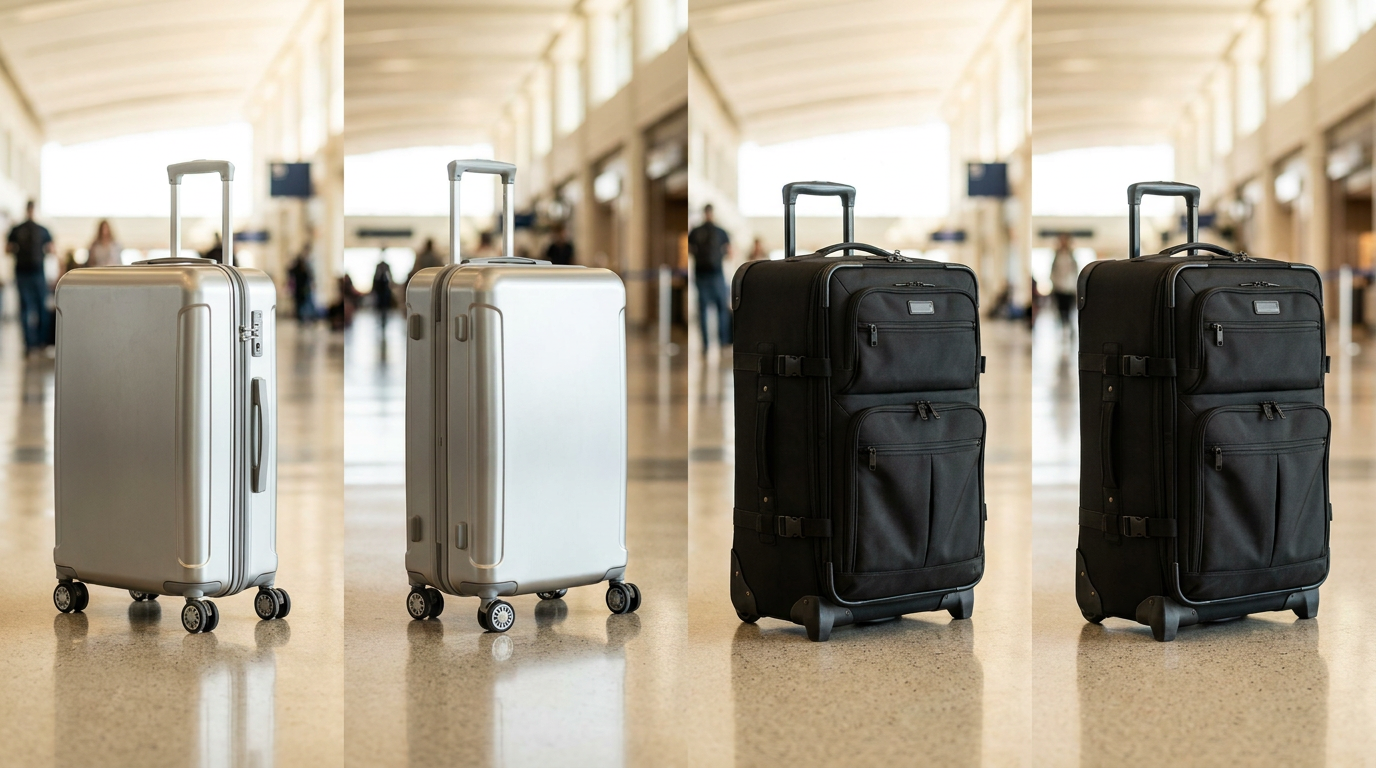
- Hardside Loyalists
- Prioritize protection, security, and sleek aesthetics.
- Softside Advocates
- Prioritize flexibility, exterior pockets, and lightweight design.
- Pragmatic Travelers
- Choose based on the specific trip—hardside for air, softside for road.
What's not represented
- · Sustainable material advocates
- · Budget-conscious occasional travelers
Why this matters
Choosing the right luggage directly impacts travel efficiency, packing capacity, and the safety of personal belongings. A mismatched suitcase can lead to overweight baggage fees, damaged valuables, or unnecessary physical strain during transit.
Key points
- Hardside luggage offers superior protection for fragile items and better resistance to weather and spills.
- Softside luggage provides greater flexibility, expandability, and exterior pockets for quick access.
- Aluminum hardside bags are the heaviest option, while softside nylon bags are generally the lightest.
- Hardside bags typically use a clamshell opening, whereas softside bags favor a top-lid design.
- Road trips favor the pliable nature of softside bags, while checked air travel favors rigid hardshells.
The choice between hardside and softside luggage is one of the most enduring debates in modern travel. As airlines tighten weight restrictions and overhead bin space becomes a competitive battleground, the suitcase a traveler chooses dictates much of their transit experience. Making the right choice requires looking past aesthetics to understand how different materials perform under the stress of global transit.[6]
At its core, the division comes down to material science and structural philosophy. Hardside luggage relies on rigid or semi-rigid exterior shells, while softside luggage utilizes flexible, woven fabrics. This fundamental difference in construction cascades into every aspect of the bag's utility, from how it absorbs impact on a tarmac to how it fits into a crowded rental car trunk.[1][2]
The primary argument for hardside luggage centers on ultimate protection. Crafted predominantly from polycarbonate, polypropylene, ABS plastic, or aluminum, these suitcases act as a protective armor for the belongings inside. For travelers transporting fragile items, electronics, or easily crushed souvenirs, the rigid exterior offers a distinct advantage over fabric alternatives.[1][2]
Evidence supporting the hardside approach is found in its performance against the elements and rough handling. Hardshells provide superior water resistance, easily repelling rain, snow, or accidental spills that might otherwise seep into a fabric bag. Furthermore, modern polycarbonate is designed to flex upon impact, absorbing the shock of being tossed by baggage handlers before popping back into its original shape without cracking.[2][3]

Security is another strong point in the case for hardside luggage. The rigid structure is inherently more difficult to tamper with or slice open compared to fabric. Most premium hardside models also feature integrated, TSA-approved combination locks built directly into the shell, eliminating the need for external padlocks that can easily be clipped or lost during transit.[1][2]
However, the case against hardside luggage highlights its rigid limitations. The inflexibility that protects contents also means the bag cannot easily be overstuffed or squeezed into a tight overhead compartment. Additionally, the sleek exterior usually precludes the inclusion of quick-access front pockets, forcing travelers to open the entire suitcase to retrieve a passport, laptop, or sweater.[1][5]
Weight is also a critical factor when evaluating hardside options. While materials like polypropylene have reduced the burden, hardside bags generally weigh more than their softside counterparts. Aluminum suitcases, the pinnacle of hardside durability, are the heaviest; high-end models can weigh nearly 12 pounds empty, eating significantly into strict airline weight allowances before a single item is packed.[1]
Conversely, the argument for softside luggage is built entirely around flexibility and convenience. Constructed from high-density fabrics like ballistic nylon, polyester, or canvas, these bags are inherently pliable. This material choice allows the suitcase to expand, contract, and mold to its environment, making it a favorite among travelers who prioritize adaptability over impenetrable defense.[2][5]

The evidence for softside superiority is most apparent in its packing dynamics. Softside bags frequently feature zippered expansion gussets that can add several inches of depth, accommodating the inevitable accumulation of items during a trip. Their fabric construction also means they can be forcefully squeezed into unyielding spaces, such as the last remaining gap in an airplane's overhead bin.[1][5]
The evidence for softside superiority is most apparent in its packing dynamics.
Furthermore, softside luggage excels in accessibility. The exterior of a soft bag is typically outfitted with multiple zippered pockets and compartments. This design allows travelers to easily stash and retrieve travel documents, reading materials, or snacks without having to lay the suitcase flat and expose their personal belongings to the entire airport terminal.[2][3]
The baseline weight of softside luggage also provides a distinct advantage. Because fabric is inherently lighter than plastic or metal, softside suitcases typically range from five to ten pounds empty. For frequent flyers navigating strict international weight limits, this lighter starting point allows for more clothing and gear to be packed without incurring hefty overweight baggage fees.[1]
Yet, the case against softside luggage involves its vulnerability to the environment and wear. Fabrics are susceptible to tearing, fraying, and absorbing moisture. If a softside bag is left on a rain-soaked tarmac, water can seep through the zippers and fabric, potentially ruining the contents inside. They are also more difficult to clean, often holding onto dirt and stains that would simply wipe off a hardshell.[2][3][5]

The packing experience also differs drastically between the two styles. Hardside luggage almost exclusively utilizes a clamshell design, splitting down the middle into two equal halves. This requires a larger footprint to open but allows for highly organized, compartmentalized packing. Softside luggage typically features a top-lid opening, which requires less space to unpack and allows for deeper stacking of clothes in a single main compartment.[1][3]
When analyzing the evidence across different modes of transit, distinct winners emerge. For air travel, particularly when checking bags, hardside luggage is generally preferred due to its ability to withstand the blunt force of automated sorting systems and the weight of other bags stacked on top of it in the cargo hold.[2][4]
In contrast, road trips heavily favor softside luggage. The pliable nature of fabric bags allows them to be wedged into the irregular dimensions of a car trunk, stacked efficiently, and compressed alongside other gear. A rigid hardside bag, with its fixed dimensions, offers no such forgiveness when playing trunk Tetris.[2][5]
The aesthetic divide also plays a role in the decision-making process. Hardside luggage often projects a sleek, modern, and professional image, making it highly popular among business travelers. Softside luggage, while available in premium finishes, generally leans toward a more casual, utilitarian look that appeals to adventure travelers and families.[1][2]

Ultimately, hardside luggage fits well when travelers are checking bags on international flights, transporting fragile items, or prioritizing weather resistance and maximum security. It is the optimal choice for those who value a structured packing process and a sleek aesthetic that can withstand the rigors of global transit.[1][6]
However, a rigid shell does not fit well when road-tripping with limited trunk space, traveling on smaller regional jets with strict overhead dimensions, or for those who rely heavily on exterior pockets for quick access. The lack of give can turn a slightly overpacked hardside bag into a logistical headache at the boarding gate.[2][5]
Conversely, softside luggage fits well when flexibility is paramount. It is the ideal companion for travelers who frequently overpack, navigate tight spaces, or need immediate access to laptops and documents while on the move. Its lighter weight and expandable nature make it a highly pragmatic choice for domestic weekenders and carry-on enthusiasts.[3][5]
Yet, softside baggage does not fit well when itineraries involve heavy rain, when packing delicate electronics in the checked hold, or when security against tampering is a primary concern. For those who demand an impenetrable fortress for their belongings, the traditional fabric suitcase will always fall short of the hardshell standard.[2][6]
How we got here
Pre-1970s
Trunks and heavy leather suitcases dominate travel, requiring porters for transport.
1987
The invention of the modern rollaboard softside suitcase by a commercial airline pilot revolutionizes personal travel.
Early 2000s
Polycarbonate is introduced to the luggage market, making hardside bags significantly lighter and more resilient.
2010s
The four-wheel 'spinner' design becomes the industry standard across both hardside and softside models.
2020s
Hybrid designs emerge, featuring hardside shells with soft front pockets for laptops and quick-access items.
Viewpoints in depth
Hardside Loyalists
Prioritize ultimate protection, security, and a sleek aesthetic.
This camp argues that the primary purpose of luggage is to protect its contents from the brutal realities of modern air travel. They point to the superior impact resistance of polycarbonate and the impenetrable nature of aluminum as non-negotiable features. For these travelers, the inability to overpack is seen as a feature rather than a bug, enforcing discipline and ensuring the bag always fits within airline sizers. The inclusion of integrated TSA locks and weather-resistant shells further cements their belief that hardside is the only choice for serious globetrotters.
Softside Advocates
Prioritize flexibility, expandability, and quick access to belongings.
Advocates for softside luggage view travel as a fluid experience that requires adaptable gear. They emphasize the pragmatic benefits of exterior pockets, which allow for the seamless retrieval of passports, laptops, and liquids in the security line without exposing the main compartment. This camp also values the forgiving nature of ballistic nylon, which can stretch to accommodate last-minute souvenirs or compress to squeeze into a crowded overhead bin. For them, the lighter baseline weight of fabric bags is a crucial advantage in avoiding airline fees.
Pragmatic Travelers
Select luggage based entirely on the specific demands of the itinerary.
This perspective rejects the idea of a single perfect suitcase, arguing instead for a modular approach to travel gear. Pragmatists will deploy a rigid hardside checked bag for a multi-stop international flight to protect against rough handling and unpredictable weather. However, for a weekend road trip or a regional flight on a small commuter jet, they will switch to a softside duffel or rollaboard that can be easily wedged into a trunk or a tiny overhead compartment. Their loyalty lies with the use-case, not the material.
What we don't know
- How airlines will adjust future weight and size restrictions, which could heavily penalize heavier hardside materials.
- Whether emerging hybrid materials will eventually blur the lines entirely between hard and soft luggage.
Key terms
- Polycarbonate
- A lightweight, highly durable plastic used in premium hardside luggage that flexes under pressure to prevent cracking.
- ABS (Acrylonitrile Butadiene Styrene)
- A cheaper, more rigid plastic used in budget hardside luggage that is more prone to cracking than polycarbonate.
- Clamshell Design
- A luggage opening style typical of hardside bags where the suitcase splits into two equal halves for packing.
- Top-Lid Opening
- A design common in softside luggage where a single main compartment is accessed via a zippered front flap.
- Ballistic Nylon
- A thick, synthetic fabric originally developed for military use, prized in softside luggage for its resistance to tearing and abrasion.
Frequently asked
Is hardside or softside luggage lighter?
Softside luggage is generally lighter, typically weighing between 5 and 10 pounds, whereas hardside options often range from 10 to 15 pounds.
Which type of luggage is better for road trips?
Softside luggage is usually better for road trips because its flexible fabric can be squeezed into tight car trunks alongside other bags.
Do hardside suitcases crack easily?
While older plastic models were prone to cracking, modern polycarbonate shells are designed to flex upon impact, making them highly durable.
Can softside luggage protect fragile items?
Softside luggage offers less impact protection than hardside shells, making it less ideal for transporting fragile items in the checked baggage hold.
Sources
Source coverage
6 outlets
3 viewpoints surfaced






[1]ForbesHardside Loyalists
Hardside Vs. Softside Luggage: Overview
Read on Forbes →[2]DelseyHardside Loyalists
What's the Difference Between Hardside and Soft-Side Luggage?
Read on Delsey →[3]TravelproSoftside Advocates
Hardside vs Softside Luggage - What's Best for You?
Read on Travelpro →[4]BG BerlinPragmatic Travelers
HARDSIDE VS SOFTSIDE LUGGAGE | A COMPARISON
Read on BG Berlin →[5]Luggage On TourSoftside Advocates
Hardside vs. Softside Luggage
Read on Luggage On Tour →[6]Factlen Editorial TeamPragmatic Travelers
Synthesis by Factlen editorial team
Read on Factlen Editorial Team →



Every angle. Every day.
Get shopping stories with full source coverage and perspective breakdowns delivered to your inbox.