
Global Remittance Fees Hit Record Lows as Stablecoin Adoption Surpasses Traditional Networks
Driven by deep integrations from major payment processors, blockchain-based stablecoins have officially become the cheapest and most utilized method for cross-border money transfers, saving families billions in fees.
By Factlen Editorial Team
- Fintech Innovators
- View this milestone as the ultimate validation of blockchain technology, focusing on the democratization of global finance.
- Traditional Banking Sector
- Acknowledges the massive efficiency gains but emphasizes the ongoing need for strict compliance and liquidity management at the local off-ramps.
- Global Development Advocates
- Celebrate the reduction in fees as a direct wealth transfer back to developing nations, boosting local economies.
What's not represented
- · Rural populations in developing nations who lack smartphone access and still rely entirely on physical cash agents.
Why this matters
For decades, migrant workers and international families have lost significant portions of their income to high wire-transfer fees. The shift to stablecoin rails means billions of dollars will stay in the pockets of those who need it most, fundamentally reshaping global financial inclusion.
Key points
- Stablecoin transfer volumes for consumer remittances have surpassed traditional wire services for the first time.
- Integrations by Stripe, PayPal, and Visa allow users to send money globally without interacting with complex crypto interfaces.
- The shift drops average cross-border transaction fees from roughly 6.2% to fractions of a cent.
- Regulatory clarity in the US and EU has given traditional financial institutions the confidence to adopt the technology.
- The savings represent billions of dollars retained by families in developing nations rather than lost to intermediary banks.
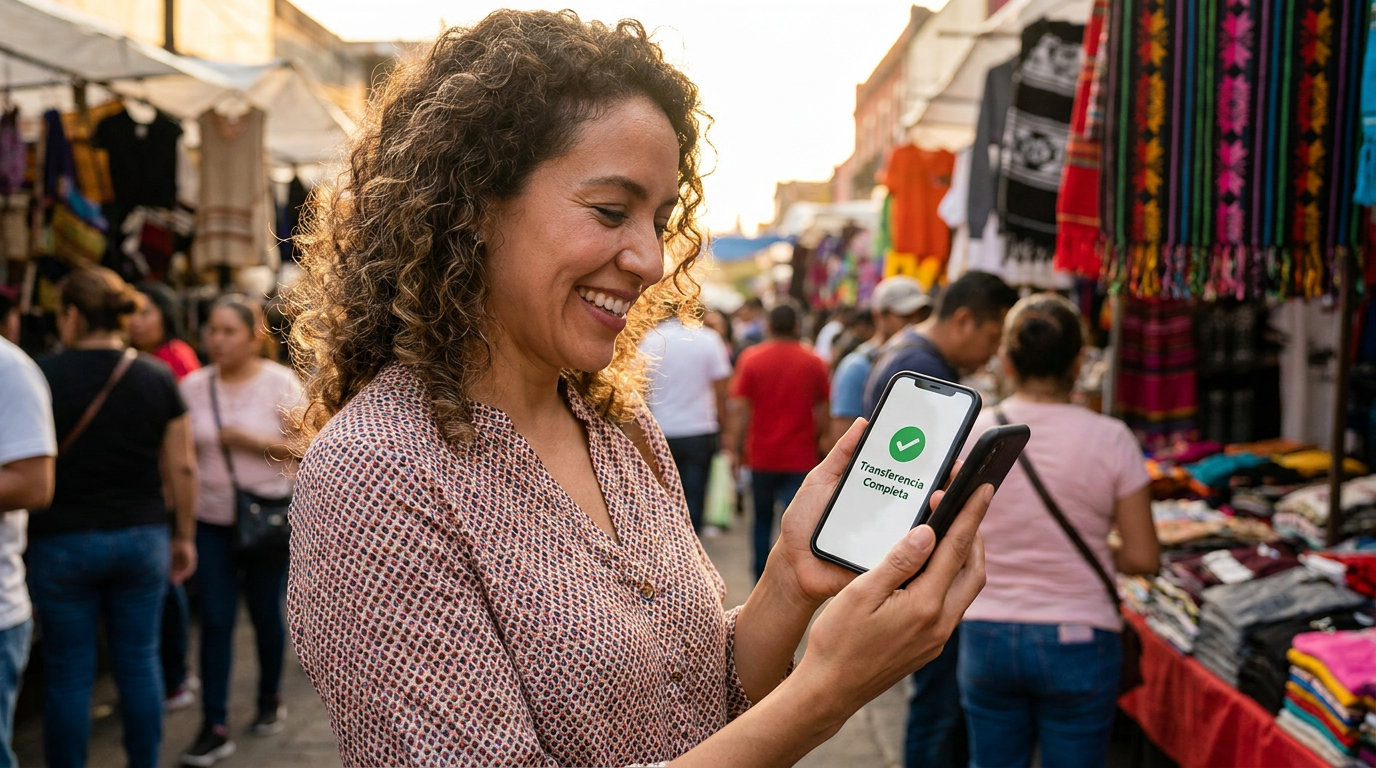
In a watershed moment for global financial inclusion, stablecoin transfer volumes for cross-border consumer remittances have officially eclipsed traditional wire services for the first time. The milestone, reached in June 2026, marks a profound shift in how money moves around the world, transitioning from legacy correspondent banking systems to high-speed blockchain networks.[1][3]
The transition has been driven largely by major payment processors rather than crypto-native startups. Over the past two years, giants like Stripe, PayPal, and Visa have quietly integrated stablecoins—digital currencies pegged one-to-one with the US dollar—into their backend infrastructure. This allows consumers to send money internationally without ever needing to interact with complex crypto wallets or private keys.[2][5]
For the end user, the experience is seamless. A worker in the United States simply opens a familiar fintech app, enters an amount in dollars, and hits send. In the background, the fiat currency is instantly converted to a stablecoin like USDC or PYUSD, routed across a low-cost network like Solana or Base, and deposited into the recipient's local digital wallet in seconds.[2][4]
The most striking impact of this technological shift is the collapse in transaction costs. According to the World Bank, traditional remittance fees have stubbornly hovered around 6.2% globally for years, heavily taxing those sending money to developing nations. In stark contrast, stablecoin rails cost fractions of a cent per transaction, effectively dropping the cost of moving money to zero.[5][6]

The real-world consequences of these savings are massive. For a worker sending $200 home to family in the Philippines, Mexico, or Nigeria, traditional fees would historically siphon off roughly $12 per transfer. By utilizing digital dollar rails, that money now goes directly toward groceries, healthcare, or education rather than intermediary banks and currency converters.[3][6]
For a worker sending $200 home to family in the Philippines, Mexico, or Nigeria, traditional fees would historically siphon off roughly $12 per transfer.
Analytics firm The Block reported that over $150 billion in retail remittances moved via stablecoins in the first half of 2026 alone. This represents a staggering 400% increase from two years prior, highlighting how rapidly consumers will adopt new financial technology when it offers a clear, immediate economic benefit.[4]

Industry analysts point to recent regulatory clarity as the primary catalyst for this explosion in utility. The passage of comprehensive stablecoin legislation in the United States, combined with the European Union's MiCA framework, provided the legal certainty that traditional financial institutions needed to fully embrace and scale the technology.[1][5]
The final hurdle for crypto remittances—converting digital dollars into local fiat currency—has been largely solved by a proliferation of local fintech partnerships in emerging markets. Digital wallets in recipient countries now feature direct integrations with local banking systems and cash-pickup locations, creating a frictionless "off-ramp" for users.[2][3]
Rather than fighting the trend, several major traditional banks are now launching their own stablecoin settlement desks. Recognizing that the legacy correspondent banking model is becoming obsolete for retail users, these institutions are pivoting to provide the underlying liquidity and compliance layers for the new digital ecosystem.[1][7]

Crucially, this wave of adoption has completely decoupled from the speculative frenzy that characterized early cryptocurrency cycles. Fully reserved, regulated stablecoins function purely as a utility layer for value transfer, insulated from the price volatility of assets like Bitcoin or Ethereum.[3][5]
Looking ahead, financial analysts predict that by 2028, over 80% of all cross-border consumer payments will utilize blockchain rails in some capacity. The infrastructure is rapidly expanding beyond consumer remittances into business-to-business payments, promising similar efficiency gains for global trade.[1][4]
After years of debate over the practical use cases of blockchain technology, the industry has finally delivered on its earliest and most vital promise. By stripping away the friction of borders and intermediaries, stablecoins are quietly building a faster, cheaper, and more equitable global financial system.[2][5]
How we got here
2014
The first major stablecoins are introduced, primarily used by traders to park assets between crypto trades.
August 2023
PayPal launches its own stablecoin (PYUSD), signaling mainstream fintech interest in digital dollars.
April 2024
Stripe resumes crypto payments, integrating stablecoin settlements directly into its global merchant network.
Late 2025
Comprehensive stablecoin legislation passes in the US, providing a clear regulatory framework for issuers.
June 2026
Stablecoin remittance volumes officially eclipse traditional legacy wire services globally.
Viewpoints in depth
Fintech Innovators
View this milestone as the ultimate validation of blockchain technology, focusing on the democratization of global finance.
For the developers and founders who built the underlying blockchain networks, this moment represents the realization of crypto's original promise. They argue that while the media focused on the speculative casino of token trading, the real work was being done on infrastructure. By reducing the cost of moving money to near-zero, they believe stablecoins are democratizing finance, removing the rent-seeking intermediaries that have historically taxed the world's poorest workers.
Traditional Banking Sector
Acknowledges the massive efficiency gains but emphasizes the ongoing need for strict compliance and liquidity management at the local off-ramps.
Legacy financial institutions concede that blockchain rails are vastly superior for moving data and value quickly. However, they caution that the "last mile" of finance—converting digital dollars into local physical cash—still requires robust traditional banking infrastructure. Their focus remains on ensuring that these new high-speed networks do not become conduits for illicit finance, advocating for strict Know Your Customer (KYC) controls at every fiat off-ramp.
Global Development Advocates
Celebrate the reduction in fees as a direct wealth transfer back to developing nations, boosting local economies.
Organizations monitoring global poverty and development view the collapse of remittance fees as a massive, immediate economic stimulus for emerging markets. When a worker doesn't have to pay a 6% tax to send money home, that capital flows directly into local businesses, healthcare, and education. These advocates are now pushing for greater smartphone penetration and digital literacy to ensure rural populations aren't left behind by the shift to digital dollars.
What we don't know
- How quickly legacy wire-transfer companies will be able to pivot their business models to survive the loss of retail fee revenue.
- Whether central bank digital currencies (CBDCs) will eventually compete with or complement these private stablecoin networks.
Key terms
- Stablecoin
- A type of digital currency designed to maintain a constant value by being pegged to a traditional asset, most commonly the US dollar.
- Remittance
- Money sent by a person in a foreign country back to their home country, often a crucial source of income for families in developing nations.
- Off-ramp
- The process or service that allows users to convert digital assets or stablecoins back into traditional, local paper money.
- Blockchain Rails
- The underlying digital network infrastructure that processes and records transactions instantly and securely across the globe.
Frequently asked
Do I need to buy cryptocurrency to use this?
No. Major apps like PayPal and Stripe handle the conversion automatically. You simply send fiat currency (like US dollars), and the app uses stablecoins in the background to route the money instantly.
Are stablecoins safe from price crashes?
Regulated stablecoins like USDC and PYUSD are fully backed 1:1 by US dollars and short-term Treasury bills, meaning their value does not fluctuate like Bitcoin or other speculative assets.
How does the receiver get local money?
Recipients receive the funds in their local digital wallet, which is partnered with local banks or cash-pickup locations, allowing them to easily withdraw the money in their native currency.
Sources
Source coverage
7 outlets
3 viewpoints surfaced







[1]BloombergTraditional Banking Sector
Crypto's Utility Era: Stablecoins Eclipse Legacy Remittance Rails
Read on Bloomberg →[2]CoinDeskFintech Innovators
How Fintech Giants Quietly Moved the World to Blockchain Rails
Read on CoinDesk →[3]ReutersGlobal Development Advocates
Global Remittance Fees Plummet as Digital Dollar Adoption Grows
Read on Reuters →[4]The BlockFintech Innovators
Data: Retail Stablecoin Transfers Cross $150 Billion in First Half of 2026
Read on The Block →[5]CNBCTraditional Banking Sector
The End of the 6% Wire Fee: How Crypto Finally Solved Payments
Read on CNBC →[6]World BankGlobal Development Advocates
Migration and Development Brief: The Impact of Digital Assets on Remittance Costs
Read on World Bank →[7]Financial TimesTraditional Banking Sector
Banks Scramble to Adapt as Stablecoins Eat the Cross-Border Market
Read on Financial Times →

Every angle. Every day.
Get finance stories with full source coverage and perspective breakdowns delivered to your inbox.