
Global Peace Index 2026: The $21.8 Trillion Cost of Conflict and the Policy Trade-Offs
As global peacefulness drops to its lowest recorded level, the 2026 Global Peace Index reveals a $21.8 trillion economic toll, forcing nations to weigh the immediate security of militarization against the long-term yields of socio-economic peacebuilding.

- Deterrence Advocates
- Argue that rising geopolitical instability and asymmetric warfare necessitate increased military spending to protect sovereignty.
- Positive Peace Proponents
- Emphasize that true stability comes from strong institutions, equitable resources, and diplomacy, which offer a better long-term return on investment.
- Economic Pragmatists
- Focus on the unsustainable $21.8 trillion burden, advocating for a reallocation of capital from reactive conflict management to proactive economic development.
Perspectives this story doesn't cover
- Local community leaders in high-conflict zones whose grassroots peacebuilding efforts are often unmeasured by national indices.
- Civilian populations bearing the direct economic and physical brunt of the $21.8 trillion cost of violence.
The release of the 2026 Global Peace Index (GPI) by the Institute for Economics & Peace marks a sobering milestone: global peacefulness has reached its lowest level since the index's inception. The report evaluates 163 independent states and territories, revealing that the economic impact of violence has surged to an unprecedented $21.8 trillion. This staggering figure, representing approximately 10.5 percent of global GDP, underscores a widening fracture in international stability. As nations grapple with rising cross-border tensions and internal unrest, the data forces a critical evaluation of how governments allocate resources to maintain security and foster prosperity.[1][2]
The findings highlight a fundamental policy divergence in how nations attempt to secure their populations and economies. On one side of the spectrum is the traditional reliance on militarized deterrence—expanding defense budgets, fortifying borders, and investing in advanced weaponry. On the other side is socio-economic peacebuilding, a framework the IEP terms "Positive Peace," which focuses on strengthening institutions, ensuring equitable resource distribution, and fostering diplomatic ties. The 2026 data provides a comprehensive evidence base to compare the efficacy and trade-offs of these two distinct approaches.[1][3]
The first approach, Militarization and Deterrence, has seen a significant resurgence globally. The GPI notes that over 100 countries have increased their military capabilities in response to geopolitical instability and the proliferation of asymmetric warfare technologies, such as drones. This strategy prioritizes hard power, operating on the premise that overwhelming defensive capabilities prevent aggression and secure national borders against both state and non-state actors in an increasingly unpredictable geopolitical environment.[4][5]
When evaluating Militarization and Deterrence, policymakers weigh distinct trade-offs. • For: It provides immediate territorial defense, reassures domestic populations in times of acute crisis, and deters asymmetric threats that can rapidly destabilize a region. • Against: It diverts massive amounts of capital away from domestic development, healthcare, and education, while often triggering regional arms races that paradoxically decrease overall security. • Evidence: The 2026 index reveals that despite widespread increases in military expenditure, global peacefulness declined for the 12th consecutive year, suggesting that militarization alone has not yielded a net increase in global safety.[2][4][6]
Conversely, the Socio-Economic Peacebuilding approach focuses on the structural drivers of stability. Nations that consistently top the GPI, such as Iceland, New Zealand, and Switzerland, invest heavily in the pillars of Positive Peace. These include well-functioning governments, low levels of corruption, high human capital, and sound business environments. Rather than preparing for conflict, this strategy invests in the societal resilience required to resolve disputes without violence, creating an environment where economic growth can flourish uninterrupted.[1][2]
Conversely, the Socio-Economic Peacebuilding approach focuses on the structural drivers of stability.
The trade-off analysis for Socio-Economic Peacebuilding presents a different set of calculations. • For: It addresses the root causes of unrest, yields exceptionally high long-term economic returns, and builds societal resilience that insulates countries from external economic shocks. • Against: It requires decades of consistent investment to show results, offers little immediate physical protection against an active, external military invasion, and is often politically difficult to prioritize over immediate security concerns. • Evidence: The GPI data shows that countries with high Positive Peace scores experience significantly lower economic volatility. However, global expenditure on peacebuilding and peacekeeping remains stagnant, historically representing less than 0.6 percent of total military spending.[2]
The economic disparity between these two approaches is a central theme of the 2026 report. The $21.8 trillion lost to violence encompasses military spending, the costs of internal security, and the profound GDP losses associated with armed conflict. Economic analysts point out that this reactive spending creates a massive opportunity cost. Every dollar absorbed by the economic impact of violence is a dollar stripped from infrastructure, climate adaptation, and technological innovation, effectively acting as a heavy tax on global human development.[3][6]
Regional data further illustrates these dynamics. Europe, historically the most peaceful region, has seen its metrics challenged by nearby conflicts, prompting a rapid pivot toward militarization. Meanwhile, regions that have suffered the highest relative economic costs of violence—often exceeding 40 percent of their national GDP—demonstrate the catastrophic failure of deterrence when it escalates into active conflict. In contrast, nations that have maintained their top-tier peace rankings have largely insulated themselves through deep diplomatic integration and robust internal safety nets.[2][5]
The proliferation of accessible military technology has fundamentally altered the cost-benefit analysis of these strategies. The rise of asymmetric warfare means that smaller non-state groups can inflict disproportionate economic damage using relatively inexpensive drone technology. This dynamic makes traditional militarized deterrence increasingly expensive and complex to maintain, as conventional militaries are forced to develop costly countermeasures against cheap, decentralized threats, further inflating the global cost of violence.[4]
Based on the 2026 data, clear parameters emerge for when each strategy is most applicable. Militarized deterrence fits well when a nation faces immediate, existential threats from neighboring states or active insurgencies, and where physical security is the absolute prerequisite for any subsequent economic activity. It does not fit when a country's primary instability stems from internal economic inequality, resource scarcity, or institutional corruption; in these scenarios, increased military spending often exacerbates public grievances and accelerates domestic unrest.[5][6]
Conversely, socio-economic peacebuilding fits well when a nation possesses baseline border security and can afford to allocate capital toward long-term institutional resilience, education, and equitable resource distribution. It is the proven pathway to sustaining top-tier peacefulness and economic prosperity over decades. It does not fit when a state is in the midst of an active, high-intensity armed conflict where immediate civilian protection requires hard-power intervention and where civil institutions have already collapsed.[1]
Ultimately, the 2026 Global Peace Index serves as a stark financial ledger for the world's security choices. The $21.8 trillion burden highlights the limitations of relying solely on reactive militarization. While hard power remains a necessity in acute crises, the data unequivocally demonstrates that the most peaceful—and prosperous—nations are those that systematically invest in the socio-economic foundations of Positive Peace, treating stability not as the absence of war, but as the presence of resilient, equitable institutions.[1][2][6]
Key points
- The 2026 Global Peace Index reports a $21.8 trillion economic cost of violence, representing 10.5% of global GDP.
- Global peacefulness has declined to its lowest level since the index's inception, driven by cross-border conflicts.
- Over 100 countries increased their militarization in response to geopolitical instability and asymmetric warfare.
- Global investment in proactive peacebuilding remains stagnant at roughly 0.6% of total military spending.
- Top-ranking peaceful nations rely on 'Positive Peace' factors like strong institutions and equitable resources rather than heavy militarization.
Why this matters
Understanding the $21.8 trillion cost of violence highlights a critical global policy choice: whether governments invest their budgets in immediate military deterrence or long-term institutional resilience, directly impacting global economic stability and domestic prosperity.
Sources
Source coverage
6 outlets
3 viewpoints surfaced






- [1]Institute for Economics & PeacePositive Peace Proponents
Global Peace Index 2026 Report
Read on Institute for Economics & Peace → - [2]Vision of HumanityPositive Peace Proponents
2026 Global Peace Index: Measuring Peace in a Complex World
Read on Vision of Humanity → - [3]ReutersDeterrence Advocates
Global economic cost of violence hits record $21.8 trillion, index shows
Read on Reuters → - [4]BloombergDeterrence Advocates
Defense spending surges as Global Peace Index drops to lowest level on record
Read on Bloomberg → - [5]Al JazeeraEconomic Pragmatists
Middle East and Europe drive global peace decline in 2026, report finds
Read on Al Jazeera → - [6]The EconomistEconomic Pragmatists
Guns over butter: The economic toll of a less peaceful world
Read on The Economist →
Comments

More in Data & Analysis
See all →Evaluation Metrics
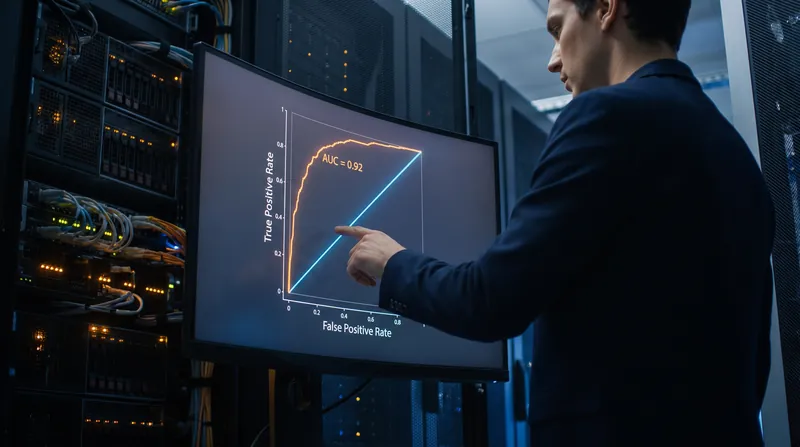
How the Area Under the ROC Curve is the Probability of Correctly Ranking a Positive Example Over a Negative One
7 sources
Regression Mechanics
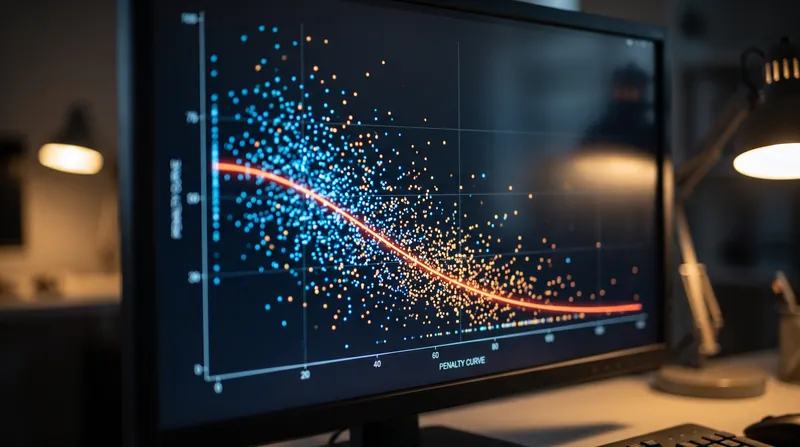
How Adjusted R-Squared Penalizes the Addition of Irrelevant Predictors to Prevent Model Overfitting
10 sources
Forecast Math
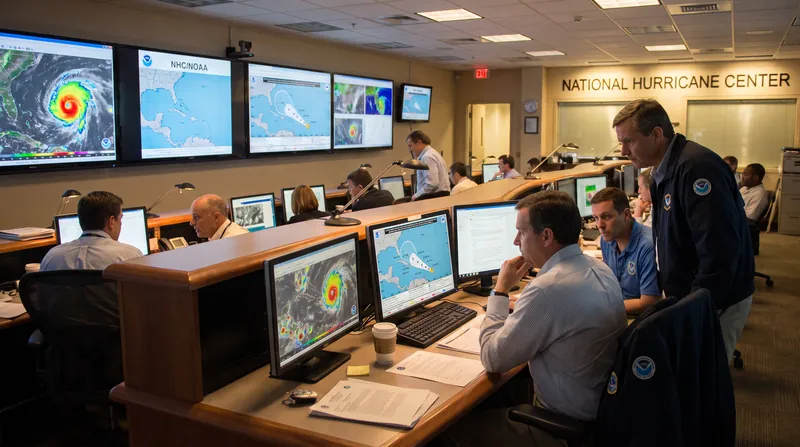
How the Cone of Uncertainty's Width Increases with the Square Root of the Forecast Horizon
6 sources
Regression Diagnostics
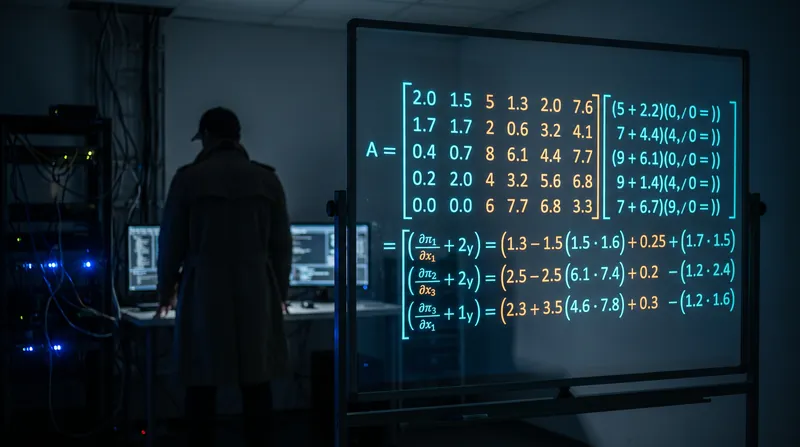
How a Near-Zero Eigenvalue in the Design Matrix Reveals Multicollinearity in Regression
6 sources
Every angle. Every day.
Get Data & Analysis stories with full source coverage and perspective breakdowns delivered to your inbox.