
Germany Unveils Roadmap to Phase Out All Fossil Fuels From Energy Sector by 2045
Europe's largest economy has formally committed to ending its reliance on coal, oil, and natural gas by 2045, detailing a sector-by-sector transition plan. The roadmap relies heavily on scaling up renewable electricity, heat pumps, and electric vehicles to replace imported fossil fuels.
By Layla Zaher

- Climate Advocates
- Focus on the urgency of implementation and the geopolitical security benefits of decarbonization.
- Industrial Sector
- Emphasize the need for reliable, cost-competitive energy alternatives and protective trade mechanisms during the transition.
- Energy Infrastructure Planners
- Prioritize the physical realities of grid expansion, hydrogen deployment, and maintaining baseload reliability.
Perspectives this story doesn't cover
- Fossil fuel exporters supplying Germany
- Low-income consumer advocacy groups
Why this matters
Germany's plan provides the first concrete blueprint for how a heavily industrialized, manufacturing-dependent economy intends to fully decouple from fossil fuels. If successful, the 2045 roadmap will serve as a template for other major economies attempting to balance grid stability with total decarbonization.
Industrial lobbying groups and grid skeptics frequently argue that a heavy manufacturing economy cannot fully decouple from fossil fuels without collapsing its industrial base. On Wednesday, the German government presented a comprehensive roadmap designed to dismantle that assumption, detailing a sector-by-sector phase-out of all coal, oil, and natural gas from Europe's largest energy system by 2045.[1]
The blueprint was published on the sidelines of the United Nations General Assembly in New York, directly answering UN Secretary-General António Guterres' call for developed nations to deliver credible transition timelines. With the announcement, Germany becomes only the third major developed economy—following France and the Netherlands—to formalize a national exit strategy for fossil fuels, moving beyond vague pledges of carbon neutrality to an explicit mandate to end fossil fuel consumption.[1][4][5]
The scale of the transition required is massive. In 2024, fossil fuels still accounted for roughly 65 percent of Germany's total energy consumption, costing the country 76 billion euros in imports. To replace that volume, the government plans to increase the share of renewable energy in gross electricity consumption from 55 percent to at least 80 percent by 2030. That expansion requires adding 12 gigawatts of onshore wind capacity and pushing total installed solar capacity to 215 gigawatts by the end of the decade.[1]
Beyond the power grid, the roadmap mandates a sweeping electrification of the transport and heating sectors. The strategy relies heavily on state-subsidized heat pumps to replace residential oil and gas boilers, a shift that is already underway: for the first time in 2025, more heat pumps were sold in Germany than gas central heating systems. On the mobility front, the government noted that by August 2026, roughly one-third of all newly registered cars in the country were fully electric.[6]
Beyond the power grid, the roadmap mandates a sweeping electrification of the transport and heating sectors.
For Germany's energy-intensive industrial sector, the plan pairs direct electrification with a pivot to green hydrogen. Coal-fired power stations, which generated nearly a quarter of the country's electricity in 2025, are legally mandated to close by 2038, though the roadmap explores accelerating that deadline to 2035. Any new gas-fired power plants receiving state funding must be built hydrogen-ready and transition entirely to climate-neutral fuels by 2045.[1][2]
The strategy also targets near-term emissions reductions, committing to cut methane emissions by 30 percent by 2030 in alignment with the 2021 Global Methane Pledge. Because methane traps roughly 80 times more heat than carbon dioxide over a 20-year period, curbing its release from industrial and agricultural sources is viewed as a critical lever for immediate climate mitigation.
Climate advocates welcomed the explicit policy shift but warned that execution will dictate its success. Former German climate envoy Jennifer Morgan noted that accelerating the shift to renewables will insulate consumers from geopolitical price shocks, but cautioned that "a roadmap is only the starting line." Meanwhile, industrial groups are closely watching the rollout of the European Union's Carbon Border Adjustment Mechanism, which is designed to protect European manufacturers from being undercut by imports from countries with weaker climate regulations.[5]
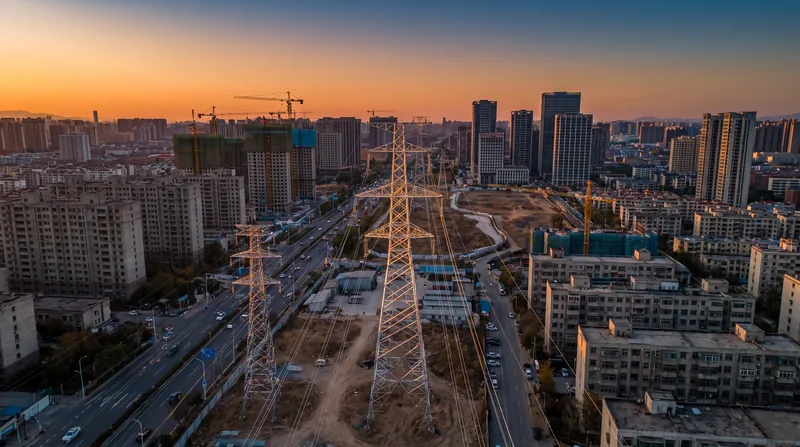
The immediate test for the 2045 roadmap will be the pace of infrastructure deployment over the next 36 months. Achieving the 2030 interim targets requires not just building wind and solar farms, but massively expanding the high-voltage transmission grids needed to carry renewable power from the windy north to the industrial south.[1][3]
Viewpoints in depth
Climate Advocates
Environmental groups view the roadmap as a necessary but overdue commitment that requires immediate, aggressive implementation.
Organizations and former climate envoys argue that setting a 2045 deadline is only the first step. They emphasize that the real challenge lies in accelerating the deployment of green electrification and overcoming bureaucratic hurdles. Advocates stress that moving away from fossil fuels is not just an environmental imperative, but a critical measure to insulate the economy from geopolitical price shocks and volatile global energy markets.
Industrial Manufacturers
Heavy industry sectors are focused on the economic feasibility and infrastructure requirements of the transition.
For Germany's manufacturing base, the shift away from cheap pipeline gas requires massive investments in electrification and green hydrogen. Industrial leaders point out that remaining globally competitive during this transition depends heavily on the rapid expansion of the national transmission grid and the successful implementation of the European Union's Carbon Border Adjustment Mechanism. Their primary concern is ensuring that clean energy supplies scale up fast enough to replace retiring fossil fuel assets without triggering price spikes.
Grid Operators
Utility and transmission companies emphasize the physical infrastructure challenges of a fully electrified economy.
Grid managers note that replacing dispatchable coal and gas plants with intermittent wind and solar generation requires a fundamental redesign of the power system. They highlight the need for thousands of kilometers of new high-voltage transmission lines to carry wind power from the north to industrial centers in the south, alongside massive investments in battery storage and hydrogen-ready backup plants to maintain grid stability during periods of low renewable output.
Key points
- Germany has formally committed to phasing out all coal, oil, and natural gas by 2045.
- The government plans to increase renewable electricity generation from 55 percent to 80 percent by 2030.
- The roadmap relies heavily on scaling up electric vehicles and state-subsidized heat pumps.
- Coal-fired power plants are legally mandated to close by 2038, with a potential accelerated exit by 2035.
Sources
Source coverage
6 outlets
3 viewpoints surfaced






- [1]Climate Home NewsClimate Advocates
Germany unveils plan to end use of fossil fuels in energy sector by 2045
Read on Climate Home News → - [2]Clean Energy WireEnergy Infrastructure Planners
Germany presents fossil fuel transition plan, reaffirms 2045 climate target
Read on Clean Energy Wire → - [3]Argus MediaIndustrial Sector
Germany presents roadmap for fossil fuel phase-out
Read on Argus Media → - [4]Table.BriefingsIndustrial Sector
UN Climate Summit: Germany responds to Guterres' call to present a plan for phasing out fossil fuels
Read on Table.Briefings → - [5]BusinessGreenClimate Advocates
'Only the starting line': Germany commits to fossil fuel phase-out by 2045
Read on BusinessGreen → - [6]BILYONARYO BusinessEnergy Infrastructure Planners
Germany maps out fossil fuel exit, backing EVs, heat pumps
Read on BILYONARYO Business →
Comments
More in Energy
See all →LNG Pricing
The S-Curve and J-Curve That Define the Price Relationship Between Oil-Indexed and Hub-Indexed LNG Contracts
6 sources
Energy Transition
S&P Global Study Finds Emerging Market Energy Demand Growth Challenges 1.5C Climate Target
5 sources
Refining Economics
The 45 Gallons of Finished Product and Processing Gain That Come From a 42-Gallon Barrel of Crude Oil
7 sources
Hydropower Physics
The Physics Equation That Dictates the Limits of Hydroelectric Power
6 sources
Every angle. Every day.
Get Energy stories with full source coverage and perspective breakdowns delivered to your inbox.