
G&W and Parallel Systems Partner to Test Autonomous, Self-Propelled Container Cars for Freight Rail Future
Genesee & Wyoming and Los Angeles-based startup Parallel Systems have begun testing autonomous, battery-electric freight cars in Georgia, aiming to shift short-haul container traffic from highways to rail.
By Marina Lopez

The prospect of fewer heavy trucks on local highways and lower shipping emissions is moving closer to reality in rural Georgia. Genesee & Wyoming (G&W) and Los Angeles-based startup Parallel Systems have launched the first Federal Railroad Administration (FRA) approved commercial pilot for autonomous, battery-electric freight cars.[1][2][6]
Founded by former SpaceX engineers, Parallel Systems has developed self-propelled flatcars that operate without traditional locomotives. Each individually powered vehicle can carry a single shipping container up to 500 miles on a single charge. Instead of mechanical couplers, the cars use software-managed bumpers to form platoons of up to 50 vehicles, allowing them to split off to different destinations or separate at grade crossings to avoid blocking local traffic.[1][3][5]
The testing program, which recently entered its second phase, is taking place on G&W's Heart of Georgia Railroad. Following a successful initial run on a closed two-mile track, the current phase expands operations to a 30-mile stretch between Vidalia and Helena, Georgia, to evaluate the system's performance across different terrains, weather conditions, and grade crossing interactions.[2][6]
For G&W, the technology offers a way to compete directly with short-haul trucking. Traditional freight trains require massive volume to be profitable, leaving short routes dominated by trucks. By deploying single-car autonomous units, railroads could economically move containers between major hubs like the Port of Savannah and inland distribution centers, revitalizing dormant rural rail lanes. Parallel Systems, backed by roughly $100 million in venture funding, anticipates launching full commercial operations by 2026.[1][3][5]
The shift toward automation has triggered intense pushback from organized labor. The SMART-TD union, which represents rail workers, has formally opposed the pilot program. Union leadership argues that crewless vehicles fail to meet established federal safety regulations and pose a severe risk to both rail professionals and local communities.[4]
Beyond safety, the union views the technology as a direct threat to the jobs of conductors and yard workers, noting that the startup's ultimate goal is to eliminate traditional engines and crews entirely. The FRA granted 22 waivers to allow the seven-phase testing program to proceed, setting up a clash between technological innovation and labor protections.[2][4]
As testing ramps up in the final phases, the autonomous vehicles will operate over a 160-mile section of track shared by the Heart of Georgia and Georgia Central railroads. The outcome of these trials will likely dictate whether the U.S. rail network embraces a decentralized, drone-like approach to freight or maintains its reliance on mile-long, crewed trains.[1][2][6]
The broader implications for the supply chain are significant. Shifting heavy freight to rail gives shippers pricing stability against volatile diesel spikes, delivers granular tracking visibility, and creates a new ecosystem of local maintenance and remote supervisory jobs while decongesting highway traffic around major ports.[3][5]
Viewpoints in depth
Parallel Systems & Railroad Operators
Advocates for autonomous rail technology emphasize its potential to decarbonize freight and revitalize short-haul routes.
Proponents argue that battery-electric, self-propelled railcars can fundamentally change the economics of freight transportation. By operating like a flexible, decentralized network rather than a traditional mile-long train, these vehicles can make short-haul rail routes (under 500 miles) profitable again. This shift would pull heavy freight off congested highways, drastically reduce transportation emissions, and allow railroads to compete directly with trucking for container shipments moving between major ports and inland distribution centers.
Rail Labor Unions
Organized labor strongly opposes the deployment of crewless trains, citing severe safety risks and job losses.
Rail unions, led by SMART-TD, view the testing of autonomous container cars as a dangerous experiment that violates established federal safety regulations. They argue that crewless vehicles compound risks to both rail professionals and local communities, especially at grade crossings and in shared railyards. Furthermore, unions see the technology as a direct threat to thousands of protected jobs, noting that the ultimate goal of eliminating traditional engines, yards, and conductors undermines the safety and livelihood of the workforce.
Key points
- Genesee & Wyoming and Parallel Systems are testing autonomous, battery-electric freight cars in Georgia.
- The self-propelled vehicles can carry a single container up to 500 miles on one charge.
- Software-managed bumpers allow the cars to form platoons of up to 50 vehicles without mechanical couplers.
- The FRA granted 22 waivers for the seven-phase commercial pilot program.
- Rail Innovators & Operators
- Advocates for autonomous rail technology emphasize its potential to decarbonize freight and revitalize short-haul routes.
- Organized Rail Labor
- Organized labor strongly opposes the deployment of crewless trains, citing severe safety risks and job losses.
Perspectives this story doesn't cover
- Local community leaders near the testing routes
- Short-haul trucking companies facing potential competition
Sources
Source coverage
6 outlets
2 viewpoints surfaced





- [1]Trains.comRail Innovators & Operators
Parallel Systems begins testing autonomous car on G&W short line
Read on Trains.com → - [2]Progressive RailroadingRail Innovators & Operators
G&W, Parallel Systems begin second round of autonomous vehicle tests
Read on Progressive Railroading → - [3]Los Angeles TimesRail Innovators & Operators
The Los Angeles startup Parallel Systems has raised $100 million to develop autonomous, electric freight trains
Read on Los Angeles Times → - [4]SMART-TD UnionOrganized Rail Labor
Genesee and Wyoming (G&W) railroad, the parent of the Heart of Georgia Railroad and Georgia Central Railway, and their partner, Parallel Systems Inc., are attempting to begin testing fully autonomous train cars.
Read on SMART-TD Union → - [5]Robotics & Automation NewsRail Innovators & Operators
Autonomous rail could become one of the most significant developments in logistics
Read on Robotics & Automation News → - [6]AASHTO JournalRail Innovators & Operators
Parallel Systems Launches First Commercial Pilot Test of Autonomous Freight Rail System
Read on AASHTO Journal →
More in Transportation
See all →Rail Infrastructure
The Power-Loss and Insulation Trade-Off That Determines Rail Electrification Voltage Standards
5 sources
Track Geometry
How Track Superelevation Balances Centrifugal Force and Minimizes Lateral Wheel Wear
8 sources
Rail Infrastructure
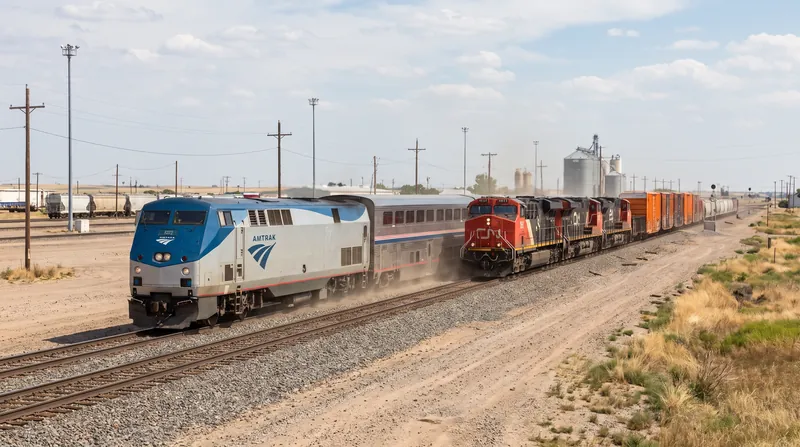
Amtrak and CN Sign Eight-Year Operating Agreement, Resolving Decade-Long Regulatory Dispute
5 sources
Oversight Audit
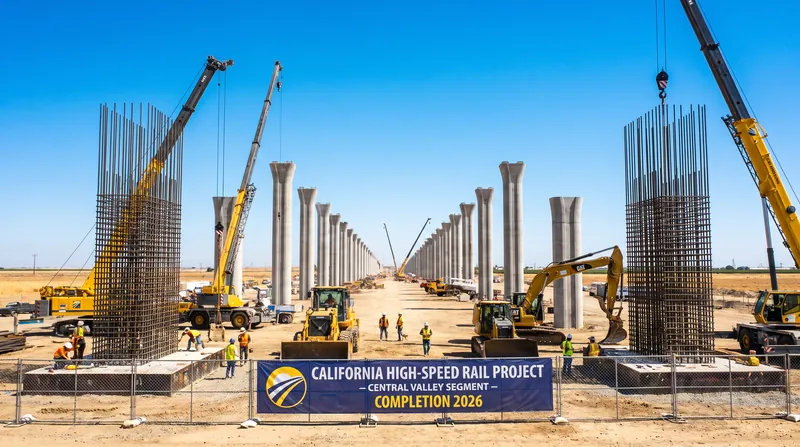
Inspector General Finds California High-Speed Rail Paid $600,000 in Unallowable Consultant Travel Expenses
6 sources
Comments
Every angle. Every day.
Get Transportation stories with full source coverage and perspective breakdowns, free every day.