
STB Pauses Review of Proposed $85 Billion Union Pacific-Norfolk Southern Merger
Federal regulators have halted their review of the largest rail merger in U.S. history, demanding more data on how the combination would affect competition and the supply chain.

The U.S. Surface Transportation Board (STB) has officially hit the brakes on the largest proposed rail merger in American history. On May 28, the independent federal agency accepted the revised merger application from Union Pacific and Norfolk Southern as "technically complete," but immediately placed all proceedings in abeyance.[3]
The pause halts the regulatory review of an $85 billion stock-and-cash transaction that would create the nation's first true transcontinental freight railroad. The STB cited significant gaps in the submitted materials, stating that portions of the revised filing lacked sufficient clarity and detail regarding the merger's broader economic impacts.[3]
The announcement sent immediate ripples through the financial markets. By mid-morning following the decision, Union Pacific's stock had shed approximately 5.2% of its value, while Norfolk Southern tumbled up to 6.5%, marking their largest intraday declines since April 2025.[3]
The regulatory hurdle centers on the STB's stringent requirements for major rail consolidations. Unlike standard corporate mergers reviewed solely by antitrust agencies, U.S. rules require Class I rail mergers to explicitly demonstrate that the deal will serve the public interest and actively enhance competition.
In its decision, the STB ordered the two railroads to submit extensive supplemental information by July 27, 2026. The board is seeking clarification on merged market share projections, downstream merger impacts, the effects on passenger rail, and the supply of train cars.[3]
The environmental review process, a mandatory step for such large-scale infrastructure combinations, has also been put on hold. Consequently, the companies' initial goal of closing the merger by April 2027 is now highly unlikely, with a final STB decision potentially pushed to September 2027.[3]
If ultimately approved, the combined entity would be a logistical colossus. The merger would weave together a network spanning more than 52,000 miles of track across 43 states, directly linking the East Coast to the West Coast without the need to hand off freight to intermediary carriers.[3]
Union Pacific and Norfolk Southern argue the combination is essential for modernizing the U.S. supply chain. The companies project that a unified network will eliminate interchange delays, open new direct routes, reduce transit times on key corridors, and generate $2.9 billion in annualized synergies.[2][3]
The financial structure of the deal values Norfolk Southern at $320 per share, representing a 25% premium over its trading price prior to the merger rumors. The companies estimate the tie-up will create more than $30 billion in value for shareholders while driving a 60% growth in free cash flow within three years.[2]
However, the path to approval is fraught with opposition. A broad coalition of rival carriers, business associations, state attorneys general, and labor groups have mobilized against the transaction, warning of severe anti-competitive consequences.[1]
BNSF Railway, Union Pacific's primary western rival, praised the STB's pause. In a letter to customers, BNSF argued that the merging companies' approach placed an "undue burden on other parties to ascertain and evaluate key aspects of the proposed merger," particularly regarding Union Pacific's ability to manage projected volume growth.
Labor organizations have also voiced strong objections. The Teamsters Rail Conference, which includes the Brotherhood of Locomotive Engineers and Trainmen (BLET), labeled the proposal "extremely flawed," accusing the railroads of overstating the benefits while minimizing the potential harm to the unionized workforce.[1]
Agricultural and manufacturing shippers share these concerns. Attorneys general from states including Iowa, Kansas, Florida, and the Dakotas have joined the opposition, fearing that reduced rail options will drive up freight rates for farmers and ranchers who rely on the network to move their products to market.
The merger application itself acknowledges potential friction points. The filing identifies five customer locations that would see their rail options drop from two carriers to one, and four sites that would drop from three to two, all located in Illinois. Union Pacific has offered affected customers the ability to receive service from another Class I railroad to mitigate these bottlenecks.
Union Pacific has drawn a hard line on the concessions it is willing to make. The railroad has stated it will walk away from the acquisition if regulators order widespread trackage rights or line sales, with the only exception being a potential spin-off of duplicative main lines between Kansas City and St. Louis.
The merger agreement includes a $2.5 billion breakup fee that Union Pacific would owe Norfolk Southern if burdensome regulatory conditions force it to abandon the deal. Union Pacific has indicated it can absorb minor divestitures as long as the total financial impact of STB-imposed conditions remains under a $750 million threshold.
As the July 27 deadline approaches, the freight industry remains in a holding pattern. The STB's eventual ruling will not only decide the fate of the Union Pacific-Norfolk Southern tie-up but will also set a definitive precedent for the future of rail consolidation in North America.[3]
Key points
- The Surface Transportation Board paused its review of the $85 billion Union Pacific-Norfolk Southern merger, citing incomplete data.
- Regulators have given the railroads until July 27, 2026, to submit supplemental information regarding competition and supply chain impacts.
- The merger would create the first U.S. transcontinental freight railroad, spanning 52,000 miles across 43 states.
- A broad coalition of rival carriers, labor unions, and state attorneys general strongly oppose the deal, fearing higher freight costs.
What we don’t know
- Whether Union Pacific and Norfolk Southern can provide sufficient data by July 27 to satisfy the STB's enhanced competition standard.
- How the STB will handle the specific 2-to-1 customer bottlenecks identified in Illinois.
- If the environmental review delay will permanently derail the companies' timeline or just push the closing date into late 2027.
How we got here
Dec 2025
Union Pacific and Norfolk Southern submit their initial merger application to the STB.
Jan 2026
The STB rejects the first application for failing to include required regulatory information.
April 30, 2026
The railroads file a revised application for the $85 billion transaction.
May 28, 2026
The STB accepts the application as technically complete but immediately pauses the review.
July 27, 2026
Deadline for the companies to submit supplemental data on competition and downstream impacts.
- The Merging Railroads
- Argue the merger is a necessary modernization that will eliminate delays and create a seamless transcontinental supply chain.
- Regulatory Watchdogs
- Emphasize that major rail consolidations must actively enhance competition and serve the public interest.
- Labor and Competitors
- Warn that the merger will create an unbalanced monopoly, harm rival carriers, and negatively impact unionized workers.
- Shippers and Agriculture
- Fear that reduced rail options will drive up freight rates for farmers and manufacturers.
Perspectives this story doesn't cover
- Passenger Rail Advocates
- Local Municipalities along the proposed routes
Sources
Source coverage
3 outlets
4 viewpoints surfaced



- [1]Brotherhood of Locomotive Engineers and TrainmenLabor and Competitors
STB pauses review of UP-NS merger proposal — again
Read on Brotherhood of Locomotive Engineers and Trainmen → - [2]Union Pacific & Norfolk SouthernThe Merging Railroads
Transaction Details | Union Pacific & Norfolk Southern
Read on Union Pacific & Norfolk Southern → - [3]QuartzRegulatory Watchdogs
The Surface Transportation Board accepted the revised merger application... halting review of their $85 billion deal
Read on Quartz →
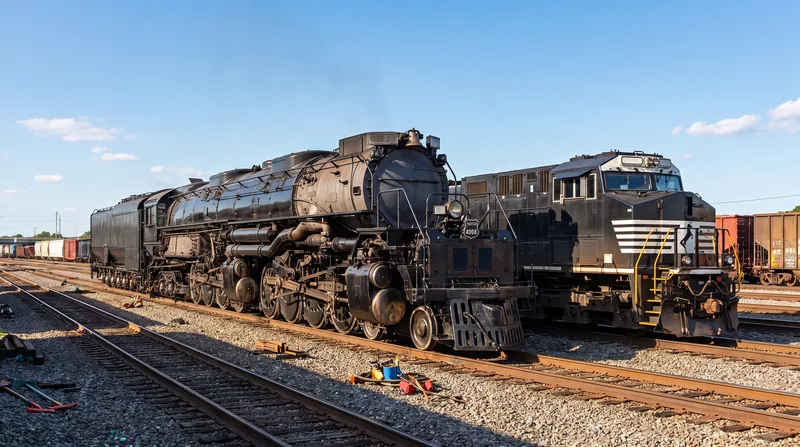
More in Transportation
See all →Freight Infrastructure
Congress Passes Landmark Railway Safety Act Mandating Two-Person Crews and Hotbox Detector Standards
9 sources
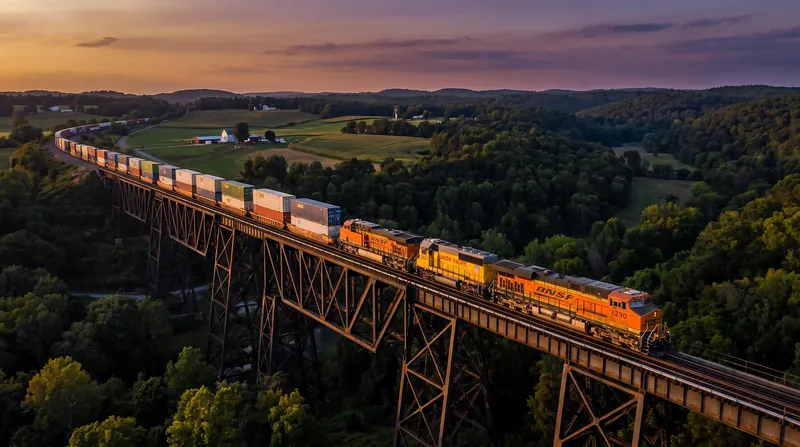
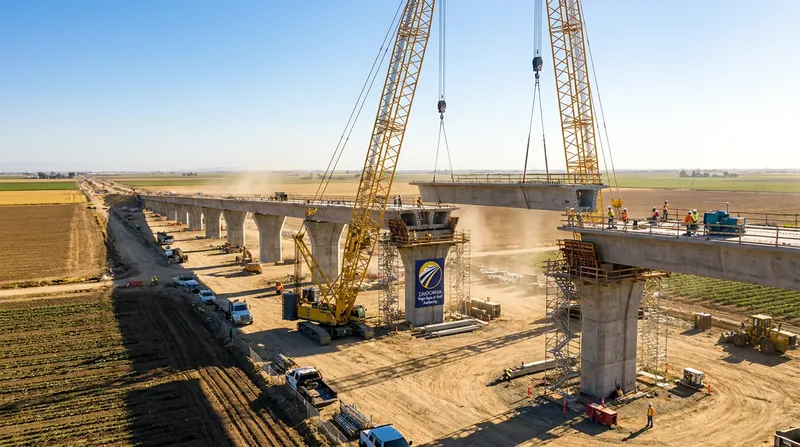
Infrastructure Policy
How a GOP Funding Cut is Forcing California High-Speed Rail to Pivot to Private Investment
7 sources
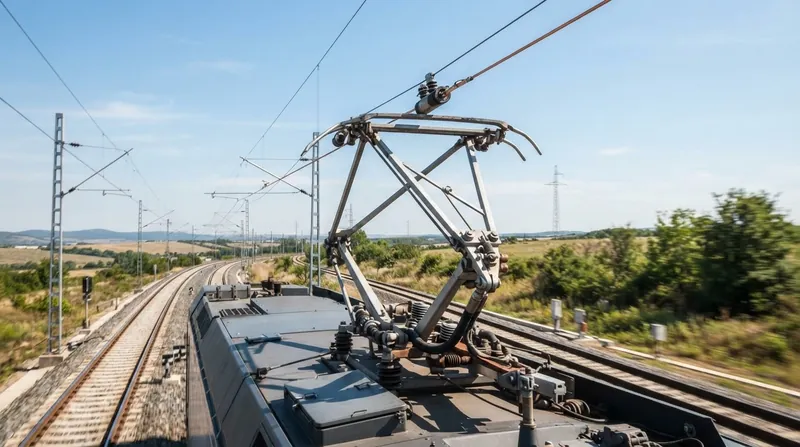
Pantograph Dynamics
Catenary Wave Propagation Speed Caps Electric Train Velocity to Prevent Destructive Arcing
6 sources
Rail Infrastructure
The Power-Loss and Insulation Trade-Off That Determines Rail Electrification Voltage Standards
5 sources
Comments
Every angle. Every day.
Get Transportation stories with full source coverage and perspective breakdowns, free every day.