
Florida Exempts Home Improvement Projects Under $7,500 From Building Permits
A new Florida law aims to cut red tape by eliminating building permit requirements for minor residential renovations, though significant exclusions and local workarounds remain.
By Tao Yang

- Deregulation Advocates
- View the law as a necessary cut to bureaucratic red tape that lowers costs for homeowners.
- Local Municipalities
- Emphasize the narrow scope of the law and the continued need for safety oversight.
- Consumer Protection & Legal Analysts
- Warn about local zoning loopholes and the shift of liability onto homeowners.
Perspectives this story doesn't cover
- Home insurance adjusters evaluating unpermitted repairs
- Unlicensed contractors who may exploit the lack of inspections
Summary
- Florida's HB 803 exempts single-family home projects under $7,500 from building permits.
- The law aims to cut red tape, reduce fees, and speed up minor cosmetic renovations.
- Electrical, plumbing, structural, mechanical, and gas work still require permits regardless of cost.
- Properties located in designated flood hazard areas are entirely excluded from the exemption.
- Homeowners must still submit a written exemption request to their local building department.
- Some cities are bypassing the law by requiring zoning permits for exterior work like fences.
Florida homeowners embarking on minor renovations have a new tool to bypass the state's notoriously slow bureaucracy. As of July 1, 2026, House Bill 803 officially took effect, mandating that local governments exempt single-family home improvement projects valued under $7,500 from traditional building permit requirements.[1][2]
The legislation, signed into law earlier in the year, was designed to eliminate the red tape that often turns weekend DIY projects or minor contractor jobs into months-long administrative headaches. By stripping away the requirement for a formal building permit, the state aims to reduce unnecessary delays, eliminate permit fees, and lower the overall cost of home maintenance.[1][3]
For years, Florida's booming real estate market and stringent hurricane codes have created massive backlogs in local building departments. Contractors frequently cited permit wait times—sometimes stretching up to 60 days for jobs worth only a few thousand dollars—as a primary driver of inflated quotes, as crews were forced to sit idle while paperwork languished in municipal queues.[3][8]
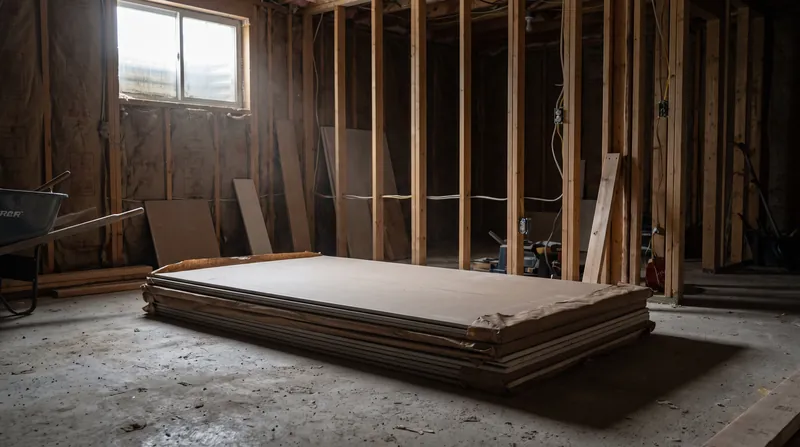
Under the new framework, a wide array of cosmetic and non-structural improvements are now exempt. Homeowners can install new cabinetry, replace flooring, finish drywall, and execute interior painting projects without waiting for a county inspector to sign off on the work, provided the total value remains strictly under the $7,500 threshold.[2][5]
However, the exemption is not an automatic free pass to begin construction. Homeowners or their hired contractors are still required to submit a formal written request for exemption to their local building department before picking up a hammer.[2][4]
This intake process requires applicants to provide documentation demonstrating the exact nature and value of the proposed work. Municipalities typically require a signed contract from a licensed professional or a detailed ledger of material and labor costs to prove the project genuinely falls below the statutory limit.[4][5]
Crucially, the law carves out strict exceptions for work that impacts the safety, habitability, or structural integrity of a home. The exemption explicitly does not apply to five specific trades: electrical, plumbing, mechanical, gas, and structural work.[2][6]
Crucially, the law carves out strict exceptions for work that impacts the safety, habitability, or structural integrity of a home.
If a $6,000 kitchen remodel involves moving a plumbing line or adding a new electrical circuit, the entire project remains subject to standard permitting and inspection requirements. The state's goal is to deregulate cosmetic updates while maintaining rigorous oversight over systems that pose fire, water, or life-safety risks.[2][6]
Another massive caveat buried in the legislation involves Florida's geography. The permit waiver is entirely void for any property located partially or wholly within a designated Special Flood Hazard Area. Given the state's extensive coastline, lakes, and low-lying retention zones, millions of properties are automatically disqualified from the exemption.[1][6]
To prevent contractors from gaming the system, the law includes a strict anti-evasion clause. It is explicitly illegal to divide a larger renovation—such as a $14,000 flooring overhaul—into two separate $7,000 contracts to dodge the permit requirement. Local building officials retain the authority to audit exemption requests for phased project splitting.[2][3]
Beyond the $7,500 threshold, House Bill 803 also delivered a significant victory for homeowners battling restrictive neighborhood rules. The law amends state statutes to prohibit Homeowners' Associations from demanding a government building permit as a prerequisite for reviewing an owner's proposed architectural improvements.[2]
Previously, many HOAs refused to even look at a homeowner's plans until a county permit was secured, creating a catch-22 where the county sometimes wanted HOA approval first. The new law severs that dependency, allowing the HOA architectural review process to proceed independently of the local government timeline.[2][8]
Despite the state's deregulatory push, some legal analysts and industry observers warn that the law is something of a paper tiger due to a glaring municipal loophole. Because the statute only bans building permits for minor work, several cities and counties have simply pivoted to requiring zoning permits or land development permits instead.[7]
This workaround is particularly common for exterior projects like fences. Because a fence dictates land use, setbacks, and property lines, local governments argue it falls under zoning authority rather than building code enforcement. As a result, homeowners may still find themselves paying fees, submitting surveys, and waiting for approvals under a different administrative label.[7]
Furthermore, the removal of the permit process shifts a significant liability burden onto the homeowner. A closed building permit serves as a government record that work was completed to code and passed inspection. Without that paper trail, homeowners bear the sole responsibility for ensuring that exempt work complies with the Florida Building Code.[6][8]
If a contractor performs substandard work under the exemption, the local government has no legal duty to intervene, and the homeowner may face complications when selling the property or filing a future insurance claim. Adjusters evaluating storm damage, for instance, may question the provenance of unpermitted roof repairs or structural modifications.[8]
Ultimately, while House Bill 803 successfully removes a layer of friction for simple interior updates, it requires homeowners to be far more diligent. Navigating the fine print—from flood zone maps to local zoning workarounds—is now a mandatory step in the modern Florida DIY project.[8]
Significance
For Florida homeowners, the new law promises to save hundreds of dollars in fees and weeks of waiting for minor projects like flooring and cabinetry. However, understanding the fine print is crucial to avoid accidental code violations or unexpected zoning fees.
Sources
Source coverage
8 outlets
3 viewpoints surfaced








- [1]Insurance JournalDeregulation Advocates
Florida Governor Signs Bill Dropping Building Permit Requirements for Work Valued at $7,500 or Less
Read on Insurance Journal → - [2]Adams and ReeseDeregulation Advocates
Florida HB 803: Beyond the $7,500 Exception
Read on Adams and Reese → - [3]GovWellLocal Municipalities
Florida HB 803 creates mandatory permit review deadlines, expands private provider authority, and exempts residential work under $7,500
Read on GovWell → - [4]Santa Rosa CountyLocal Municipalities
Residential Permit Exemption for Certain Work Under $7,500
Read on Santa Rosa County → - [5]Village of Palmetto BayLocal Municipalities
Changes to the permit process take place on July 1, 2026
Read on Village of Palmetto Bay → - [6]Wyman Legal SolutionsConsumer Protection & Legal Analysts
Florida's New $7,500 Permit Exemption
Read on Wyman Legal Solutions → - [7]Gifford Fence OrlandoConsumer Protection & Legal Analysts
The Myth of Florida's $7,500 Permit Exemption
Read on Gifford Fence Orlando → - [8]Factlen Editorial TeamConsumer Protection & Legal Analysts
Synthesis by Factlen editorial team
Read on Factlen Editorial Team →
Comments
More in Home
See all →Color Science
The 10-Degree Shift: How the Munsell Color System Predicts a Paint's Appearance Under Different Light Sources
7 sources

5S Framework
The Sort, Set in Order, Shine, Standardize, Sustain Sequence: How the 5S Methodology Actually Organizes a Home
4 sources

Circadian Lighting
The 460-480 Nanometer Peak: How Blue Light Wavelengths Actually Suppress Melatonin and Govern Circadian Rhythm
9 sources

HVAC Efficiency
The 1,705-Hour Cooling Season: How the SEER2 Rating Predicts Your Air Conditioner's Annual Kilowatt-Hour Consumption
5 sources
Every angle. Every day.
Get Home stories with full source coverage and perspective breakdowns delivered to your inbox.