
Federal Reserve Raises Benchmark Rate to 4.0 Percent, Altering Commercial Real Estate Financing
The Federal Reserve has increased its benchmark interest rate to a range of 3.75 to 4.0 percent, marking the first hike since 2023. The move immediately shifts borrowing costs and refinancing strategies for commercial real estate developers and prospective homebuyers.
By Dev Anand

How this story has developed
This report is part of a developing story — read the earlier chapters below.
- Federal Reserve Holds Rates Steady at 3.5% to 3.75% as Three Policymakers Dissent
- Federal Reserve Raises Benchmark Rate to 4.0 Percent, Altering Commercial Real Estate Financing (this article)
- Commercial Developers
- Focuses on how higher rates compress profit margins and complicate refinancing for existing real estate projects.
- Central Bankers
- Maintains that rate hikes are a necessary tool to combat persistent inflation and fulfill the mandate of price stability.
- Residential Market Analysts
- Analyzes the downstream effects on 30-year fixed mortgage rates and the purchasing power of everyday homebuyers.
- Political Observers
- Highlights the tension between the central bank's independence and political demands during an election year.
Perspectives this story doesn't cover
- First-time homebuyers priced out of the market
- Regional bank executives managing commercial loan portfolios
The cost of a commercial mortgage is not decided at the closing table, but inside the boardroom of the Federal Open Market Committee, where the baseline cost of capital for the entire U.S. economy is set. On Wednesday, that committee voted to raise the federal funds rate by 25 basis points to a target range of 3.75 to 4.0 percent, marking the first rate increase since 2023. For a local developer underwriting a new apartment complex or a family finalizing a home purchase, this single administrative step immediately alters the math on their monthly payments and long-term equity.[3][4]
The decision arrives after months of sticky inflation data, culminating in August's 0.3 percent rise in the core Consumer Price Index. In its official release, the Federal Reserve Board stated that "economic activity has continued to expand at a solid pace," while noting that inflation remains a primary concern. The move defies recent political pressure from former President Donald Trump, who had publicly demanded the central bank hold or lower rates ahead of the November elections.[3][6]
In the commercial real estate sector, the hike carries immediate, tangible consequences for financing. Property owners holding floating-rate debt or facing imminent loan maturities must now navigate a higher cost of capital. The 10-year Treasury yield, a critical benchmark for commercial mortgages, had already neared 5 percent in anticipation of the Fed's move. This upward pressure on yields directly compresses the spread between borrowing costs and capitalization rates, forcing investors to inject more equity into deals to maintain cash flow.[1][5]
For residential real estate professionals and prospective buyers, the hike translates into a shifting landscape for mortgage rates. While the federal funds rate does not directly dictate 30-year fixed mortgage rates, it heavily influences the broader bond market that does. Buyers who were waiting on the sidelines for rates to drop must now recalibrate their purchasing power against a 4.0 percent benchmark environment, which will likely keep retail borrowing costs elevated through the winter.[2][4]
For residential real estate professionals and prospective buyers, the hike translates into a shifting landscape for mortgage rates.
What this means for an actual property owner depends entirely on their current capital stack. A landlord with a fixed-rate loan locked in during 2024 remains insulated from Wednesday's decision, effectively enjoying a discount on their debt relative to current market conditions. Conversely, a syndicator looking to refinance a value-add multifamily property acquired with short-term, variable-rate bridge debt will face significantly higher monthly service payments, potentially requiring capital calls from investors to bridge the gap.[1][2]
The broader market reaction suggests that lenders had already priced in much of this increase. Commercial Property Executive notes that the real challenge lies not in the initial shock of the hike, but in the duration for which rates remain elevated. If the Fed signals that 4.0 percent is a new plateau rather than a brief peak, real estate valuations will undergo a structural adjustment, prioritizing properties with strong, immediate cash flow over speculative appreciation.[1][5]
Different asset classes within commercial real estate will absorb this 4.0 percent benchmark unevenly. Industrial and multifamily properties, which typically benefit from shorter lease terms that allow landlords to adjust rents to match inflation, are better positioned to weather the increased borrowing costs. In contrast, the office sector, already grappling with elevated vacancy rates and shifting tenant demands, faces a steeper climb. Refinancing an underperforming office tower in a 4.0 percent rate environment will likely require significant debt restructuring or asset sales.[1][5]
The next verifiable checkpoint for the housing and commercial markets will be the release of the Fed's updated Summary of Economic Projections in December. Until then, the 4.0 percent benchmark stands as the new reality for underwriting. Developers and buyers must now stress-test their models against this higher baseline, ensuring that their projects remain viable even if the cost of capital stays elevated through 2027.[2][3]
Key points
- The Federal Reserve raised its benchmark interest rate by 25 basis points to a target range of 3.75 to 4.0 percent.
- This marks the first rate increase since 2023, driven by persistent inflation and a 0.3 percent rise in August's core CPI.
- Commercial real estate developers face immediate pressure as borrowing costs rise and refinancing requires more equity.
- The decision defies political pressure from former President Donald Trump to hold or lower rates.
- Residential buyers must recalibrate their purchasing power as the broader bond market adjusts to the new baseline.
Why this matters
For commercial developers facing maturing loans and homebuyers calculating monthly payments, the cost of capital just reset. Understanding this new baseline allows property owners to accurately underwrite future projects and negotiate refinancing terms before the market fully absorbs the hike.
Sources
Source coverage
6 outlets
4 viewpoints surfaced






- [1]GlobestCommercial Developers
Fed Rate Hike Has Serious Long-Term Implications for CRE
Read on Globest → - [2]Housing WireResidential Market Analysts
What real estate professionals should know about the Fed rate hike
Read on Housing Wire → - [3]Federal Reserve BoardCentral Bankers
Federal Reserve issues FOMC statement
Read on Federal Reserve Board → - [4]Stock TitanPolitical Observers
Fed Rate Hike September 16, 2026: 3.75%-4.00%, Why Now
Read on Stock Titan → - [5]LakeRock CapitalResidential Market Analysts
CRE Rate Signal: 10-Year Nears 5% Ahead of Fed
Read on LakeRock Capital → - [6]BNN BloombergPolitical Observers
U.S. Federal Reserve is expected to raise its benchmark rate, defying Trump's demands
Read on BNN Bloomberg →
Comments

More in Real Estate
See all →Property Tenure
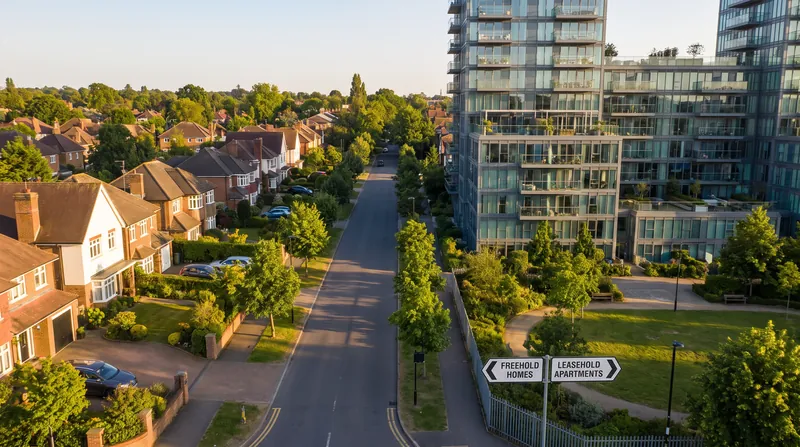
How Freehold and Leasehold Estates Differ in Property Rights and Duration
7 sources
Property Law
The Three Tests That Define a Fixture and Determine Whether an Item Conveys With the Real Estate
6 sources

Commercial Lending
TPG RE Finance Trust Prices $1.0 Billion Commercial Real Estate CLO, Unlocking Capital for Developers
5 sources
State-Led Housing
China Commits to State-Led Housing Model, Using Central Bank Funds to Buy Millions of Unsold Homes
3 sources

Every angle. Every day.
Get Real Estate stories with full source coverage and perspective breakdowns delivered to your inbox.