
Fact Check: The Evidence Behind the Universal Free School Meals Boom
As more states adopt permanent universal school lunch programs in 2026, a review of the data reveals measurable improvements in household savings and student behavior, though direct academic gains are more nuanced.
By Factlen Editorial Team
- Child Welfare Advocates
- Argue that food is a fundamental prerequisite for learning and that universal access removes harmful socioeconomic stigma.
- Educators & Administrators
- Focus on the immediate classroom benefits, noting that fed students are calmer, more focused, and easier to teach.
- Fiscal Analysts
- Support targeted welfare but question the fiscal efficiency of subsidizing meals for wealthy families, warning of long-term state budget strain.
What's not represented
- · Private food service contractors
- · Agricultural suppliers
Why this matters
For parents, this policy represents an average savings of $1,200 per year per child, freeing up household budgets for other necessities. For taxpayers and voters, understanding the actual return on investment is crucial as more legislatures debate funding these multi-million dollar programs.
Key points
- Fourteen states now offer permanent universal free school meals following the expiration of pandemic-era federal waivers.
- Data shows a modest but statistically significant improvement in math scores, equating to about three weeks of extra learning.
- Schools report an 11% drop in suspensions and a 15% drop in afternoon office referrals.
- Families save an average of $1,200 per child annually, often redirecting funds to other child-centric needs.
- Universal access effectively eliminates the socioeconomic stigma previously associated with the 'free lunch' line.
- Long-term fiscal sustainability remains a challenge as food and labor costs rise.
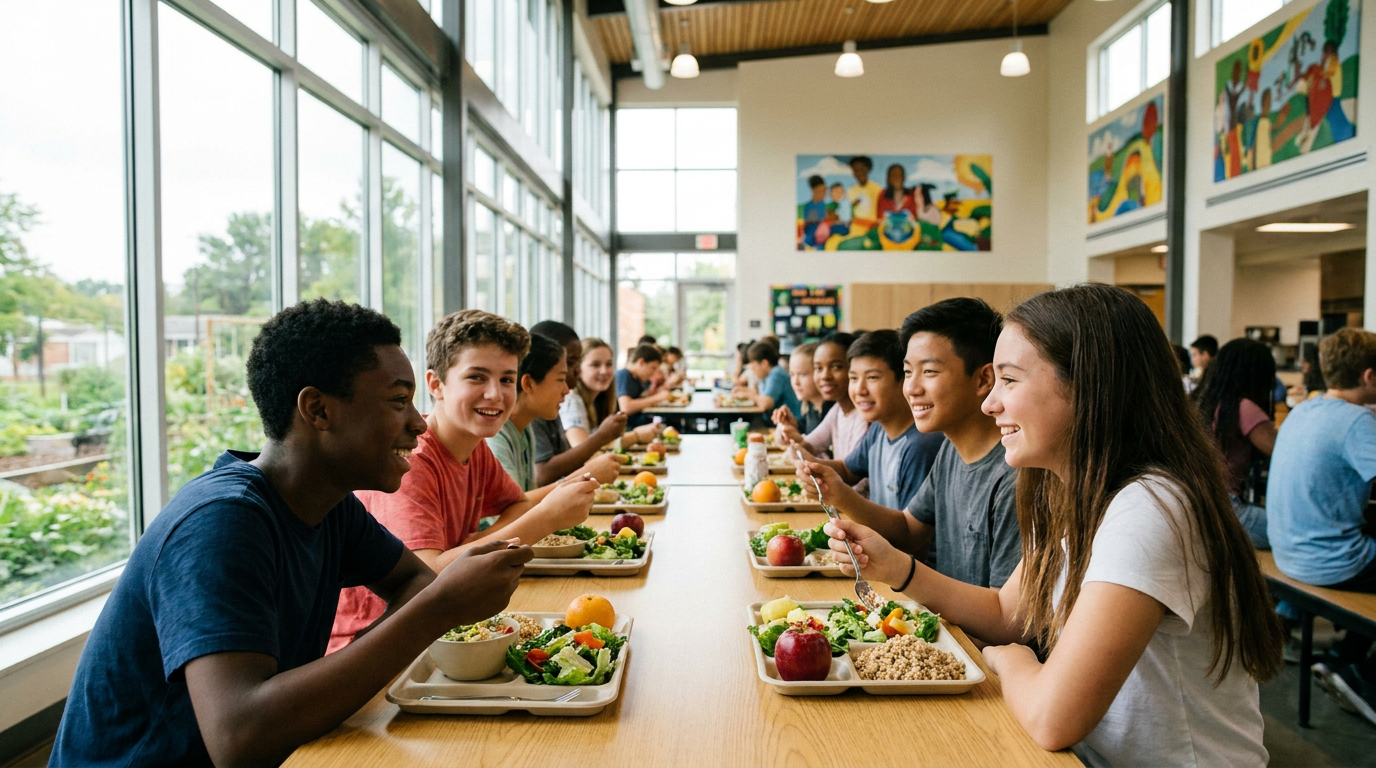
By the middle of 2026, the landscape of the American school cafeteria has fundamentally shifted. Following the expiration of pandemic-era federal waivers that temporarily fed all students, a growing coalition of states—now numbering fourteen—has passed legislation to permanently fund universal free school meals for all children, regardless of household income.[8]
Proponents of these sweeping policy changes have made bold claims to voters and legislatures: that feeding every child will dramatically boost test scores, eliminate classroom behavioral issues, and provide significant financial relief to working families.[1]
But as the first comprehensive data from early-adopter states like California, Maine, and Colorado begins to materialize, policymakers and parents alike are asking for a rigorous accounting of the results. This evidence pack evaluates the core claims surrounding universal school meals, separating politically popular rhetoric from peer-reviewed data.[1]

Claim 1: Universal meals significantly improve academic performance. The evidence here is positive, but highly specific. A comprehensive 2026 working paper from the National Bureau of Economic Research analyzed standardized test scores across three states that implemented universal meals in 2023.[2]
Researchers found that while reading scores remained relatively flat, math scores saw a statistically significant bump, particularly among students who were previously on the borderline of eligibility for free meals. The mechanism, cognitive scientists suggest, is straightforward: mathematical problem-solving is highly sensitive to working memory, which is demonstrably impaired by short-term caloric deficits.[2]
However, the NBER data cautions against viewing school lunch as a silver bullet for pandemic-era learning loss. The academic gains, while measurable, equate to roughly three weeks of additional learning over a school year—a solid return on investment, but not a transformative overhaul of educational outcomes.[2][6]
Claim 2: Free meals reduce behavioral and disciplinary issues. Here, the evidence is robust and overwhelmingly supported by both quantitative data and qualitative educator reports.[1]
The Brookings Institution recently aggregated disciplinary records from over 4,000 public schools transitioning to universal meals. Their analysis revealed an 11% average reduction in out-of-school suspensions and a 15% drop in office referrals for insubordination during the afternoon hours.[6]

The Brookings Institution recently aggregated disciplinary records from over 4,000 public schools transitioning to universal meals.
This statistical drop aligns perfectly with the lived experience of educators. According to a nationwide survey conducted by Education Week, 78% of middle school teachers in universal-meal states reported a "noticeable decrease" in afternoon classroom disruptions. Teachers frequently cite the elimination of the "hangry" effect—the irritability and lack of focus that spikes in adolescents who skip lunch due to stigma or lack of funds.[5]
Claim 3: The policy provides meaningful economic relief to families. The financial impact on households is perhaps the most easily quantifiable metric, and the data strongly supports the proponents' claims.[1]
A recent study published in the Journal of Public Economics tracked the grocery purchasing habits of families before and after the implementation of state-funded meal programs. The researchers found that families with two school-aged children saved an average of $2,400 annually on grocery bills.[4]
Crucially, the study noted that these savings were not simply absorbed into general household spending. Lower- and middle-income families disproportionately redirected these funds toward other child-centric expenses, including extracurricular activities, tutoring, and pediatric healthcare co-pays.[4]

Furthermore, the USDA's latest participation data shows a massive 3.2 million student increase in daily school lunch consumption compared to the pre-pandemic 2019 baseline. This suggests that prior targeted programs were missing millions of families who either fell just outside the income eligibility threshold or avoided the program due to administrative burdens.[3]
Claim 4: Universal programs eliminate cafeteria stigma. For decades, the bifurcated system of "free lunch" versus "paid lunch" created a visible socioeconomic divide in American cafeterias.[1]
The American Academy of Pediatrics has long argued that this visible sorting mechanism contributes to social anxiety and bullying among low-income students. Their latest policy review indicates that universal programs effectively dismantle this hierarchy. When every student, from the wealthiest to the poorest, stands in the same line and eats the same meal, the stigma evaporates entirely.[7]
State-level implementation reports corroborate this cultural shift. Colorado's "Healthy School Meals for All" year-two impact report highlighted a 40% increase in lunch participation among students who previously qualified for free meals but chose not to eat—a clear indicator that stigma had previously been a barrier to access.[8]

The Uncertainty: Long-term fiscal sustainability. While the social and educational benefits are becoming clear, the primary area of uncertainty remains the long-term cost to state taxpayers.[1]
The Brookings analysis notes that food inflation and rising labor costs for cafeteria workers have pushed the price per meal higher than initial 2023 legislative estimates. Several states are currently debating how to sustainably fund these programs without dipping into general education budgets or raising property taxes.[6]
Ultimately, the 2026 data paints a picture of a policy that delivers heavily on its promises of behavioral improvement, stigma reduction, and household economic relief. While it may not single-handedly solve the nation's academic challenges, the evidence suggests that universal school meals represent one of the most effective, direct-to-citizen policy interventions of the decade.[1][6]
How we got here
March 2020
The USDA issues pandemic waivers allowing all public schools to serve free meals to all students.
June 2022
Federal pandemic waivers expire, returning most states to the traditional income-based eligibility system.
2023-2025
A wave of early-adopter states, including California, Maine, and Colorado, pass legislation to permanently fund universal meals at the state level.
Mid-2026
Comprehensive data from the first full years of state-level implementation is published, allowing for rigorous policy evaluation.
Viewpoints in depth
Child Welfare Advocates' View
Argue that food is a fundamental prerequisite for learning and that universal access removes harmful stigma.
Organizations like the American Academy of Pediatrics view universal school meals not just as an educational tool, but as a critical public health intervention. They argue that the traditional tiered system—where some kids pay and others receive free meals—creates a visible socioeconomic hierarchy that breeds bullying and social anxiety. By making meals universal, advocates argue that schools remove the stigma that previously caused many eligible low-income students to skip lunch entirely. Furthermore, they point to the data showing that consistent caloric intake is a non-negotiable prerequisite for cognitive development and emotional regulation.
Educators' View
Focus on the immediate classroom benefits, noting that fed students are calmer, more focused, and easier to teach.
For teachers and school administrators, the debate is less about macroeconomic theory and more about daily classroom management. Educator surveys consistently show overwhelming support for universal meals because of the immediate reduction in afternoon behavioral issues. Teachers report that eliminating the 'hangry' effect allows them to spend more time on instruction and less time de-escalating conflicts or managing irritable students. Administrators also note that universal programs drastically reduce the administrative burden on school staff, who no longer have to chase down unpaid lunch debt from struggling families.
Fiscal Analysts' View
Support targeted welfare but question the fiscal efficiency of subsidizing meals for wealthy families.
Fiscal conservatives and budget analysts generally support feeding low-income children but question the cost-benefit ratio of universal programs. They argue that using taxpayer dollars to subsidize the lunches of upper-middle-class and wealthy families is an inefficient use of state funds. As food inflation and labor costs continue to rise, these analysts warn that the ballooning budgets for universal meal programs could eventually force states to divert money away from core educational needs, such as teacher salaries or facility maintenance, unless dedicated and sustainable tax revenues are secured.
What we don't know
- Whether the modest academic gains seen in early-adopter states will compound over a student's entire K-12 career.
- How states will manage the rising costs of food and cafeteria labor without cutting into general education budgets.
- If the increase in school lunch participation will have a measurable long-term impact on childhood obesity rates.
Key terms
- Universal Free School Meals
- A policy where every student in a public school is offered breakfast and lunch at no cost, regardless of their family's household income.
- Working Memory
- The cognitive system responsible for temporarily holding and processing information, which is highly sensitive to short-term hunger and crucial for math problem-solving.
- Hangry Effect
- A colloquial term used by educators to describe the spike in irritability, distraction, and behavioral issues in students who have not eaten lunch.
Frequently asked
Do universal meals improve test scores?
Yes, but the gains are modest and mostly concentrated in math. Researchers equate the improvement to roughly three weeks of additional learning over a school year.
How much money do families actually save?
Studies show that families save an average of $1,200 per child annually on grocery bills when school meals are provided for free.
Does this mean wealthy families get free food?
Yes. Universal programs provide meals to all students regardless of income, which advocates argue is necessary to completely eliminate the stigma associated with the 'free lunch' line.
How are states paying for this?
Funding mechanisms vary by state. Some, like Colorado, capped income tax deductions for high earners to fund the program, while others use general education funds.
Sources
Source coverage
8 outlets
3 viewpoints surfaced







[1]Factlen Editorial Team
Synthesis by Factlen editorial team
Read on Factlen Editorial Team →[2]National Bureau of Economic ResearchChild Welfare Advocates
The Impact of Universal Free Meals on Academic Achievement: Evidence from State Rollouts
Read on National Bureau of Economic Research →[3]USDA Food and Nutrition ServiceEducators & Administrators
National School Lunch Program: 2025-2026 Participation Data
Read on USDA Food and Nutrition Service →[4]Journal of Public EconomicsFiscal Analysts
Household Grocery Expenditure Responses to Universal School Meals
Read on Journal of Public Economics →[5]Education WeekEducators & Administrators
Teachers Report Calmer Classrooms as Universal Meals Expand
Read on Education Week →[6]The Brookings InstitutionFiscal Analysts
Evaluating the Cost-Benefit Ratio of State-Funded School Nutrition
Read on The Brookings Institution →[7]American Academy of PediatricsChild Welfare Advocates
Nutritional and Psychological Benefits of Stigma-Free School Lunch Environments
Read on American Academy of Pediatrics →[8]Colorado Department of EducationEducators & Administrators
Healthy School Meals for All: Year Two Impact Report
Read on Colorado Department of Education →

More in news politics
See all 5 stories →Islamabad Memorandum
US and Iran Sign 'Islamabad Memorandum' to End 110-Day War, Triggering Lebanon Ceasefire
7 sources

Reproductive Rights
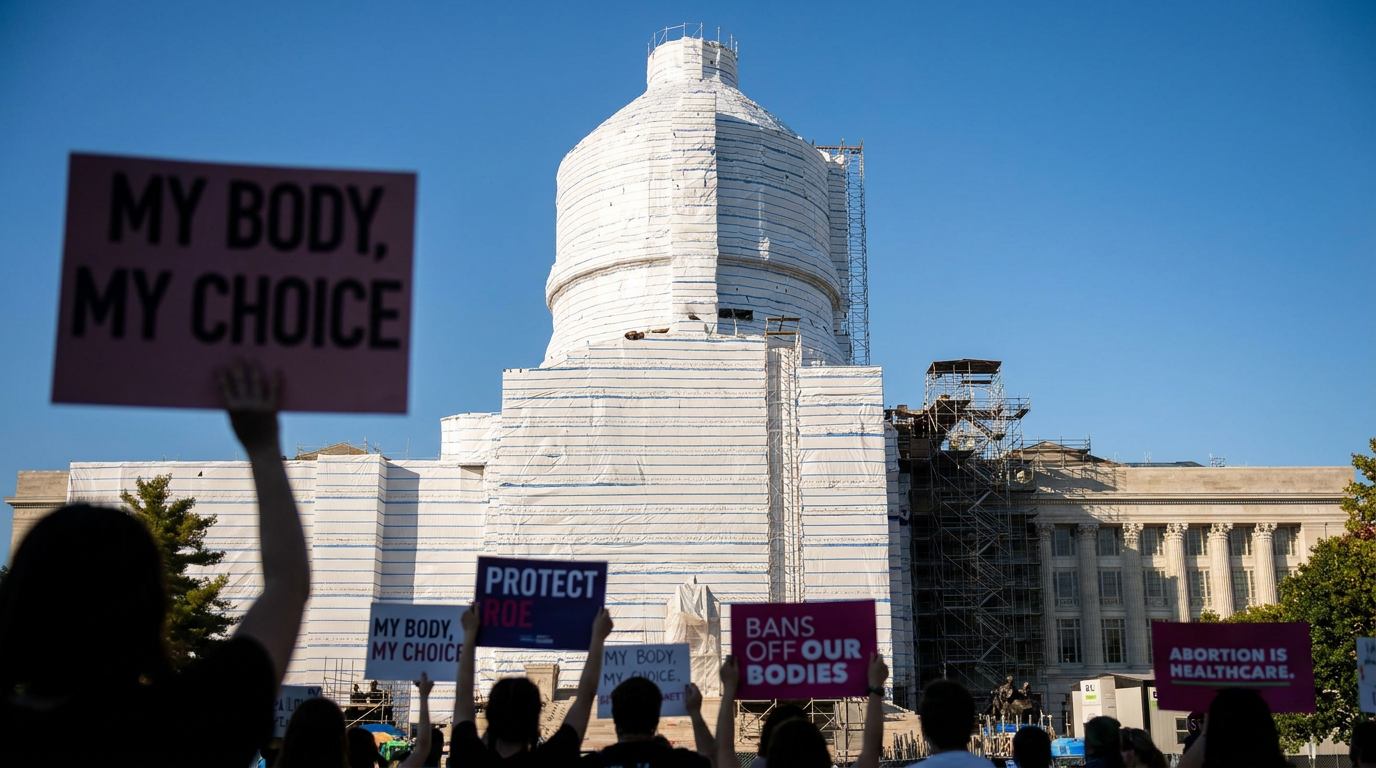
Missouri Court Strikes Down Abortion Restrictions, Restoring Medication Access
8 sources
US-Iran Deal
US and Iran Sign Historic Memorandum to End War; Israel and Hezbollah Agree to Ceasefire
8 sources

Every angle. Every day.
Get news politics stories with full source coverage and perspective breakdowns delivered to your inbox.