
FAA Forecasts Nearly 4,300 Commercial Space Launches Over the Next Decade
Driven by mega-constellations and lunar outposts, the FAA projects commercial space operations will more than double, transforming orbital logistics into a routine transportation sector.

Share this story
For decades, the launch of a rocket was a rare, highly choreographed national event that commanded global attention and paused normal operations for miles around. Today, the era of the occasional, headline-grabbing rocket launch is quietly giving way to the era of routine space logistics. According to a newly released ten-year forecast by the Federal Aviation Administration (FAA), the United States is on the precipice of an unprecedented orbital boom.
Under its high-case scenario, the agency projects nearly 4,300 licensed commercial space operations—encompassing both launches and reentries—between 2026 and 2036. This staggering volume represents a fundamental shift in how humanity accesses and utilizes the environment just beyond our atmosphere, transitioning spaceflight from a bespoke engineering marvel into a reliable, high-cadence transportation sector.[1][2]
To put that figure into perspective, the FAA authorized a total of 982 launches and reentries between 1989 and 2025. Now, the agency expects to authorize more than four times that amount in a single decade.
Annual operations are forecast to climb steadily from roughly 200 today to more than 500 per year by the mid-2030s. This is not merely an incremental increase; it is an exponential curve driven by the maturation of reusable rocket technology and the influx of private capital. As the cost per kilogram to orbit continues to plummet, the barrier to entry for commercial enterprises is evaporating, opening the floodgates for a wide array of new orbital business models.[1][2]
The primary engine behind this exponential growth is the deployment and maintenance of 'mega-constellations' in low Earth orbit (LEO). Networks like SpaceX's Starlink and Amazon's Project Kuiper require thousands of individual satellites to provide seamless global broadband coverage.
Because these LEO satellites operate in a high-drag environment and have relatively short operational lifespans—often designed to safely burn up in the atmosphere after five to seven years—they demand a continuous, relentless cycle of replenishment launches just to maintain the network's baseline functionality. This constant need for fresh hardware ensures a steady, predictable baseline of demand for launch providers.[1][2]
But the FAA's forecast extends far beyond the deployment of internet satellites. The agency points to a burgeoning cislunar economy—operations occurring in the vast expanse between the Earth and the Moon—as a major secondary driver of future traffic.
Anticipated missions include the delivery of heavy cargo and crew to permanent lunar outposts, as well as the nascent field of In-orbit Servicing, Assembly, and Manufacturing (ISAM). ISAM technologies will eventually allow companies to repair aging satellites, refuel spacecraft, and construct massive structures directly in orbit, fundamentally altering how space architecture is designed by removing the constraints of launching fully assembled payloads from Earth.[1][3]
Currently, SpaceX dominates the commercial launch market, accounting for roughly 83 percent of all FAA-licensed operations in recent years thanks to its workhorse Falcon 9 fleet and the rapid iteration of its Starship program. However, the forecast explicitly accounts for a rapidly diversifying field of operators.
Companies like Rocket Lab, Blue Origin, and United Launch Alliance are aggressively ramping up their own launch cadences. Blue Origin's introduction of its heavy-lift New Glenn rocket and Rocket Lab's steady stream of Electron launches signal a maturing, competitive market where multiple providers can offer reliable, routine access to orbit for a variety of payload classes.[1][2]
This unprecedented surge in vertical traffic presents a profound logistical challenge for horizontal traffic: the commercial aviation industry. Historically, a single rocket launch from Florida's Space Coast required the FAA to close vast swaths of airspace for hours to ensure public safety from potential debris.
Prior to recent regulatory reforms, a typical launch would force up to 36 commercial flights to reroute around the hazard zones, delaying up to 4,300 passengers and adding 1,500 extra miles of flight time per event. As the launch cadence accelerated, these disruptions threatened to create unsustainable gridlock in the skies over the southeastern United States.
Recognizing that the U.S. cannot accommodate 500 launches a year if it means grounding commercial flights every time a rocket ignites, the FAA has completely overhauled its Temporary Flight Restriction (TFR) protocols. By utilizing advanced telemetry, highly accurate trajectory modeling, and real-time risk analysis, the agency determined that over 80 percent of Florida launches head east and south over the Atlantic Ocean. This data-driven approach allowed regulators to safely keep the busy northern airspace corridors open during most missions, drastically shrinking the size and duration of the required hazard zones.
The results of this airspace redesign have been immediate, dramatic, and highly successful. For most typical launches today, the FAA reports zero rerouted flights, zero passenger delays, and zero extra miles flown by commercial airlines. Flights traveling from the Northeast down to central Florida hubs like Orlando and Tampa can now remain on their most optimal and efficient routes.
This seamless, invisible integration of space and atmospheric traffic is a critical prerequisite for the high-cadence future outlined in the 2026 forecast. It proves that the aerospace industry can scale its orbital ambitions without paralyzing the existing transportation infrastructure that millions of people rely on every day.
While the airspace problem is largely solved, the physical infrastructure on the ground is beginning to feel the strain of this rapid expansion. The United States currently relies on a handful of primary spaceports, including Cape Canaveral in Florida, Vandenberg Space Force Base in California, and the Wallops Flight Facility in Virginia.
To prevent these facilities from becoming the ultimate bottleneck, NASA and commercial partners are actively expanding infrastructure at sites like Wallops to accommodate medium- and large-class orbital vehicles. Upgraded launch pads, expanded liquid fueling facilities, and modernized integration hangars are essential to keeping the launch pipeline flowing.[4]
Internationally, the U.S. launch boom is spurring a global spaceport race. Countries including the United Kingdom, Japan, Australia, Sweden, and Brazil are aggressively upgrading existing facilities or developing entirely new launch sites to capture a slice of the lucrative commercial market. As launch vehicles become more standardized and horizontal launch systems—which take off from traditional runways rather than vertical pads—continue to mature, the barrier to entry for hosting space operations is steadily lowering, promising a truly globalized launch network in the coming decades.
While dramatic rocket launches naturally dominate the headlines, the FAA forecast also highlights a critical and often overlooked uptick in reentries. Historically limited to a handful of cargo capsules returning from the International Space Station, atmospheric reentries are rapidly becoming routine operations.
This growth is driven by the recovery of reusable rocket stages, an increasing cadence of commercial crew missions, and the steady expansion of suborbital space tourism. Managing the complex logistics of spacecraft descending at hypersonic speeds through commercial airspace requires the same level of precision and coordination as the launches themselves.[1]
Forecasting this highly dynamic market is notoriously difficult, and the FAA acknowledges the inherent uncertainty in projecting a decade into the future. In the 1990s and 2000s, industry projections often wildly overestimated demand, predicting commercial space booms that never materialized due to high costs and technological stagnation. Today, the problem is often the exact reverse: the rapid iteration of reusable rockets and the sheer volume of mega-constellation deployments have occasionally caused actual launch numbers to completely outpace the FAA's high-case estimates, forcing regulators to constantly update their models.[3]
To account for this inherent volatility, the FAA's 2026 forecast includes a low-case scenario, which projects a more modest 2,687 operations over the next decade. This lower bound reflects potential macroeconomic headwinds, such as delays in ambitious Mars settlement efforts, shifts in national defense priorities, or temporary pauses in commercial human spaceflight programs following anomalies. However, even this conservative low-case scenario represents a massive, historic increase over the previous decade's activity, underscoring the fundamental strength and momentum of the commercial space sector.[1]
Regardless of whether the industry ultimately hits the high or low projection, the trajectory is clear, and the regulatory burden on the FAA's Office of Commercial Space Transportation (AST) is scaling rapidly. To handle the unprecedented volume, the agency is transitioning to a streamlined Part 450 licensing regime. This modernized framework is designed to give operators the flexibility to launch various vehicle configurations from multiple sites under a single, comprehensive license, rather than requiring bespoke, time-consuming approvals for every individual mission.[1][3]
To handle the unprecedented volume, the agency is transitioning to a streamlined Part 450 licensing regime.
Ultimately, the FAA's 4,300-operation forecast is much more than just a statistical projection; it is a concrete blueprint for a trillion-dollar space economy. By treating spaceflight not as a series of isolated, exceptional events, but as a continuous, integrated transportation network, regulators and industry leaders are laying the groundwork for a new era of human achievement.
Key points
- The FAA projects nearly 4,300 commercial space launches and reentries between 2026 and 2036 under its high-case scenario.
- Annual operations are expected to more than double, rising from roughly 200 today to over 500 by the mid-2030s.
- The boom is primarily driven by the deployment and replenishment of low Earth orbit satellite mega-constellations.
- The FAA has successfully redesigned airspace restrictions, allowing high-cadence launches to occur without delaying commercial airline flights.
What we don’t know
- Whether emerging launch providers can successfully scale their operations to capture market share from SpaceX.
- How quickly the market for In-orbit Servicing, Assembly, and Manufacturing (ISAM) will mature into a profitable commercial sector.
- The exact timeline for the development of permanent lunar outposts, which could significantly alter the demand for heavy-lift cislunar launches.
How we got here
1989–2020
Commercial spaceflight remains a niche industry, with the FAA licensing a slow but steady stream of operations.
2021–2025
Launch cadence accelerates dramatically, driven by reusable rockets and the initial deployment of low Earth orbit satellite constellations.
April 2023
The FAA implements redesigned airspace restrictions around Florida, drastically reducing the impact of rocket launches on commercial aviation.
July 2026
The FAA releases its 10-year forecast, projecting up to 4,300 commercial space operations by 2036.
- Commercial Launch Providers
- Operators view high-cadence launch capability as the fundamental bottleneck for the new space economy.
- Aviation Regulators
- The FAA prioritizes the safe integration of spaceflight into the existing, highly congested National Airspace System.
- Spaceport Authorities
- Local and national spaceports are racing to build the physical infrastructure required to host the orbital boom.
- Industry Forecasters
- Analysts focus on the difficulty of predicting demand in a volatile market where technological leaps routinely outpace historical models.
Perspectives this story doesn't cover
- Environmental groups monitoring upper-atmosphere emissions
- Astronomers affected by LEO satellite light pollution
Sources
Source coverage
4 outlets
4 viewpoints surfaced




- [1]Federal Aviation AdministrationAviation Regulators
FAA Aerospace Forecast Fiscal Years 2026–2046
Read on Federal Aviation Administration → - [2]Leonard David's Inside Outer SpaceCommercial Launch Providers
The Decade Ahead: FAA Forecast of Commercial Space Operations
Read on Leonard David's Inside Outer Space → - [3]New Space EconomyIndustry Forecasters
Forecasting Commercial Space Launches: Why It's Hard and Getting Harder
Read on New Space Economy → - [4]NASASpaceport Authorities
Environmental Assessment for the Expansion of the Wallops Flight Facility Launch Range

More in Transportation
See all →Orbital Mechanics
Eastward Launch Trajectories Exploit Earth's Equatorial Rotational Speed to Save 460 m/s of Delta-V
5 sources
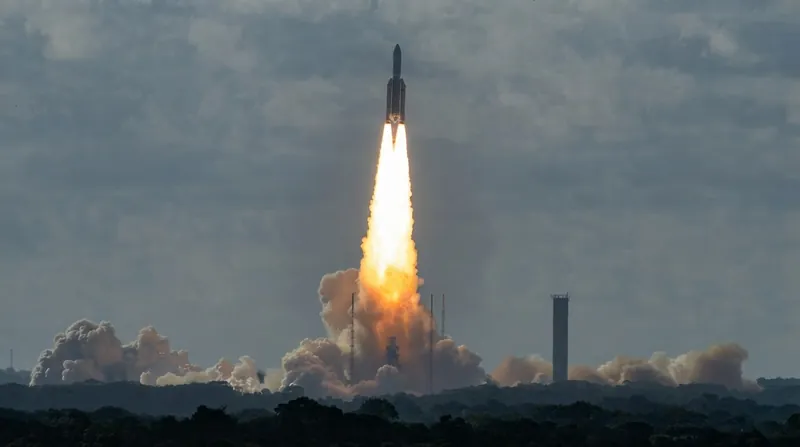
Flow Separation
How Atmospheric Pressure and Flow Separation Tear Vacuum Rocket Nozzles Apart at Sea Level
7 sources
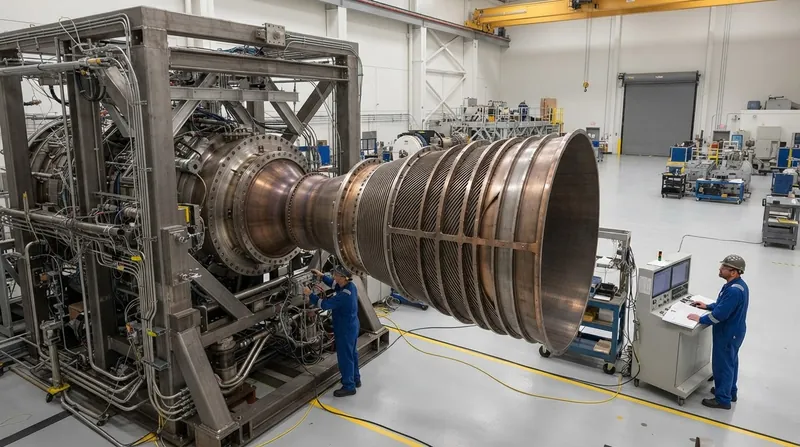
Rocket Propulsion
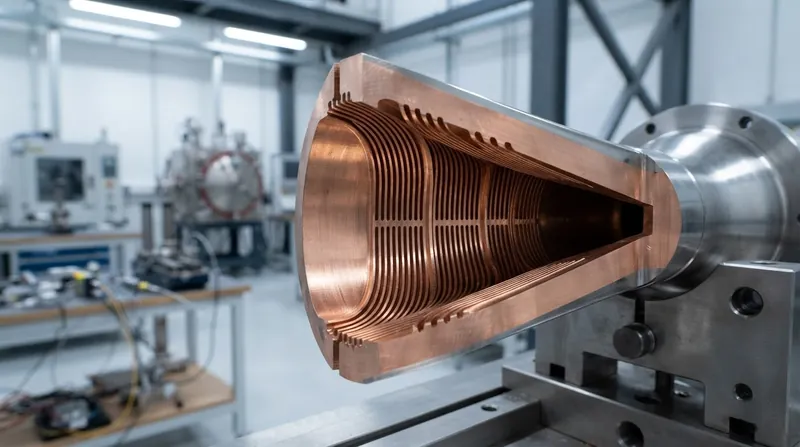
How Cryogenic Fuel and Milled Channels Keep Rocket Nozzles From Melting at 3,000°C
3 sources
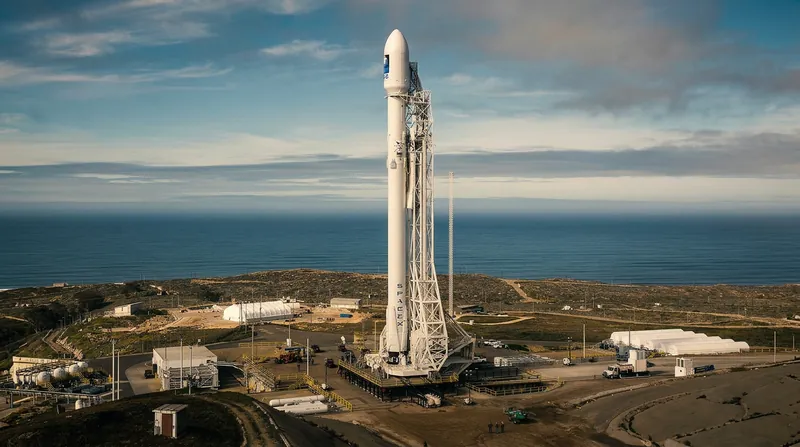
Aerospace Engineering
Why Rockets Throttle Down Mid-Ascent to Survive Max Q
3 sources
Comments
Every angle. Every day.
Get Transportation stories with full source coverage and perspective breakdowns, free every day.