
Do Smart Rings Actually Work? An Evidence-Based Review of Sleep and Health Tracking
Smart rings have become the go-to wearable for sleep and recovery tracking in 2026. We reviewed the clinical evidence to separate the marketing hype from the scientific reality.
By Factlen Editorial Team
- Clinical Researchers
- Value smart rings for their high adherence rates and accurate resting heart rate data, but caution against relying on them for exact sleep staging or diagnosing disorders.
- Tech Reviewers
- Focus on the user experience, ecosystem integration, and the ongoing debate over hardware subscription models.
- Consumer Health Advocates
- Emphasize the empowering nature of passive health tracking while warning against orthosomnia.
What's not represented
- · Primary Care Physicians (who must interpret the influx of patient-generated wearable data)
- · Users with chronic sleep disorders (who experience lower device accuracy)
Why this matters
Understanding the actual accuracy of smart rings prevents you from wasting hundreds of dollars on the wrong device, and ensures you don't misinterpret normal sleep variations as medical issues.
Key points
- Smart rings provide highly accurate resting heart rate and HRV data, rivaling clinical ECG monitors.
- The finger is anatomically superior to the wrist for optical sensors, reducing motion artifacts during sleep.
- Sleep staging (REM vs. Deep sleep) remains an educated guess, with accuracy dropping significantly in users with sleep disorders.
- Smart rings are poor choices for active workout tracking due to movement interference.
- The 2026 market offers strong subscription-free alternatives to Oura, including the Samsung Galaxy Ring and Ultrahuman.
In 2026, the wearable technology market has decisively shifted its focus from the wrist to the finger. Devices like the Oura Ring 4, the Samsung Galaxy Ring, and the Ultrahuman Ring AIR have transformed smart rings from a niche, early-adopter gadget into a mainstream health and wellness staple. Consumers are increasingly swapping out their bulky, glowing smartwatches for these lightweight, screenless bands in an effort to track their sleep, stress levels, and daily recovery without the constant distraction of notifications. But as the market floods with new competitors, each promising clinical-grade biometric insights and AI-driven coaching, a critical question remains for buyers: what does the actual scientific evidence say about their accuracy, and are they worth the premium price tag?[4][5][6]
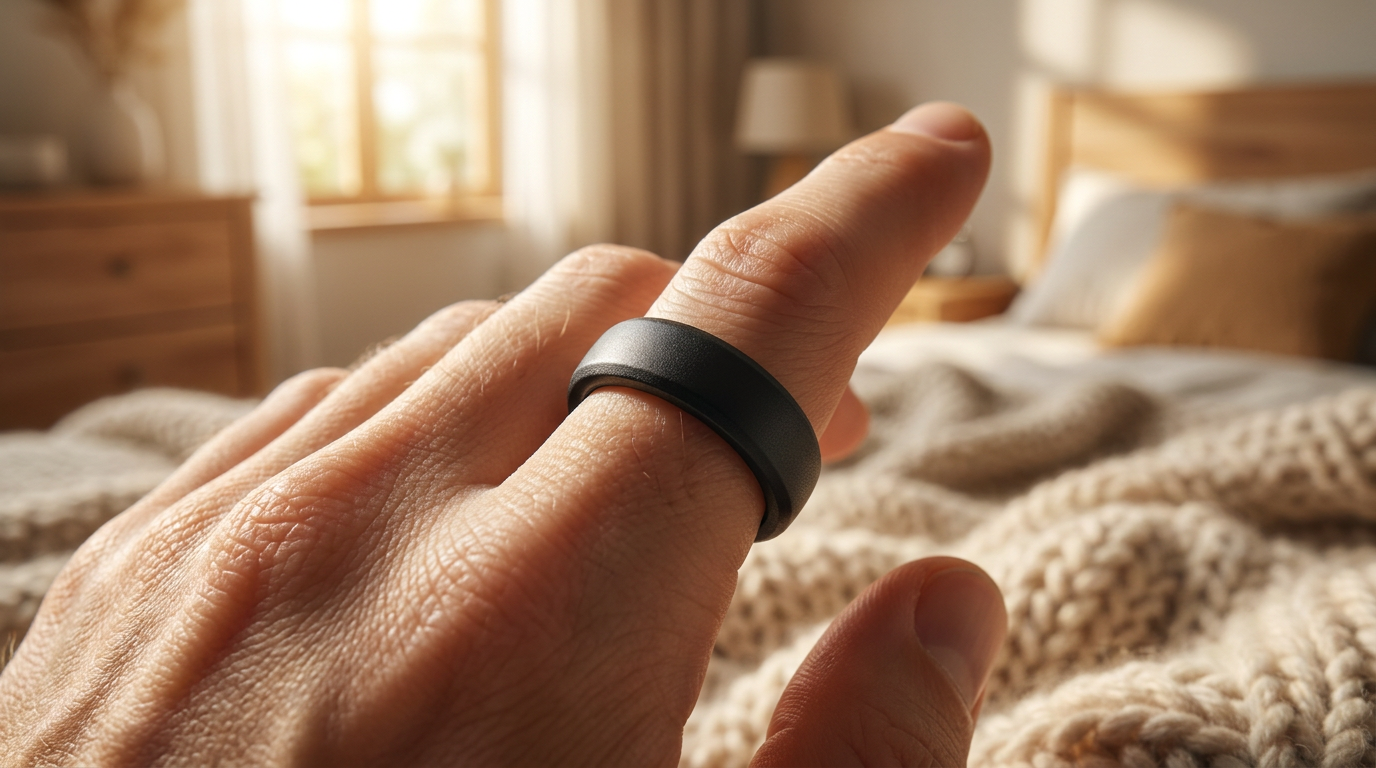
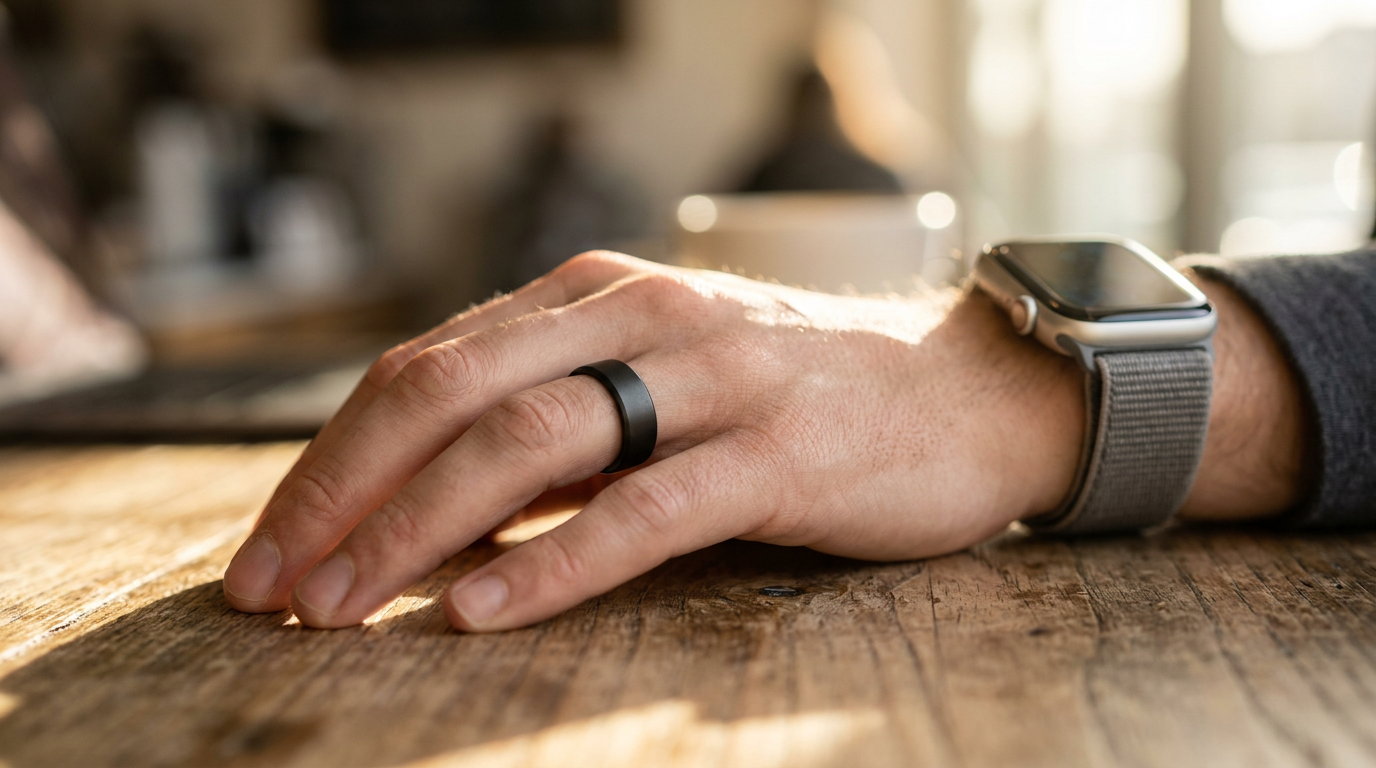
To understand how smart rings work—and why they often outperform watches at night—one must look at the anatomy of the human finger. Smart rings utilize a technology called photoplethysmography, which involves shining tiny LED lights into the skin to measure microscopic changes in blood volume with every heartbeat. The digital arteries that run along the underside of the finger are situated much closer to the skin's surface and feature a significantly denser capillary network than the blood vessels at the wrist. This distinct anatomical advantage provides a much cleaner, stronger signal for the ring's optical sensors, drastically reducing the data noise caused by ambient light leaks or the subtle arm movements that frequently plague wrist-worn devices like the Apple Watch or Fitbit during sleep.[2][8]
When it comes to measuring resting heart rate and heart rate variability—the two most critical metrics for assessing physical recovery—the scientific evidence supporting smart rings is exceptionally strong. A comprehensive validation study published in the Journal of Medical Internet Research compared the Oura Ring against a medical-grade electrocardiogram chest monitor, which is considered the gold standard in cardiology. The researchers' results demonstrated a near-perfect correlation for nocturnal heart rate and heart rate variability, yielding a concordance correlation coefficient approaching 0.99. For consumers looking to track their baseline cardiovascular recovery, monitor nervous system stress, or detect the early onset of an illness, top-tier smart rings are functionally equivalent to the tools used in a clinical setting.[2][3]
The evidence for basic sleep-versus-wake detection is equally robust across the category. A sweeping 2025 systematic review published in Clinical Medicine, which analyzed over one hundred independent studies encompassing roughly 100,000 participants, found that modern smart rings consistently demonstrate 93 to 96 percent sensitivity in detecting when a user is actually asleep. Beyond the raw sensor accuracy, rings benefit from a massive behavioral advantage: compliance. Because they are entirely unobtrusive and comfortable—typically weighing between just two and four grams—users are far more likely to wear them consistently through the night. This high adherence rate provides users and their doctors with highly reliable, uninterrupted longitudinal data spanning months and years, which is often more valuable than a single night of perfect data.[3][8]

The evidence for basic sleep-versus-wake detection is equally robust across the category.
However, consumers should treat the exact sleep-stage graphs provided by these companion apps with a healthy dose of skepticism. While rings generally outperform wrist wearables in mapping the transitions between light, deep, and REM sleep, they still rely on predictive algorithms to guess brain states based entirely on peripheral movement, skin temperature, and heart rate patterns. Independent validation studies show that four-stage sleep classification accuracy hovers around 76 to 79 percent in healthy adults. More concerningly, in clinical populations with pre-existing sleep disorders like insomnia or sleep apnea, that accuracy can plummet to roughly 53 percent. Ultimately, no consumer ring on the market can replace a clinical polysomnography study that measures actual electrical brainwaves.[1][3]
While they excel at nighttime monitoring, smart rings struggle significantly with active workout tracking. Because their hardware is fundamentally optimized for passive, continuous monitoring during periods of rest, they frequently fail to maintain accurate heart rate readings during vigorous physical movement. Gripping a heavy dumbbell, holding onto bicycle handlebars, or swinging a tennis racket physically shifts the ring's position on the finger, introducing massive signal artifacts and dropping the heart rate connection entirely. For active performance tracking, zone training, or marathon preparation, traditional chest straps or tightly fastened wrist wearables like Garmin or WHOOP remain vastly superior tools for the job.[5][8]
Beyond the clinical validation of the sensors, the consumer landscape in 2026 is largely defined by software ecosystem integration and competing pricing models. The Oura Ring 4 remains the undisputed gold standard for overall data accuracy, hardware finish, and app refinement, but it requires a $72 annual subscription fee on top of the initial $349 hardware cost. This recurring financial commitment has become a major point of contention among tech reviewers and consumers alike, opening the door for a wave of formidable competitors who offer entirely different value propositions for buyers hesitant to commit to a lifetime subscription.[4][6]

The Samsung Galaxy Ring, priced at a flat $299, has rapidly emerged as the strongest alternative for Android users. It cleverly leverages the broader Samsung Health ecosystem to cross-reference overnight ring biometrics with daytime Galaxy Watch data, offering a comprehensive, 24-hour health picture without any monthly subscription fees. Meanwhile, dedicated wearable brands like Ultrahuman and RingConn are aggressively capturing the fitness-focused and budget-conscious demographics. They offer robust, subscription-free hardware that matches Oura's multi-day battery life and basic sensor array, proving that premium health tracking doesn't necessarily require a recurring monthly payment.[4][5][7]

Ultimately, the scientific consensus firmly supports smart rings as excellent, highly accurate tools for tracking directional trends in physical recovery, nervous system stress, and overall sleep duration. They are not, however, diagnostic medical devices, and their exact sleep-stage percentages should always be viewed as educated algorithmic estimates rather than absolute physiological truth. But for users seeking to deeply understand their baseline health, optimize their daily energy levels, and track their sleep without the constant distraction of a glowing screen on their wrist, the 2026 generation of smart rings offers the most validated, frictionless wearable experience currently available.[2][3][8]
How we got here
2015
Oura launches its first-generation smart ring via Kickstarter, pioneering the finger-worn wearable category.
2021
Oura releases the Gen 3 ring, introducing continuous heart rate monitoring and blood oxygen sensing, solidifying its market dominance.
2022
Independent clinical studies validate smart ring resting heart rate and HRV accuracy against medical-grade ECG monitors.
2024
Samsung officially enters the market with the Galaxy Ring, providing the first major tech-giant competition to Oura.
2026
The market expands with subscription-free alternatives like Ultrahuman and RingConn, while Oura launches its refined Ring 4.
Viewpoints in depth
Clinical Researchers
Medical professionals evaluating the utility of consumer wearables in formal healthcare settings.
Clinical researchers view smart rings as a massive breakthrough for longitudinal data collection, primarily because patients actually wear them. While wrist-worn actigraphy devices have historically suffered from low adherence after a few weeks, the unobtrusive nature of rings allows researchers to gather months of continuous resting heart rate and HRV data. However, these experts strongly caution against using rings for diagnostic purposes. They point to studies showing that sleep-staging algorithms—which guess when a user is in REM versus deep sleep—drop significantly in accuracy when applied to patients who actually have sleep disorders, as the algorithms were trained primarily on healthy adults.
Tech Reviewers
Consumer technology analysts focused on device performance, software ecosystems, and value.
For tech reviewers, the conversation in 2026 has shifted away from pure hardware capabilities and toward software ecosystems and pricing models. Reviewers universally praise the Oura Ring 4 for its polished app and accurate sensors, but heavily criticize its mandatory subscription fee. This camp champions devices like the Samsung Galaxy Ring and Ultrahuman Ring AIR, arguing that consumers shouldn't have to pay a monthly rent to access their own biometric data. They evaluate rings based on battery life, scratch resistance, and how seamlessly the data integrates with broader platforms like Apple Health or Samsung Health.
Everyday Consumers
Users seeking actionable insights to improve their daily energy, fitness, and sleep habits.
Consumers generally adopt smart rings to solve a specific problem: understanding why they feel tired, tracking their menstrual cycles, or monitoring their recovery from intense exercise. For this group, the exact clinical accuracy of a sleep stage is less important than the directional trend. If the ring tells them their HRV drops every time they drink alcohol before bed, that insight is actionable and valuable, regardless of whether the exact millisecond measurement perfectly matches an ECG. However, this camp also faces the risk of 'orthosomnia'—an unhealthy obsession with achieving perfect sleep scores that can paradoxically cause more stress.
What we don't know
- How accurately next-generation smart ring algorithms will perform on diverse clinical populations with pre-existing sleep disorders.
- Whether continuous biometric tracking actually improves long-term health outcomes, or simply increases health-related anxiety.
- How long the internal batteries of the 2026 generation of rings will last before degrading, given their tiny physical footprint.
Key terms
- Photoplethysmography (PPG)
- An optical measurement technique that uses light to detect changes in blood volume in the microvascular bed of tissue, commonly used in wearables to track heart rate.
- Heart Rate Variability (HRV)
- The variation in time between consecutive heartbeats, used as a key indicator of nervous system recovery, stress, and overall physical readiness.
- Polysomnography (PSG)
- A comprehensive, medical-grade sleep study that records brain waves, oxygen levels, heart rate, and breathing to diagnose sleep disorders.
- Concordance Correlation Coefficient
- A statistical measure used to evaluate how well a new measurement device agrees with a gold-standard reference device.
Frequently asked
Can a smart ring diagnose sleep apnea?
No. While smart rings can track blood oxygen drops and respiratory rate, they are not FDA-cleared to diagnose sleep apnea. They can only flag potential issues that should be evaluated by a doctor.
Is the Oura Ring more accurate than the Apple Watch?
For resting heart rate and sleep tracking, yes. The finger provides a cleaner optical signal than the wrist, and rings are less prone to movement artifacts during sleep.
Do all smart rings require a monthly subscription?
No. While the market-leading Oura Ring requires a $72 annual subscription, competitors like the Samsung Galaxy Ring, Ultrahuman, and RingConn offer their full feature sets with no ongoing fees.
Can I wear a smart ring while lifting weights?
It is not recommended. Gripping heavy metal bars can scratch the ring, be uncomfortable, and cause the sensors to lose contact with your skin, resulting in inaccurate heart rate data.
Sources
Source coverage
8 outlets
3 viewpoints surfaced







[1]MDPI SensorsClinical Researchers
A Validation of Six Wearable Devices for Estimating Sleep, Heart Rate and Heart Rate Variability in Healthy Adults
Read on MDPI Sensors →[2]Journal of Medical Internet ResearchClinical Researchers
Accuracy Assessment of Oura Ring Nocturnal Heart Rate and Heart Rate Variability in Comparison With Electrocardiography
Read on Journal of Medical Internet Research →Smart Ring in Clinical Medicine: A Systematic Review
Read on MDPI Clinical Medicine →[4]ForbesTech Reviewers
Best Smart Rings 2026
Read on Forbes →[5]PCMagTech Reviewers
The Best Smart Rings We've Tested for 2026
Read on PCMag →[6]WareableTech Reviewers
Best smart rings 2026: Oura and top alternatives tested
Read on Wareable →[7]StuffTech Reviewers
Best smart rings in 2026: we've tested Oura, Ultrahuman, Samsung and more
Read on Stuff →[8]Factlen Editorial TeamConsumer Health Advocates
Synthesis by Factlen editorial team
Read on Factlen Editorial Team →

More in shopping
See all 5 stories →

Every angle. Every day.
Get shopping stories with full source coverage and perspective breakdowns delivered to your inbox.