
Do At-Home LED Light Therapy Masks Actually Work? The Clinical Evidence
At-home LED masks promise clinic-level skin benefits, but dermatological evidence shows that while red and blue light therapies are effective, consumer devices vary wildly in power, safety, and results.
By Factlen Editorial Team
- Dermatologists & Clinical Researchers
- Focus on the proven science of photobiomodulation, emphasizing the importance of precise wavelengths, FDA clearance, and realistic expectations regarding device power.
- Consumer Reviewers
- Evaluate devices based on usability, comfort, battery life, price-to-value ratio, and the visible results achieved through daily home use.
- Skeptics & Budget Advocates
- Argue that while the technology works, the high cost of masks is better spent on proven, highly regulated topical treatments like retinoids and sunscreen.
What's not represented
- · Long-term (5+ years) at-home users, as the widespread consumer adoption of these devices is still relatively recent.
Why this matters
With premium LED masks costing between $300 and $500, consumers need to know if the underlying science justifies the investment. Understanding the clinical evidence helps buyers distinguish medical-grade devices from ineffective imitations and sets realistic expectations for results.
Key points
- Clinical evidence strongly supports the use of specific red and blue light wavelengths for anti-aging and acne treatment.
- At-home masks are significantly less powerful than in-office dermatologist panels, requiring strict daily use to achieve results.
- Red light (633nm) stimulates collagen production, while blue light (415nm) destroys acne-causing bacteria.
- Experts strongly advise purchasing only FDA-cleared devices to ensure safety and accurate wavelength emission.
- LED masks are considered a supplementary treatment and should not replace foundational skincare like sunscreen and retinoids.
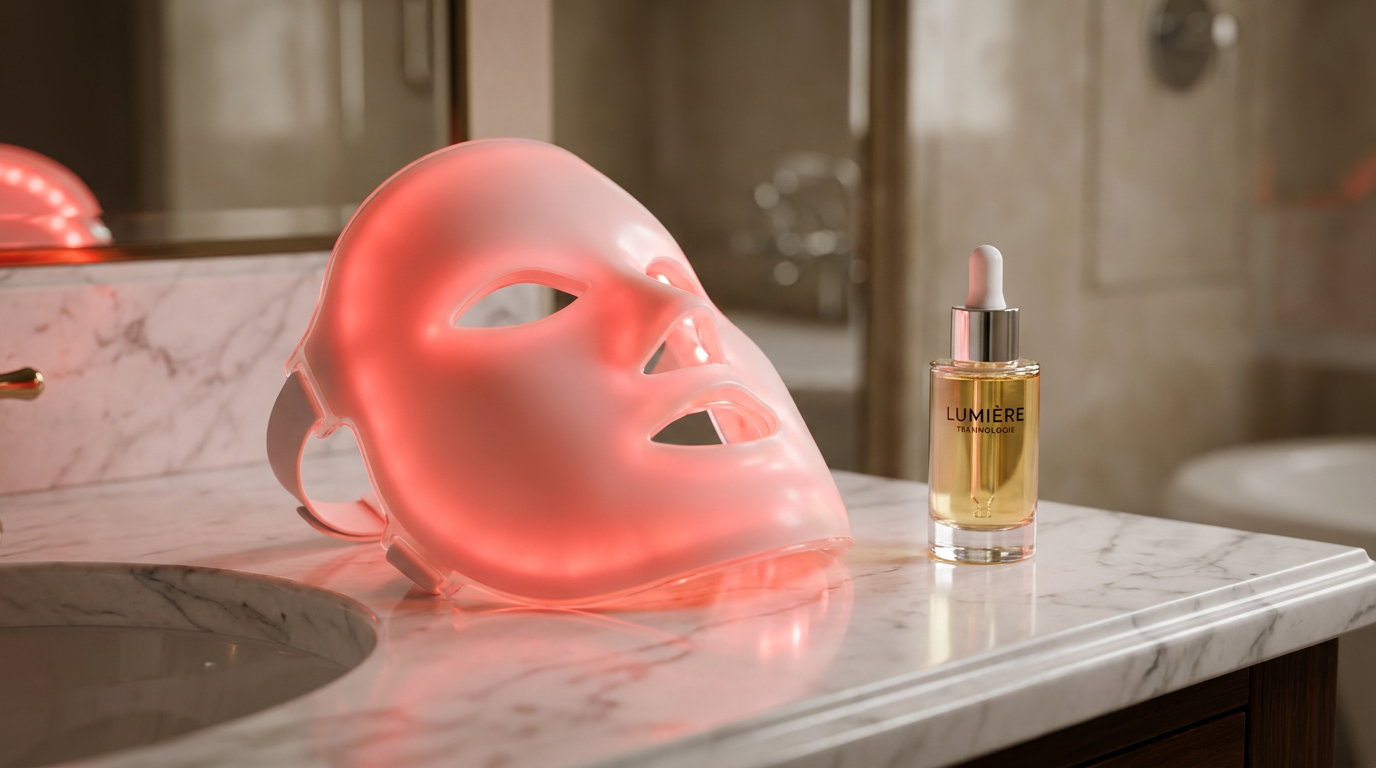
Over the past three years, the beauty and wellness markets have been flooded with glowing, futuristic-looking facial masks. Promising everything from the eradication of stubborn acne to the reversal of fine lines, these at-home LED (light-emitting diode) devices have transitioned from niche dermatologist tools to mainstream consumer staples. High-profile endorsements and viral social media trends have driven sales, but they have also generated a cloud of marketing claims that can be difficult for the average consumer to verify. With price tags frequently ranging from $300 to over $500, the central question for shoppers is no longer whether these masks are popular, but whether the underlying science actually supports the steep financial investment required to bring them home.[4][7]
The fundamental mechanism behind LED therapy is a biological process known as photobiomodulation. Unlike ultraviolet light, which damages cellular DNA and accelerates aging, or laser resurfacing, which intentionally creates micro-injuries to prompt healing, photobiomodulation uses specific, non-thermal wavelengths of light to stimulate cellular function. When these specific wavelengths penetrate the skin barrier, they are absorbed by photoreceptors within the cells' mitochondria. This absorption triggers a cascade of metabolic events, primarily increasing the production of adenosine triphosphate (ATP), the energy currency of the cell. This boost in cellular energy allows skin cells to repair themselves more efficiently, reduce localized inflammation, and accelerate the production of structural proteins.[1][2][5]
The clinical pedigree of this technology is surprisingly robust, tracing its origins back to aerospace research. In the 1990s, NASA began experimenting with red LED lights to promote plant growth in the zero-gravity environment of the Space Shuttle. Researchers soon noticed an unexpected secondary benefit: the scientists working with the lights experienced faster healing of abrasions on their hands. This accidental discovery pivoted the research toward human tissue repair, eventually leading to decades of clinical trials exploring how specific light frequencies could be utilized in medical dermatology to treat severe burns, chronic wounds, and eventually, cosmetic skin concerns.[2]

When evaluating the evidence for anti-aging claims, the scientific consensus heavily favors red and near-infrared (NIR) wavelengths. Red light, typically calibrated between 630 and 633 nanometers, penetrates the epidermis to reach the underlying dermis. Here, it directly stimulates fibroblasts—the specialized cells responsible for manufacturing collagen and elastin. Near-infrared light, operating at roughly 830 nanometers, penetrates even deeper, reaching subcutaneous tissue to reduce inflammation and improve microcirculation. Clinical studies published in dermatological journals consistently demonstrate that regular exposure to these specific wavelengths over a 12-week period yields statistically significant improvements in skin density, texture, and the reduction of periorbital wrinkles.[2][5]
For acne treatment, the evidence pack shifts to blue light therapy, which operates at a shallower wavelength of approximately 415 nanometers. Instead of stimulating cellular repair, blue light acts as an antimicrobial agent. It specifically targets porphyrins, which are compounds produced by Cutibacterium acnes, the bacteria primarily responsible for inflammatory acne breakouts. When these porphyrins absorb blue light, they produce free radicals that effectively destroy the bacteria from the inside out, without damaging the surrounding skin tissue. The American Academy of Dermatology acknowledges blue light as a viable, non-invasive adjunct therapy for mild to moderate acne, particularly for patients who cannot tolerate harsh topical treatments like benzoyl peroxide.[3][5]
For acne treatment, the evidence pack shifts to blue light therapy, which operates at a shallower wavelength of approximately 415 nanometers.
However, the transition from clinical efficacy to consumer reality introduces a massive variable: irradiance, or the power output of the device. In-office LED panels used by board-certified dermatologists are massive, high-powered machines that deliver highly concentrated, consistent energy to the skin in a matter of minutes. At-home consumer masks, by necessity, are intentionally underpowered. Manufacturers must cap the energy output to ensure the devices remain completely safe for untrained users to operate daily without the risk of thermal burns or overexposure. This power disparity is the primary reason why consumer results often diverge from clinical trial outcomes.[2][3][6]

Because consumer devices emit a fraction of the energy of clinical panels, the therapeutic threshold can only be reached through sheer repetition. Consumer testing organizations and beauty editors uniformly note that at-home users must commit to daily, 10-to-20-minute sessions for a minimum of four to six weeks before noticing any visible changes. The evidence suggests that LED therapy is highly cumulative; skipping treatments or using the mask sporadically effectively resets the biological clock on the photobiomodulation process. For many consumers, the barrier to success is not the technology itself, but the strict behavioral compliance required to make the low-powered devices work.[4][6][7]
Safety is another critical vector in the evidence pack. While the light itself is non-invasive and inherently free of harmful UV rays, the design of the mask matters immensely. The American Academy of Dermatology and independent consumer watchdogs have raised concerns about potential ocular damage from poorly designed devices, particularly those utilizing bright blue light, which can strain the retina over time. Premium masks mitigate this risk by including opaque silicone eye shields or designing the LED array to strictly avoid the orbital area, but cheaper, unregulated models often skip these crucial safety features to cut manufacturing costs.[3][6]
This leads to the most vital purchasing advice supported by the evidence: the necessity of FDA clearance. In the United States, FDA clearance for an LED mask means the manufacturer has submitted clinical data proving the device safely emits the exact wavelengths it claims to, without dangerous heat spikes or UV leakage. Consumer reviewers emphasize that buyers should never purchase unbranded, deeply discounted masks from third-party marketplaces, as these devices frequently use standard, non-therapeutic colored LED bulbs that provide zero biological benefit and may pose electrical safety risks.[1][4][6]

From a financial perspective, the cost-benefit analysis of an at-home mask depends heavily on the user's baseline habits. A $400 upfront investment in a high-quality, FDA-cleared mask can be highly economical over a three-year lifespan when compared to monthly $150 in-office LED treatments. Furthermore, because LED therapy increases local blood flow and cellular permeability, it can theoretically enhance the absorption and efficacy of the user's existing topical skincare products, effectively acting as a force multiplier for serums and moisturizers already in their routine.[4][7]
Conversely, skeptics and budget-conscious dermatologists point out that LED masks should never replace the foundational pillars of skincare. For many consumers, investing that same $400 budget into proven, highly regulated topical treatments—such as prescription-strength retinoids, stabilized Vitamin C serums, and high-quality daily sunscreen—will yield more dramatic, scientifically undisputed results. LED therapy is categorized by medical professionals as a 'nice-to-have' supplementary treatment, not a replacement for active topical ingredients or sun protection.[1][3][5]

Ultimately, the clinical consensus confirms that at-home LED masks are not a scam, but they are also not miracle cures. The science of photobiomodulation is real, proven, and effective for both anti-aging and acne management. However, unlocking those benefits at home requires purchasing a premium, FDA-cleared device with the correct wavelengths, and committing to a rigorous, daily routine for months. For the disciplined consumer willing to make the investment of both time and money, the evidence suggests the glow is genuinely achievable.[1][2][4][5]
How we got here
1990s
NASA begins experimenting with red LED lights for plant growth in space, accidentally discovering their wound-healing properties on human skin.
Early 2000s
Dermatologists begin utilizing large, high-powered LED panels in clinical settings for tissue repair and severe acne treatments.
2018-2020
Advances in flexible silicone and miniaturized diodes allow for the creation of the first wave of premium, wearable at-home LED masks.
2023-Present
At-home LED masks become mainstream consumer beauty staples, prompting increased scrutiny from consumer watchdogs regarding safety and efficacy claims.
Viewpoints in depth
Dermatologists & Clinical Researchers
Medical professionals who validate the underlying science but caution against overestimating consumer devices.
This camp relies heavily on decades of peer-reviewed studies proving that photobiomodulation is a real, measurable biological phenomenon. They confirm that hitting fibroblasts with 633nm red light genuinely increases ATP production and collagen synthesis. However, their primary concern is the gap between clinical and consumer hardware. Dermatologists frequently warn that patients often abandon at-home masks because they expect the rapid results of a high-powered, in-office treatment, failing to understand that low-irradiance home devices require months of unbroken daily compliance to achieve a fraction of the clinical effect.
Consumer Reviewers
Product testers focused on the practical realities of using the devices at home, balancing cost against visible benefits.
For consumer testing organizations and beauty editors, the science is secondary to usability and value. This camp evaluates masks based on battery life, strap comfort, the flexibility of the silicone, and the clarity of the instruction manuals. They argue that the 'best' mask isn't necessarily the one with the highest theoretical power output, but the one that is comfortable and convenient enough that a user will actually wear it for 15 minutes every single day. They are also the loudest advocates for FDA clearance, frequently warning readers away from cheap, unverified knockoffs found on massive online retailers.
Skeptics & Budget Advocates
Voices arguing that the high cost of LED masks is better allocated to proven, traditional skincare interventions.
While not denying the science of light therapy, this perspective focuses on opportunity cost. Skeptics argue that a $400 LED mask is a luxury supplement, not a necessity. They point out that the vast majority of consumers would see far more dramatic improvements in skin texture, acne reduction, and anti-aging by spending that money on dermatologist-prescribed retinoids (like Tretinoin) and high-quality, daily broad-spectrum sunscreen. From this viewpoint, LED masks are only a worthwhile investment for consumers who already have a flawless foundational skincare routine and possess disposable income to chase marginal, incremental gains.
What we don't know
- Whether the daily use of low-level LED therapy over a period of 10 to 20 years provides compounding anti-aging benefits, as the consumer devices haven't existed long enough for longitudinal studies.
- The exact threshold of irradiance (power output) below which an at-home device becomes completely biologically ineffective.
Key terms
- Photobiomodulation
- The biological process where specific wavelengths of light stimulate cellular function, promoting healing, reducing inflammation, and increasing collagen production.
- Irradiance
- The power output or intensity of the light emitted by a device, usually measured in milliwatts per square centimeter (mW/cm²). Higher irradiance means shorter treatment times.
- Fibroblasts
- Cells located in the dermal layer of the skin that are responsible for producing structural proteins like collagen and elastin.
- FDA-Cleared
- A designation indicating that the US Food and Drug Administration has reviewed the device and determined it is substantially equivalent to another legally marketed device, ensuring basic safety and efficacy claims.
Frequently asked
Can I use an LED mask with retinol or Vitamin C?
Yes, but timing matters. Dermatologists generally recommend using the LED mask on clean, dry skin first, and applying active ingredients like retinol or Vitamin C immediately afterward to maximize absorption.
Does LED light therapy hurt or burn?
No. True LED therapy is entirely non-thermal and non-invasive. You should not feel any heat or discomfort during a session. If a mask feels hot, it may be defective or lack proper safety clearance.
How long does it take to see results?
Clinical evidence suggests that with daily use (10-20 minutes per day), it takes a minimum of 4 to 6 weeks to see improvements in acne, and 10 to 12 weeks to see measurable changes in collagen production and fine lines.
Is it safe for all skin tones?
Yes. Unlike some laser therapies which target melanin and can be risky for darker skin tones, LED light therapy does not interact with melanin and is considered safe and effective for all Fitzpatrick skin types.
Sources
Source coverage
7 outlets
3 viewpoints surfaced







[1]Factlen Editorial TeamSkeptics & Budget Advocates
Synthesis by Factlen editorial team
Read on Factlen Editorial Team →[2]Journal of Clinical and Aesthetic DermatologyDermatologists & Clinical Researchers
Photobiomodulation in Dermatology: A Comprehensive Review of Clinical Efficacy
Read on Journal of Clinical and Aesthetic Dermatology →[3]American Academy of DermatologyDermatologists & Clinical Researchers
LED Light Therapy: What You Need to Know Before Trying At-Home Devices
Read on American Academy of Dermatology →[4]WirecutterConsumer Reviewers
The Best LED Face Masks, Tested and Reviewed
Read on Wirecutter →[5]Cleveland ClinicDermatologists & Clinical Researchers
Does LED Light Therapy Really Work for Your Skin?
Read on Cleveland Clinic →[6]Consumer ReportsConsumer Reviewers
Evaluating the Safety and Value of At-Home LED Skincare Masks
Read on Consumer Reports →[7]AllureConsumer Reviewers
We Tested the Most Popular LED Masks—Here Are the Ones Worth the Money
Read on Allure →
Every angle. Every day.
Get shopping stories with full source coverage and perspective breakdowns delivered to your inbox.