
COP31 Hosts Propose '35 by 35' Global Electrification Target to Accelerate Fossil Fuel Phaseout
Australia and Turkey, co-hosts of the upcoming COP31 climate summit, have unveiled a flagship goal to increase the global share of electricity in final energy consumption to 35% by 2035.
By Factlen Editorial Team
- COP31 Leadership
- Argues that rapid electrification is the most viable path to energy security and emissions reductions, framing the transition as an economic opportunity.
- Climate Campaigners
- Welcomes the electrification target but warns it is insufficient if fossil fuel production continues to rise simultaneously.
- Global Institutions
- Emphasizes that clean technologies are becoming the new normal but must be scaled exponentially to avert the worst climate scenarios.
- Fossil Fuel Exporters
- Faces a shrinking market for high-carbon goods and must pivot to clean energy exports to maintain economic stability.
What's not represented
- · Developing Nations Requiring Finance
- · Heavy Industry Representatives
Why this matters
Shifting from fossil fuels to electricity for everyday needs—like driving, heating, and manufacturing—is the most direct path to reducing global emissions. If adopted globally, the '35 by 35' target would fundamentally reshape energy markets, accelerating the rollout of EVs and heat pumps while shrinking the market for oil and gas.
Key points
- COP31 hosts Turkey and Australia proposed a global target to electrify 35% of final energy consumption by 2035.
- The initiative aims to accelerate the transition away from fossil fuels by rapidly deploying EVs, heat pumps, and electric industrial processes.
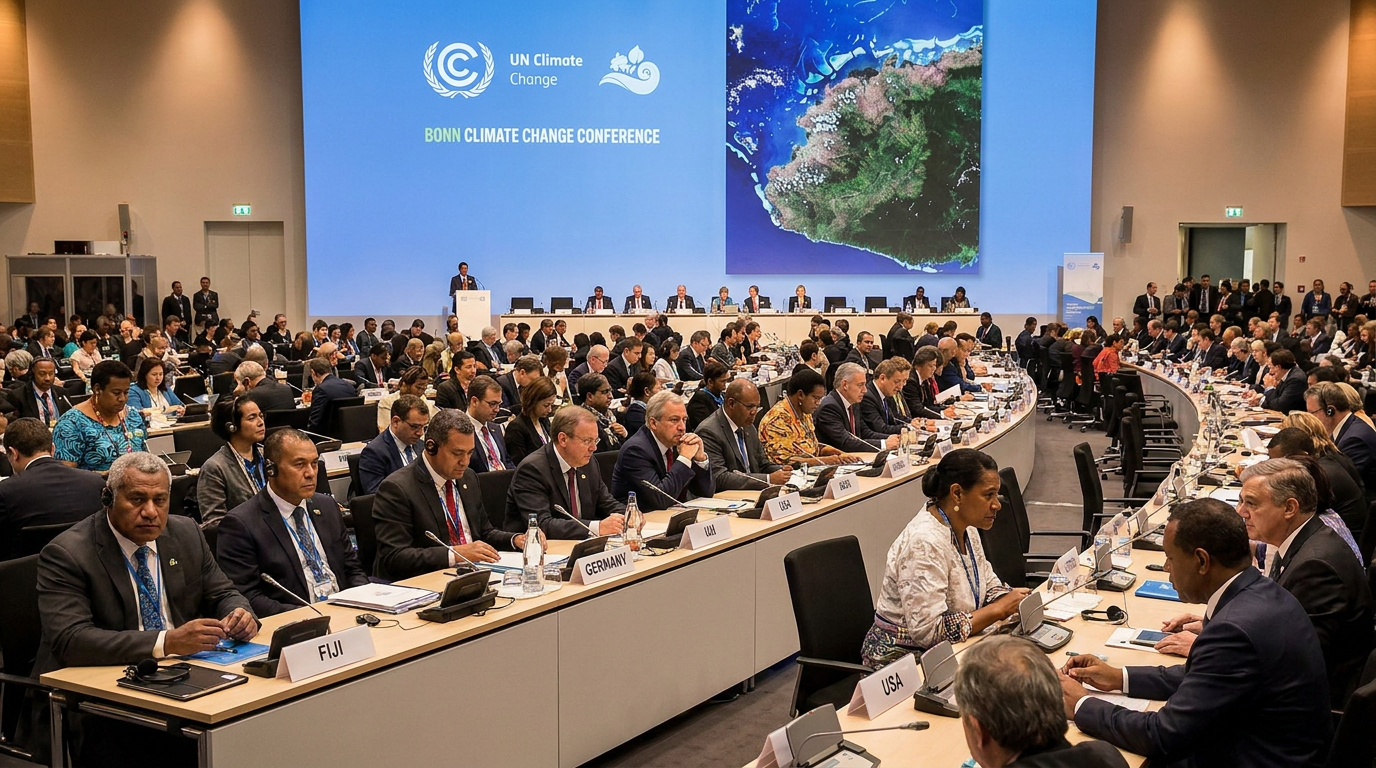
- The announcement was made at the mid-year UN climate talks in Bonn, Germany, against the backdrop of a global energy shock.
- Climate campaigners welcomed the target but warned that electrification must reach 45% by 2035 to keep global warming below 1.5°C.
At the mid-year United Nations climate talks in Bonn, Germany, the incoming leadership for the COP31 summit unveiled a major new blueprint for global climate action, centering on a massive expansion of electrification. Turkish COP31 President-Designate Murat Kurum and Australia's climate minister Chris Bowen introduced the "35 by 35" goal, a flagship initiative designed to accelerate the global transition away from fossil fuels. The target seeks to ramp up the share of final energy consumption provided by electricity from its current level of roughly 20 percent to 35 percent by 2035. This ambitious proposal marks the first major policy target to emerge since the global energy shock of early 2026, signaling a coordinated effort by the upcoming summit hosts to bypass the political gridlock that has historically plagued direct negotiations over fossil fuel phase-outs.[3][5][6]
By focusing heavily on the demand side of the energy equation, the COP31 presidency hopes to build a broad international coalition willing to commit to rapid technological deployment. The push for rapid electrification comes as the world grapples with the severe economic fallout of the 2026 global energy shock, triggered by escalating conflict in the Middle East. This crisis has starkly highlighted the inherent fragility of fossil fuel supply chains and the vulnerability of nations that rely on imported oil and gas. During his address to the delegates in Bonn, Bowen framed the clean energy transition not as an economic risk, but as a definitive solution to geopolitical uncertainty and energy disruption.[2][4][5]

The announcement is particularly notable given Australia's long-standing status as one of the world's largest exporters of coal and liquefied natural gas. Bowen openly acknowledged that fossil fuels will face a rapidly shrinking market in the coming decades, stating that Australia must proactively prepare to switch to exporting clean energy products. He emphasized that more than 80 percent of Australia's trading partners have already committed to net-zero emissions targets, making the transition an economic imperative rather than just an environmental one. This rhetorical shift from a major fossil fuel producer underscores a growing recognition that the global economy is fundamentally realigning around clean energy technologies.[1][2]
Achieving the 35 percent electrification target will require a monumental acceleration in the deployment of electric vehicles, heat pumps, and electric cookers, alongside the complex electrification of heavy industry and manufacturing. Kurum emphasized that electrifying daily life is essential to protect families and businesses from the extreme volatility of global energy markets. The target is heavily informed by recent analysis from the International Renewable Energy Agency, which underscores that electricity is the most efficient and cost-effective vector for deep decarbonization across multiple sectors of the global economy. Bowen noted that whether the task involves electrifying heavy industry in a powerhouse economy like Germany, or replacing expensive diesel generators with solar energy in remote Pacific island nations, renewable electricity has definitively become the cheapest form of power available to humanity.[3][5][6]
Kurum emphasized that electrifying daily life is essential to protect families and businesses from the extreme volatility of global energy markets.
Despite the optimism surrounding the "35 by 35" goal, the transition faces significant structural hurdles in sectors that have historically been slow to decarbonize, such as commercial transport, space heating, and heavy manufacturing. Currently, about four-fifths of the world's final energy still comes directly from combusting fossil fuels. While climate campaigners and policy analysts widely welcomed the renewed focus on electrification, many warned that it represents only half the battle. The daily COP newsletter ECO, produced by Climate Action Network International, cautioned that surging global renewable energy capacity is currently being matched by record-high fossil fuel production, a dynamic that is pushing global greenhouse gas emissions to the brink of climate catastrophe.[3]

Furthermore, environmental analysts noted that to meet the ultimate goal of achieving 100 percent renewable energy by 2050—a strict precondition for holding average global warming to the critical 1.5 degrees Celsius threshold—electrification would actually need to reach 45 percent by 2035. This suggests that while the 35 percent target is a significant step forward, it may still fall short of what the climate science strictly requires to avert the most severe impacts of global warming. Environmental advocacy groups like Greenpeace Australia Pacific are demanding more aggressive leadership from the COP31 hosts, arguing that targets based solely on clean energy deployment are insufficient without corresponding agreements to limit extraction.[2][3][4]
These advocacy groups argue that while the focus on electrification is necessary and welcome, the current COP31 agenda still lacks a binding global roadmap for a complete and equitable phase-out of fossil fuels, which was a key shortcoming carried over from previous climate summits. They stress that adding renewable capacity does not automatically reduce emissions if total global energy demand continues to grow and fossil fuels are burned alongside clean energy. The pressure is mounting on the incoming presidency to ensure that the "35 by 35" target is paired with explicit commitments to leave remaining coal, oil, and gas reserves in the ground.[2][4]

The "35 by 35" target, along with complementary goals addressing waste management and building efficiency, will serve as the foundational framework for negotiations leading up to the COP31 summit in Antalya, Turkey, later this year. The presidency aims to forge a strong global coalition that is ready to act, promising to facilitate access to crucial technical assistance and climate finance for developing countries. Ensuring that the transition to clean energy leaves no nation behind will be critical to securing the unanimous consensus required at UN climate summits. As global temperatures continue to reach near-record levels, the UN Environment Programme recently highlighted that while clean technologies are rapidly becoming the new normal, their global adoption must accelerate exponentially to secure a livable future.[4][5][7]
How we got here
April 2026
57 countries meet in Colombia for the world's first conference on the transition away from fossil fuels.
June 2026
COP31 hosts Turkey and Australia unveil the '35 by 35' electrification target at the UN climate talks in Bonn.
November 2026
The COP31 climate summit is scheduled to take place in Antalya, Turkey, where the target will be formally negotiated.
Viewpoints in depth
COP31 Leadership
Argues that rapid electrification is the most viable path to energy security and emissions reductions.
The incoming COP31 presidency, led by Turkey and Australia, views the '35 by 35' target as a pragmatic blueprint for climate action. By focusing on electrifying transport, heating, and industry, they aim to bypass the political gridlock often associated with direct fossil fuel bans. They argue that renewable electricity is now the cheapest form of power, making the transition an economic imperative that protects nations from volatile global energy markets.
Climate Campaigners
Welcomes the electrification target but warns it is insufficient without a hard cap on fossil fuel extraction.
Environmental groups and climate analysts caution that adding renewable capacity does not automatically reduce emissions if total energy demand continues to grow. They point out that while solar and wind are surging, global fossil fuel production is also hitting record highs. Campaigners argue that targets like '35 by 35' must be paired with binding agreements to phase out coal, oil, and gas, otherwise the world will fail to keep warming below the critical 1.5-degree threshold.
Fossil Fuel Exporters
Faces a shrinking market for high-carbon goods and must pivot to clean energy exports to maintain economic stability.
For nations like Australia, which heavily rely on exporting coal and gas, the global shift toward net-zero presents a profound economic challenge. Recognizing that 80 percent of their trading partners are committed to decarbonization, these exporters are beginning to reframe their economic strategies. The focus is shifting toward exporting clean energy products, such as green hydrogen and critical minerals, to secure their position in the future global economy.
What we don't know
- Whether the '35 by 35' target will be formally adopted by all nations at COP31 or remain a voluntary pledge.
- How developing nations will finance the massive infrastructure upgrades required to electrify their economies.
- Whether the rapid growth in renewable electricity will actually displace fossil fuels or simply add to total global energy consumption.
Key terms
- COP31
- The 31st Conference of the Parties to the UN Framework Convention on Climate Change, scheduled for late 2026.
- Final Energy Consumption
- The total energy consumed by end users, such as households and industry, excluding energy used by the energy sector itself.
- Electrification
- The process of replacing technologies that use fossil fuels with technologies that use electricity as a source of energy.
- Nationally Determined Contributions (NDCs)
- Climate action plans submitted by countries under the Paris Agreement, outlining their emissions reduction targets.
Frequently asked
What is the '35 by 35' target?
It is a proposed global goal to increase the share of electricity in final energy consumption to 35% by the year 2035.
Why is electrification important for climate change?
Electrifying sectors like transport and heating allows them to be powered by renewable energy sources like wind and solar, significantly reducing greenhouse gas emissions.
Where will the COP31 summit be held?
The COP31 summit will be hosted in Antalya, Turkey, in late 2026, with Australia playing a leading role in the negotiations.
Sources
Source coverage
7 outlets
4 viewpoints surfaced







[1]The GuardianCOP31 Leadership
Australia can switch from fossil fuel exports to renewables, says next Cop president
Read on The Guardian →[2]Michael West MediaFossil Fuel Exporters
Electrification and clean energy foregrounded by Australian leader of international climate negotiations
Read on Michael West Media →[3]The Energy MixClimate Campaigners
COP31 hosts eye electrification. '35 BY 35'
Read on The Energy Mix →[4]RenewEconomyClimate Campaigners
Greenpeace calls on Australia's climate minister to lead with vision at Bonn talks
Read on RenewEconomy →[5]Climate Home NewsCOP31 Leadership
COP31 hosts unveil headline goals on electrification, waste and buildings
Read on Climate Home News →[6]Carbon BriefClimate Campaigners
COP31 hosts eye electrification
Read on Carbon Brief →[7]UN Environment ProgrammeGlobal Institutions
Cheaper. Cleaner. Unstoppable. Clean technologies that are delivering for the climate
Read on UN Environment Programme →
More in news politics
See all 154 stories →Media Consolidation
DOJ Approves $111 Billion Paramount-Warner Bros. Merger, Reshaping Media Landscape
9 sources

Tren de Aragua
U.S. Military Strike in Venezuela Kills Tren de Aragua Leader Niño Guerrero
7 sources
Tren de Aragua
U.S. Military Strike in Venezuela Kills Tren de Aragua Leader Niño Guerrero
7 sources
Information Integrity
The 'Mind Vaccine': How Prebunking is Winning the War Against Misinformation
6 sources

Every angle. Every day.
Get news politics stories with full source coverage and perspective breakdowns delivered to your inbox.