
Cold vs. Heat: The Science of Temperature Therapy for Muscle Recovery
While cold water immersion and heat therapy both accelerate muscle recovery, they operate through opposing biological mechanisms that can either blunt or boost long-term muscle growth.
By Factlen Editorial Team
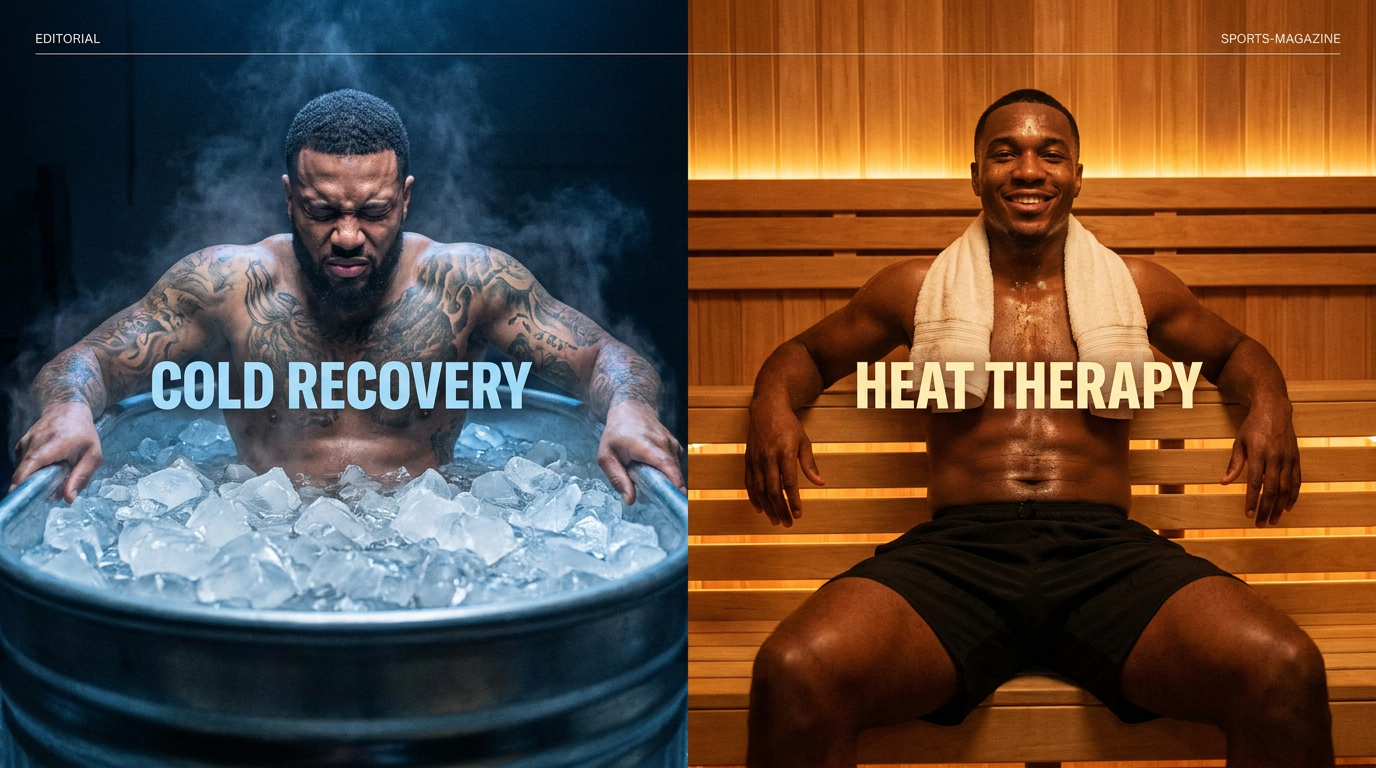
- Hypertrophy & Heat Proponents
- Focus on maximizing muscle growth and cellular repair through thermal stress.
- Evidence-Based Physiologists
- Advocate for periodizing temperature therapy based on specific training phases and goals.
- Cryotherapy Advocates
- Prioritize immediate pain relief and rapid return to play for competitive athletes.
What's not represented
- · Recreational athletes with limited access to specialized recovery facilities
- · Cardiovascular specialists monitoring blood pressure risks of extreme temperature shifts
Why this matters
Choosing the wrong temperature therapy post-workout can actively sabotage your fitness goals. Using an ice bath when you want to build muscle can blunt your gains, while using heat when you need immediate pain relief can prolong inflammation.
Key points
- Cold water immersion reduces pain and soreness by constricting blood vessels and numbing nerve endings.
- Cold therapy can actively blunt muscle hypertrophy if used immediately after resistance training.
- Heat therapy increases blood flow by up to 400%, accelerating nutrient delivery and waste removal.
- Sauna use triggers Heat Shock Proteins and the mTOR pathway, promoting long-term muscle growth.
- Contrast therapy alternates hot and cold to flush metabolic waste without stopping the inflammatory repair process.
- Athletes should periodize recovery: cold for immediate performance, heat for off-season muscle growth.
Ice baths and infrared saunas are no longer reserved for elite athletic facilities or professional sports franchises; they have become ubiquitous staples of everyday fitness culture. From boutique recovery studios to backyard cold plunges, athletes of all levels are utilizing extreme temperatures to bounce back faster from grueling workouts. The wellness industry has heavily commercialized both modalities, often marketing them side-by-side as interchangeable tools for post-exercise rejuvenation. However, beneath the marketing gloss lies a complex physiological reality. As athletes plunge into fifty-degree water or sweat it out in one-hundred-and-fifty-degree heat, they are triggering entirely different biological cascades.
This surge in popularity has sparked a intense physiological debate among sports scientists, coaches, and athletes. Both cold water immersion and heat therapy promise accelerated recovery, reduced soreness, and improved subsequent performance, yet they operate through entirely opposing biological mechanisms. Choosing the wrong temperature therapy post-workout can actively sabotage an athlete's specific fitness goals, either by prolonging unnecessary soreness or by blunting the very muscle adaptations they just worked hard to achieve. Understanding the science of temperature modulation is no longer just for exercise physiologists; it is a prerequisite for anyone looking to optimize their training outcomes.
The core of this temperature debate lies in how the human body repairs itself after physical exertion. Intense exercise, particularly resistance training or high-impact cardiovascular work, induces microscopic tears in muscle fibers. This micro-trauma triggers a localized inflammatory response as the immune system rushes to clear out cellular debris and begin the rebuilding process. This inflammation is the primary culprit behind Delayed Onset Muscle Soreness (DOMS)—the stiff, aching feeling that peaks twenty-four to forty-eight hours after a workout. However, this same inflammatory cascade is also the precise biological signal the body uses to remodel tissue and build it back stronger than before.
Cold water immersion (CWI) attacks the pain side of this biological equation with brute force. When an athlete submerges their body in water typically ranging between 41°F and 59°F (5°C to 15°C), the cardiovascular system reacts instantly to preserve core temperature. Blood vessels in the extremities and near the skin's surface rapidly constrict, a process known as vasoconstriction. This physiological shunting mechanism forces blood away from the muscles and toward the vital organs, drastically altering the local environment of the exercised tissue. By clamping down on peripheral blood flow, cold therapy acts as a biological tourniquet, limiting the amount of fluid and inflammatory cells that can pool in the damaged muscle fibers.[1]

Beyond fluid dynamics, cold environments directly interact with the body's nervous system to provide immediate analgesic effects. The sudden drop in temperature activates TRPM8 cold receptors located in the skin and underlying tissues. The activation of these specific receptors inhibits the firing frequency of cold-sensitive nerve endings and significantly slows the transmission of nociceptive—or pain-sensing—signals to the brain. This neurological dampening effectively numbs the affected area, providing a rapid, subjective decrease in perceived soreness and fatigue that allows athletes to feel instantly refreshed upon exiting the cold plunge.[2]
The clinical evidence supporting cold therapy's ability to mitigate pain is highly robust. A comprehensive 2025 network meta-analysis encompassing fifty-five randomized controlled trials confirmed that low-temperature immersion is highly effective at managing post-exercise trauma. The data revealed that cold water immersion significantly reduces blood creatine kinase (CK) levels—a primary biochemical marker of muscle damage that leaks into the bloodstream when muscle cell membranes are compromised. Furthermore, the analysis consistently demonstrated that athletes utilizing cold therapy experienced a statistically significant reduction in Delayed Onset Muscle Soreness compared to those who utilized passive rest.[1][3]
However, this rapid pain relief comes with a significant and often misunderstood physiological cost. By artificially blunting the inflammatory response and restricting blood flow to the micro-trauma sites, cold water immersion simultaneously blunts the vital signaling pathways required for muscle hypertrophy. Inflammation is not merely a nuisance; it is the catalyst for cellular repair. When cold therapy suppresses the infiltration of macrophages and other immune cells, it delays the clearance of necrotic tissue and inhibits the subsequent activation of satellite cells, which are essential for adding new nuclei to muscle fibers and driving growth.[4]
Consequently, if an athlete's primary goal is building muscle mass or increasing absolute strength, jumping into an ice bath immediately after a heavy resistance training session is highly counterproductive. Studies consistently show that acute cold exposure inhibits the pathways responsible for muscle protein synthesis. Lifters who routinely use cold water immersion post-workout may literally be washing away their hard-earned gains in exchange for temporary pain relief. The muscle fibers repair themselves to their baseline state, but they lack the robust inflammatory signal required to adapt and grow larger than they were before the training stimulus.[4]

Studies consistently show that acute cold exposure inhibits the pathways responsible for muscle protein synthesis.
Furthermore, cold therapy has been shown to immediately inhibit explosive power and neuromuscular function. Research indicates that metrics like countermovement jump (CMJ) height and maximum voluntary isometric contraction are significantly depressed immediately following cold water immersion. The cooling effect increases tissue viscosity and decreases nerve conduction velocity, making the muscles sluggish and less capable of rapid force production. Therefore, utilizing an ice bath between heats of a same-day track competition or during halftime of a sport requiring explosive sprinting is a tactical error that will actively degrade athletic performance.[2][3]
Heat therapy, conversely, leans entirely into the body's natural repair mechanisms rather than attempting to suppress them. Whether administered through a traditional dry sauna, an infrared cabin, a hot tub, or targeted heat wraps, exposing the body to elevated temperatures triggers profound vasodilation. As the body attempts to dissipate the external heat, blood vessels widen significantly. This vascular expansion increases localized blood flow to the muscles by up to four hundred percent, fundamentally changing the post-workout environment from one of restriction to one of absolute abundance.[5]
This massive influx of blood floods damaged muscle tissues with oxygen, vital nutrients, and amino acids required for structural repair. Simultaneously, the increased circulation accelerates the clearance of metabolic waste products that accumulate during intense exercise, such as hydrogen ions and inorganic phosphates. Unlike cold therapy, which traps waste products out of the area by clamping down on vessels, heat therapy actively flushes the system. This accelerated nutrient delivery and waste removal process helps to alleviate chronic stiffness and restores tissue elasticity without interrupting the necessary inflammatory signals.[5]
Beyond simple circulatory mechanics, heat stress initiates a profound and highly beneficial cellular response. Regular exposure to sauna temperatures upregulates the production of Heat Shock Proteins (HSPs), specifically HSP70 and HSP72. These specialized proteins act as "molecular chaperones" within the cells. When muscle fibers sustain microscopic damage from exercise, Heat Shock Proteins patrol the intracellular environment to repair misfolded proteins, protect against oxidative stress, and prevent cellular apoptosis (programmed cell death). By increasing the baseline levels of these protective proteins, heat therapy equips the muscles with a larger, more active maintenance crew.[4]

Crucially for strength athletes and bodybuilders, thermal stress actively stimulates the mammalian target of rapamycin (mTOR) signaling pathway. The mTOR pathway is the central biological regulator of cell growth and muscle protein synthesis. While mechanical tension from lifting weights is the primary driver of hypertrophy, thermal stress acts as a powerful supplementary stimulus. By activating mTOR and interacting synergistically with Heat Shock Proteins, heat therapy actively promotes muscle hypertrophy and helps preserve lean tissue mass, making it an incredibly valuable tool even during periods of injury or forced inactivity.[4]
Yet, despite its profound benefits for long-term tissue remodeling and growth, heat therapy is not a universal panacea for all recovery needs. While it excels at promoting hypertrophy and relieving chronic, lingering stiffness, it is markedly less effective than cold therapy at providing immediate relief for acute, sharp pain. If an athlete has suffered a fresh sprain, a contusion, or severe localized swelling, applying heat can actually exacerbate the issue by driving even more fluid and inflammation into an already overwhelmed area, leading to increased pressure and discomfort.
For athletes seeking to harness the benefits of both modalities while minimizing their respective drawbacks, contrast water therapy (CWT) has emerged as a highly compelling middle ground. Contrast therapy involves rapidly alternating between hot and cold environments, forcing the cardiovascular system to rapidly switch between vasodilation and vasoconstriction. A standard protocol typically utilizes a three-to-one ratio—such as three minutes of heat exposure followed immediately by one minute of cold exposure—repeated for three to five continuous rounds, always ending on a cold cycle to ensure the vessels close and minimize residual pooling.[5]
This cyclical shifting acts as a powerful "vascular pump" for the muscular system. The heat phase draws fresh, nutrient-rich blood into the tissues, while the subsequent cold phase forcefully squeezes the blood—along with accumulated metabolic waste—back out into the central circulation for filtration. Multiple scoping reviews have demonstrated that this pumping action is highly effective at reducing the severity of Delayed Onset Muscle Soreness and flushing waste products, all without permanently blunting the inflammatory signals required for long-term muscular adaptation and hypertrophy.[5]

Ultimately, the emerging consensus among sports scientists is that temperature therapy should be meticulously periodized, treated with the same strategic care as the training program itself. There is no single "best" recovery modality; the optimal choice depends entirely on the athlete's immediate physiological goal and their position within the competitive calendar. The biological mechanisms of hot and cold are tools, and applying the wrong tool to a specific training phase can actively undermine an athlete's hard work and dedication in the gym or on the field.[6]
During a grueling competitive season, a multi-day tournament, or a high-frequency training camp where immediate performance, pain management, and rapid turnaround are the absolute highest priorities, cold water immersion is undeniably the superior tool. It rapidly reduces perceived soreness, numbs acute pain, and gets the athlete back on the field feeling subjectively fresh and ready to perform. In these specific scenarios, the slight blunting of long-term muscle hypertrophy is a perfectly acceptable trade-off for the ability to survive the immediate physical demands of the sport.[6]
Conversely, during the off-season, or for recreational lifters whose primary objectives are building muscle mass, increasing absolute strength, and driving long-term physiological adaptations, heat therapy is the clear and unequivocal winner. By embracing the heat of the sauna or the hot tub, athletes can actively support their body's natural remodeling processes, upregulate protein synthesis, and ensure that every microscopic muscle tear sustained during training translates directly into measurable, lasting growth. When long-term adaptation is the goal, the temporary discomfort of muscle soreness should be viewed not as an enemy to be iced away, but as the necessary foundation for building a stronger, more resilient body.[6]
Viewpoints in depth
Cryotherapy Advocates
Prioritize immediate pain relief and rapid return to play.
This camp, often comprising in-season competitive athletes and sports physiologists, values cold water immersion for its powerful analgesic properties. By forcing rapid vasoconstriction and numbing nerve endings, ice baths allow athletes to survive grueling multi-day tournaments or two-a-day training sessions. They argue that while cold may slightly blunt long-term muscle hypertrophy, the trade-off is worth it if it enables an athlete to perform at maximum capacity in their next immediate event.
Hypertrophy & Heat Proponents
Focus on maximizing muscle growth and cellular repair through thermal stress.
Bodybuilders, strength coaches, and longevity researchers champion heat therapy for its ability to upregulate Heat Shock Proteins (HSPs) and activate the mTOR signaling pathway. This perspective views post-workout inflammation not as an enemy to be iced away, but as a necessary biological signal for tissue remodeling. They argue that exposing muscles to heat accelerates the clearance of metabolic waste while actively promoting protein synthesis, ensuring that the hard work done in the gym translates into maximum muscle adaptation.
Evidence-Based Physiologists
Advocate for periodizing temperature therapy based on specific training phases.
Rather than declaring a universal winner, clinical researchers and evidence-based practitioners emphasize context. They argue that temperature therapy is a highly specific tool that must be matched to the athlete's macrocycle. During off-season hypertrophy phases, they recommend heat therapy to maximize adaptations. Conversely, during peak competition phases where immediate readiness supersedes long-term growth, they prescribe cold water immersion. They also heavily utilize contrast therapy as a middle-ground solution for general recovery.
What we don't know
- The exact threshold at which cold water immersion begins to significantly blunt muscle hypertrophy in elite versus recreational athletes.
- Whether the long-term cardiovascular benefits of sauna use can fully replace the need for active cardiovascular exercise in injured athletes.
- The precise molecular mechanism by which contrast therapy balances waste removal without suppressing the mTOR signaling pathway.
Key terms
- Vasoconstriction
- The narrowing of blood vessels, typically in response to cold, which restricts blood flow and reduces acute swelling.
- Vasodilation
- The widening of blood vessels, often triggered by heat, which increases blood flow and nutrient delivery to tissues.
- Heat Shock Proteins (HSPs)
- A family of proteins produced by cells in response to thermal stress that act as 'molecular chaperones' to repair damaged proteins.
- mTOR Pathway
- A central cellular signaling pathway that regulates cell growth, protein synthesis, and muscle hypertrophy.
- Delayed Onset Muscle Soreness (DOMS)
- The muscle pain and stiffness that typically peaks 24 to 72 hours after intense or unfamiliar exercise.
- Creatine Kinase (CK)
- An enzyme found in muscle tissue that leaks into the bloodstream when muscles are damaged, used as a biomarker for exercise-induced trauma.
Frequently asked
Should I take an ice bath immediately after lifting weights?
If your primary goal is building muscle size and strength, you should avoid ice baths immediately after lifting. Cold water immersion blunts the inflammatory signals and mTOR pathway activation required for muscle hypertrophy.
How long should I stay in a sauna for muscle recovery?
Research suggests 20 to 30 minutes in an infrared sauna (120–150°F) or a traditional sauna is sufficient to trigger Heat Shock Proteins and increase blood flow without overtaxing the nervous system.
What is contrast water therapy?
Contrast therapy involves rapidly alternating between hot and cold environments to create a 'vascular pump.' A common protocol is 3 minutes of heat followed by 1 minute of cold, repeated for 3 to 5 rounds.
Does cold water immersion actually reduce muscle soreness?
Yes. Multiple meta-analyses confirm that cold water immersion significantly reduces Delayed Onset Muscle Soreness (DOMS) and lowers blood markers of muscle damage like creatine kinase.
Sources
Source coverage
6 outlets
3 viewpoints surfaced






[1]Frontiers in PhysiologyEvidence-Based Physiologists
Recovery impacts of varying cold water immersion protocols on acute exercise-induced muscle damage
Read on Frontiers in Physiology →[2]MDPICryotherapy Advocates
Effects of Cold-Water Immersion Combined with Other Therapies in Post-Exercise Fatigue Recovery
Read on MDPI →[3]ExamineCryotherapy Advocates
Cold water immersion after exercise inconsistently reduced muscle soreness
Read on Examine →[4]National Institutes of HealthHypertrophy & Heat Proponents
Musculoskeletal adaptations from passive heat therapy
Read on National Institutes of Health →[5]BodySpecHypertrophy & Heat Proponents
The Science of Temperature Therapy: Vasoconstriction vs. Vasodilation
Read on BodySpec →[6]Factlen Editorial TeamEvidence-Based Physiologists
Synthesis by Factlen editorial team
Read on Factlen Editorial Team →

Every angle. Every day.
Get fitness stories with full source coverage and perspective breakdowns delivered to your inbox.