
China's Historic Shift to Net Black Tea Importer Upends Global Trade, Driving Down Prices for African Growers
Driven by a booming domestic market for milk and bubble teas, China is now importing more black tea than it exports. The shift is forcing East African growers to adapt to intense price pressures while pivoting toward premium processing.
By Kabir Mehra

Share this story
In short
- China has officially become a net importer of black tea, importing nearly double what it exports.
- The shift is driven by China's booming domestic market for bubble teas and milk teas, which require cheap, standardized bases.
- East African nations like Kenya are supplying this bulk demand using the mechanized CTC processing method.
For centuries, China’s relationship with tea was defined by a single, unidirectional flow: outward. As the birthplace of the beverage, the nation historically dominated global trade, setting the gold standard for flavor and commanding premium prices. But a quiet, structural reversal has culminated in a historic milestone. According to the 2026 China Black Tea Import and Export Analysis Report, China has officially transformed into a net importer of black tea.[4]
The numbers illustrate a stark departure from tradition. In 2025, China imported 49,100 tons of black tea while exporting only 25,900 tons. This represents a 17 percent year-over-year increase in imports, far surpassing the volume the country sends abroad. To understand how the "King of Black Tea" became a massive buyer, one only needs to look at the menus of modern Chinese beverage chains.[2]
The domestic market for "new-style tea beverages"—a category encompassing bubble teas, milk teas, and fruit-infused drinks—has exploded over the last decade. Brands like Mixue Bingcheng, which operates thousands of stores, require massive volumes of highly standardized, low-cost raw materials to serve as the base for their highly sweetened concoctions. Traditional, artisanal Chinese black tea production, which is labor-intensive and highly variable in flavor, simply cannot meet the scale or the price point demanded by industrial beverage chains.[4]
When a modern beverage company needs a thousand tons of identical-tasting tea at rock-bottom prices, standardized industrialization wins. To feed this insatiable demand, Chinese buyers have turned their attention to East Africa. Kenya, the world's largest exporter of black tea by volume, alongside neighbors like Rwanda and Burundi, has become the primary engine fueling China's bubble tea boom.[1][3]
East African growers specialize in CTC (Crush, Tear, Curl) tea. This highly mechanized processing method runs harvested leaves through a series of cylindrical rollers with hundreds of sharp teeth, crushing and tearing them into small, hard pellets. CTC tea brews quickly, yields a dark, robust liquor, and is perfectly suited for milk-heavy beverages. It is also remarkably cheap to produce at scale.[3][4]
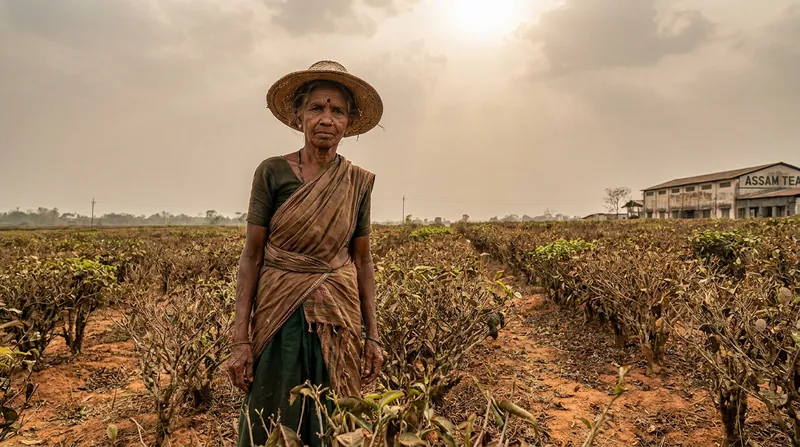
However, this massive new export channel has come with a severe catch for African farmers. Because Chinese beverage conglomerates are purchasing tea strictly as a bulk commodity ingredient rather than a premium standalone product, they exert immense downward pressure on prices. The influx of Chinese demand has paradoxically contributed to a race to the bottom for bulk CTC tea, squeezing margins for smallholder farmers in Kenya and Rwanda.[3]
Global trade data reflects this squeeze. While Kenya exported nearly 600 million kilograms of tea in recent years, the average price per kilogram for bulk CTC has stagnated or fallen. Chinese export prices have also suffered in the global market; China's own black tea export price plummeted from $7.34 per kilogram in 2015 to just $5.26 per kilogram in 2025, as traditional export models hit a wall against cheaper global alternatives.[2]
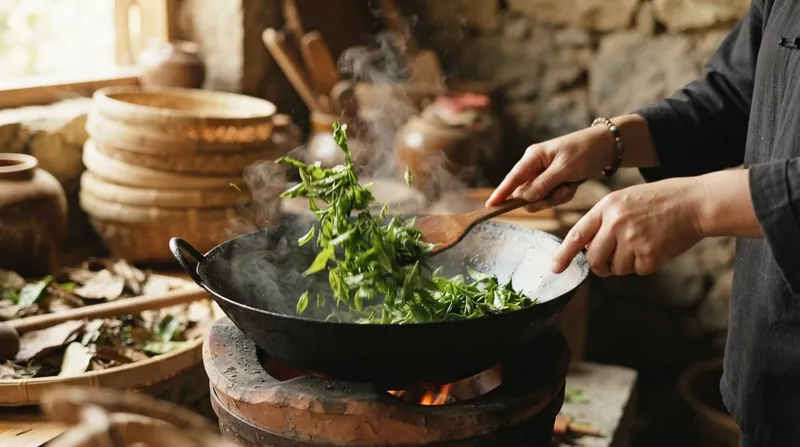
Faced with shrinking margins on bulk CTC tea, African growers and international investors are beginning to pivot. The strategy is to move up the value chain by producing "orthodox" tea. Unlike the mechanized CTC method, orthodox processing is a more labor-intensive approach that preserves the whole leaf, resulting in a higher-cost product with a nuanced flavor profile that appeals to traditional tea drinkers and premium markets.[4]
This pivot is already attracting significant foreign capital. In late 2025, Benny Tea Industries, one of China's largest tea companies, announced a $100 million investment in Kenya. The initiative focuses specifically on modernizing Kenya's tea processing infrastructure to expand orthodox tea production. By setting up modern orthodox factories in selected tea-growing counties, the company aims to secure a steady supply of premium whole-leaf tea for higher-end Chinese consumers.
For Kenyan producers, this represents a vital lifeline. Demand for Kenyan orthodox tea has surged, with export values jumping from $4.4 million in 2022 to over $20 million in 2024. The shift allows farmers to decouple their livelihoods from the volatile, low-margin bulk CTC market and capture a larger share of the final retail price.[4]
The transition is being aided by structural reforms within African markets. Kenya recently implemented policies allowing local tea factories to sell directly to international buyers, bypassing the traditional Mombasa Tea Auction and various intermediaries. Direct market access enables producers to negotiate better prices, secure long-term contracts with Chinese buyers, and build stronger international brand recognition.
The transition is being aided by structural reforms within African markets.
As the global tea trade rewires itself, the traditional hierarchy of producers and consumers is blurring. China's dual role as a premium artisanal producer and a massive importer of industrial bulk tea highlights the bifurcated nature of the modern market. Meanwhile, African growers are proving that they are not just passive suppliers of cheap raw materials, but agile participants capable of adapting to the shifting tastes of the world's largest consumer base.[4]
Key terms
- Net Importer
- A country that buys more of a specific good from the rest of the world than it sells, indicating that domestic demand has outstripped domestic supply for that category.
- CTC (Crush, Tear, Curl)
- A highly mechanized tea processing method that crushes leaves into uniform pellets, designed for rapid brewing and mass-market commercial use.
- Orthodox Tea
- A traditional, labor-intensive method of processing tea that preserves the integrity of the whole leaf, yielding complex flavors and commanding premium prices.
- New-Style Tea Beverages
- A modern category of commercial drinks, including bubble teas and fruit-infused teas, that rely on heavily sweetened, standardized tea bases.
Frequently asked
Why is China importing black tea when it produces so much?
China's domestic production is largely focused on green tea and artisanal premium teas. The booming 'new-style' beverage market (like bubble tea) requires massive volumes of cheap, standardized black tea that domestic producers cannot supply at competitive prices.
What is the difference between CTC and orthodox tea?
CTC (Crush, Tear, Curl) is a mechanized process that turns tea leaves into small, hard pellets ideal for quick brewing in tea bags and milk teas. Orthodox tea is processed to preserve the whole leaf, resulting in a more nuanced flavor and a higher market price.
How are African growers responding to falling prices?
Many are partnering with foreign investors to upgrade their facilities to produce orthodox tea, which commands a higher premium. They are also utilizing new policies to sell directly to international buyers, bypassing traditional auction middlemen.
Viewpoints in depth
African Growers' Strategy
Pivoting away from low-margin bulk commodities toward premium processing and direct sales.
For decades, East African tea economies were built on volume. By mastering the CTC method, countries like Kenya became the undisputed kings of bulk export, feeding the tea bags of Europe and the Middle East. However, as Chinese beverage giants entered the market demanding even lower prices for massive industrial scale, the volume-first model began to yield diminishing returns. In response, growers are actively seeking to decouple from the commodity trap. By utilizing foreign capital to build orthodox processing facilities, they are attempting to reclaim pricing power. Furthermore, recent regulatory shifts allowing direct sales to international buyers mean farmers can bypass the Mombasa auction, retaining a larger share of the profits and building direct relationships with premium Chinese buyers.
Chinese Beverage Industry
Prioritizing absolute standardization and cost efficiency to fuel rapid domestic expansion.
The modern Chinese tea market is no longer defined solely by quiet, artisanal tea ceremonies; it is dominated by massive, fast-paced beverage franchises. Brands operating thousands of storefronts cannot rely on the seasonal variations and high costs of traditional domestic black tea. They require a product that tastes exactly the same in Beijing as it does in Chengdu, and they need it at a price point that supports high-margin retail drinks. Importing bulk CTC tea from Africa solves this logistical hurdle perfectly. The industry views the shift to net importer status not as a loss of cultural heritage, but as a necessary evolution of a highly efficient, globally integrated supply chain.
- African Tea Growers
- Focused on escaping the low-margin trap of bulk commodity exports by securing direct market access and upgrading to premium orthodox processing.
- Chinese Beverage Brands
- Prioritize massive scale, absolute flavor standardization, and rock-bottom raw material costs to fuel the rapidly expanding domestic milk tea market.
- Global Trade Analysts
- View the shift as a historic reversal of China's centuries-old export dominance, highlighting how consumer trends can fundamentally rewire global agricultural flows.
Perspectives this story doesn't cover
- Smallholder African farmers facing immediate cash-flow issues
- Traditional Chinese artisanal tea producers losing domestic market share
Sources
Source coverage
4 outlets
3 viewpoints surfaced




- [1]UN ComtradeGlobal Trade Analysts
Global Trade Data: HS Code 090240 (Black Tea)
Read on UN Comtrade → - [2]Firsd TeaGlobal Trade Analysts
2026 China Tea Report: Production and Exports
Read on Firsd Tea → - [3]TridgeGlobal Trade Analysts
Black Tea Global Market Overview 2026
Read on Tridge → - [4]Factlen Editorial Team
Synthesis by Factlen editorial team
Read on Factlen Editorial Team →
More in Food & Drink
See all →Global Tea Market
How China's Zero-Tariff Policy on African Tea is Rewiring the Global Market
4 sources

Tea Chemistry
L-Theanine Counterbalances Caffeine in Tea to Elevate Alpha Brain Waves
2 sources

Extraction Kinetics
How Rapid Catechin Depletion Makes the Second Steep of Oolong and Pu-erh Taste Sweeter
7 sources

Food Chemistry
How Heat Inactivates the Enzyme That Turns Green Tea Leaves Black
4 sources
Comments
Every angle. Every day.
Get Food & Drink stories with full source coverage and perspective breakdowns, free every day.