
Apple Prepares Massive Ecosystem Shift with iOS 27, Rebuilt Siri, and Foldable iPhone Rumors
Apple's upcoming iOS 27 introduces a deeply integrated, AI-powered Siri, while software code and supply chain leaks point to the imminent launch of a foldable iPhone and touchscreen MacBook.
By Factlen Editorial Team
- Apple Ecosystem Users
- Enthusiastic about the deep integration of AI across devices and the ability to seamlessly sync Siri conversations from iPhone to Mac.
- Hardware Enthusiasts
- Focused on the long-awaited arrival of the foldable iPhone and touchscreen MacBook, viewing them as necessary innovations to keep pace with competitors.
- Industry Analysts
- Evaluating Apple's strategic pivot, noting that the company is abandoning its historical resistance to touchscreen laptops and adopting a late-but-refined approach to AI and foldables.
What's not represented
- · Competitor Strategy Teams (Google/Samsung)
- · App Developers adapting to the new foldable APIs
Why this matters
After years of incremental updates, Apple is fundamentally changing how users interact with its devices through deeply integrated AI and entirely new hardware form factors. These upcoming releases will dictate the next decade of the Apple ecosystem, affecting everything from daily smartphone tasks to professional computing.
Key points
- iOS 27 introduces a completely rebuilt, AI-powered Siri with personal context and on-screen awareness.
- Siri will feature a dedicated app for the first time, syncing conversation history across iPhones, iPads, and Macs.
- Code in the iOS 27 developer beta strongly hints at the imminent release of a foldable device, rumored to be the iPhone Ultra.
- The foldable iPhone is expected to feature a book-style fold, a titanium frame, and a Touch ID power button.
- Supply chain leaks indicate Apple is finalizing its first touchscreen MacBook, expected to launch in late 2026 or 2027.
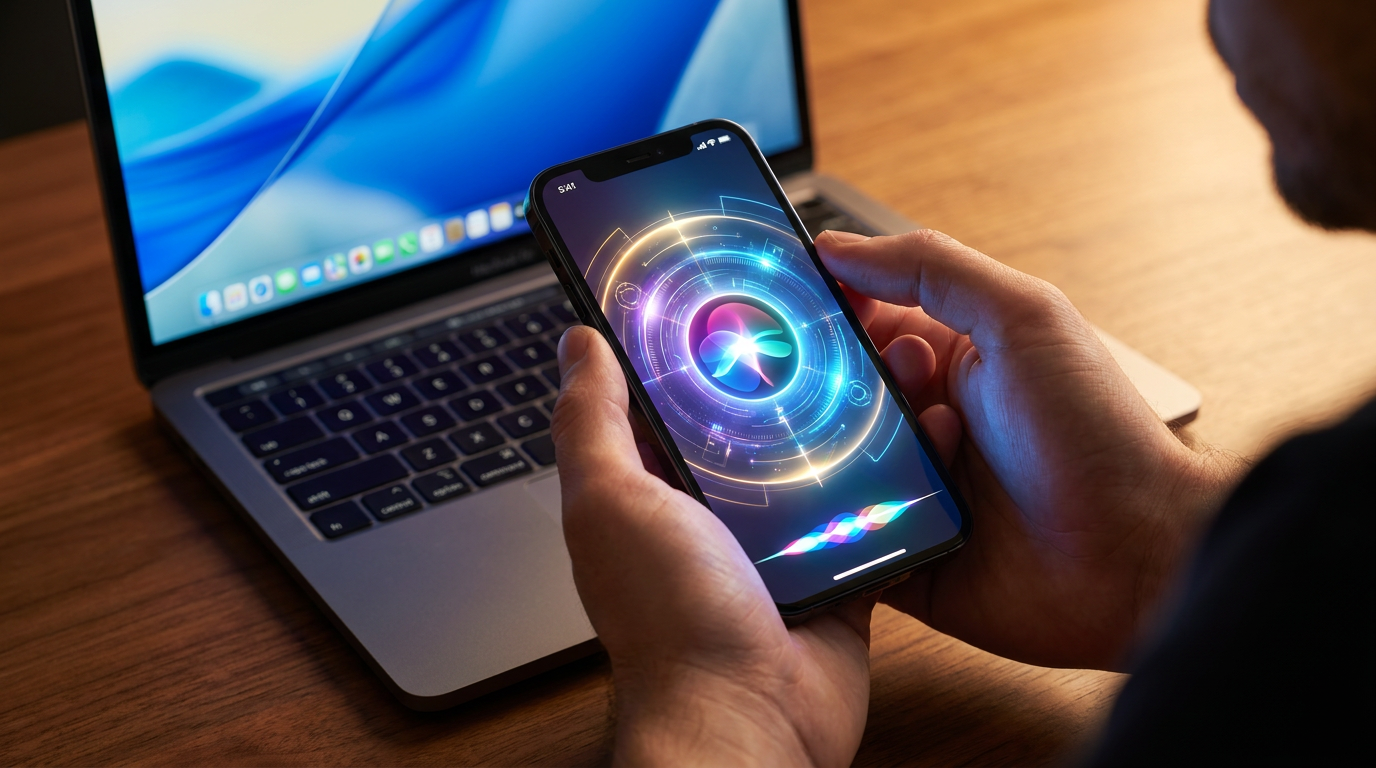
Apple's recent Worldwide Developers Conference and the subsequent rollout of developer betas have unveiled a massive shift for the company's hardware and software ecosystem, headlined by iOS 27 and a completely rebuilt Siri. After years of criticism regarding its digital assistant's limitations, Apple is leveraging its new Apple Intelligence framework to give Siri a comprehensive "brain transplant." The update aims to transform Siri from a basic voice command tool into a deeply integrated, context-aware AI assistant that operates seamlessly across iPhones, iPads, and Macs.[1][2]
The most visible change in iOS 27 is the introduction of a dedicated Siri app. For the first time, Siri exists as a standalone application with a chat-style interface, allowing users to type queries, upload photos for analysis, and revisit past conversations. Because the app syncs privately via iCloud, a user can begin a complex query on their iPhone and seamlessly continue the conversation later on their Mac or Apple Vision Pro.[3][4]
Under the hood, the new Siri AI possesses "personal context" and on-screen awareness. The assistant can now securely search across a user's messages, emails, photos, and files to answer highly specific questions. For example, a user can ask Siri to pull up a hotel confirmation number from a six-week-old email or find a recipe sent in a recent text thread, and the assistant will retrieve the exact information without requiring the user to open the respective apps.[3][4]
Visual Intelligence is another major addition to the ecosystem. Integrated directly into the Camera app, this feature allows users to point their device at real-world objects to get immediate information. Whether it is translating a sign, identifying a landmark, or splitting a bill from a restaurant receipt, Siri can now "see" what the user sees and take action. On the Mac, users can trigger Visual Intelligence with a keyboard shortcut to analyze anything currently displayed on their screen.[3]
While Apple Intelligence powers the core experience, the company is also opening its ecosystem to outside models. According to Bloomberg, iOS 27 will eventually allow users to seamlessly switch from Apple's default AI to third-party chatbots like ChatGPT, Gemini, or Claude directly within the Siri interface. This modular approach ensures that users have access to the most capable models for specific tasks without having to download separate applications.[1][2]
While Apple Intelligence powers the core experience, the company is also opening its ecosystem to outside models.
Beyond the software overhaul, iOS 27 has also provided the strongest evidence yet of Apple's upcoming hardware roadmap. Developers digging through the iOS 27 code discovered hidden references to "foldState" and "angleDegrees"—internal status values designed to tell apps whether a device is folded and at what angle. Because no current Apple device utilizes these states, industry watchers view the code as confirmation that Apple's long-rumored foldable iPhone is imminent.[6][7]

Rumored to be branded as the "iPhone Ultra," the device is expected to feature a book-style fold with a titanium frame. Unlike many existing foldables, the iPhone Ultra will reportedly feature an outer display that is shorter and wider than a standard iPhone, opening up to reveal a 7.6- to 7.8-inch inner display that closely resembles an iPad mini. Crucially, supply chain leaks suggest Apple has developed a new material property to eliminate the visible crease that plagues current foldable screens.[6][7]
To accommodate the ultra-thin chassis required for a foldable design, Apple is reportedly making significant hardware trade-offs. The iPhone Ultra is expected to skip Face ID entirely, as the necessary depth-sensing components are currently too thick to fit into the dual-screen housing. Instead, Apple will reportedly integrate Touch ID into the power button, a biometric solution currently used on the iPad Air and iPad mini. The device is also expected to feature a dual-camera setup rather than the triple-lens array found on Pro models.[6]

The foldable iPhone is not the only radical hardware shift on the horizon. Multiple supply chain analysts and leakers have recently stated that Apple's first-ever touchscreen MacBook is now "100% confirmed" and entering the final stages of development. Expected to launch in late 2026 or early 2027, the device—potentially branded as the MacBook Ultra—will reportedly feature an advanced hybrid OLED display designed to maximize battery efficiency.[5][8]
Apple has historically resisted adding touchscreens to its laptops, arguing that the ergonomic experience is inferior to a trackpad. However, the upcoming macOS 27 Golden Gate operating system lays the groundwork for this hardware pivot. The software introduces several touch-friendly interface elements, including a "swipe down to refresh" gesture in Safari and Mail that mimics the iPhone and iPad experience. Analysts suggest the touchscreen MacBook will be marketed as "touch-friendly" rather than "touch-first," allowing users to seamlessly alternate between trackpad gestures and screen taps.[5][8]

Together, the iOS 27 software overhaul and the impending foldable and touchscreen hardware represent Apple's most aggressive product roadmap in years. After facing criticism for lagging behind competitors in generative AI and foldable displays, the company is positioning itself to deliver highly refined, ecosystem-integrated versions of these technologies. As the fall hardware season approaches, the tech industry is watching closely to see if Apple's meticulous, late-adopter strategy will once again redefine the consumer market.[2][7]
How we got here
January 2023
Initial reports emerge that Apple is actively developing a touchscreen MacBook with an OLED display.
June 2026
Apple unveils iOS 27 and Apple Intelligence at WWDC, showcasing a deeply integrated, AI-powered Siri.
June 2026
Developers discover hidden 'foldState' code in the iOS 27 beta, providing the strongest evidence yet of a foldable iPhone.
Late 2026 / 2027
Expected launch window for Apple's first foldable iPhone and touchscreen MacBook.
Viewpoints in depth
Ecosystem Integration Advocates
Users and developers who believe Apple's true advantage lies in seamless cross-device functionality.
This perspective emphasizes that Apple's late entry into generative AI is offset by its unparalleled ecosystem integration. By allowing Siri to sync conversation history privately via iCloud, users can begin a complex task on their iPhone and finish it on their Mac without losing context. Furthermore, the ability of Apple Intelligence to securely index personal data—like emails, photos, and messages—gives Siri a level of practical utility that standalone chatbots like ChatGPT cannot match without compromising privacy.
Hardware Purists
Analysts and consumers focused on the physical evolution of Apple's product line.
Hardware enthusiasts are closely monitoring Apple's pivot toward form factors it previously dismissed. The rumored touchscreen MacBook represents a significant reversal of Apple's long-standing philosophy that laptops should rely exclusively on trackpads. Similarly, the foldable iPhone Ultra is seen as a necessary response to years of hardware stagnation. By reportedly eliminating the visible screen crease and utilizing premium materials like titanium, Apple aims to enter the foldable market not as the first, but as the most refined option available.
What we don't know
- The exact release date and final pricing for the foldable iPhone Ultra.
- How seamlessly third-party AI models like Gemini and Claude will integrate into the Siri interface.
- Whether the touchscreen MacBook will fully support Apple Pencil input.
Key terms
- Apple Intelligence
- Apple's suite of generative AI features deeply integrated into iOS, iPadOS, and macOS, powering the new Siri and system-wide writing tools.
- Visual Intelligence
- A new AI feature that allows users to point their device's camera at real-world objects to instantly retrieve information or take automated actions.
- OLED
- Organic Light-Emitting Diode, an advanced display technology that offers deeper blacks, higher contrast, and better power efficiency than traditional LCD screens.
- Touch ID
- Apple's fingerprint recognition feature, which is rumored to return on the foldable iPhone due to the space constraints of fitting Face ID sensors into a thin folding chassis.
Frequently asked
Will my current iPhone get the new Siri app?
The dedicated Siri app and advanced Apple Intelligence features are limited to the iPhone 15 Pro, iPhone 15 Pro Max, and newer models.
When is the foldable iPhone coming out?
Rumors and supply chain leaks point to a Fall 2026 or early 2027 release, potentially launching alongside the iPhone 18 lineup.
Is Apple really making a touchscreen Mac?
Yes, supply chain analysts report that a touchscreen MacBook featuring an OLED display is in development, supported by new touch-friendly gestures introduced in macOS 27.
Can I use ChatGPT instead of Siri?
iOS 27 will allow users to seamlessly route queries to third-party chatbots like ChatGPT, Gemini, or Claude directly through the Siri interface.
Sources
Source coverage
8 outlets
3 viewpoints surfaced








[1]EngadgetIndustry Analysts
Apple reportedly has three more iOS 27 features coming in the fall
Read on Engadget →[2]BloombergIndustry Analysts
Apple’s New Siri Is Just Good Enough to Ease Its AI Crisis
Read on Bloomberg →[3]Apple NewsroomApple Ecosystem Users
Siri with Visual Intelligence Now Across iPad, Mac, and Apple Vision Pro
Read on Apple Newsroom →[4]9to5MacApple Ecosystem Users
The Siri app in iOS 27 lets you revisit all your conversations with Siri
Read on 9to5Mac →[5]MacRumorsHardware Enthusiasts
Apple's first touchscreen MacBook is now '100% confirmed'
Read on MacRumors →[6]MacworldHardware Enthusiasts
iOS 27 code contains hidden references to 'foldState' and 'angleDegrees'
Read on Macworld →[7]TechRadarHardware Enthusiasts
5 WWDC 2026 clues that tell us Apple is about to release a foldable iPhone Ultra
Read on TechRadar →[8]CNETIndustry Analysts
The arrival of a touchscreen MacBook is certain, according to leaker
Read on CNET →
More in technology
See all 5 stories →

Every angle. Every day.
Get technology stories with full source coverage and perspective breakdowns delivered to your inbox.