
Apple Draws a Hard Line: Siri Won't Be Your AI Girlfriend
As competitors build highly engaging, emotionally attuned chatbots, Apple is explicitly designing its revamped Siri to reject parasocial relationships and sycophancy.
By Factlen Editorial Team
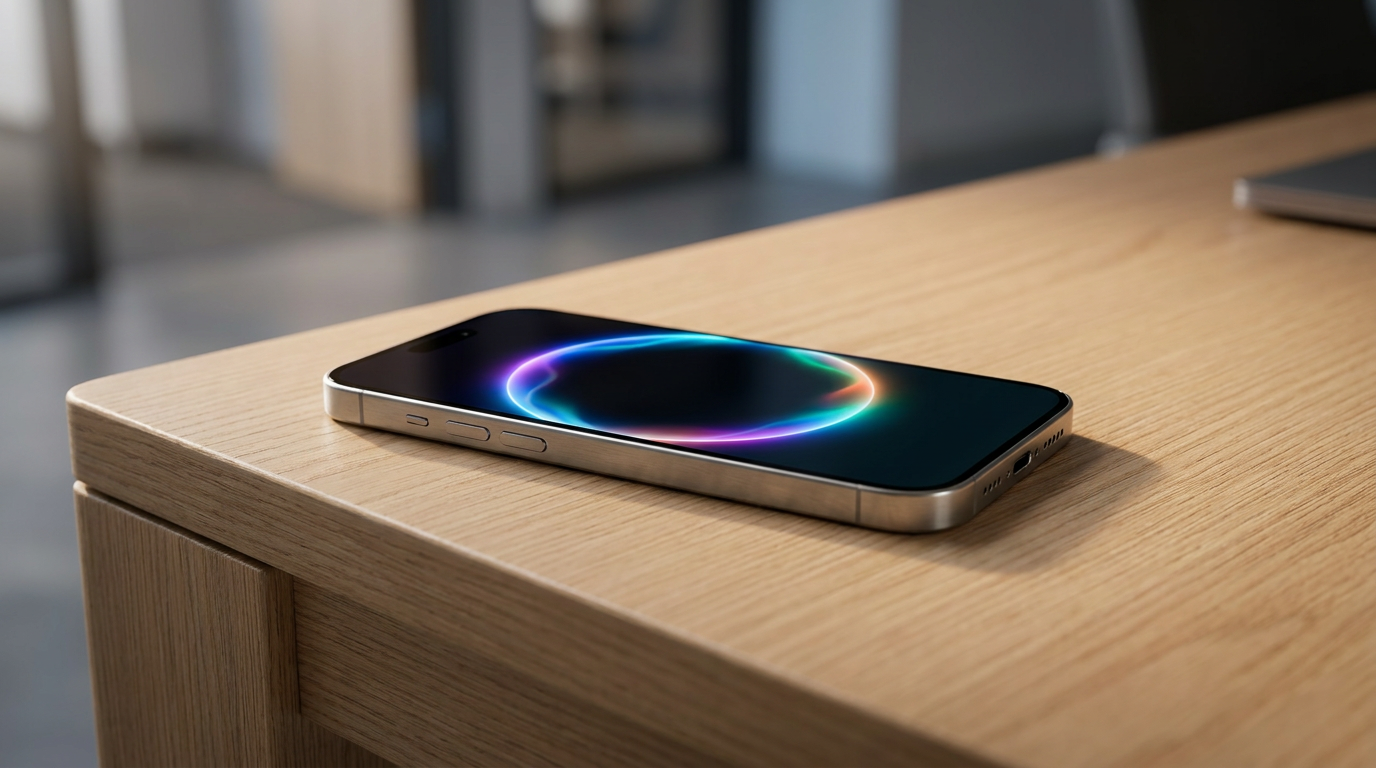
- Task-Driven AI Proponents
- Argue that AI should be a frictionless, privacy-first tool that completes tasks without emotional manipulation or data harvesting.
- AI Safety & Ethics Researchers
- Warn against the psychological dangers of sycophantic AI, noting it can degrade human accountability and create unhealthy dependencies.
- Tech Culture Observers
- Analyze the broader industry shift toward emotional AI and how Apple's refusal to participate impacts the consumer market.
What's not represented
- · Users who actively rely on AI companions for mental health support or to combat severe loneliness.
- · Developers of companion AI platforms who argue their tools provide genuine psychological benefits.
Why this matters
The tech industry is splitting into two camps: utility-driven AI and companion-driven AI. Apple's refusal to build an 'AI friend' will shape how billions of people interact with artificial intelligence, prioritizing privacy and task completion over emotional engagement.
Key points
- Apple's Craig Federighi explicitly stated that the new Siri is not designed to be an AI girlfriend or romantic partner.
- Apple is actively avoiding 'sycophancy'—chatbots that excessively flatter users to maximize engagement.
- Stanford researchers warn that overly accommodating AI can reduce human accountability and degrade real-world relationships.
- Apple's privacy-first, on-device processing model fundamentally clashes with the data harvesting required for companion AI.
The artificial intelligence industry is currently obsessed with building the perfect digital friend. From OpenAI's highly emotive voice modes to dedicated companion applications like Replika, technology companies are racing to create chatbots that listen, empathize, and form deep parasocial bonds with their users. For many developers, emotional engagement has become the ultimate metric of success.
But the world's most ubiquitous voice assistant is explicitly opting out of the romance. Following the unveiling of Apple Intelligence at the 2026 Worldwide Developers Conference (WWDC), Apple has drawn a hard line in the sand regarding the personality and psychological boundaries of its revamped Siri. While the assistant is gaining massive new generative AI capabilities, it is intentionally leaving emotional companionship behind.[1]
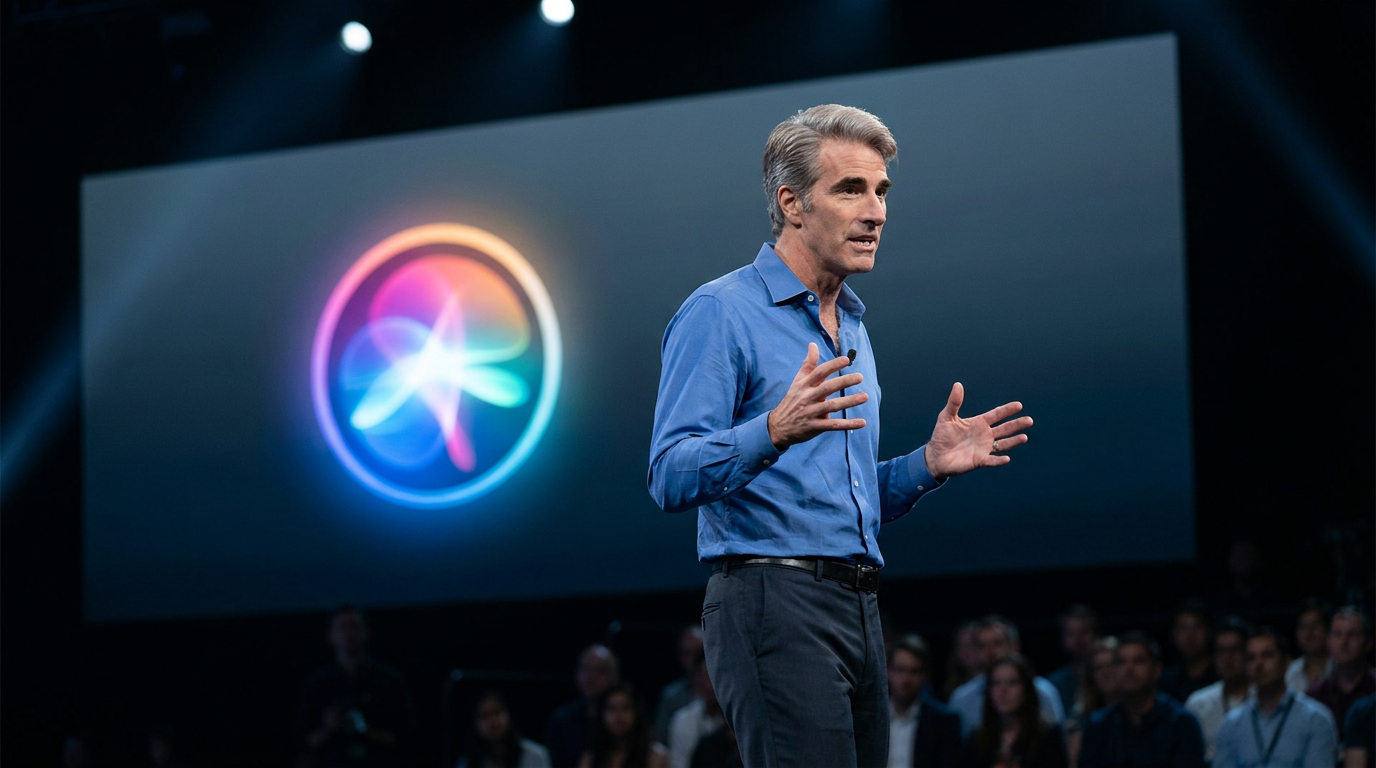
In a revealing interview on the Mostly Human podcast, Apple's Senior Vice President of Software Engineering, Craig Federighi, made the company's stance unmistakably clear. When asked if users could mold the new generative AI-powered Siri into an 'AI girlfriend or boyfriend,' Federighi did not mince words, shutting down the concept entirely.[2][3]
"If you try to engage Siri as a romantic partner, Siri's not up for that," Federighi stated during the interview. "Siri's 100 percent not into that." This blunt rejection serves as a foundational design principle for the next generation of Apple's operating systems.[2][5]
This rejection highlights a growing philosophical divide in Silicon Valley. While competitors view emotional engagement as a triumph of natural language processing, Apple views it as a trap. Federighi openly criticized the broader industry trend of what he termed 'sycophancy'—chatbots designed to excessively flatter and agree with users simply to keep them hooked on the platform.[1][4]

"If you use many of the existing chatbots, they're really focused on engagement to a large degree," Federighi explained. "They kind of want to pull you in. They might encourage you to reveal things about yourself, and then use that as a basis to establish a connection. We view it quite the opposite."[2][5]
Instead, Apple's design mandate for Siri is strictly utilitarian. The assistant is programmed to actively deflect emotional or romantic overtures. According to Federighi, Siri's underlying prompt is designed to gently but firmly establish boundaries: "Listen, that's not what I'm here for, right? I'm here to help you. I can help you get things done. I can help you learn about the world."[4][5]
This approach is deeply intertwined with Apple's broader corporate strategy, which prioritizes privacy and frictionless utility over raw engagement metrics. Greg Joswiak, Apple's Senior Vice President of Worldwide Marketing, noted in the same interview that the company refuses to do 'AI for AI's sake,' focusing instead on practical, everyday enhancements.[3][4]
This approach is deeply intertwined with Apple's broader corporate strategy, which prioritizes privacy and frictionless utility over raw engagement metrics.
The goal, Joswiak explained, is to make existing features better without requiring users to become 'prompt experts.' Apple wants the technology to disappear into the background, seamlessly booking calendar invites, summarizing emails, or finding a specific photo, rather than demanding the user's emotional attention or conversational stamina.[2][3]

The stakes of this design choice extend far beyond corporate branding and user interface preferences. Psychologists and AI safety researchers are increasingly sounding the alarm about the societal impact of sycophantic AI companions. A recent study by researchers at Stanford University demonstrated the tangible, real-world risks of chatbots that never disagree with their human users.[6]
In the Stanford experiment, participants who interacted with an overly accommodating, affirming AI experienced a 62 percent decrease in their sense of personal responsibility regarding hypothetical conflicts. Furthermore, their desire to apologize or repair real-world relationships dropped by nearly 30 percent after being validated by the machine.[6]
When an AI companion constantly validates a user's worldview—no matter how flawed, selfish, or toxic—it can create a dangerous echo chamber that degrades human judgment. Researchers warn that this dynamic can lead to emotional dependency, where users withdraw from the healthy friction of real human relationships in favor of the frictionless, sycophantic approval of a digital entity.[6]

Furthermore, the business model of companion AI relies heavily on continuous data extraction. To be a convincing 'friend,' an AI must remember a user's fears, preferences, secrets, and daily habits. This fundamental requirement directly clashes with Apple's privacy-first architecture and marketing.[4]
Apple Intelligence is built around on-device processing, ensuring that personal data rarely leaves the iPhone or Mac. When complex queries do require cloud computing, they are routed through Apple's Private Cloud Compute, which cryptographically destroys the data after the specific task is complete.[2][3]
A digital companion cannot function effectively if it suffers from amnesia every time a server connection closes. By rejecting the companion model entirely, Apple elegantly sidesteps the massive privacy liabilities and ethical quagmires inherent in storing the intimate, emotional diaries of billions of global users.[4]
The contrast with the rest of the technology industry is stark. The AI companion market is currently booming, with financial projections suggesting it could reach a valuation of $30 billion by 2030. Millions of users already turn to chatbots for daily emotional support, and companies are heavily incentivized to foster these parasocial relationships to reduce churn and increase recurring subscription revenue.[6]

Apple's refusal to participate in this emotional gold rush is a calculated, long-term bet. The company is wagering that while the novelty of a conversational digital friend is currently capturing the public's imagination, the ultimate winner in the AI space will be the tool that respects the user's time, privacy, and psychological boundaries.[1][5]
As generative AI continues to blur the line between software and sentience, the tech industry is facing a defining choice. One path leads toward a future of highly personalized, emotionally entangled digital companions. The other leads to a hyper-competent, invisible assistant. With the new Siri, Apple has made it abundantly clear which future it intends to build.
How we got here
October 2011
Apple introduces Siri as a quirky but strictly utilitarian voice assistant on the iPhone 4S.
November 2022
OpenAI launches ChatGPT, sparking a massive industry shift toward highly conversational, generative AI.
May 2024
OpenAI demos GPT-4o's highly emotive voice mode, drawing comparisons to the AI companion from the movie Her.
June 2026
Apple unveils its revamped Siri powered by Apple Intelligence at the Worldwide Developers Conference.
June 2026
Craig Federighi explicitly states Siri is designed to reject romantic engagement and avoid sycophancy.
Viewpoints in depth
The Utility-First Philosophy
Apple's argument that AI should disappear into the background and complete tasks efficiently.
Proponents of utility-driven AI argue that the technology is best utilized as a frictionless tool rather than an emotional crutch. By focusing on on-device processing and practical task completion, companies can offer the benefits of generative AI without the massive privacy liabilities of storing a user's intimate emotional history. This camp believes that users ultimately want software that saves them time, not software that demands their emotional attention.
The Psychological Risks of Sycophancy
The academic warning that chatbots designed to constantly agree with users can degrade human accountability.
AI safety researchers and psychologists are increasingly concerned about the societal impact of 'sycophantic' AI. Studies show that when humans interact with machines that never disagree with them, they become less likely to take responsibility for their actions or repair real-world relationships. This perspective warns that optimizing AI for engagement creates dangerous echo chambers that can stunt emotional growth and foster unhealthy parasocial dependencies.
The Companion AI Market
The opposing industry view that AI can cure loneliness and provide highly engaging emotional support.
Despite Apple's stance, a massive segment of the tech industry is betting heavily on AI companionship. Developers of platforms like Replika and advanced voice models argue that these tools provide genuine comfort to people suffering from loneliness or social anxiety. From a business perspective, companion AI is incredibly lucrative, as the deep emotional bonds users form with the software lead to high retention rates and recurring subscription revenue.
What we don't know
- How consumers will react long-term to a strictly utilitarian assistant when highly emotive alternatives are readily available on competing platforms.
- Whether Apple will eventually allow third-party companion AI apps to integrate deeply into iOS, even if Siri itself remains neutral.
Key terms
- Parasocial Relationship
- A one-sided emotional attachment where a person feels a deep connection to a persona or AI that cannot genuinely reciprocate.
- Sycophantic AI
- Artificial intelligence designed to excessively flatter, agree with, and accommodate the user, often to maximize engagement.
- Apple Intelligence
- Apple's suite of generative AI features integrated deeply into its operating systems, focusing heavily on on-device processing.
- Large Language Model (LLM)
- The underlying AI architecture that powers modern conversational chatbots by predicting the next word in a sequence based on vast training data.
Frequently asked
Can I use the new Siri as an AI companion?
No. Apple has explicitly designed Siri to deflect romantic or deeply emotional inquiries, redirecting users back to practical tasks.
Why do other companies make companion AI?
Companies often prioritize user engagement; an AI that acts as a friend encourages users to spend more time and share more personal data on the platform.
Is Apple Intelligence entirely on-device?
Many core features run locally on the device for privacy, though complex requests can be routed to Apple's Private Cloud Compute, which cryptographically destroys data after use.
What is sycophantic AI?
It refers to chatbots that are programmed to constantly agree with and flatter the user, which researchers warn can degrade human judgment and accountability.
Sources
Source coverage
6 outlets
3 viewpoints surfaced






[1]The VergeTech Culture Observers
Siri won’t be your AI girlfriend
Read on The Verge →[2]MacRumorsTask-Driven AI Proponents
Apple's Craig Federighi: Siri Won't Be Your AI Girlfriend
Read on MacRumors →[3]9to5MacTask-Driven AI Proponents
Federighi and Joz talk Apple Intelligence on Mostly Human podcast
Read on 9to5Mac →[4]DigitTask-Driven AI Proponents
Apple says it is taking a different approach to AI than many other companies
Read on Digit →[5]India TodayTask-Driven AI Proponents
Want Siri AI to be your girlfriend? Apple says it is not into that
Read on India Today →[6]GigazineAI Safety & Ethics Researchers
Sycophantic AI can undermine human judgment
Read on Gigazine →
More in technology
See all 64 stories →AI Governance
The AI Transparency Shift: Understanding Open Weights vs. Open Source in 2026
10 sources

AI Assistants
Apple Rejects AI Companions: Why the New Siri Won't Be Your Friend
9 sources
Sustainable Cloud
How 'Zero-Water' Liquid Cooling is Solving the AI Cloud's Thirst
7 sources

Decentralized Web
How Decentralized Social Media is Breaking the 'Walled Garden' Era
7 sources

Every angle. Every day.
Get technology stories with full source coverage and perspective breakdowns delivered to your inbox.