
Airbus Cuts 20-Year Global Aircraft Demand Forecast, Citing Geopolitical and Fuel Cost Headwinds
Airbus has slightly trimmed its 20-year global aircraft demand forecast, projecting 42,060 new deliveries by 2045 as airlines prioritize fleet replacement and efficiency over pure capacity expansion.

Share this story
The post-pandemic aviation boom is settling into a more pragmatic reality. After years of aggressive fleet expansion to capture surging travel demand, the global airline industry is recalibrating its long-term expectations.[2]
Airbus, the world's largest commercial aircraft manufacturer, has officially trimmed its 20-year global demand forecast for the first time since the pandemic recovery began. In its newly released 2026–2045 Global Market Forecast, the European planemaker projects that the industry will require 42,060 new passenger and freighter aircraft over the next two decades.[1][3]
While that figure still represents a massive industrial undertaking, it marks a 1% reduction from the company's previous rolling outlook. The downward revision reflects a complex web of macroeconomic headwinds, including volatile fuel costs, trade tariffs, and geopolitical instability stemming from the ongoing Iran conflict.[3]
"That post-COVID recovery has effectively flattened," Antonio Da Costa, Airbus's head of market analysis, told reporters during the forecast's unveiling. He noted that consecutive economic shocks have forced airlines to abandon speculative capacity growth in favor of more conservative, financially disciplined expansion strategies.[2]
The revised 42,060-aircraft total is heavily weighted toward single-aisle jets, which will account for 33,920 deliveries, or roughly 81% of the market. These narrowbody workhorses, such as the Airbus A320neo family and the Boeing 737 MAX, remain the backbone of domestic and regional travel. Widebody aircraft, used primarily for long-haul international routes, make up the remaining 8,140 projected deliveries.[1][2]
But the most revealing data point in the 2026 forecast is not the total number of aircraft—it is the shifting motivation behind the purchases. Airbus now expects 47% of all future deliveries to be used for replacing older aircraft, up from 45% in its previous projection.
This structural shift from pure capacity growth to fleet renewal is a direct response to the industry's twin pressures: operating costs and environmental mandates. With fuel prices remaining elevated due to energy flow disruptions through the Strait of Hormuz, airlines are accelerating the retirement of aging, gas-guzzling jets.[3]
The latest generation of single-aisle aircraft burns 15% to 20% less fuel than the models they are replacing. By 2045, Airbus projects that nearly 100% of the global commercial fleet will consist of these new-generation, highly efficient aircraft, a staggering increase from just 39% in 2026.[1]
This efficiency drive is also reshaping how airlines design their route networks. Historically, the industry relied heavily on the hub-and-spoke model, funneling passengers through massive megahubs before connecting them to their final destinations.
Now, networks are decentralizing. Airbus forecasts that over the next twenty years, urbanization will shift heavily toward smaller and medium-sized cities, which are growing at nearly three times the rate of major metropolitan centers.
This demographic shift, combined with the extended range of modern narrowbody jets like the A321XLR and the A220, is making direct, point-to-point routes between secondary cities economically viable. Routes such as Dublin to Nashville, Riga to Tenerife, or Melbourne to Alice Springs can now be served profitably without forcing passengers to lay over in London, Frankfurt, or Sydney.
Despite the slight reduction in total aircraft deliveries, the fundamental demand for air travel remains robust. Airbus projects that global passenger traffic will grow by an average of 3.9% annually, ultimately more than doubling to roughly 10 billion passengers per year by 2045.[1]
This surge in human movement is anchored in global economic expansion and shifting demographics. Over the next two decades, the global middle class—the demographic most likely to fly—is expected to increase by 1.4 billion people, representing a 34% rise.[1]
Asia remains the undisputed engine of this long-term growth, projected to account for roughly half of all new aircraft deliveries. India stands out as the fastest-growing domestic air travel market in the world, with Airbus actually raising its annual growth expectation for the country to 9.1%.[2]
Conversely, the planemaker lowered its domestic growth outlook for China from 5.4% to 4.7%, adding a note of caution to a market that has historically driven the industry's most aggressive demand projections. Meanwhile, the Middle East is seeing a strong recovery in hub traffic, stabilizing as airlines navigate the regional uncertainty of the Iran conflict.[2]
For the broader aerospace supply chain, the 1% trim in the demand forecast might actually offer a silver lining. Both Airbus and Boeing have struggled with severe manufacturing bottlenecks, parts shortages, and labor constraints that have left them unable to meet their current delivery targets.[3]
A slight cooling in speculative airline orders could give manufacturers the breathing room they need to work through massive multi-year backlogs. It also provides a window for emerging competitors, such as China's COMAC and its C919 jet, to establish a firmer foothold in the market.[2]
Ultimately, the 2026 Global Market Forecast paints a picture of a maturing industry. The next era of commercial aviation will not be defined by the sheer volume of planes added to the sky, but by a disciplined transition toward smarter, cleaner, and more direct global connectivity.
Key points
- Airbus projects a need for 42,060 new commercial aircraft by 2045, a 1% decrease from its previous 20-year forecast.
- The reduction is driven by geopolitical instability, trade tariffs, and volatile fuel costs that have flattened the post-pandemic recovery.
- Airlines are shifting focus from pure capacity growth to fleet renewal, with 47% of new deliveries earmarked to replace older jets.
- By 2045, nearly 100% of the global commercial fleet will consist of new-generation, highly fuel-efficient aircraft.
Open questions
- How long the current supply chain bottlenecks will persist, and whether Airbus and Boeing can scale production to meet even this slightly reduced demand.
- To what extent rising operational costs and fleet renewal expenses will be passed on to passengers in the form of higher ticket prices.
- Whether emerging aircraft manufacturers, such as China's COMAC, can capture a meaningful share of the 42,060 projected deliveries.
Timeline
2020–2022
The COVID-19 pandemic causes a historic collapse in global air travel, prompting airlines to ground fleets and delay new aircraft orders.
2023–2024
A sharp post-pandemic rebound in passenger demand leads to a surge in massive aircraft orders, straining manufacturer supply chains.
2025
Escalating geopolitical conflicts and energy market disruptions begin to inflate airline operating costs.
July 2026
Airbus releases its 2026–2045 Global Market Forecast, trimming its 20-year demand outlook to reflect a maturing, efficiency-focused market.
- Aviation Market Analysts
- Focus on the macroeconomic drivers shifting the industry from aggressive growth to disciplined replacement.
- Aerospace Manufacturers
- Emphasize the long-term resilience of air travel demand and the shift toward fuel-efficient, decentralized networks.
- Industry Data Trackers
- Analyze the specific numerical shifts in fleet composition, regional growth rates, and delivery timelines.
Perspectives this story doesn't cover
- Consumer advocacy groups concerned about how slower capacity growth might impact ticket prices and route availability.
- Environmental organizations evaluating whether fleet renewal is sufficient to offset the emissions from a doubling of passenger traffic.
Sources
Source coverage
3 outlets
3 viewpoints surfaced



- [1]AirbusAerospace Manufacturers
Airbus forecasts traffic growth driven by urbanisation and increased connectivity
Read on Airbus → - [2]Aviation Business Middle EastAviation Market Analysts
Airbus reduces 20-year forecast for global passenger aircraft demand
Read on Aviation Business Middle East → - [3]QuartzAviation Market Analysts
Airbus is trimming its 20-year jet demand forecast as Iran war and tariffs stall aviation's rebound
Read on Quartz →

More in Transportation
See all →Aviation Safety
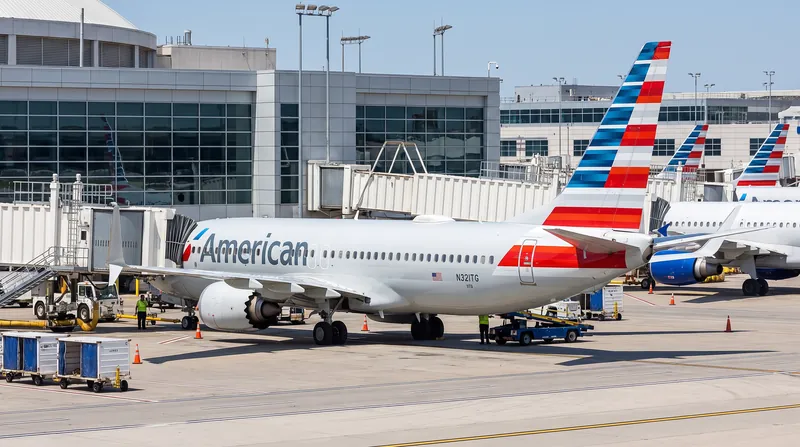
FAA Orders Mandatory Crack Inspections for 471 Boeing 737 Max Jets
5 sources
Aviation Decarbonization
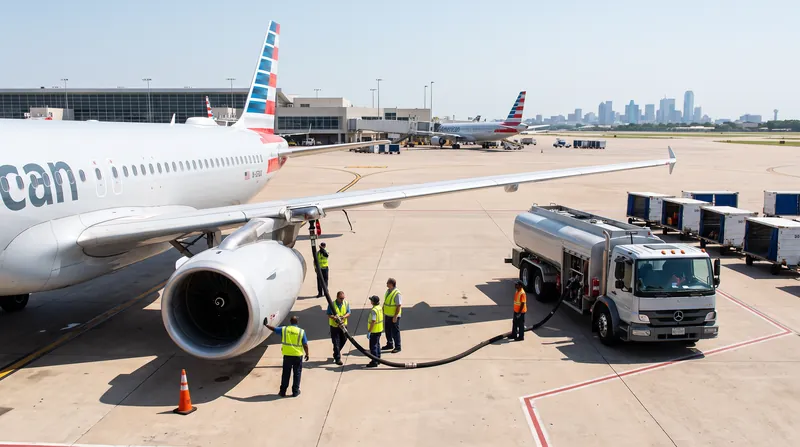
American Airlines Operates First U.S. Commercial Flight Powered by Electro-Synthetic Fuel
6 sources
Aviation Safety
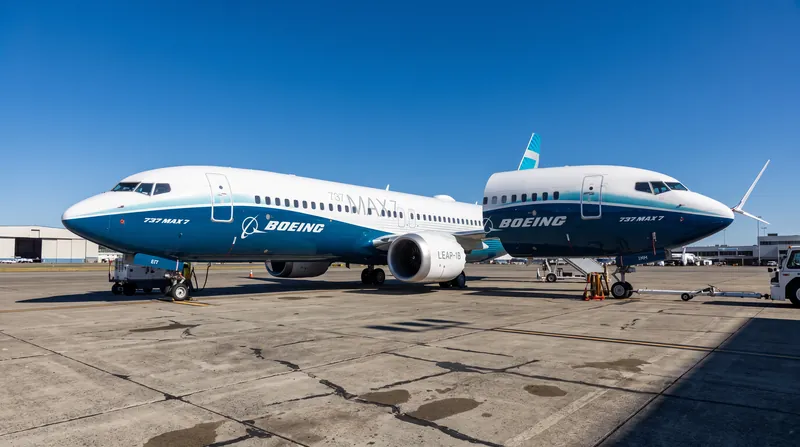
FAA Certifies Boeing 737 MAX-7, Ending Years-Long Regulatory Review
6 sources
Space Regulation
FAA Proposes Rule Allowing Transportation Secretary to Waive 13 Environmental Laws for Commercial Space Launches
2 sources

Comments
Every angle. Every day.
Get Transportation stories with full source coverage and perspective breakdowns, free every day.