
20-Year NIH Trial: Lifestyle Intervention, Not Metformin, Cuts Risk of Multiple Chronic Diseases in Prediabetes
A landmark two-decade study reveals that diet and exercise significantly reduce the risk of developing multiple chronic conditions as we age, outperforming the popular diabetes drug metformin.


- Preventative Medicine Advocates
- Argue that structured, daily lifestyle habits address the root systemic causes of aging and metabolic decline far better than single-target pharmaceuticals.
- Public Health Officials
- Focus on the scalable, long-term cost savings and quality-of-life improvements that come from delaying chronic diseases in an aging population.
- Longevity & Biohacking Community
- Often champion metformin as a low-cost anti-aging shortcut, but must now grapple with long-term data showing its limitations for broad disease prevention.
Summary
- A 20-year follow-up of the Diabetes Prevention Program found lifestyle changes cut the risk of multiple chronic diseases by 21%.
- The diabetes drug metformin did not significantly reduce the risk of developing multiple chronic conditions compared to a placebo.
- The lifestyle program focused on 150 minutes of weekly physical activity, reduced dietary fat, and a 7% weight loss.
- The protective benefits extended to conditions like stroke, heart failure, chronic kidney disease, and COPD.
For decades, the search for a magic bullet to slow aging and hold off the cascade of chronic diseases has captivated everyone from Silicon Valley biohackers to neighborhood walking groups. Metformin, a humble and inexpensive diabetes medication, has long been the darling of this quest, rumored to be a pharmaceutical fountain of youth. But the short version of a newly published, two-decade-long study is stated plainly: the most powerful medicine we have isn't found in a pill bottle. It is found in the daily, tangible rhythms of how we move and what we eat.[1][4]
According to landmark findings published in JAMA this week, adults who committed to an intensive lifestyle program experienced a 21 percent lower risk of developing multiple chronic diseases over a 20-year period compared to those who did nothing. Metformin, despite its glowing reputation, failed to offer the same broad, systemic protection. The results force a profound shift in how we think about our future selves, proving that the effort we put into a brisk evening walk or a vibrant, home-cooked meal pays dividends that no drug can match.[1][2]
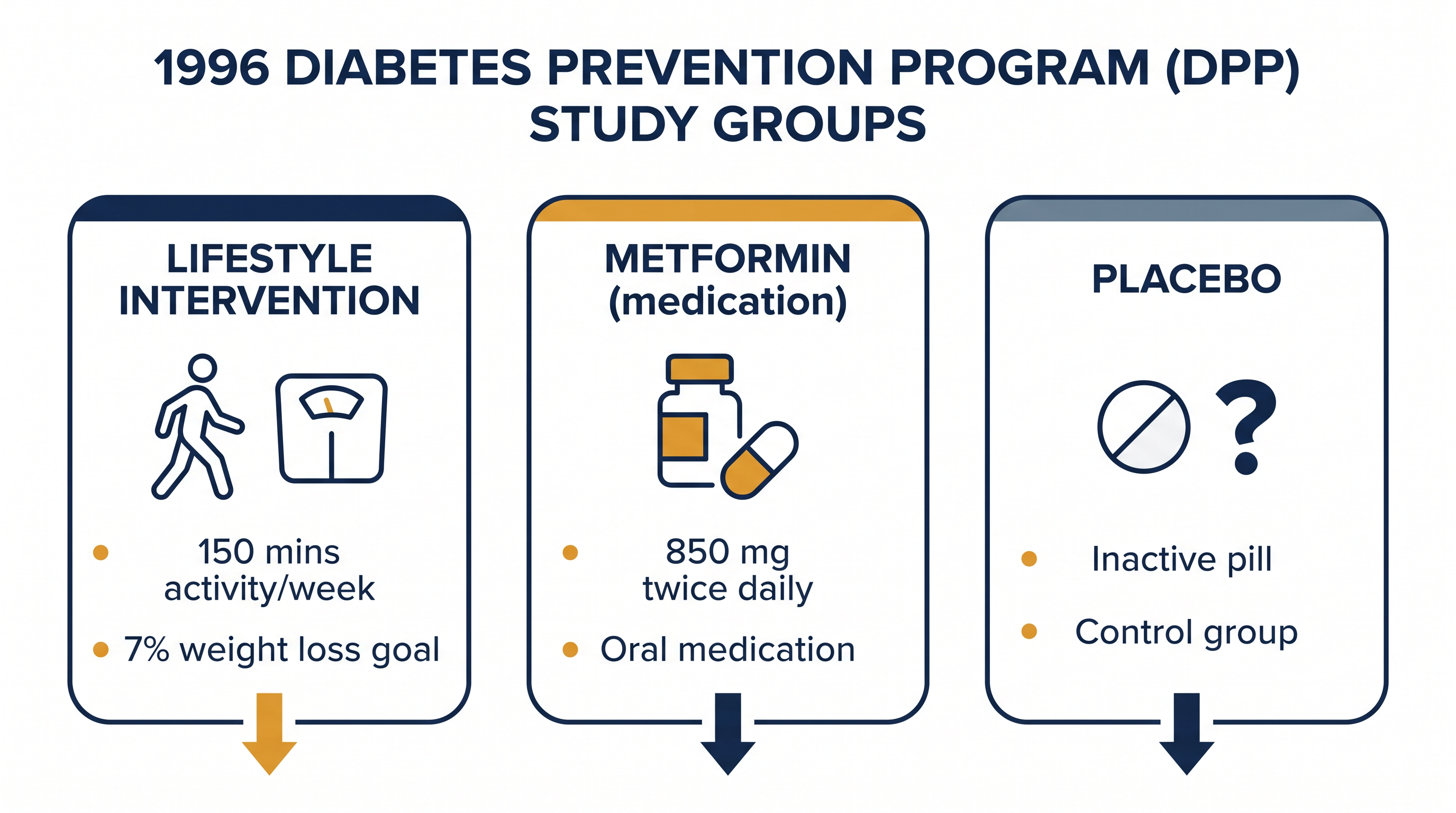
To understand how we got here, we have to look back to 1996. That year, the National Institutes of Health launched the Diabetes Prevention Program, recruiting thousands of adults who were at high risk for developing type 2 diabetes. The participants were split into three paths: one group took a daily placebo, another took metformin, and a third group was guided through a structured lifestyle intervention.[2]
The lifestyle group wasn't asked to perform extreme feats of endurance or adopt punishing diets. Instead, they aimed for a modest 7 percent reduction in body weight and committed to 150 minutes of moderate physical activity each week—roughly a 20-minute daily walk. They also worked on reducing dietary fat and increasing their intake of fresh, fiber-rich foods. The researchers then tracked these individuals for more than two decades, watching to see how their health unfolded as they aged.[2]
The initial results, published years ago, proved that both the lifestyle changes and metformin could successfully delay the onset of diabetes. But the new analysis, led by researchers tracking Medicare claims through 2021, asked a much bigger question: did these interventions protect against the broader, compounding burden of aging? They looked at a metric called multimorbidity, defined simply as the presence of two or more chronic health conditions in a single person.[1][2]
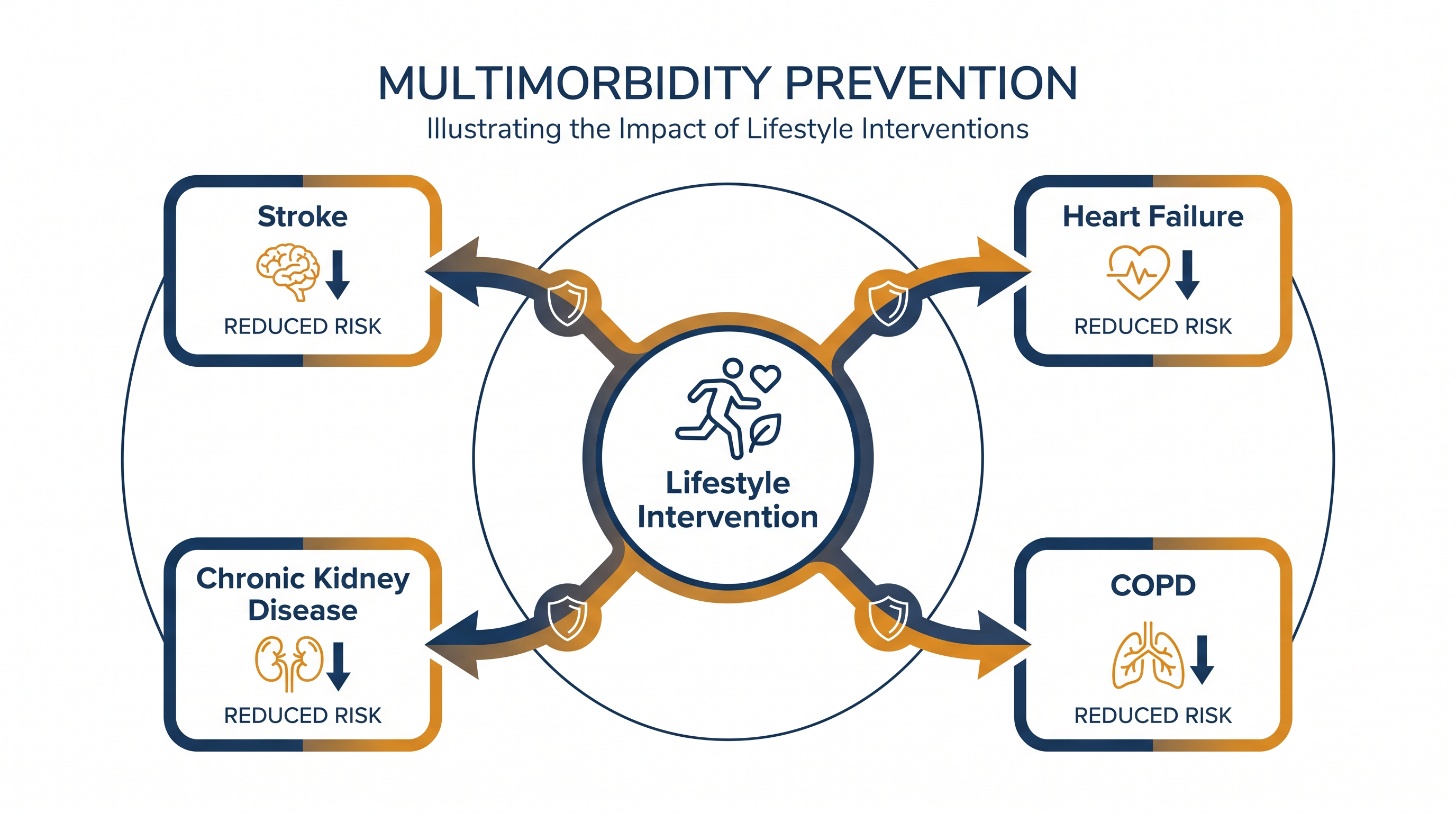
The evidence was striking. The group that had spent their middle years walking, swimming, and eating mindfully didn't just dodge diabetes; they fundamentally altered their health trajectory. They experienced significantly lower rates of devastating disease combinations, including stroke, chronic kidney disease, heart failure, and chronic obstructive pulmonary disease (COPD). The benefits of their daily habits rippled outward, protecting organ systems that a targeted diabetes drug couldn't reach.[1]
The group that had spent their middle years walking, swimming, and eating mindfully didn't just dodge diabetes; they fundamentally altered their health trajectory.
Metformin, by contrast, fell short of its mythical status. While the drug is highly effective at managing blood sugar, the participants assigned to take it did not experience a statistically significant reduction in their overall risk of multimorbidity compared to the placebo group. It turns out that while a pharmaceutical can tweak a specific metabolic pathway, it cannot replicate the full-body symphony of benefits that occurs when we actively engage our muscles and nourish our cells.[3][4]
The mechanism behind this difference lies in the systemic nature of human biology. When you step outside for a brisk walk, you aren't just burning calories. You are conditioning your heart muscle, improving the elasticity of your blood vessels, clearing your mind, and prompting your muscles to absorb glucose more efficiently. When you swap heavy, processed meals for crisp vegetables and hearty legumes, you are feeding your gut microbiome and lowering systemic inflammation.

A pill, no matter how well-designed, is a single tool. Lifestyle is a complete physiological overhaul. The researchers noted that the reduced risk of chronic diseases in the lifestyle group remained robust even when diabetes was completely removed from the analysis. This proves that the protective effect wasn't just a byproduct of keeping blood sugar in check; it was a fundamental upgrade to the body's resilience.[1]
However, the data also carries a dose of realistic uncertainty. The study does not promise immortality, nor does it suggest that chronic illness can be entirely avoided if we just eat enough kale. In fact, the researchers found that by the end of the two-decade follow-up, 85 percent of all participants had developed at least two chronic conditions. Aging remains an inevitable process, and our bodies will eventually wear down.[2][3]
The true victory found in this data is the gift of time. While the lifestyle group eventually faced health challenges, they pushed those challenges back by years. In the context of a human life, delaying the onset of heart failure or dementia by five or ten years is a monumental triumph. It means more years of independence, more energy to travel, and more time spent actively enjoying family rather than managing medical appointments.[2]
For anyone looking to apply these findings to their own life, the takeaway is deeply encouraging. You do not need to become a biohacker or invest in expensive longevity supplements to protect your future. The protocol that achieved these remarkable results is accessible, free, and grounded in common sense. It is the feeling of your heart rate rising as you cycle through your neighborhood, and the satisfaction of preparing a meal that makes you feel vibrant rather than sluggish.
As we look toward an era where the global population is aging rapidly, preventing the accumulation of multiple chronic diseases is perhaps the most urgent public health challenge we face. This landmark study reminds us that while modern medicine is miraculous, our daily choices remain our most potent defense. The path to a healthier, more resilient older age is paved with the simple, consistent habits we choose to build today.[2]
Ultimately, the 20-year legacy of the Diabetes Prevention Program is a testament to human agency. It strips away the illusion that our health is entirely at the mercy of our genetics or that we must wait for a pharmaceutical breakthrough to save us. By embracing the sensory, lived experience of moving our bodies and eating well, we are actively writing a better, more capable future for ourselves—one walk and one meal at a time.
Definitions
- Multimorbidity
- The co-occurrence of two or more chronic health conditions in a single individual, such as having both heart disease and arthritis.
- Prediabetes
- A condition where blood sugar levels are higher than normal but not yet high enough to be diagnosed as type 2 diabetes.
- Metformin
- A widely prescribed, inexpensive oral medication used to lower blood sugar levels in people with type 2 diabetes.
- Systemic inflammation
- A chronic, low-grade immune response throughout the body that contributes to the development of many age-related diseases.
- Health span
- The period of a person's life during which they are generally healthy and free from serious or chronic illness, as opposed to just their total lifespan.
Chronology
1996
The National Institutes of Health launches the Diabetes Prevention Program (DPP), enrolling over 3,200 adults with prediabetes.
2001
The initial phase of the trial ends early because both the lifestyle intervention and metformin clearly demonstrate success in delaying type 2 diabetes.
2002
Researchers launch the DPP Outcomes Study (DPPOS) to track the long-term health of the original participants over the coming decades.
June 2026
A new analysis published in JAMA reveals that the lifestyle group, unlike the metformin group, experienced a 21 percent lower risk of developing multiple chronic diseases over 20 years.
Analysis by camp
Preventative Medicine Advocates
Argue that structured, daily lifestyle habits address the root systemic causes of aging and metabolic decline far better than single-target pharmaceuticals.
For those in the preventative medicine and holistic health spaces, this 20-year data is the ultimate vindication. They point out that a pharmaceutical like metformin is designed to alter a specific metabolic pathway—primarily how the liver produces glucose. While effective for its intended purpose, it cannot mimic the full-body cascade of benefits triggered by physical movement and whole-food nutrition. Advocates emphasize that a brisk walk simultaneously conditions the cardiovascular system, builds muscle mass, clears metabolic waste from the brain, and reduces systemic inflammation. They argue that healthcare systems should pivot funding toward subsidizing gym memberships, nutritional counseling, and walkable community infrastructure, treating lifestyle as the primary medical intervention rather than an afterthought.
Public Health Officials
Focus on the scalable, long-term cost savings and quality-of-life improvements that come from delaying chronic diseases in an aging population.
From a population health perspective, the focus is on the sheer scale of the aging crisis. With 85 percent of participants eventually developing multiple chronic conditions, officials acknowledge that aging is inevitable. However, they view the 21 percent risk reduction achieved by the lifestyle group as a massive victory in 'compressing morbidity'—shortening the window of life spent in a state of severe illness. Delaying the onset of costly, debilitating conditions like heart failure or COPD by even a few years translates to billions of dollars in Medicare savings and a vastly improved quality of life for seniors. Their goal is to figure out how to scale the intensive, structured support of the 1996 trial to millions of everyday adults.
Longevity & Biohacking Community
Often champion metformin as a low-cost anti-aging shortcut, but must now grapple with long-term data showing its limitations for broad disease prevention.
The biohacking and longevity communities have spent the last decade elevating metformin from a standard diabetes treatment to a highly sought-after anti-aging supplement. Many healthy individuals secure off-label prescriptions, hoping the drug's cellular effects will act as a shortcut to a longer health span. This new data forces a reckoning within that community. While they still value metformin's specific mechanisms, the clear failure of the drug to prevent broader multimorbidity compared to basic diet and exercise is a humbling reality check. It reinforces a growing consensus among longevity experts that there is no 'hack' that can outpace the foundational pillars of sleep, movement, and nutrition.
Questions & answers
Did the lifestyle changes prevent chronic diseases entirely?
No. By the end of the 20-year study, 85 percent of all participants had developed at least two chronic conditions. The lifestyle intervention successfully delayed the onset of these diseases, giving people more years of healthy independence.
What exactly did the lifestyle program involve?
Participants aimed to lose 7 percent of their body weight, reduce their dietary fat intake, and engage in at least 150 minutes of moderate physical activity (like brisk walking) every week.
Is metformin still useful?
Yes. Metformin remains a highly effective and proven medication for managing blood sugar and delaying type 2 diabetes. However, this study showed it does not provide the same broad protection against other chronic diseases as diet and exercise.
Does this apply to people who already have diabetes?
While this specific study tracked people who started with prediabetes, the systemic benefits of movement and healthy eating are universally recognized to improve outcomes and quality of life for those who already have diabetes.
Limits of the evidence
- Whether starting the lifestyle intervention later in life, after multiple chronic conditions have already developed, can reverse the accumulation of multimorbidity.
- Exactly which specific component of the lifestyle intervention—the weight loss, the dietary changes, or the physical activity—contributed the most to the protective effect.
Significance
As the global population ages, preventing the compounding burden of chronic illness is crucial for maintaining independence and quality of life. This research proves that accessible, daily habits offer a more powerful defense against aging than pharmaceutical shortcuts.
Sources
Source coverage
4 outlets
3 viewpoints surfaced




[1]JAMAPublic Health Officials
Lifestyle and Metformin Interventions and Risk of Multimorbidity in Adults with Prediabetes
Read on JAMA →[2]George Washington UniversityPublic Health Officials
Long-Term Study Finds Lifestyle Intervention Reduces Risk of Multiple Chronic Diseases in Adults with Prediabetes
Read on George Washington University →[3]MedPage TodayLongevity & Biohacking Community
Lifestyle Changes Tied to Lower Risk of Multimorbidity, Metformin Not
Read on MedPage Today →[4]MedscapeLongevity & Biohacking Community
What Beats the Biohacking Drug Metformin for Healthy Aging?
Read on Medscape →
Comments

Every angle. Every day.
Get lifestyle stories with full source coverage and perspective breakdowns delivered to your inbox.