
Why Healthy People Are Wearing Continuous Glucose Monitors
Once reserved exclusively for managing diabetes, continuous glucose monitors have become a mainstream tool for biohackers and health enthusiasts seeking real-time metabolic data.
By Factlen Editorial Team
- Biohackers & Longevity Seekers
- View CGMs as essential tools for personalized nutrition, arguing that tracking real-time data optimizes energy and prevents long-term metabolic decline.
- Medical Skeptics
- Warn that constant monitoring in healthy individuals lacks long-term evidence, risks pathologizing normal biological responses, and can trigger severe food anxiety.
- Behavioral Health Advocates
- Argue that real-time data is a uniquely powerful catalyst for lifestyle changes, motivating dietary improvements far more effectively than traditional education.
What's not represented
- · Health insurance providers evaluating coverage for preventative wearables
- · Individuals with eating disorders who may be harmed by hyper-quantified diet trends
Why this matters
Understanding how your unique biology responds to food can eliminate the guesswork of generic diets, offering a personalized roadmap to better energy, improved sleep, and long-term metabolic health.
Key points
- Over-the-counter continuous glucose monitors are now widely available for non-diabetics.
- The devices measure glucose in the interstitial fluid, lagging actual blood sugar by 5 to 15 minutes.
- Real-time data reveals that individual responses to the exact same foods vary enormously.
- Users frequently reduce their sugar intake by 30% to 40% after seeing the data.
- Medical experts warn that constant tracking can cause anxiety over normal, healthy glucose spikes.
- There is currently no long-term clinical evidence proving CGMs extend lifespan in healthy people.
The era of invisible biology is ending. For decades, the only way to know how a specific meal affected your bloodstream was a painful finger-prick or a doctor's lab order. Today, anyone with a smartphone and a credit card can watch their metabolic machinery operate in real time.[9]
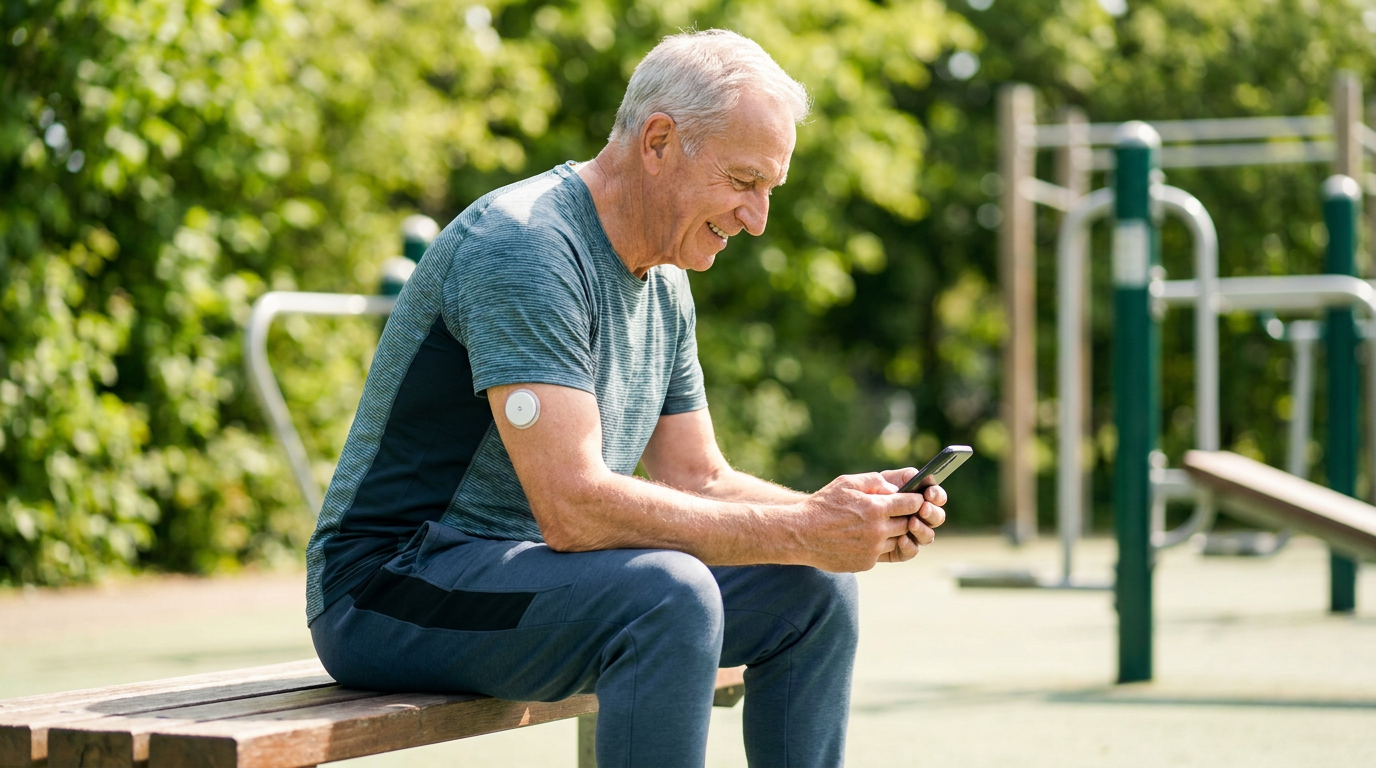
Continuous glucose monitors (CGMs) were invented to save the lives of people with diabetes, acting as a crucial early-warning system for dangerous blood sugar crashes. But in 2026, these quarter-sized wearable sensors have leaped out of the medical sphere and onto the arms of athletes, biohackers, and the simply curious.[1][9]
The shift accelerated rapidly when the U.S. Food and Drug Administration cleared the first over-the-counter CGMs—such as Dexcom's Stelo and Abbott's Lingo—specifically for users without diabetes. The global CGM market, valued at $5.2 billion in 2022, is now hurtling toward a projected $16 billion by 2030, with longevity-focused consumers making up an estimated 25% of the non-diabetic user base.[1][3]
But how exactly do these devices peer inside the body? A CGM does not actually measure blood. When a user presses the applicator to the back of their arm, a tiny, flexible filament—thinner than a human hair—slips just beneath the skin.[8]
This filament sits in the interstitial fluid, the liquid that surrounds the body's cells. As glucose from digested food enters the bloodstream, it eventually seeps into this fluid. The sensor measures that interstitial glucose and transmits the data via Bluetooth to a smartphone app every few minutes.[8]

Because the glucose must travel from the blood vessels into the interstitial fluid, there is a physiological delay. Endocrinologists note that CGM readings typically lag behind actual blood sugar levels by 5 to 15 minutes. While this delay is negligible during steady states, it means the app might not instantly reflect a rapid spike during a high-intensity workout or immediately after a sugary meal.[7][8]
Despite this slight lag, the data is revolutionizing the concept of personalized nutrition. For decades, dietary advice was built on universal glycemic indexes—the idea that a bowl of oatmeal or a banana would provoke a predictable blood sugar response in everyone.[1][9]
Real-time monitoring has shattered that assumption. Landmark research, including a highly cited study by Zeevi and colleagues in the journal Cell, demonstrated that individual glycemic responses to identical foods vary enormously. A banana might provide perfect, stable fuel for one runner, while triggering a massive glucose spike and subsequent energy crash in another.[1]

A banana might provide perfect, stable fuel for one runner, while triggering a massive glucose spike and subsequent energy crash in another.
This personalized feedback loop is the primary draw for healthy users. Instead of following generic dietary guidelines, wearers can run n-of-1 experiments on their own biology. They can see exactly how a poor night of sleep degrades their carbohydrate tolerance the next day, or how stress from a tense meeting causes their liver to dump glucose into their system.[2][9]
The behavioral impact of this real-time data is striking. According to market research, non-diabetic CGM users reduce their overall sugar intake by 30% to 40% on average. Seeing a stark, red spike on a smartphone screen after drinking a seemingly healthy fruit smoothie often prompts immediate dietary swaps.[3]

"Near real-time feedback from CGM appears to help individuals better understand the impact of food, physical activity, sleep and stress on their glucose levels, motivating behaviour change more effectively than dietary and lifestyle education alone," notes Dr. Iseult Roche, a director at the health policy think tank 20/20health.[5]
Users also discover powerful behavioral levers to blunt those spikes. A common revelation among biohackers is the efficacy of post-prandial movement. Taking a brisk 15-minute walk immediately after a carbohydrate-heavy meal can reduce the subsequent glucose rise by 20 to 30 mg/dL, as contracting muscles pull glucose out of the blood without requiring insulin.[7]
Yet, the mainstreaming of CGMs has sparked intense debate within the medical community. Many endocrinologists and primary care physicians warn that strapping a medical diagnostic tool onto a healthy person can do more harm than good, primarily by pathologizing normal human physiology.[2][6]
"Glucose spikes are a normal metabolic response to food and fuel and exercise," experts told ABC News Australia. In a healthy body, insulin rapidly brings that post-meal spike back to baseline. A temporary rise to 140 mg/dL after eating a bowl of rice is not a medical crisis—it is the body working exactly as designed.[4]
Without medical context, users often misinterpret these normal fluctuations as dangerous. This can lead to severe data anxiety and a hyper-fixation on maintaining a perfectly flat glucose line. Some users begin unnecessarily restricting healthy carbohydrates, such as legumes and whole fruits, simply to avoid seeing a spike on their app.[1][2]

Furthermore, the long-term clinical benefits remain unproven. While observational data shows short-term behavioral improvements, institutions like Harvard Health Publishing and UCLA Health caution that there are currently no large-scale randomized controlled trials proving that CGM use translates to measurable, long-term health improvements or extended lifespans in people without diabetes.[6]
For individuals with prediabetes, polycystic ovary syndrome (PCOS), or a strong family history of metabolic disease, a CGM can serve as a vital early-warning system, detecting insulin resistance years before it shows up on a standard fasting blood test.[2]
For the metabolically healthy, however, the consensus is settling on a middle ground. Rather than wearing a sensor 365 days a year, experts suggest using a CGM as a short-term educational tool. Wearing one for a month can provide a lifetime of personalized insights into how your body reacts to food, sleep, and exercise—allowing you to learn your unique metabolic language, and then take the device off to simply live your life.[7][9]
How we got here
1999
The FDA approves the first professional continuous glucose monitor, requiring a doctor to download the data.
2017
The first factory-calibrated CGMs hit the market, eliminating the need for daily finger-prick calibrations.
2024
The FDA clears the first over-the-counter CGMs specifically designed for users without diabetes.
2026
The non-diabetic CGM market surges, with biohackers and longevity enthusiasts driving massive consumer adoption.
Viewpoints in depth
Biohackers & Longevity Seekers
View CGMs as essential tools for personalized nutrition and preventative health.
This camp argues that generic dietary advice is fundamentally flawed because individual glycemic responses vary wildly. By tracking real-time data, they aim to optimize energy, prevent long-term metabolic decline, and run n-of-1 experiments on their own biology. They view the temporary discomfort of wearing a sensor as a small price to pay for actionable, personalized health data.
Medical Skeptics
Warn that constant monitoring in healthy individuals risks pathologizing normal biology.
Endocrinologists and primary care physicians in this camp argue that temporary glucose spikes after meals are a normal, healthy physiological function. They caution that over-monitoring can trigger severe food anxiety, orthorexia, and the unnecessary restriction of healthy carbohydrates, all while lacking robust clinical evidence that it improves long-term outcomes for non-diabetics.
Behavioral Health Advocates
Argue that real-time data is a uniquely powerful catalyst for lifestyle changes.
This perspective focuses on the psychological impact of the technology. They point to evidence that seeing a direct, immediate consequence of eating high-sugar foods motivates dietary improvements and exercise far more effectively than traditional, abstract nutritional education. To them, the CGM is less of a diagnostic tool and more of a behavioral intervention.
What we don't know
- Whether long-term use of CGMs in healthy individuals actually extends lifespan or prevents metabolic disease.
- The exact psychological threshold where helpful health tracking crosses into harmful data anxiety and orthorexia.
- How the widespread consumer use of CGMs will impact the supply chain and pricing for diabetic patients who medically require them.
Key terms
- Continuous Glucose Monitor (CGM)
- A wearable sensor that tracks sugar levels in the body's fluids 24 hours a day, transmitting the data to a smartphone.
- Interstitial Fluid
- The fluid that surrounds the body's cells, which is where CGMs actually measure glucose, rather than directly in the blood.
- Glycemic Response
- The effect that a specific food or meal has on a person's blood sugar levels after eating.
- Insulin Resistance
- A condition where the body's cells stop responding properly to insulin, leading to elevated blood sugar and increasing the risk of type 2 diabetes.
- Orthorexia
- An unhealthy obsession with eating only foods considered perfectly healthy or pure, which can be exacerbated by excessive health tracking.
Frequently asked
Do I need a prescription to get a CGM?
Not anymore. While they were historically prescription-only, the FDA has recently cleared several models, like the Dexcom Stelo and Abbott Lingo, for over-the-counter purchase by non-diabetics.
Does applying the sensor hurt?
Most users report little to no pain. The device uses a tiny, flexible filament—thinner than a human hair—that sits just beneath the skin, rather than a rigid needle.
What is a normal glucose spike after eating?
In a healthy, non-diabetic person, it is entirely normal for glucose to temporarily rise to 140 mg/dL after a carbohydrate-rich meal before insulin brings it back down.
Can a CGM help me lose weight?
While not a weight-loss device itself, the real-time feedback often prompts users to make better dietary choices, such as reducing sugar intake and walking after meals, which can support weight loss.
Sources
Source coverage
9 outlets
3 viewpoints surfaced








[1]AskVoraBiohackers & Longevity Seekers
Continuous glucose monitors for non-diabetic athletes and biohackers
Read on AskVora →[2]Florida Endocrinology and Diabetes CenterMedical Skeptics
Continuous Glucose Monitor for Non-Diabetics: Is It Worth It?
Read on Florida Endocrinology and Diabetes Center →[3]PatentPCBiohackers & Longevity Seekers
Non-diabetic glucose monitors are revolutionizing health tracking
Read on PatentPC →[4]ABC News AustraliaMedical Skeptics
The Feed: Continuous glucose monitors marketed as a wellness tool
Read on ABC News Australia →[5]20/20healthBehavioral Health Advocates
Metabolic Health Matters: The evidence for continuous glucose monitoring outside of diabetes
Read on 20/20health →[6]SibionicsMedical Skeptics
Verdict on CGM for Non-Diabetic Individuals
Read on Sibionics →[7]Mattioli 1885 JournalsBehavioral Health Advocates
CGM for non-diabetics offers real-time insight
Read on Mattioli 1885 Journals →[8]VCU HealthMedical Skeptics
What is a continuous glucose monitor (CGM) and how does it work?
Read on VCU Health →[9]Factlen Editorial Team
Synthesis by Factlen editorial team
Read on Factlen Editorial Team →

More in health
See all 9 stories →Dementia Research
The Shingles Vaccine Is Emerging as a Powerful Shield Against Dementia
7 sources

Exercise Mimetics
The Science of 'Exercise in a Pill': How New Longevity Drugs Mimic Physical Activity
7 sources

Brain Health
How Deep Sleep Washes the Brain: The Science of the Glymphatic System
7 sources

Longevity Science
The Postbiotic Promise: How Urolithin A Recycles Aging Cells
6 sources

Every angle. Every day.
Get health stories with full source coverage and perspective breakdowns delivered to your inbox.