
Why Gen Z is Trading Smartphones for Flip Phones and Digital Cameras
Driven by burnout and a desire for mental clarity, young adults are fueling a massive resurgence in 'dumbphones' and retro digital cameras.
By Factlen Editorial Team

- Digital Minimalists
- Users prioritizing mental health and intentional living over constant connectivity.
- Tech Industry Analysts
- Market observers tracking the commercial rise of the analog economy.
- Mental Health Professionals
- Researchers studying the psychological benefits of reducing screen time.
What's not represented
- · App developers whose business models rely on constant user engagement.
- · Parents navigating how to introduce technology to younger children amidst the dumbphone trend.
Why this matters
The shift away from hyper-connectivity challenges the tech industry's assumption that consumers always want more features. By embracing analog tools, a generation is proving that reclaiming attention and mental health is possible without entirely dropping off the grid.
Key points
- Nearly half of adults under 30 are actively taking steps to reduce their daily screen time.
- Sales of basic 'dumbphones' have increased by 30% among 18-to-25-year-olds.
- A one-week break from social media is linked to a 24% drop in depression symptoms.
- Vintage point-and-shoot cameras are trending for their unedited, spontaneous aesthetic.
- Many users adopt a hybrid approach, using flip phones for socializing and smartphones for work.
The generation that grew up entirely immersed in the algorithm is quietly opting out. Across cafes, college campuses, and city parks, the sleek glass slabs of modern smartphones are increasingly being replaced by the tactile snap of a retro flip phone and the mechanical whir of a point-and-shoot digital camera. What began as a niche aesthetic on TikTok under hashtags like #bringbackflipphones has solidified into a measurable behavioral shift in 2026, driven by young adults desperate to reclaim their attention from the endless scroll.[1][5]
This movement, often dubbed "digital minimalism" or the "analog resurgence," is rooted in a profound exhaustion with constant connectivity. For many in Generation Z, the smartphone is no longer viewed as a tool of empowerment, but as an attention-harvesting burden that demands unpaid labor in the form of constant availability. By downgrading their hardware, they are enforcing a hard boundary between their digital and physical lives.[1][4]
The data reflects a generation hitting its breaking point. Recent surveys indicate that 47% of people under 30 are actively taking steps to reduce their screen time, not just planning to do so. Consequently, sales of non-smartphone devices—often referred to as "dumbphones" or "feature phones"—have surged by 30% among the 18-to-25 demographic. These devices offer calls, texts, and perhaps a basic calculator or the classic game Snake, but crucially lack the infrastructure for social media apps and push notifications.[3][5]

The mental health benefits of this "dopamine diet" are becoming clinically apparent. Research published in cyberpsychology journals demonstrates that just one week off social media can reduce depression symptoms by 24% and anxiety by 16%. Mental health professionals note that the constant pressure to curate an online persona and the decision fatigue of infinite content feeds are major drivers of modern distress. By removing the temptation entirely, users report a rapid return of their ability to focus and a deeper sense of calm.[3][5][8]

The mental health benefits of this "dopamine diet" are becoming clinically apparent.
Alongside the dumbphone, the early-2000s digital camera has experienced a massive revival. Young photographers are flocking to vintage point-and-shoots, driving up prices in second-hand markets. The appeal lies in the "messy chic" aesthetic—grainy, overexposed, and spontaneous photos that stand in stark contrast to the heavily edited, AI-enhanced perfection of modern smartphone photography. It is a deliberate rejection of the staged reality that has dominated platforms like Instagram for the past decade.[2][7]
This analog shift is not merely about nostalgia for a time many Gen Z users barely remember; it is a functional choice. Taking photos on a dedicated camera means the act of capturing a memory is separated from the act of sharing it. Users must wait to upload the images to a computer, creating a healthy buffer that prevents the immediate dopamine loop of posting and waiting for likes. This intentional friction is exactly what digital minimalists are seeking.[2][7][8]

The technology industry is scrambling to adapt to this unexpected counter-trend. HMD Global, the maker of Nokia phones, has seen its flip phone sales double, while boutique brands like Punkt and Light are designing premium minimalist phones specifically for consumers who want to disconnect without sacrificing build quality. Even major consumer brands are capitalizing on the moment; Heineken recently collaborated with fashion retailer Bodega to release "The Boring Phone," a featureless device explicitly marketed as a tool to help people socialize in person without digital distractions.[1][6]
However, fully abandoning the smartphone remains a logistical challenge in a society built around them. QR code menus, digital concert tickets, banking apps, and ride-sharing services make a pure "dumbphone" lifestyle difficult to sustain. As a result, many young adults are adopting a hybrid approach. They use their smartphone as a tethered utility device during the workday, but switch their SIM card to a flip phone when socializing, attending events, or relaxing on the weekends.[6][8]
This compromise highlights the core philosophy of the analog resurgence: technology should serve the user, not the other way around. By consciously choosing when and how to engage with the digital world, Gen Z is building a $5 billion analog economy centered on vinyl records, physical books, and feature phones. It is a quiet rebellion that proves the future of technology might not just be about adding more features, but knowing when to turn them off.[5][6]
How we got here
2017
HMD Global relaunches the iconic Nokia 3310, sparking early interest in retro feature phones.
2022
The #bringbackflipphones trend goes viral on TikTok, introducing Gen Z to early-2000s tech aesthetics.
2023
Sales of flip phones in the US double as the digital detox movement gains mainstream traction.
April 2024
Heineken and Bodega launch 'The Boring Phone' at Milan Design Week, cementing the dumbphone as a cultural status symbol.
Summer 2026
The 'Flip Phone Summer' movement sees a massive spike in young adults actively trading their smartphones for analog alternatives.
Viewpoints in depth
Digital Minimalists
Advocates for intentional technology use who prioritize mental health and real-world connection.
For this camp, the smartphone has evolved from a convenience into a psychological liability. They argue that algorithmic feeds and constant notifications are fundamentally incompatible with human well-being, leading to chronic anxiety and decision fatigue. By switching to dumbphones and dedicated cameras, they are intentionally introducing 'friction' into their lives—making it harder to doomscroll and easier to remain present in their physical surroundings.
Tech Industry Analysts
Market observers tracking the commercial impact of the analog resurgence.
Analysts view the dumbphone trend as a fascinating, albeit niche, market correction. While they acknowledge that smartphones will remain the dominant global standard, they see the $5 billion 'analog economy' as a highly lucrative sub-sector. They point to the success of premium minimalist devices like the Light Phone and the resurgence of Nokia feature phones as proof that consumers are willing to pay for hardware that explicitly limits their capabilities, signaling a shift in how tech luxury is defined.
Mental Health Professionals
Psychologists studying the clinical effects of screen time and digital detoxes.
Researchers strongly support the 'dopamine diet' approach, noting that the human brain was not built to process the volume of social stimuli provided by modern smartphones. They point to clinical trials showing rapid reductions in depression and loneliness when users limit social media to under 30 minutes a day. However, they also caution that true mental health recovery requires replacing screen time with meaningful offline activities, rather than simply swapping one device for another.
What we don't know
- Whether this analog shift will remain a permanent lifestyle change or eventually fade as a cyclical trend.
- How mainstream tech giants like Apple and Google will alter their operating systems to address the growing demand for digital minimalism.
- If the infrastructure of modern society (digital tickets, QR codes) will eventually force minimalists back to smartphones.
Key terms
- Dumbphone
- A basic mobile phone that lacks advanced operating systems, internet browsing, and social media apps, typically only capable of calls and texts.
- Digital Minimalism
- A philosophy of technology use in which individuals intentionally restrict their digital tools to only those that add significant value to their lives.
- Dopamine Diet
- The practice of reducing activities that provide instant gratification, such as endless scrolling, to reset the brain's reward pathways.
- Doomscrolling
- The act of spending excessive time reading large quantities of negative or highly stimulating news and content online.
- Feature Phone
- An industry term for a mobile phone that retains the form factor of earlier generations but may include basic modern features like a hotspot or GPS.
Frequently asked
Can you still use WhatsApp on a dumbphone?
It depends on the model. Some modern feature phones run basic operating systems like KaiOS that support stripped-down versions of WhatsApp, while traditional dumbphones only support SMS texting.
Why are old digital cameras so expensive now?
High demand from Gen Z photographers seeking a nostalgic, lo-fi aesthetic has driven up prices for early-2000s point-and-shoot cameras on second-hand markets.
How do people navigate without smartphone maps?
Many digital minimalists use their dumbphone as a secondary device for socializing, keeping a smartphone at home or in the car for essential utilities like navigation and banking.
Does a digital detox actually improve mental health?
Yes. Clinical studies show that taking even a one-week break from social media and constant connectivity can significantly reduce symptoms of anxiety and depression.
Sources
Source coverage
8 outlets
3 viewpoints surfaced








[1]The GuardianDigital Minimalists
It’s almost enough to make you stop doomscrolling: dull devices are now cool
Read on The Guardian →[2]CBCMental Health Professionals
Digital cameras trend again as Gen Z seeks intentional consumption
Read on CBC →[3]Washington TimesTech Industry Analysts
Generation Z abandoning smartphones for basic flip phones in 'dopamine diet'
Read on Washington Times →[4]ZDNetDigital Minimalists
Gen Z embraces dumb flip phones, a smarter life hack than you'd think
Read on ZDNet →[5]BrainstampedTech Industry Analysts
Flip Phone Summer: Why Gen Z Is Leading the Biggest Digital Detox of 2026
Read on Brainstamped →[6]NSS MagazineDigital Minimalists
Gen Z ditching their iPhone for flip phones
Read on NSS Magazine →[7]CanonMental Health Professionals
The grainy lo-fi aesthetic of the late nineties is a thing with Gen Z
Read on Canon →[8]United CeresMental Health Professionals
The Cultural Shift Towards Mindful Technology Use
Read on United Ceres →
More in entertainment
See all 6 stories →Pixar Animation
'Toy Story 5' Premieres to Critical Acclaim as Pixar Tackles the Screen-Time Era
0 sources

Toy Story 5
Toy Story 5 Premieres With Taylor Swift Original Song, Tackling the Modern Dilemma of Screen Time
0 sources

Awards History
The EGOT Explained: How Entertainment's Ultimate Crown is Actually Won
0 sources

Game Accessibility
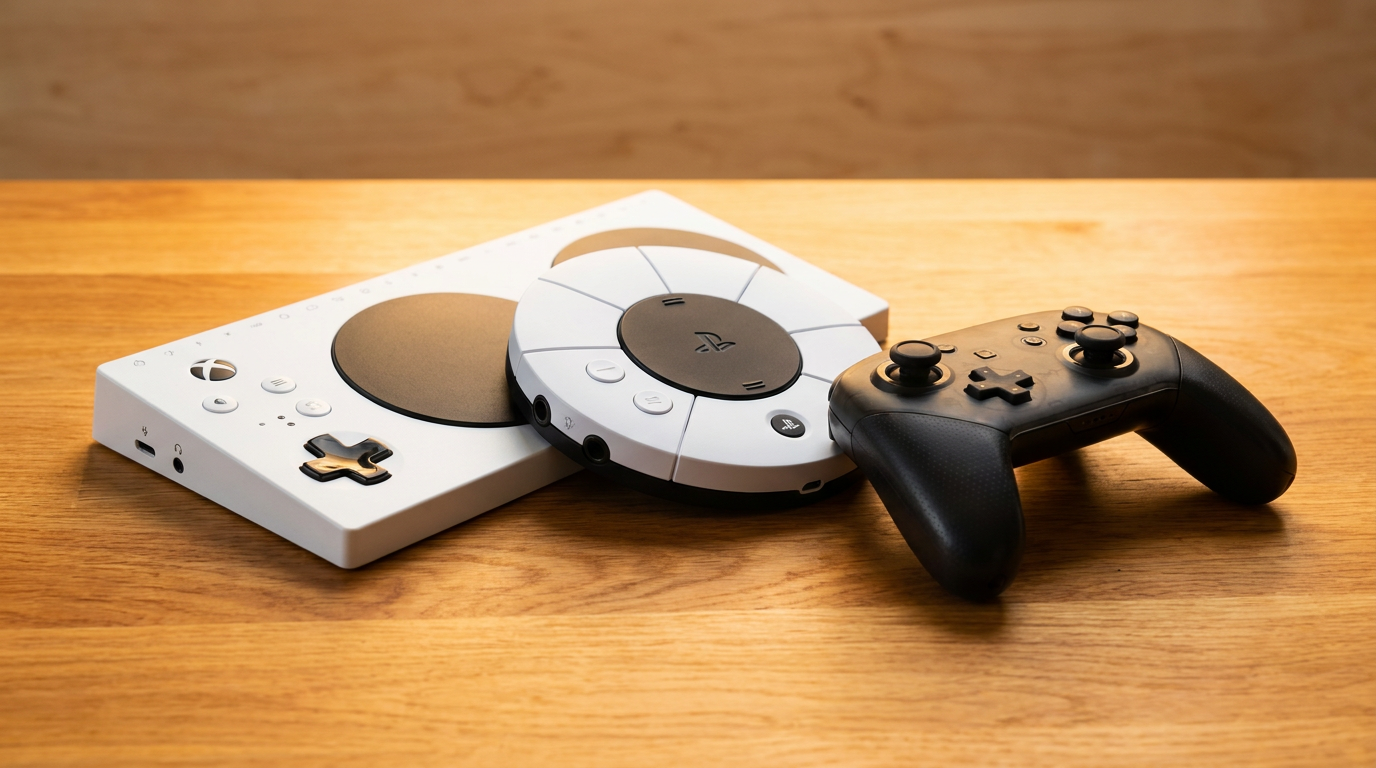
Gaming Giants Unite to Launch Universal Accessibility Standard Across All Consoles
0 sources
Every angle. Every day.
Get entertainment stories with full source coverage and perspective breakdowns delivered to your inbox.