
Where Your $35 Goes: The Federal Law That Keeps National Park Fees at the Gate
When visitors pay an entrance fee at a U.S. National Park, a specific 2004 law ensures the vast majority of that money never disappears into the general federal treasury. The Federal Lands Recreation Enhancement Act mandates that 80 percent of collected funds remain exactly where they were paid, funding local maintenance and visitor services.

Share this story
In short
- The Federal Lands Recreation Enhancement Act (FLREA) mandates that 80 percent of entrance fees remain at the park where they were collected.
- The remaining 20 percent is pooled nationally to support the 322 National Park System units that do not charge an entry fee.
- Only 108 of the 430 units in the National Park System currently have the infrastructure to collect entrance fees.
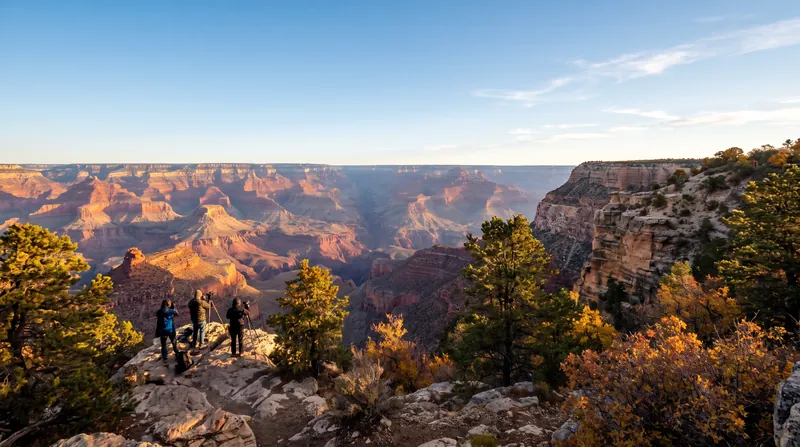
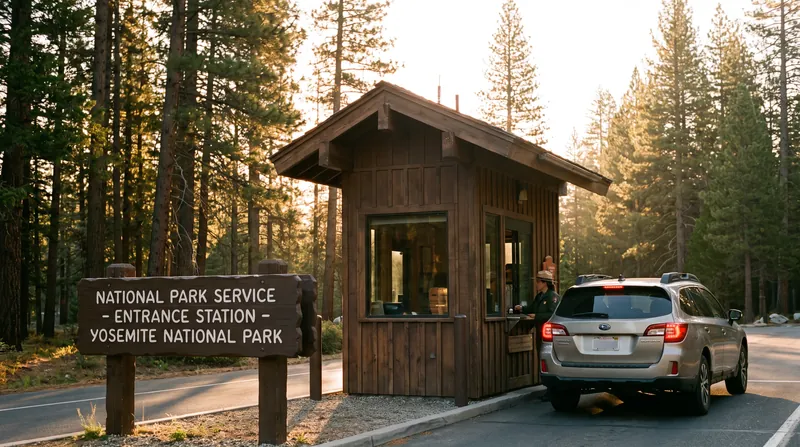
A visitor handing a credit card to a ranger at the Grand Canyon entrance station is participating in a highly specific financial transaction, one governed by a strict geographical tether. For the system to work as designed, the site must have the physical infrastructure to collect a toll. Without a gate, the math collapses. Currently, only 108 of the 430 units in the National Park System charge an entrance fee, meaning the vast majority of federal lands rely on a secondary mechanism to survive.[4]
That mechanism is the Federal Lands Recreation Enhancement Act (FLREA), passed by Congress in 2004. The legislation established a hard boundary around visitor revenue: 80 percent of the money collected at a specific park must remain at that exact park. If you pay $35 to drive the Going-to-the-Sun Road in Glacier National Park, $28 of that payment goes directly to Glacier's local maintenance backlog, trail repairs, and visitor services.[1]
The remaining 20 percent—$7 from that same vehicle pass—flows into a centralized agency pool. The National Park Service distributes this smaller fund to the 322 sites that do not charge entry fees, such as urban historical sites or massive open-access preserves like Great Smoky Mountains National Park.[3][4]
The Congressional Research Service detailed this structure in a February 22, 2023 report, noting that FLREA was designed to give local land managers direct control over their revenue streams. Before such retention laws existed, entrance fees vanished into the general U.S. Treasury, leaving popular parks chronically underfunded despite generating millions in gate receipts.[4]
"The fee revenue is critical to protecting the parks and providing a good experience for visitors," the National Parks Conservation Association explains in its policy breakdown. The organization notes that these funds are legally restricted to specific uses, primarily deferred maintenance, habitat restoration, and direct visitor amenities like restrooms and trail signage.[3]
However, the exact definition of "visitor services" occasionally triggers intense political friction. On June 18, 2026, States Newsroom reported that the Department of the Interior's recent allocation of park fee revenue raised immediate questions regarding federal funding rules. The debate centers on whether the executive branch can redirect the 20 percent national pool toward high-profile projects in the capital.
A week earlier, on June 10, 2026, U.S. Senator Jack Reed and several colleagues issued a sharp critique of the administration's financial maneuvering. The senators argued that the Department of the Interior was "diverting National Park fees from where they are most needed to DC vanity projects," bypassing the traditional congressional appropriations process.[2]
The legal text of 16 U.S. Code Chapter 87 explicitly states that the Secretary of the Interior may use the centralized funds for "repair, maintenance, and facility enhancement related directly to visitor enjoyment, visitor access, and health and safety." The current dispute hinges on whether ceremonial upgrades on the National Mall fit that statutory definition better than failing wastewater systems in Yellowstone.[1]
For the traveler planning a summer road trip, this legislative architecture directly dictates the quality of the experience. Parks that retain 80 percent of high visitation revenues—like Yosemite, Zion, and Grand Canyon—can afford to deploy shuttle systems, rebuild washed-out trails, and staff backcountry permit offices using the funds collected directly from the people utilizing those services.[3]
Conversely, sites dependent on the 20 percent pool often face a structural disadvantage. A park without an entrance gate cannot capitalize on a surge in popularity. When a hidden gem goes viral on social media, the resulting influx of visitors degrades the local infrastructure, but the park receives no proportional increase in FLREA funding to manage the crowds.[4]
This dynamic has prompted several previously free sites to petition the agency for the right to implement entrance fees. As the Factlen Editorial Team notes in its analysis of federal land management, converting a site from a dependent of the national pool to a self-sustaining entity under the 80 percent rule fundamentally alters its operational capacity overnight.[5]
The next phase of this funding model will likely involve digital passes and automated license plate readers, reducing the overhead cost of collection. As the National Park Service navigates a multi-billion dollar maintenance backlog, the precise routing of every $35 vehicle fee remains the most direct link between a visitor's wallet and the preservation of the public lands they came to see.[3][5]
Key terms
- FLREA
- The Federal Lands Recreation Enhancement Act, a 2004 law that allows federal land management agencies to charge visitor fees and retain the revenue locally.
- Deferred Maintenance
- Infrastructure repairs and upgrades that were postponed due to budget constraints, which FLREA funds are specifically authorized to address.
- 80/20 Split
- The statutory requirement that 80 percent of collected fees stay at the host park, while 20 percent goes to a national agency pool.
- General Treasury
- The primary federal government account where tax revenues are deposited; prior to modern retention laws, park fees disappeared into this fund.
Frequently asked
Does my entrance fee go to the general U.S. Treasury?
No. Under the Federal Lands Recreation Enhancement Act, 100 percent of your entrance fee stays within the agency, with 80 percent remaining at the specific park where you paid it.
How are free national parks funded?
Parks without entrance gates rely on congressional appropriations and a share of the 20 percent national pool collected from the parks that do charge fees.
Can park fees be used to pay ranger salaries?
Fee revenue is generally restricted to visitor services, deferred maintenance, and habitat restoration, rather than funding permanent administrative salaries.
Viewpoints in depth
Local Park Advocates
Argue that revenue generated by a specific landscape should remain entirely dedicated to mitigating the impact of the visitors who paid it.
Organizations focused on specific, high-traffic parks argue that the 80 percent retention rule is the only thing keeping popular destinations functional. When a park like Zion or Yellowstone sees millions of visitors, the wear and tear on trails, restrooms, and shuttle systems is immense. Local advocates maintain that diluting the 80 percent rule would effectively punish popular parks, draining their resources to subsidize sites that do not experience the same level of physical degradation.
Federal Administrators
Emphasize the importance of the 20 percent central pool to ensure equitable funding for historical and urban sites that cannot charge entry fees.
From a system-wide management perspective, the 20 percent pool is a critical lifeline for equity. Hundreds of National Park Service units—including vital civil rights monuments, urban historical sites, and massive open-access preserves—lack the physical geography to install a toll booth. Administrators argue that the national pool allows the agency to distribute the financial success of the crown jewel parks to smaller sites that preserve equally important, though less lucrative, aspects of American history.
Congressional Oversight
Focus on strict adherence to the statutory limits of FLREA, opposing executive attempts to redirect funds to unauthorized projects.
Lawmakers view FLREA as a specific contract with the American taxpayer: fees are authorized only if they directly enhance the visitor experience. When the executive branch attempts to use the 20 percent centralized pool for high-profile ceremonial projects or administrative overhead, congressional critics argue it violates the spirit of the 2004 law. This perspective insists that fee revenue must bypass the traditional political appropriations process and remain strictly tethered to on-the-ground maintenance.
- Local Park Advocates
- Argue that revenue generated by a specific landscape should remain entirely dedicated to mitigating the impact of the visitors who paid it.
- Federal Administrators
- Emphasize the importance of the 20 percent central pool to ensure equitable funding for historical and urban sites that cannot charge entry fees.
- Congressional Oversight
- Focus on strict adherence to the statutory limits of FLREA, opposing executive attempts to redirect funds to unauthorized projects.
Perspectives this story doesn't cover
- Visitors from low-income households affected by fee increases
- Gateway community business owners
Sources
Source coverage
5 outlets
3 viewpoints surfaced




- [1]Cornell Law SchoolCongressional Oversight
16 U.S. Code Chapter 87 - FEDERAL LANDS RECREATION ENHANCEMENT
Read on Cornell Law School → - [2]U.S. SenateCongressional Oversight
Reed, Colleagues Sound Alarm That Trump is Diverting National Park Fees from Where They are Most Needed to DC Vanity Projects
Read on U.S. Senate → - [3]National Parks Conservation AssociationLocal Park Advocates
FAQ: What the New Fee Increases Will Mean for Visitors and Parks
Read on National Parks Conservation Association → - [4]Congressional Research Service
NPS Fee Increases
Read on Congressional Research Service → - [5]Factlen Editorial Team
Synthesis by Factlen editorial team
Read on Factlen Editorial Team →
More in Travel
See all →Grand Canyon Recovery
Grand Canyon National Park Sets Tentative Thanksgiving Date for South Rim Water Restoration
5 sources
Park Permits
The 7:00 AM Release: How the National Park Service Actually Allocates Timed-Entry Permits
6 sources
Wildlife Safety
The 100-Yard/25-Yard Rule: How the National Park Service Actually Defines a Safe Distance from Wildlife
5 sources
Aviation Tech
How Low-Earth Orbit Satellites Are Actually Rewiring In-Flight Wi-Fi
4 sources

Comments
Every angle. Every day.
Get Travel stories with full source coverage and perspective breakdowns, free every day.