
What to Expect From Kevin Warsh's First Meeting as Federal Reserve Chair
As the newly confirmed Federal Reserve Chair prepares to lead his first policy meeting, economists and investors are closely watching how he will balance sticky inflation with political pressure to cut rates.
By Factlen Editorial Team
- Inflation Hawks & Policy Traditionalists
- Believe the Fed must prioritize crushing inflation and maintaining institutional independence over short-term growth.
- Market Optimists & Pro-Growth Advocates
- Argue that underlying economic data justifies rate cuts to spur investment and align with pro-growth political agendas.
- Consumer & Institutional Observers
- Focused on the factual mechanics of the Fed transition and its immediate impact on everyday borrowing costs.
What's not represented
- · Small business owners struggling with the cost of commercial loans.
- · Retirees who benefit from higher yields on savings accounts and fixed-income investments.
Why this matters
The Federal Reserve's interest rate decisions directly dictate the baseline cost of borrowing across the entire economy. Kevin Warsh's approach to inflation will determine whether Americans pay more for mortgages, auto loans, and credit card debt in the coming years.
Key points
- Kevin Warsh will lead his first Federal Open Market Committee meeting as Fed Chair on June 16-17.
- The central bank is currently holding the benchmark interest rate at a restrictive 3.5% to 3.75%.
- A recent uptick in consumer inflation to 4% has complicated expectations for near-term rate cuts.
- Warsh faces the dual challenge of managing sticky inflation while navigating political pressure for lower borrowing costs.
- The meeting will also feature the release of the 'dot plot,' detailing policymakers' long-term rate projections.
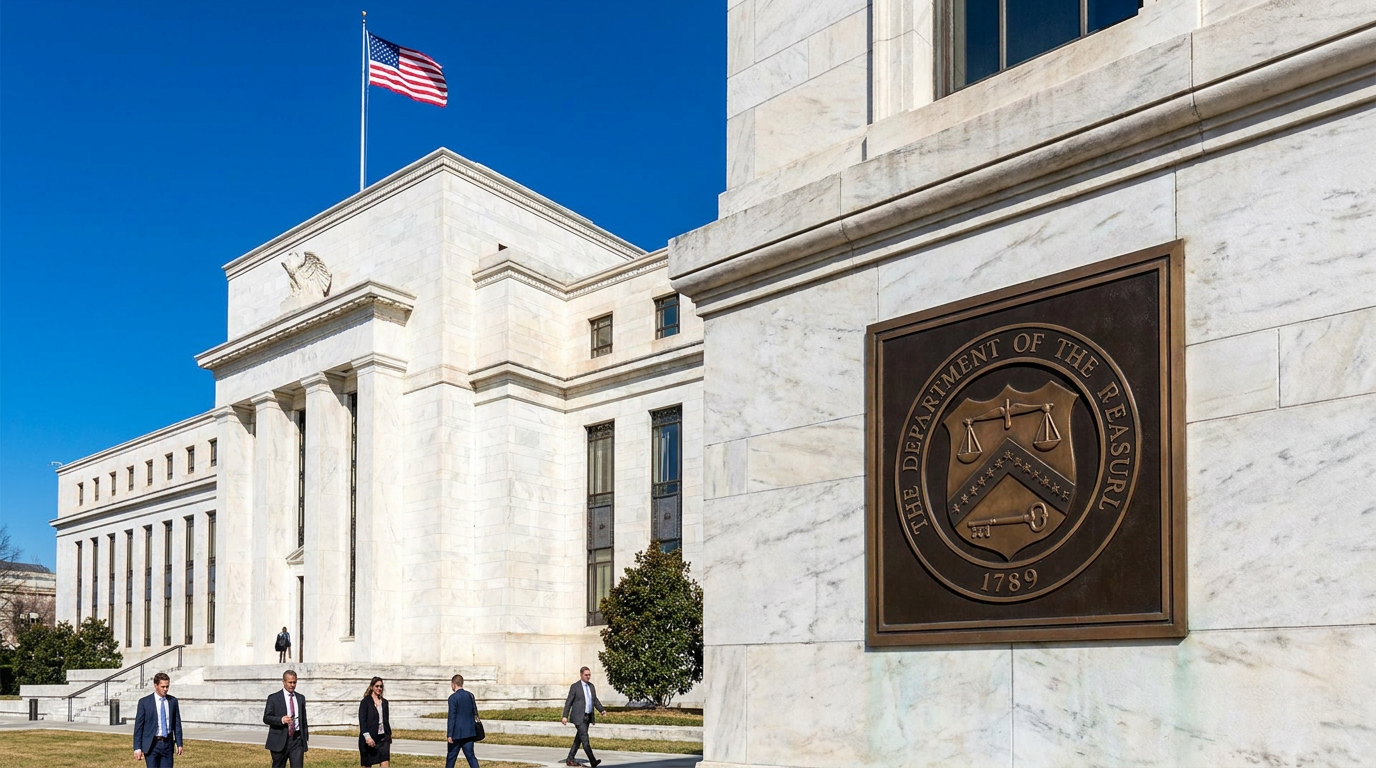
On June 16, the Federal Open Market Committee will convene in Washington, D.C., for a highly anticipated two-day policy meeting that marks a new chapter in American economic history. At the head of the massive mahogany table will be Kevin Warsh, the newly confirmed 17th Chair of the Federal Reserve, presiding over his first rate decision since taking the oath of office on May 22. The transition comes at a pivotal moment for the global economy, as the central bank attempts to navigate the delicate final stages of its battle against inflation. For millions of Americans, the stakes of this leadership change extend far beyond the marble halls of the central bank. The Federal Reserve’s policy decisions directly dictate the baseline cost of borrowing across the entire economy, influencing everything from 30-year mortgage rates and auto loans to credit card yields and the interest paid on high-yield savings accounts.[4][5][6][7]
Warsh inherits a remarkably complex economic landscape as he takes the gavel. The Federal funds rate currently sits in a target range between 3.5% and 3.75%, a level specifically calibrated to restrict economic activity just enough to cool price increases without triggering a widespread recession. For much of the past year, investors and consumers alike had been banking on a steady cadence of rate cuts to provide relief from these elevated borrowing costs. However, recent macroeconomic data has severely complicated that optimistic picture. Consumer price inflation recently ticked back up to roughly 4% on an annual basis, marking the highest level in three years and sitting uncomfortably above the Federal Reserve’s traditional 2% target. Alongside a labor market that continues to show surprising resilience, this resurgence in inflation presents an immediate and formidable test for the new chairman's policy resolve.[2][5]

This sticky inflation data sets the stage for a clash with Warsh's well-documented economic philosophy. A former Morgan Stanley executive and Hoover Institution fellow, Warsh previously served as a Federal Reserve governor during the depths of the 2008 financial crisis. Throughout his career in both the public and private sectors, he has built a reputation as a staunch defender of price stability and a skeptic of overly accommodative monetary policy. He has consistently articulated a clear, uncompromising view: the Federal Reserve bears direct and primary responsibility for controlling inflation through its monetary tools, rather than attributing price spikes to external supply chain issues, geopolitical conflicts, or global macroeconomic events. This hawkish track record suggests he may be highly reluctant to lower borrowing costs while inflation remains elevated, prioritizing the long-term purchasing power of the dollar over short-term economic acceleration.[4][5][7]
Yet, the intense political environment surrounding his appointment adds a heavy layer of scrutiny to the upcoming June meeting. President Donald Trump, who nominated Warsh to succeed Jerome Powell earlier this year, has publicly and repeatedly called for lower interest rates to stimulate economic growth, boost manufacturing, and reduce the financial burden on American borrowers. The administration views rate cuts as a crucial component of its broader pro-growth economic agenda. Despite this overt pressure from the Oval Office, Warsh used his swearing-in ceremony to firmly reaffirm his commitment to the central bank’s institutional independence. He signaled to both lawmakers and financial markets that his policy decisions will be driven strictly by incoming economic data and the Fed's statutory mandate, rather than executive branch preferences or election-cycle politics.[2][4]

Financial markets are currently on edge, closely parsing every available signal ahead of the June 17 rate announcement and subsequent press conference. Some Wall Street strategists maintain a bullish outlook, arguing that the headline inflation numbers actually mask a cooling underlying economy. According to this perspective, the stock market could rally significantly if Warsh gives the "green light" by acknowledging these softer underlying trends and signaling a willingness to ease policy in the near future. Conversely, a firm commitment to a "higher for longer" interest rate environment could introduce severe new volatility for equities. Growth-oriented technology companies, which rely heavily on cheap capital to fund expansion and innovation, are particularly vulnerable to sustained high rates, leading to potential market corrections if the Fed dashes hopes for imminent cuts.[1][5]
Financial markets are currently on edge, closely parsing every available signal ahead of the June 17 rate announcement and subsequent press conference.
Beyond the immediate binary decision of whether to cut, hold, or hike rates, Wall Street will be laser-focused on the Federal Reserve's Summary of Economic Projections, commonly known in financial circles as the "dot plot." Released quarterly, this crucial document maps out exactly where each individual committee member expects interest rates to land at the end of the current year and over the next several years. Because this will be the first dot plot published under Warsh's leadership, it offers the market its first concrete look at how the new chairman might alter the central bank's long-term trajectory. Analysts will be scrutinizing the projections to see if the median expectation for future rate cuts has been dialed back in response to the recent 4% inflation print, which would formally signal a more restrictive era of monetary policy.[1][6]
For prospective homebuyers and everyday consumers, the uncertainty surrounding the Fed's next move is already translating into tangible financial pain. After dipping earlier in the year to more manageable levels, the average rate on a 30-year fixed mortgage abruptly reversed course in late spring. As bond markets began pricing in the likelihood of sustained Federal Reserve strictness under Warsh, mortgage rates climbed back toward 6.62%. This upward pressure on borrowing costs has sidelined many potential buyers, cooling housing activity just as the crucial summer real estate season begins. Financial advisors are urging clients to re-evaluate their budgets and consider locking in rates now, warning that a hawkish surprise from the Fed could push mortgage and auto loan rates even higher in the coming months.[3][5]

In addition to managing the benchmark interest rate, Warsh faces the monumental task of addressing the Federal Reserve’s massive balance sheet, which expanded to over $6 trillion following years of quantitative easing. Throughout his post-2008 career, Warsh has been a vocal critic of the central bank's heavy intervention in bond markets, arguing that such massive asset purchases distort financial markets and enable excessive government borrowing. Economists expect that he may use his first press conference to outline a more aggressive strategy for quantitative tightening—the process of allowing bonds to mature without reinvesting the proceeds. Accelerating this runoff would pull more liquidity out of the financial system, acting as a secondary brake on inflation but also risking sudden spikes in Treasury yields that could further elevate consumer borrowing costs.[4][5]
Ultimately, economists, investors, and political observers alike are waiting to see how the real Kevin Warsh will govern when the doors close and the policy debates begin. Whether he chooses to hold rates steady, lay the groundwork for future cuts, or even float the unexpected possibility of a rate hike to crush the latest inflation spike, his first official move will definitively set the tone for the next era of American monetary policy. The June meeting represents more than just a routine adjustment of borrowing costs; it is the opening statement of a new Federal Reserve regime tasked with navigating one of the most complex economic and political environments in modern central banking history.[1][2]

As the clock ticks down to the 2:00 p.m. policy announcement on June 17, the global financial system remains in a state of suspended animation. The transition from Jerome Powell to Kevin Warsh represents a fundamental shift in the Federal Reserve's leadership style, moving from Powell's consensus-driven, market-soothing approach to Warsh's historically blunt, inflation-first orthodoxy. For the everyday American balancing a household budget, the outcome of this meeting will determine the financial weather for the remainder of the year. If Warsh successfully threads the needle, he could cement his legacy early by taming the last mile of inflation without breaking the labor market. If he miscalculates, the resulting economic turbulence will be felt from Wall Street trading desks to Main Street storefronts.[1][2][4]
How we got here
May 22, 2026
Kevin Warsh is sworn in as the 17th Chair of the Federal Reserve, succeeding Jerome Powell.
Early June 2026
Consumer price index data reveals that annual inflation has ticked back up to 4.0%.
June 16-17, 2026
The Federal Open Market Committee holds its first policy meeting under Warsh's leadership.
Viewpoints in depth
Inflation Hawks
Economists who believe the Fed must prioritize crushing inflation over short-term growth.
This camp points to the recent resurgence of inflation to 4% as proof that the battle for price stability is not yet won. They argue that cutting interest rates prematurely would risk embedding high inflation into the broader economy, ultimately requiring even more painful economic medicine down the road. For these analysts, Warsh's historical skepticism of loose monetary policy makes him the right leader to hold the line, even if it means keeping borrowing costs elevated.
Pro-Growth Advocates
Strategists and political voices pushing for rate cuts to stimulate the economy.
Voices in this camp, including the Trump administration and some Wall Street strategists, argue that the underlying economy is cooling faster than headline inflation numbers suggest. They believe that maintaining high interest rates unnecessarily stifles business investment, harms the housing market, and burdens everyday consumers with exorbitant credit costs. From this perspective, the Fed should begin easing policy to ensure the labor market remains resilient and to facilitate broader economic expansion.
What we don't know
- Whether the Fed will formally adjust its policy statement language to signal a higher likelihood of future rate hikes rather than cuts.
- How Warsh will manage the ongoing reduction of the Federal Reserve's massive $6 trillion balance sheet.
- Exactly how financial markets will react to Warsh's first post-meeting press conference and his specific communication style.
Key terms
- Federal Funds Rate
- The target interest rate set by the Fed at which commercial banks borrow and lend their excess reserves to each other overnight.
- Federal Open Market Committee (FOMC)
- The branch of the Federal Reserve responsible for directing monetary policy and setting interest rates.
- Dual Mandate
- The Federal Reserve's two primary goals set by Congress: maximizing employment and stabilizing prices.
- Summary of Economic Projections (Dot Plot)
- A chart published quarterly by the Fed showing where each committee member expects interest rates to be in the coming years.
- Quantitative Tightening
- A monetary policy tool used by central banks to decrease the amount of liquidity or money supply in the economy, typically by letting bonds mature without replacing them.
Frequently asked
Will mortgage rates go down after this meeting?
It is unlikely in the immediate term. With inflation ticking back up to 4%, the Fed is expected to keep its benchmark rate steady, meaning mortgage rates will likely remain elevated near their current levels.
Why is the Federal Reserve independent?
The Fed is designed to operate independently of the White House and Congress so it can make monetary policy decisions based on long-term economic health rather than short-term political pressures.
What does the Fed Chair actually do?
The Chair leads the Federal Reserve Board, sets the agenda for monetary policy meetings, serves as the primary public voice of the central bank, and testifies before Congress on the state of the economy.
Sources
Source coverage
7 outlets
3 viewpoints surfaced







[1]MarketWatchMarket Optimists & Pro-Growth Advocates
Will the real Kevin Warsh please stand up? Ahead of his first Fed meeting, economists honestly don’t know what to expect.
Read on MarketWatch →[2]The Washington PostInflation Hawks & Policy Traditionalists
New Fed chief may soon be forced to defy Trump and raise interest rates
Read on The Washington Post →[3]CBS NewsConsumer & Institutional Observers
3 mortgage moves to make before the June Fed meeting
Read on CBS News →[4]Council on Foreign RelationsInflation Hawks & Policy Traditionalists
What to Expect From Kevin Warsh's Fed in the First 100 Days
Read on Council on Foreign Relations →[5]Wiser Wealth ManagementInflation Hawks & Policy Traditionalists
How the New Fed Chair Could Shape Your Financial Future
Read on Wiser Wealth Management →[6]Federal Reserve BoardConsumer & Institutional Observers
Calendar: June 2026
Read on Federal Reserve Board →[7]Britannica MoneyConsumer & Institutional Observers
Kevin Warsh | Federal Reserve Chair & Former Fed Governor
Read on Britannica Money →

More in finance
See all 7 stories →Retirement Strategy
Why Late-Career Workers Are Shifting to Roth 401(k)s Ahead of Retirement
6 sources

Housing Market
How Homebuyers Are Bypassing 6.5% Mortgage Rates in 2026
6 sources

Retirement Strategy
The 2026 Roth 401(k) Mandate: Why Late-Career Workers Are Changing Their Tax Strategy
6 sources

Stablecoin Adoption
Global Banking Networks Embrace Stablecoins, Slashing Cross-Border Remittance Costs
6 sources

Every angle. Every day.
Get finance stories with full source coverage and perspective breakdowns delivered to your inbox.