
What 'Global Water Bankruptcy' Actually Means for the Planet's Hydrology
The United Nations has shifted its framework from temporary 'water crises' to 'water bankruptcy,' a state where long-term extraction permanently exceeds the natural replenishment of aquifers and rivers.
By Hunter Cole

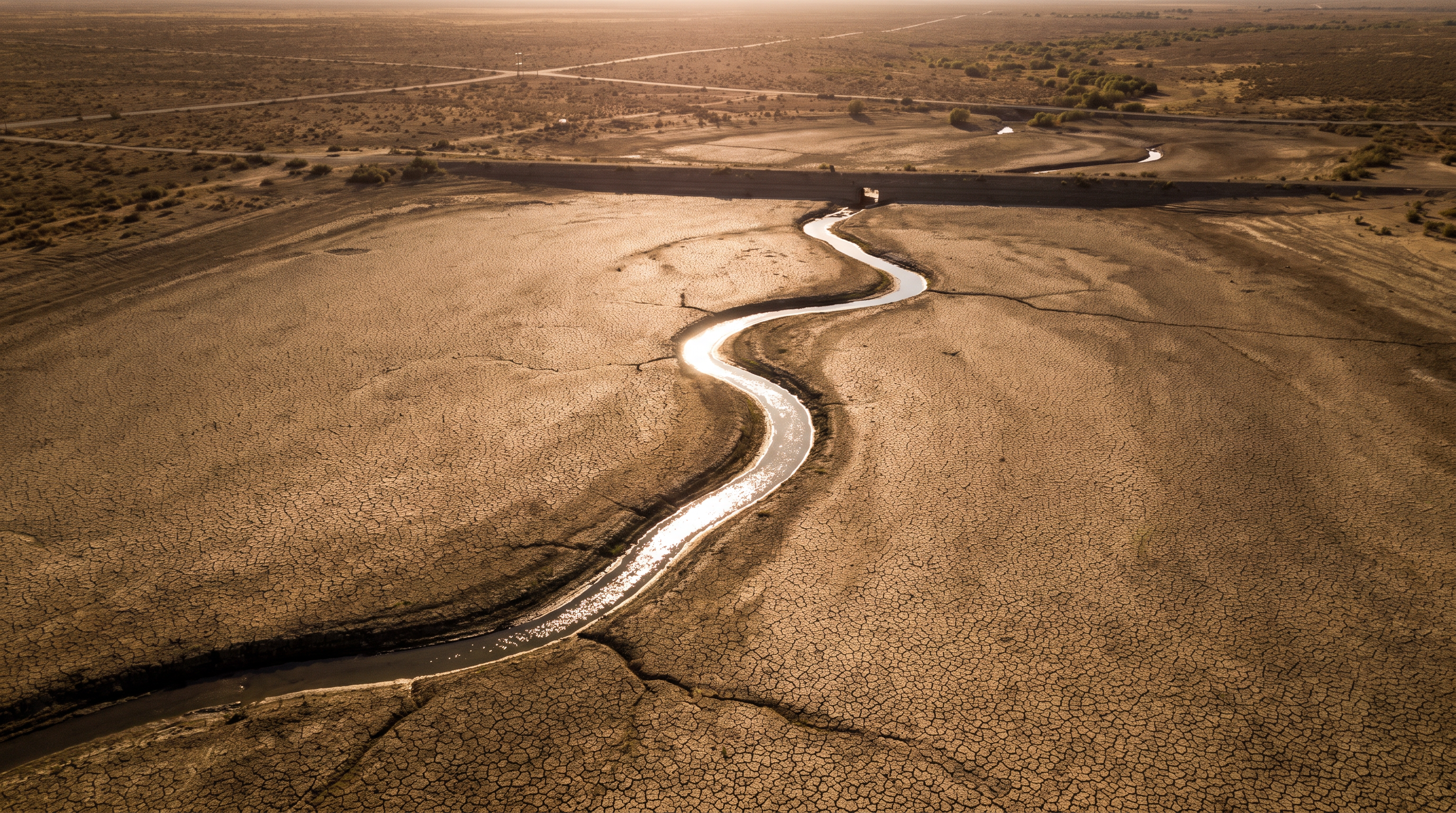
- Hydrological Researchers
- Scientists mapping the physical limits and irreversible changes in the global water cycle.
- Water Governance Advocates
- Policy experts pushing for a structural reset of water rights and usage expectations.
- Factlen Editorial Team
- Synthesizes the scientific and policy shifts from reactive crisis management to proactive adaptation.
Summary
- The UN has introduced 'global water bankruptcy' to describe water systems that have suffered irreversible depletion.
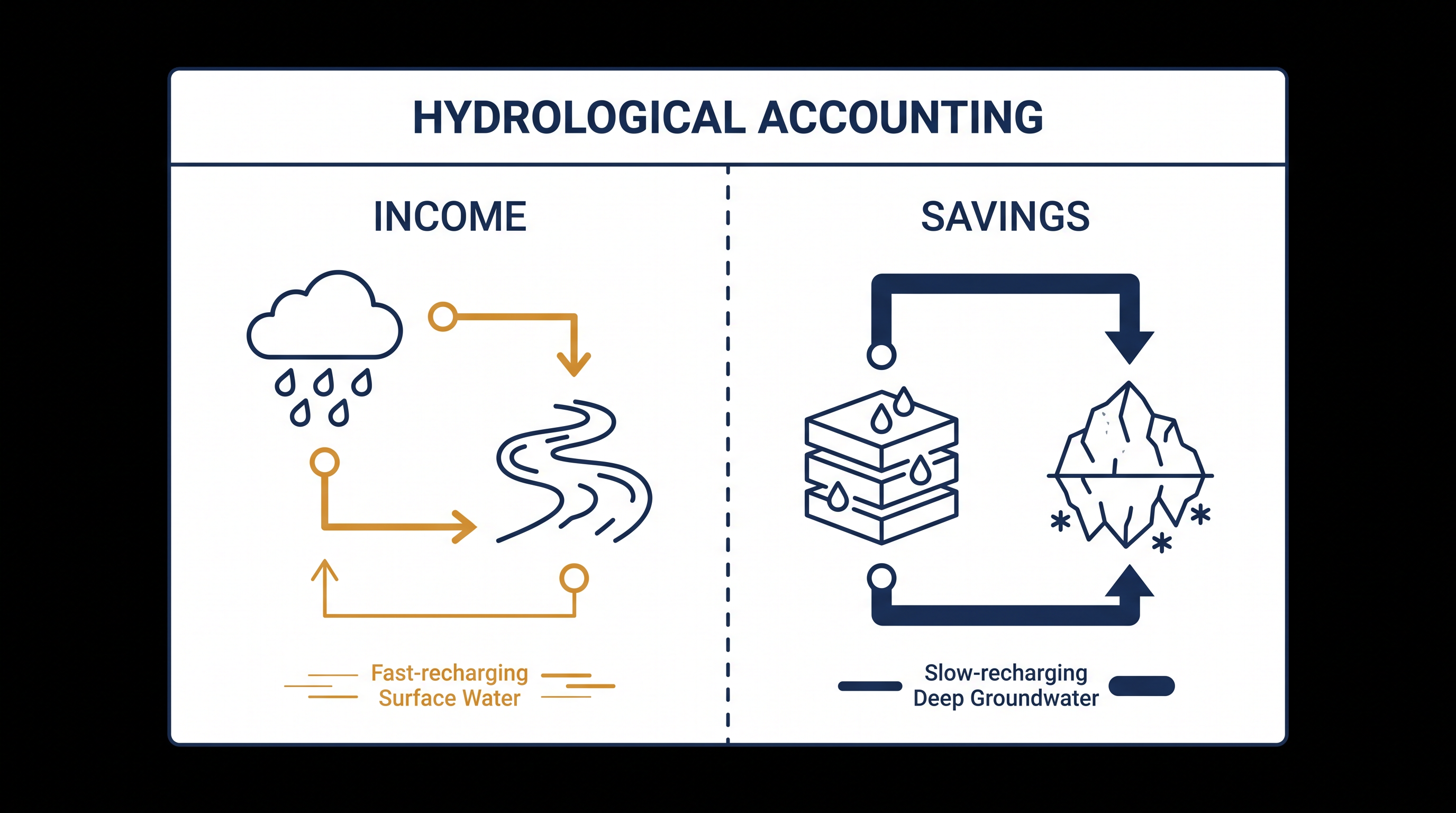
- The framework distinguishes between renewable hydrological 'income' (rain, rivers) and non-renewable 'savings' (aquifers, glaciers).
- Decades of overdrawing water savings have led to permanent physical changes, such as aquifer compaction and land subsidence.
- The shift demands a move from reactive crisis management to proactive 'bankruptcy management.'
- Solutions focus on transparent water accounting, enforceable extraction limits, and resetting unsustainable water entitlements.
For decades, global policymakers and resource managers have treated severe water shortages as temporary crises. The prevailing assumption has been that droughts, however severe, are cyclical anomalies. Under this model, emergency conservation measures and temporary supply diversions are deployed to bridge the gap until natural precipitation recharges the system and restores the historical baseline. This crisis-management approach treats water scarcity as an acute disruption to an otherwise stable equilibrium. However, a growing consensus among hydrologists suggests that this framework fundamentally misdiagnoses the current state of the global water cycle. In many critical agricultural and urban regions, the baseline itself has permanently shifted, rendering the concept of a temporary crisis obsolete.[1][2]
To address this systemic shift, the United Nations University Institute for Water, Environment and Health (UNU-INWEH) formally introduced a new conceptual framework in early 2026: "global water bankruptcy." The designation marks a deliberate departure from terms like "water stress" or "water crisis." While stress denotes a high rate of withdrawal relative to supply, bankruptcy describes a persistent, post-crisis condition where long-term extraction has so severely outstripped regenerative capacity that the resulting ecological damage is irreversible. By adopting this terminology, researchers aim to force a reckoning with the physical limits of the planet's hydrology, shifting the focus from emergency response to structural adaptation.[1]
The bankruptcy framework relies on a direct analogy to financial accounting, dividing a region's water resources into "income" and "savings." Hydrological income consists of renewable, fast-recharging sources such as annual rainfall, snowmelt, and active river flows. Hydrological savings, by contrast, represent the natural capital that took millennia to accumulate: deep groundwater aquifers, ancient wetlands, and glacial ice. For generations, agricultural and industrial expansion has been subsidized by systematically overdrawing the income account and liquidating the savings account. This structural deficit has masked the true limits of regional water availability, allowing populations and economies to grow beyond what the local hydrology can sustainably support.[1][4][6]
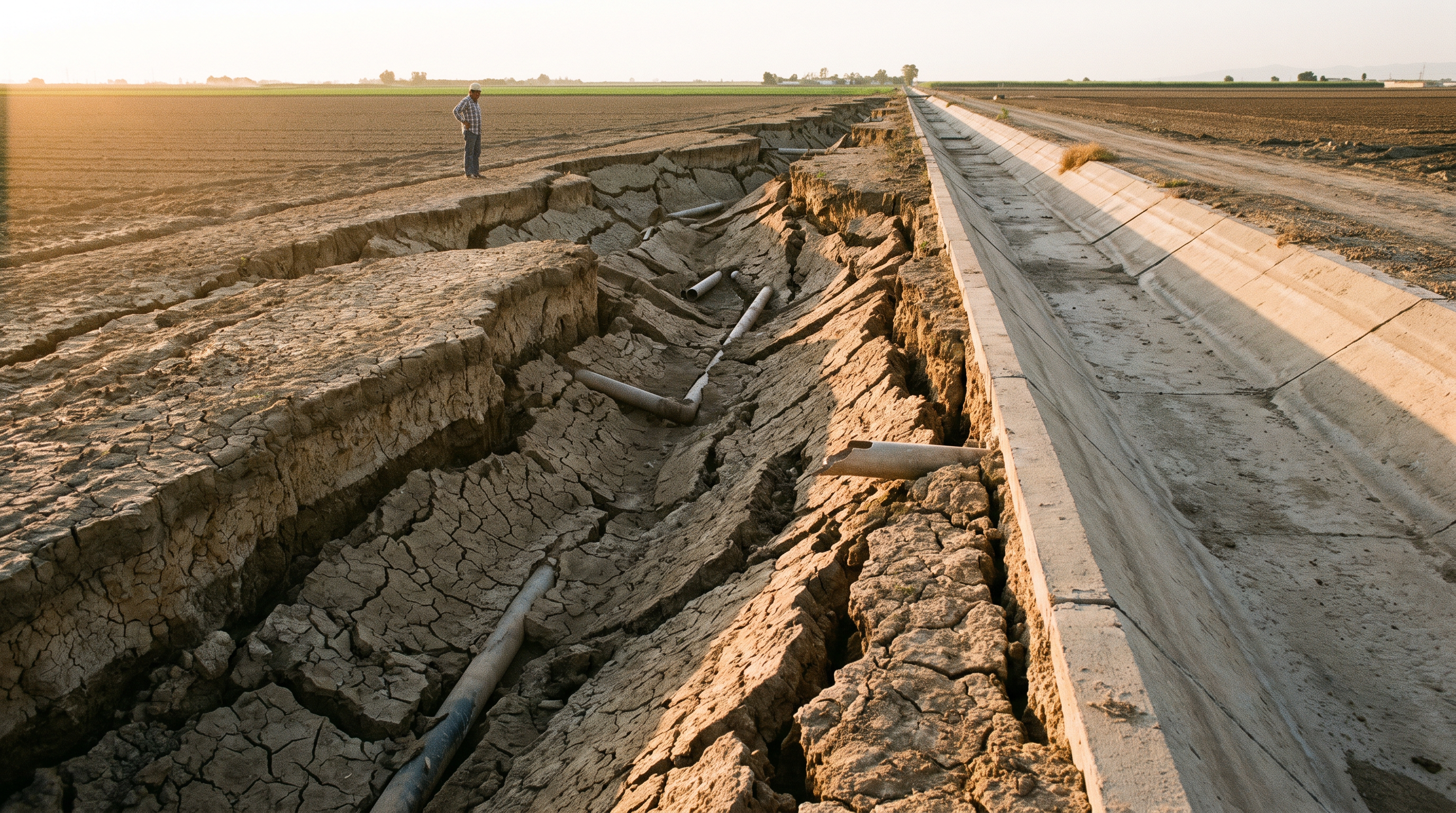
The physical consequences of this sustained overdraft extend far beyond empty reservoirs. When deep groundwater is pumped out faster than it can be replenished, the geological structures that hold the water begin to collapse. This compaction leads to land subsidence—a phenomenon currently affecting regions home to billions of people. Once an aquifer compacts, its physical capacity to store water is permanently reduced; even if pumping stops and heavy rains return, the underground storage space no longer exists. This irreversibility is the defining characteristic of hydrological bankruptcy, transforming a renewable resource into a finite one.[1][3]
The physical consequences of this sustained overdraft extend far beyond empty reservoirs.
The liquidation of the planet's hydrological savings is evident across multiple biomes. Researchers track the disappearance of more than 30 percent of global glacier mass since 1970, effectively destroying the "water towers" that provide seasonal flow security for downstream populations. Similarly, the loss of hundreds of millions of hectares of natural wetlands has removed critical infrastructure that naturally filters water and buffers against both floods and droughts. These losses are not cyclical fluctuations that can be reversed with a few wet seasons; they represent the permanent dismantling of the ecosystems that regulate the global water cycle.[1][2]
This persistent state of systemic failure has given rise to the phenomenon of "anthropogenic drought." Unlike meteorological droughts, which are driven by natural variations in weather patterns, anthropogenic droughts are chronic water deficits caused primarily by human overuse, pollution, and land degradation. Climate change accelerates this process by altering precipitation patterns and increasing evaporation rates, but the underlying vulnerability is structurally engineered. By operating consistently beyond safe depletion limits, societies have engineered a baseline of scarcity that persists regardless of annual rainfall totals.[1][3]
Declaring bankruptcy, however, is not intended as a signal of inevitable collapse. In financial systems, declaring bankruptcy is a legal mechanism that allows an insolvent entity to admit failure, write down unpayable debts, and negotiate a new, realistic balance sheet. The UN framework applies this exact logic to water governance. Acknowledging hydrological bankruptcy is the necessary first step toward resetting expectations. It requires governments and industries to admit that historical water allocations can no longer be honored and that a new, highly constrained balance sheet must be negotiated to prevent total systemic failure.[1][4]
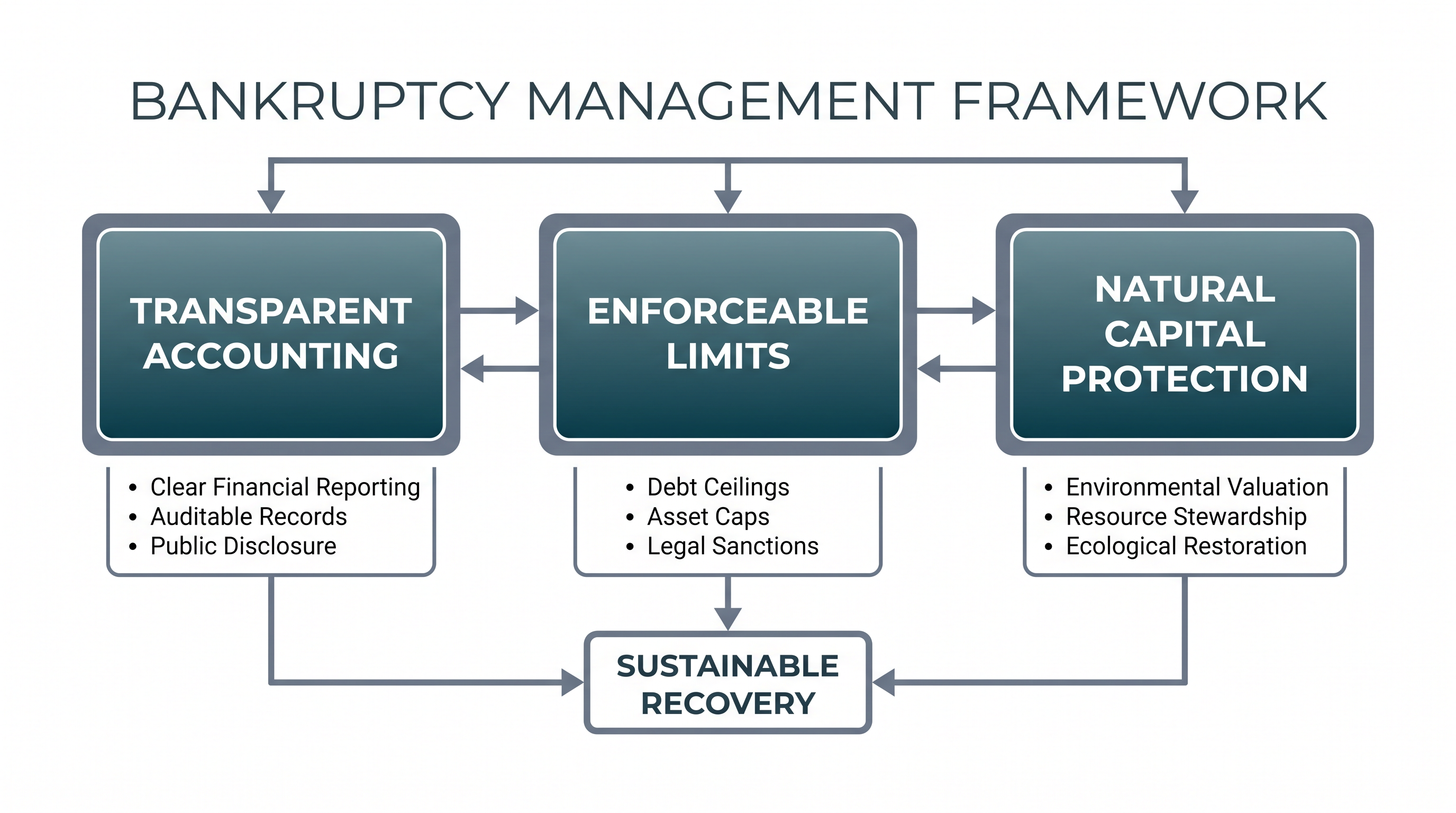
The transition from crisis management to "bankruptcy management" requires a fundamental overhaul of water governance. This approach demands transparent, science-based water accounting to establish the true limits of regional hydrology. It requires the implementation of strictly enforceable extraction caps that align with actual renewable inflows rather than historical usage rights. Furthermore, bankruptcy management prioritizes the aggressive protection of remaining natural capital—safeguarding intact aquifers, wetlands, and rivers from further degradation so they can continue to provide baseline ecosystem services.[1][2]
Downstream, this paradigm shift forces a reallocation of resources and a reevaluation of economic development. Governments must stop making agricultural, industrial, and urban development promises that local hydrology cannot physically sustain. This will inevitably require transitioning away from water-intensive crops in arid regions, redesigning urban water recycling infrastructure, and ensuring that the costs of this transition do not fall disproportionately on vulnerable populations. By abandoning the illusion of a temporary crisis, the global community can begin the difficult but necessary work of adapting to a new hydrological reality, building resilience within the strict boundaries of what the Earth's systems can actually provide.[2][6]
Definitions
- Global Water Bankruptcy
- A persistent, post-crisis condition where long-term water extraction has exceeded natural replenishment, causing irreversible damage to hydrological systems.
- Hydrological Income
- Renewable, fast-recharging water sources such as annual rainfall, snowmelt, and active river flows.
- Hydrological Savings
- Slow-recharging natural water capital, including deep groundwater aquifers, ancient wetlands, and glacial ice.
- Anthropogenic Drought
- Chronic water deficits driven primarily by human overuse, pollution, and land degradation rather than natural climate variability.
- Land Subsidence
- The sinking or settling of the Earth's surface, often caused by the compaction of underground aquifers after excessive groundwater extraction.
- Safe Depletion Limits
- The maximum amount of water that can be withdrawn from a system without causing long-term ecological damage or reducing future storage capacity.
Analysis by camp
Hydrological Researchers
Scientists mapping the physical limits and irreversible changes in the global water cycle.
For earth scientists and hydrologists, the shift to a bankruptcy framework is a necessary correction to decades of overly optimistic modeling. Researchers emphasize that the physical architecture of the water cycle has been fundamentally altered. When deep aquifers are drained, the geological strata compact, permanently erasing the underground storage capacity. Similarly, the loss of glacial mass removes the natural regulatory mechanism that ensures steady river flows during dry seasons. From this perspective, continuing to use the language of 'stress' or 'crisis' ignores the laws of physics; the natural capital required to return to historical baselines simply no longer exists.
Water Governance Advocates
Policy experts pushing for a structural reset of water rights and usage expectations.
Governance experts view the bankruptcy declaration as a vital policy lever. In many regions, legal water rights and agricultural allocations were established during unusually wet historical periods and far exceed the actual renewable supply. Advocates argue that treating water scarcity as an emergency allows politicians to avoid making difficult structural changes, relying instead on temporary bailouts or unsustainable deeper drilling. By formally declaring bankruptcy, policymakers are forced to open the ledger, write down unfulfillable water entitlements, and negotiate a new, highly constrained balance sheet that prioritizes essential human needs and ecological survival over unchecked industrial expansion.
Questions & answers
What is the difference between a water crisis and water bankruptcy?
A water crisis implies a temporary shortage caused by an acute event, like a drought, from which a region can recover. Water bankruptcy describes a permanent state where long-term overuse has irreversibly damaged the natural systems, preventing a return to historical water levels.
How does groundwater extraction cause irreversible damage?
When water is pumped from deep underground aquifers faster than it is replenished, the empty geological layers can collapse and compact. This causes land subsidence and permanently destroys the aquifer's physical capacity to store water in the future.
What does 'bankruptcy management' entail for water?
It involves treating water like a finite balance sheet. This means implementing transparent accounting of available water, setting strictly enforceable limits on extraction based on renewable income, and actively protecting remaining natural capital like wetlands and glaciers.
Are all global water systems currently bankrupt?
No. While many critical agricultural and urban basins have crossed irreversible thresholds, others remain solvent. However, the global interconnectedness of food trade and climate means that localized bankruptcies affect global supply chains and security.
Limits of the evidence
- The exact timeline for when specific regional aquifers will cross the threshold into irreversible compaction.
- How international trade agreements will adapt to the reduced agricultural output from newly declared bankrupt water basins.
- The full economic cost of transitioning major agricultural hubs to strict bankruptcy management protocols.
Significance
Understanding water scarcity as a permanent bankruptcy rather than a temporary crisis fundamentally changes how communities must plan for the future. It forces a shift away from hoping for better weather toward making immediate, structural changes to how water is allocated, priced, and consumed in everyday life.
Sources
Source coverage
6 outlets
3 viewpoints surfaced






[1]United Nations UniversityHydrological Researchers
World Enters “Era of Global Water Bankruptcy”: UN Scientists Formally Define New Post-Crisis Reality for Billions
Read on United Nations University →[2]The GuardianWater Governance Advocates
World enters era of 'global water bankruptcy' that is harming billions of people, a UN report has declared
Read on The Guardian →[3]Science Media CentreHydrological Researchers
The world has entered the era of water bankruptcy, according to a new UN report
Read on Science Media Centre →[4]UN Convention to Combat DesertificationWater Governance Advocates
World enters era of 'global water bankruptcy'
Read on UN Convention to Combat Desertification →[5]Population Institute CanadaHydrological Researchers
A conceptual framework to take account of the world's water supply
Read on Population Institute Canada →[6]Factlen Editorial TeamFactlen Editorial Team
Synthesis by Factlen editorial team
Read on Factlen Editorial Team →
Comments
Every angle. Every day.
Get environment stories with full source coverage and perspective breakdowns delivered to your inbox.