
Supreme Court Dismantles Key Provision of Voting Rights Act, Imposing New Burden on Race Discrimination Claims
In a 6-3 decision, the Supreme Court ruled that plaintiffs must prove intentional racial discrimination to challenge electoral maps, effectively neutralizing Section 2 of the Voting Rights Act.
By Hailey Scott

- Civil Rights & Voting Advocates
- Argues the ruling imposes an impossible burden of proof that dismantles decades of voting rights protections.
- The Court Majority & Republican Officials
- Maintains that the Constitution forbids race-based redistricting and requires proof of intentional discrimination.
- Independent Legal Analysts
- Focuses on the practical electoral consequences, noting the ruling provides a roadmap for partisan gerrymandering that dilutes minority votes.
Why this matters
By requiring proof of intentional racism rather than just discriminatory results, the ruling makes it nearly impossible for civil rights groups to successfully challenge gerrymandered maps, clearing the way for states to dilute minority voting power under the guise of partisan politics.
Key points
- The Supreme Court ruled 6-3 to strike down a Louisiana congressional map, establishing a new burden of proof for racial discrimination claims.
- Plaintiffs must now prove intentional racial discrimination rather than just discriminatory results to challenge electoral maps under the Voting Rights Act.
- The decision effectively neutralizes Section 2 of the Voting Rights Act, removing the primary tool used to fight racial gerrymandering.
- States can now defend against claims of racial discrimination by arguing their electoral maps were drawn for partisan advantage.
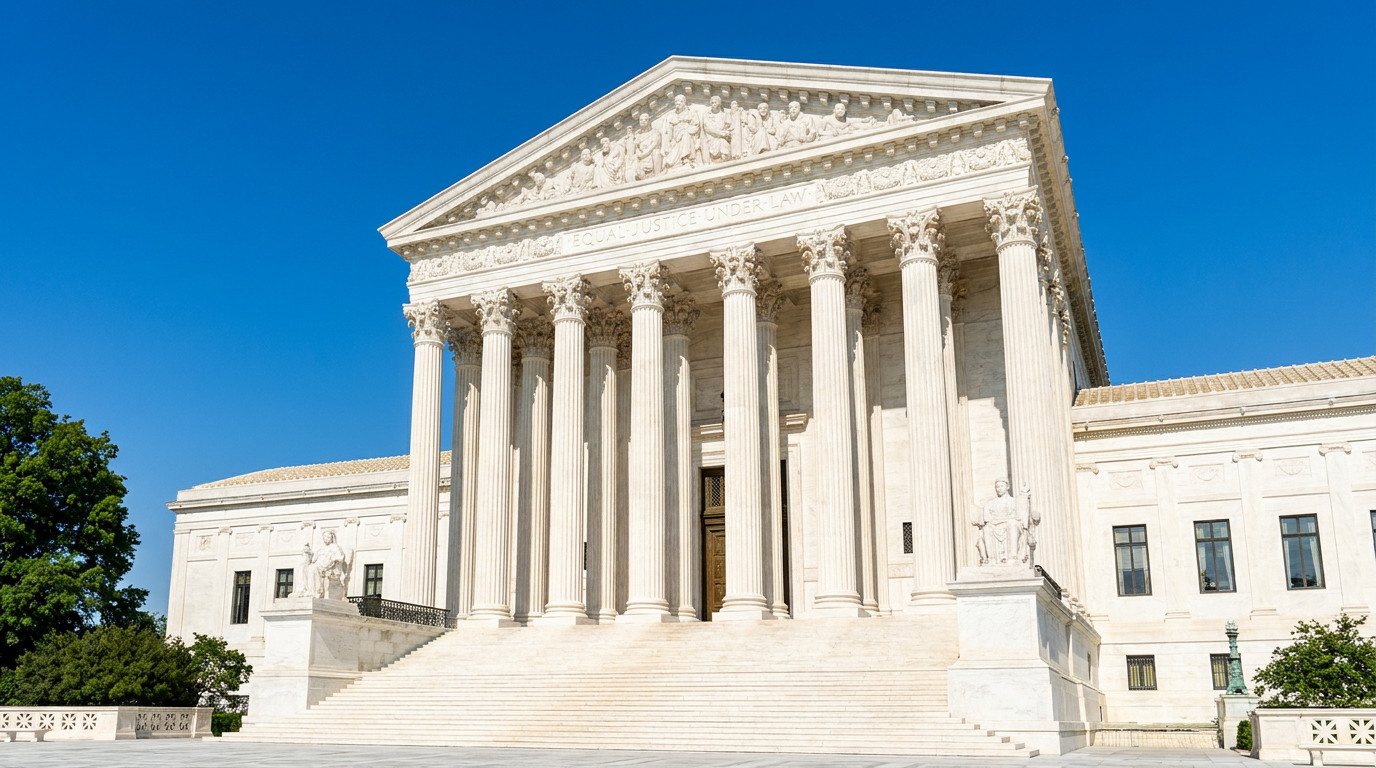
The U.S. Supreme Court has fundamentally altered the enforcement of the Voting Rights Act, ruling in a 6-3 decision that plaintiffs challenging electoral maps must prove intentional racial discrimination rather than just discriminatory results. The landmark decision in Louisiana v. Callais struck down a congressional map that included a second Black-majority district, with the conservative majority declaring that race-based redistricting violates the Constitution even when attempting to comply with the 1965 civil rights law. The ruling effectively neutralizes Section 2 of the Act, which has served as the primary nationwide protection against discriminatory voting systems for decades. By elevating the burden of proof, the Court has cleared the way for states to enact maps that dilute minority voting power, provided lawmakers attribute their line-drawing to partisan strategy rather than racial animus.[1][2][3]
Authored by Justice Samuel Alito, the majority opinion dismantles the legal standard that has governed voting rights litigation for more than forty years. Since Congress amended the Voting Rights Act in 1982, civil rights groups and voters only needed to demonstrate that a voting map or election law had a discriminatory effect on minority communities. Alito's ruling discards that framework, asserting that allowing race to play any part in government decision-making represents a departure from constitutional rules. Moving forward, plaintiffs will face the steep hurdle of producing evidence of explicit, intentional discrimination—a standard that legal experts note is nearly impossible to meet in an era where lawmakers rarely state racist intentions on the legislative record.[1][3]
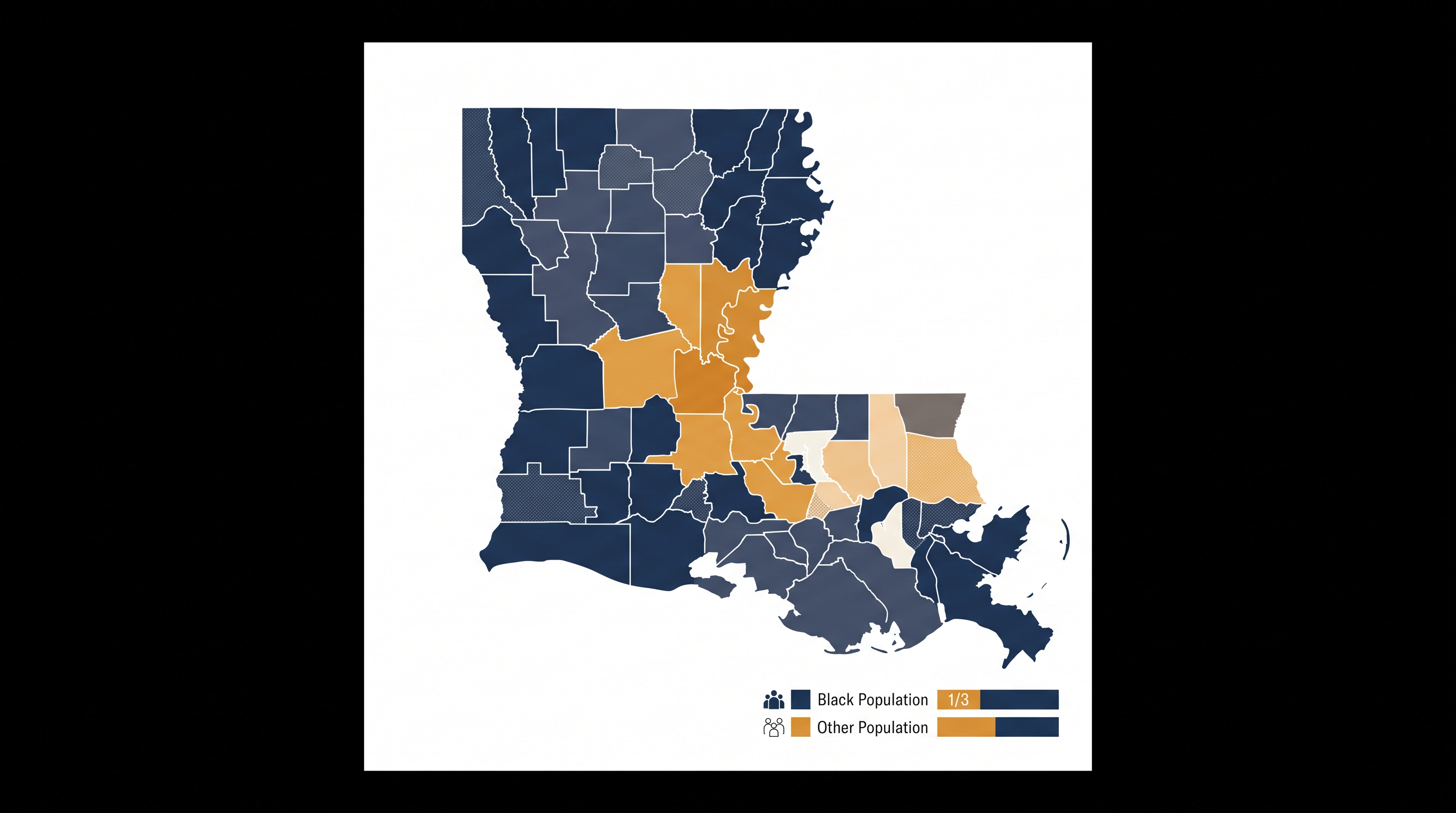
The legal battle originated in Louisiana, a state where Black residents comprise roughly one-third of the population. Following the 2020 census, the Republican-controlled state legislature drew a congressional map that packed Black voters into a single majority-Black district out of six total seats. After a federal court found that the map illegally diluted Black voting power and ordered a remedy, the state enacted a revised map featuring two majority-Black districts. That remedial map was subsequently challenged by a group of non-Black voters who argued it constituted an illegal racial gerrymander, setting the stage for the Supreme Court's intervention.[1][4]
In siding with the challengers, the Supreme Court's conservative bloc established that compliance with Section 2 of the Voting Rights Act cannot justify the state's use of race-based redistricting. Alito wrote that the state's attempt to satisfy the lower court's ruling, while understandable, resulted in an unconstitutional racial gerrymander. The decision formalizes a legal defense that allows states to deflect claims of racial discrimination by asserting their maps were drawn purely for partisan advantage. Because race and political affiliation are heavily correlated in many regions, particularly the South, this distinction provides legislatures with broad latitude to draw maps that diminish minority representation under the protective umbrella of political strategy.[1][2][3]
Alito wrote that the state's attempt to satisfy the lower court's ruling, while understandable, resulted in an unconstitutional racial gerrymander.
The Court's three liberal justices issued a sharp and forceful dissent, characterizing the majority's logic as a betrayal of the civil rights movement. Justice Elena Kagan described the ruling as the "demolition of the Voting Rights Act," arguing that the conservative majority had brazenly overridden the explicit will of Congress. Kagan noted that the decision completes a long-term judicial project to dismantle the landmark law, following the pivotal 2013 Shelby County v. Holder decision that eliminated the preclearance requirement for states with documented histories of voting discrimination. Without preclearance, Section 2 had remained the last viable mechanism for challenging discriminatory maps in federal court.[1][3]
The structural consequences for the American electoral landscape are immediate and profound. Election law experts warn that the ruling provides a clear legal roadmap for Republican-led legislatures across the country to redraw electoral maps ahead of upcoming congressional elections. Districts that currently provide minority representation are now highly vulnerable to being dismantled or heavily altered. Because the new evidentiary standard requires proof of intent, states can aggressively pack or crack minority voting blocs with virtual impunity, fundamentally altering the balance of power in the U.S. House of Representatives and statehouses nationwide.[2][5]
Civil rights organizations have responded with alarm, describing the decision as a devastating blow to multiracial democracy. Groups including the ACLU and the Legal Defense Fund emphasize that the ruling ignores the historical context and text of the 15th Amendment, which granted Congress broad powers to stamp out efforts to deny Black voting strength. Advocates argue that by requiring proof of racist intent, the Court has left minority communities without a viable legal weapon to challenge vote dilution. Representation for Black, Latino, and Native voters will now increasingly depend on the goodwill of state legislatures rather than enforceable federal law.[6][7]
The Callais decision marks the culmination of a decades-long conservative legal movement to restrict the scope of federal oversight in state elections. By shifting the administrative and political burdens entirely onto voting rights advocates, the Court has effectively returned the legal landscape to the pre-1982 era. As states absorb the implications of the ruling, the immediate future of American redistricting will likely see a surge in aggressive partisan gerrymandering, with minority voters bearing the brunt of the structural changes. The decision cements the Roberts Court's legacy of systematically dismantling the legislative achievements of the 1960s civil rights era.[4]
How we got here
1965
Congress passes the Voting Rights Act to prohibit racial discrimination in voting.
1982
Congress amends Section 2 of the Act to clarify that plaintiffs only need to prove a law has a discriminatory effect, not discriminatory intent.
2013
The Supreme Court's decision in Shelby County v. Holder eliminates the requirement for states with a history of discrimination to get federal preclearance for voting changes.
April 2026
The Supreme Court strikes down Louisiana's remedial map in Louisiana v. Callais, establishing a new requirement for proof of intentional discrimination.
Viewpoints in depth
The Conservative Majority
Argues that the Constitution prohibits race-based redistricting, even when attempting to comply with the Voting Rights Act.
In the majority opinion, Justice Samuel Alito and the conservative bloc maintain that allowing race to dictate electoral boundaries violates the 14th Amendment's equal protection clause. They argue that Section 2 of the Voting Rights Act cannot be used as a shield to justify racial gerrymandering. From this perspective, unless plaintiffs can prove that lawmakers acted with explicit, intentional racial animus, maps drawn for partisan advantage are legally permissible, even if they disproportionately impact minority voters.
Civil Rights Advocates
View the decision as the final dismantling of the Voting Rights Act and a severe threat to multiracial democracy.
Organizations like the ACLU and the Legal Defense Fund argue the Court has imposed an impossible evidentiary burden. Because modern lawmakers rarely state explicitly racist intentions on the record, requiring proof of intent effectively neutralizes the ability to challenge discriminatory maps. These advocates point out that Congress specifically amended the Voting Rights Act in 1982 to ensure that discriminatory results were sufficient to prove a violation, a legislative mandate they say the Court has now unlawfully discarded.
Election Law Analysts
Focus on the structural shift that empowers state legislatures to gerrymander aggressively under the guise of partisanship.
Legal scholars and election analysts note that in many Southern states, race and partisan affiliation are inextricably linked. By ruling that partisan gerrymandering is a valid defense against claims of racial discrimination, the Court has provided state legislatures with a clear legal roadmap to dilute minority voting power. Analysts warn this will lead to a rapid redrawing of congressional maps ahead of upcoming elections, with minority representation increasingly dependent on the political calculations of state lawmakers rather than federal protections.
Sources
Source coverage
7 outlets
3 viewpoints surfaced







[1]The GuardianIndependent Legal Analysts
Justices rule in landmark decision Louisiana must redraw congressional map, largely killing major civil rights law
Read on The Guardian →[2]Associated PressThe Court Majority & Republican Officials
Supreme Court weakens the Voting Rights Act and aids GOP efforts to control the House
Read on Associated Press →[3]Campaign Legal CenterCivil Rights & Voting Advocates
The U.S. Supreme Court Has Eviscerated the Voting Rights Act — What's Next?
Read on Campaign Legal Center →[4]League of Women VotersCivil Rights & Voting Advocates
SCOTUS's Decision in Louisiana v. Callais
Read on League of Women Voters →[5]The Daily RecordThe Court Majority & Republican Officials
Supreme Court guts key Voting Rights Act provision in Louisiana map case
Read on The Daily Record →[6]Constitutional Accountability CenterCivil Rights & Voting Advocates
Supreme Court Guts Voting Rights Act in Louisiana v. Callais
Read on Constitutional Accountability Center →[7]Democracy DocketCivil Rights & Voting Advocates
The Voting Rights Act at 61: A Legacy Under Threat
Read on Democracy Docket →
Comments
Every angle. Every day.
Get law justice stories with full source coverage and perspective breakdowns delivered to your inbox.