
Inaugural FIFA ASEAN Cup Confirmed for September with Two-Division Format and Mandatory Player Release
FIFA has officially launched a new 14-team tournament for Southeast Asia, utilizing a two-division format and enforcing mandatory player release for the first time in the region's history.
By Ryder James

Share this story
For decades, the prevailing narrative around Southeast Asian football has been defined by an artificial ceiling. The assumption across the global sport is that ASEAN national teams can never field their absolute best starting elevens because top-tier European and foreign clubs simply refuse to release their players for regional tournaments.
It has long been treated as an unsolvable geographic penalty—a structural flaw that doomed the region to secondary status. But that assumption just became entirely obsolete. The era of the club-versus-country tug-of-war in Southeast Asia is over, replaced by a mandate that fundamentally alters the balance of power in the region.[1][2]
The correction comes directly from the top of the sport. FIFA has officially confirmed the launch of the inaugural FIFA ASEAN Cup, kicking off this September, and it arrives armed with the single mechanism that changes everything: mandatory player release.
Because the new tournament is fully sanctioned by the global governing body and sits squarely inside the official September 24 to October 3 international match window, clubs worldwide no longer have the option to decline call-ups. Whether a player is starting in the English Championship, the Dutch Eredivisie, or the Belgian Pro League, they are contractually obligated to report for national duty. The region's brightest stars are finally coming home to play for real stakes.[3][5]
This is not merely a rebranded regional friendly circuit; it is a structural overhaul. The 14-team tournament introduces a high-stakes, two-division format designed to maximize competitive tension and eliminate dead-rubber matches. Indonesia will host the elite Premier Division, featuring regional heavyweights like Vietnam, Thailand, Malaysia, and Singapore, alongside invited wildcard Pakistan.
Meanwhile, Hong Kong will host the Challenge Division, creating a tiered ecosystem that gives developing programs like Brunei, Laos, and Timor-Leste a tangible ladder to climb. By separating the field into two competitive tiers, the tournament guarantees that every match has direct implications for promotion, relegation, and regional supremacy.[1][4]
The financial and ranking incentives attached to the new format are unprecedented for the region. The Premier Division champion will walk away with a $1 million prize out of a total $4 million purse, injecting vital capital into the winning federation.
More crucially, because this is an official FIFA-sanctioned event, the matches carry significantly higher world ranking points than the traditional AFF Championship. For nations hovering around the critical top-100 mark in the global rankings, a strong run in September is a direct ticket to better seeding in future World Cup and AFC Asian Cup qualification cycles. Every goal now carries compounding geopolitical weight.[2][5]
The immediate impact on squad selection will be transformative, fundamentally rewriting how these national teams operate. Take Indonesia, for example. Historically forced to field domestic-heavy squads during the AFF Championship because European clubs held back their diaspora stars, the Garuda can now summon their full-strength roster without relying on backroom negotiations. The same applies to Thailand and Vietnam, whose top exports to the Japanese J.League, South Korean K League, or European divisions are now guaranteed to be available.
Managers who have spent years building tactical systems around compromise and missing personnel will finally have access to their complete arsenals. This influx of top-tier talent is expected to drastically elevate the tactical sophistication and raw pace of the entire tournament, turning what used to be a regional showcase into a genuine gauntlet.[1][3]
To further elevate the competition level, FIFA has deliberately expanded the tournament's footprint beyond the traditional ASEAN geographic borders. India has officially signed a participation agreement to join the Premier Division, bringing a massive new broadcast market and a hardened squad desperate for competitive minutes after missing out on the AFC Asian Cup.
Pakistan steps in as a wildcard replacement for China, while Hong Kong enters not just as a host, but as a Challenge Division contender. By inviting these external challengers, the tournament breaks the insular cycle of Southeast Asian teams only playing each other, forcing them to adapt to different tactical styles and physical profiles from across the broader Asian landscape.[6]
This aggressive restructuring represents a broader strategy by FIFA to standardize and elevate regional competitions, directly mirroring the success of the recently revived FIFA Arab Cup. By taking ownership of the ASEAN calendar, the global governing body is effectively forcing a professionalization of the region's international schedule.
It eliminates the scheduling chaos and club disputes that have historically plagued Southeast Asian football federations, replacing them with a guaranteed, high-stakes window that commands global respect. For the local federations, it is a massive vote of confidence from Zurich; for the fans, who routinely pack 80,000-seat stadiums for regional derbies, it is the global validation they have sought for decades. The region is no longer an afterthought on the international calendar.[3][5]
The immediate challenge now falls squarely on the shoulders of the national federations and their coaching staffs. With the tournament kicking off in late September, managers have less than two months to integrate their returning overseas stars with their domestic cores. The tactical blueprints must be finalized, and the pressure to deliver results will be immense.
The immediate challenge now falls squarely on the shoulders of the national federations and their coaching staffs.
Key points
- FIFA has officially confirmed the inaugural ASEAN Cup for September 2026, featuring a 14-team, two-division format.
- The tournament's placement in the official international window triggers mandatory player release from clubs worldwide.
- Indonesia will host the elite Premier Division, while Hong Kong will host the Challenge Division.
- The Premier Division champion will receive a $1 million prize from a total $4 million purse.
- Invited nations including India and Pakistan will join the competition to elevate the tactical diversity of the field.
How we got here
Oct 2025
FIFA President Gianni Infantino announces the concept of the FIFA ASEAN Cup at the ASEAN Summit in Malaysia.
Mar 2026
The FIFA Council officially approves the tournament and its placement in the September international window.
Jul 2026
Participating federations receive official confirmation of the two-division format and host nations.
Sep 2026
The inaugural FIFA ASEAN Cup is scheduled to kick off in Indonesia and Hong Kong.
- ASEAN Football Federations
- Views the tournament as a crucial stepping stone for regional development and a chance to secure vital FIFA ranking points.
- Global Football Governance
- Aims to standardize regional competitions and integrate Southeast Asia more deeply into the official international match calendar.
- Invited Nations
- Sees the expanded format as a valuable opportunity to gain competitive minutes and test their squads against new tactical styles.
Perspectives this story doesn't cover
- European Club Managers
- Domestic League Organizers
Sources
Source coverage
6 outlets
3 viewpoints surfaced






- [1]The Straits TimesASEAN Football Federations
Singapore to face Indonesia, Malaysia and India in inaugural FIFA ASEAN Cup
Read on The Straits Times → - [2]Việt Nam NewsASEAN Football Federations
The newly-launched FIFA ASEAN Cup 2026 will be held in a new concept
- [3]Asia News NetworkGlobal Football Governance
Southeast Asian football is set for a fresh kick forward as FIFA confirms the timing of the inaugural 2026 FIFA ASEAN Cup
- [4]Football Association of SingaporeASEAN Football Federations
Singapore to face Indonesia, India and Malaysia in inaugural FIFA ASEAN Cup 2026™
- [5]FIFAGlobal Football Governance
FIFA Council approves the introduction of the FIFA ASEAN Cup
Read on FIFA → - [6]GKTodayInvited Nations
India signs participation agreement for inaugural FIFA ASEAN Cup
Read on GKToday →

More in Sports
See all →Youth Tournaments
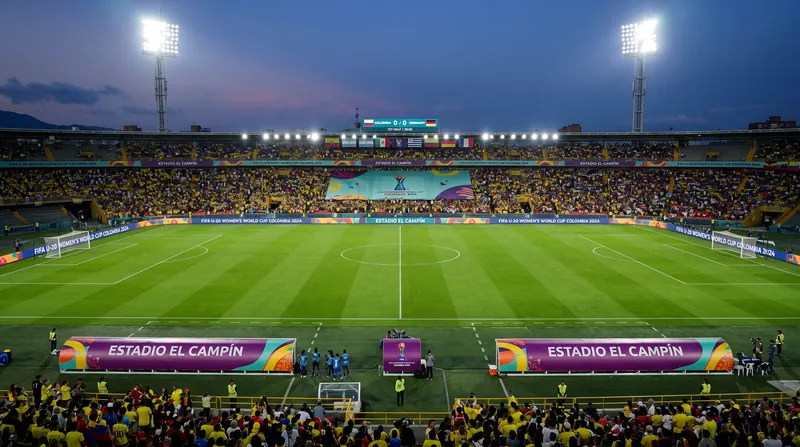
UEFA Federations Abandon U-20 Women's World Cup Boycott as 24-Team Tournament Kicks Off in Colombia
6 sources
Player Retirement
Luka Modrić Retires From Croatia National Team Following 2026 World Cup Exit
3 sources

FIFA Governance
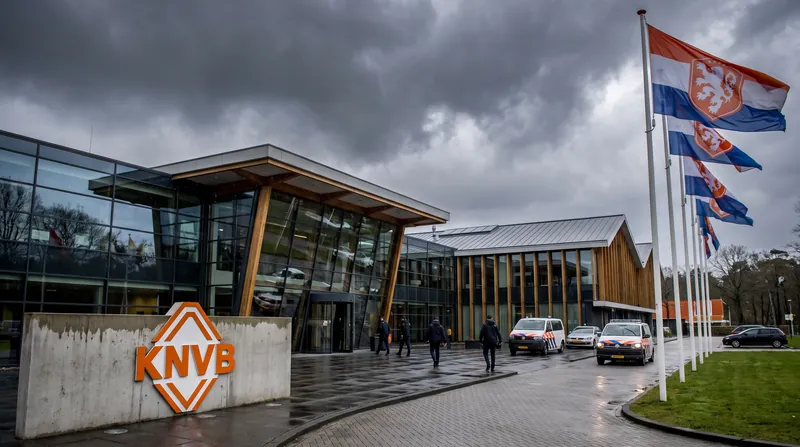
Dutch Federation Withdraws Support for Gianni Infantino, Calls for Global Summit on FIFA's Future
6 sources
World Cup Fallout
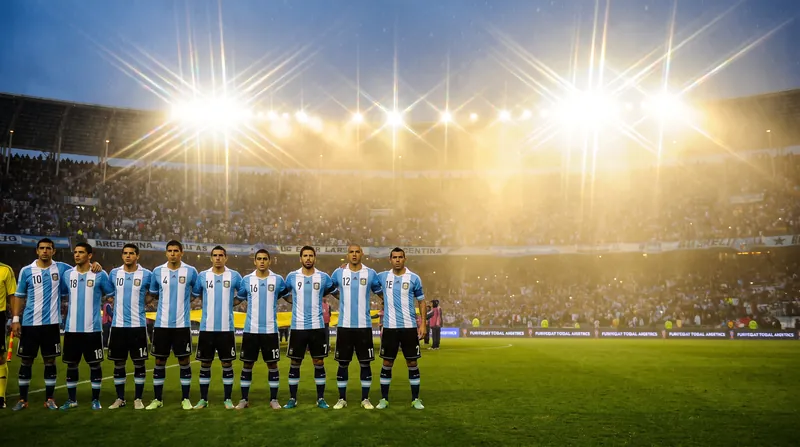
FIFA Approves Argentina's Request to Serve World Cup Final Suspensions in Friendly Matches
8 sources
Comments
Every angle. Every day.
Get Sports stories with full source coverage and perspective breakdowns, free every day.