
Two Years Out: The Early Contenders and Dark Horses for UEFA Euro 2028
With exactly two years until kickoff, early projections for Euro 2028 highlight a collision course between England's peaking golden generation and Spain's defending champions.
By Omar Haddad

Share this story
Exactly two years from today, the first whistle of UEFA Euro 2028 will blow at the National Stadium of Wales in Cardiff, kicking off a month-long festival of football across the United Kingdom and the Republic of Ireland.
With the qualification draw slated for late 2026, the continent's elite national teams are already laying the groundwork for a tournament that promises to be a defining moment for several footballing generations. While 24 teams will eventually punch their tickets to the finals, early projections, expert analyses, and betting markets have already established a clear hierarchy of contenders, dark horses, and rebuilding giants.
At the top of the early outlook sits England, a team carrying both the distinct advantage of home soil and the immense weight of recent history. After suffering back-to-back heartbreak in the finals of Euro 2020 and Euro 2024, the "Three Lions" are widely viewed as the team with the most to prove on the international stage.
By the time the summer of 2028 arrives, England's current core—featuring the likes of Jude Bellingham, Bukayo Saka, Phil Foden, and Cole Palmer—will be squarely in their physical and tactical primes, ready to finally cross the finish line.[2]
For England, the tournament layout offers a tantalizing path that could heavily favor a deep run. Should they qualify and top their respective group, they could play their opening matches at Manchester City's Etihad Stadium before returning to the familiar confines of Wembley for the latter stages of the knockouts.
Analysts note that this home-field advantage, combined with a mature squad that has repeatedly navigated deep tournament runs, makes them the narrow early favorites in outright betting markets across Europe. However, the intense pressure of delivering a major trophy at Wembley remains a significant psychological hurdle the team must overcome.[2]
Standing directly in England's path is Spain, the defending champions who broke English hearts in the 2024 final. Spain's trajectory is perhaps the most daunting prospect for the rest of Europe right now. Their current squad is anchored by a generational wave of young talent—including Lamine Yamal, Pedri, Gavi, Nico Williams, and Pau Cubarsí—who won the previous European Championship while still largely in their teens and early twenties. The prospect of facing this squad at full maturity is a terrifying thought for opposing managers.[1]
By 2028, this Spanish core will no longer be a group of prodigies; they will be battle-tested veterans with years of Champions League and international experience under their belts. Tactical observers point out that Spain has successfully evolved its traditional "tiki-taka" possession game, blending it with a modern, explosive directness on the wings that makes them incredibly difficult to defend against. Early projections suggest that if this core stays healthy, Spain could be on the verge of a dynasty rivaling their historic 2008–2012 dominance.[1][2]
Beyond the two recent finalists, the traditional continental heavyweights are looming large and preparing their own campaigns. France remains a terrifying prospect for any opponent, regardless of the venue. Led by Kylian Mbappé, the French squad boasts an assembly line of talent that provides unparalleled depth across every single position on the pitch. Their blend of elite athleticism, tactical flexibility, and major tournament pedigree ensures they remain a perennial favorite and a safe bet to reach the latter stages of the competition.[1][2]
Germany, meanwhile, is undergoing a renaissance that has captured the attention of European football analysts. Following a period of relative underachievement and uncharacteristic early tournament exits, the German national team has committed to a sweeping tactical rebuild. Centered around the creative brilliance of emerging superstars like Jamal Musiala and Florian Wirtz, Germany is moving away from its historically rigid systems toward a more fluid, hybrid style of play. Bookmakers currently position them as a top-tier threat, warning that a revitalized Germany is historically one of international football's most dangerous forces.[1][2]
While the favorites dominate the headlines, the beauty of the European Championship often lies in its unpredictability, leaving ample room for dark horses to emerge and disrupt the established order. Portugal is frequently cited as a prime candidate to cause major upsets. As the nation transitions fully out of the Cristiano Ronaldo era, a new generation featuring Vitinha, Rafael Leão, and João Félix will be hitting their peak years. Analysts suggest Portugal's technical quality and individual brilliance make them a severe threat to any team they encounter.[1][2]
Other nations carrying significant dark-horse potential include the Netherlands and reigning Euro 2020 champions Italy. The Dutch continue to rely on their influential philosophy of total football, producing technically gifted squads capable of beating anyone on their day if their system clicks. Italy, despite a rocky period following their 2021 triumph at Wembley, remains a tactical powerhouse available at longer odds, with their chances likely hinging on a new crop of emerging defensive and midfield talents breaking through over the next two years.[1][2]
For the host nations outside of England, the lead-up to the 2028 tournament is filled with both immense excitement and underlying anxiety. Unlike previous iterations of the tournament where hosts were granted a free pass, the host nations—England, Republic of Ireland, Scotland, and Wales—are not guaranteed automatic qualification to the group stages.
They must navigate the standard European qualifying rounds against highly motivated opponents, though UEFA has reserved two fallback spots for the best-performing hosts who fail to qualify directly through their respective groups. This unique setup ensures that every qualifying match will carry the weight of a knockout fixture.
This dynamic adds immense pressure to the coming years of international breaks. The Republic of Ireland, for instance, is already evaluating its long-term managerial options to ensure the team is tactically competitive enough to secure a spot and play in front of their passionate home fans at the Dublin Arena. Similarly, Wales and Scotland are desperate to ensure they are actually on the pitch when the tournament arrives in Cardiff and Glasgow, respectively, rather than watching from the sidelines as mere logistical hosts.
The stage itself is set to be spectacular, showcasing a mix of historic and modern footballing architecture. Matches will be played across nine venues, ranging from historic grounds like Villa Park and St James' Park to state-of-the-art modern arenas like the Tottenham Hotspur Stadium and Everton's newly opened dockside home. The tournament will ultimately culminate on July 9, 2028, beneath the iconic arch of Wembley Stadium, where a new chapter of European football history will be written in front of a global audience.
Key points
- Euro 2028 kicks off in exactly two years, hosted across the UK and the Republic of Ireland.
- England and defending champions Spain are the early favorites to win the tournament.
- France and a rebuilding Germany remain formidable threats with immense squad depth.
- Host nations are not guaranteed automatic qualification and must navigate the standard qualifying rounds.
- The tournament will be played across nine stadiums, culminating with the final at Wembley.
How we got here
Oct 2023
UEFA officially awards the hosting rights for Euro 2028 to the joint bid from the UK and the Republic of Ireland.
July 2024
Spain defeats England in the Euro 2024 final, setting the stage for their title defense in 2028.
Nov 2025
UEFA confirms the nine host stadiums and announces the tournament schedule.
Dec 2026
The qualifying group stage draw is scheduled to take place in Belfast.
June 2028
Euro 2028 is set to kick off at the National Stadium of Wales in Cardiff.
- The Host Nation Optimists
- Belief that England's golden generation will finally triumph on home soil.
- The Spanish Dynasty Believers
- Confidence that Spain's young core will dominate European football for the next decade.
- The Continental Heavyweights
- Backing the immense depth and tactical prowess of France and Germany.
- The Dark Horse Backers
- Belief that teams like Portugal, Italy, or the Netherlands have the talent to upset the established favorites.
Perspectives this story doesn't cover
- Smaller European nations hoping to secure one of the expanded qualification spots.
- Domestic league managers concerned about player burnout leading up to the tournament.
Sources
Source coverage
2 outlets
4 viewpoints surfaced


- [1]The Sports TodayThe Spanish Dynasty Believers
Explore UEFA Euro 2028: Top European Nations
Read on The Sports Today → - [2]BetVictorThe Continental Heavyweights
Euro 2028 Outright Winner Betting Markets
Read on BetVictor →
More in Sports
See all →Looking back
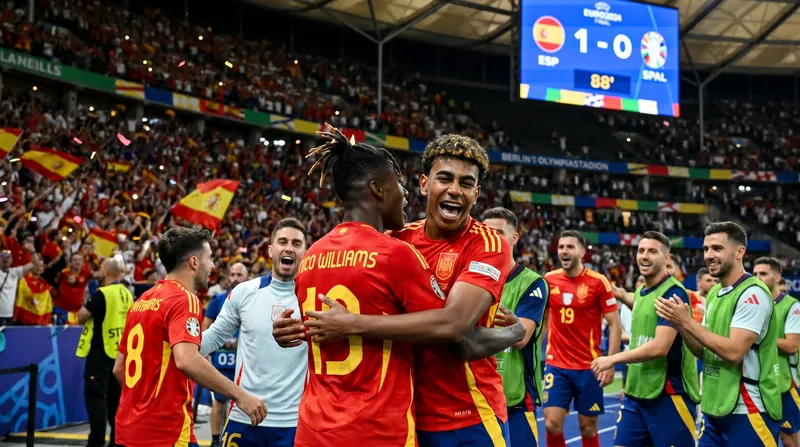
How Spain's direct revolution conquered Euro 2024: A look back at the Berlin final
3 sources
World Cup Qualification
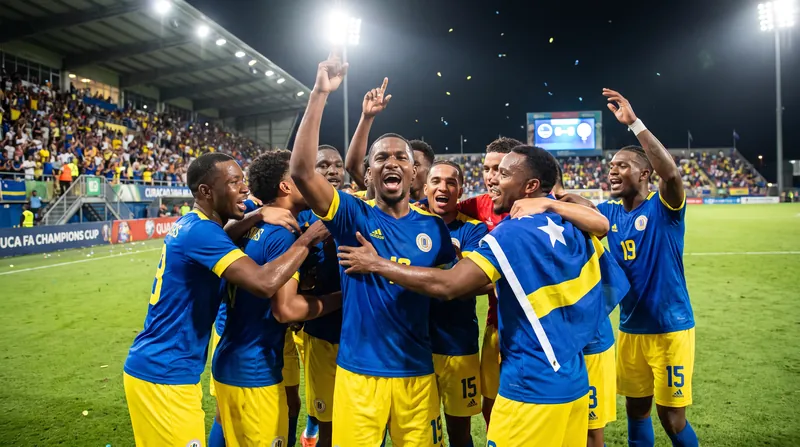
Italy Misses 2026 World Cup as Curaçao Becomes Smallest Nation Ever to Qualify
7 sources
National Team Discipline
Cristiano Ronaldo Handed 30-Day Suspension and Fine by Portuguese FA Over Squad Walkout
4 sources

Football Governance
Aleksander Čeferin Reverses Decision to Seek Fourth Term as UEFA President
6 sources
Comments
Every angle. Every day.
Get Sports stories with full source coverage and perspective breakdowns, free every day.