
USDA Finalizes 'Product of USA' Rule, Limiting Label to Meat Born, Raised, Slaughtered, and Processed Domestically
Starting in 2026, a new USDA rule will restrict the 'Product of USA' label to meat from animals whose entire lifecycle occurred in the United States, closing a long-standing loophole.
By Kabir Mehra

- Labeling Reformers
- Advocates who argue the rule closes a deceptive loophole and restores consumer trust.
- Cross-Border Trade Defenders
- Industry groups and trading partners warning the rule disrupts a highly integrated North American supply chain.
- Neutral Industry Observers
- Trade press and analysts focused on the logistical and compliance impacts of the new regulations.
Perspectives this story doesn't cover
- Small-scale domestic processors
- Grocery retailers
The competing cases
Labeling Reformers
Advocates argue the rule closes a deceptive loophole and restores consumer trust.
Proponents, including the USDA and domestic farming groups, argue that the previous labeling standards actively misled consumers. By allowing meat from foreign-born animals to carry a U.S. origin claim simply because it was sliced or packaged domestically, the old rules deprived shoppers of the ability to make informed purchasing decisions. They view the strict four-pillar requirement as a necessary correction that empowers consumers and rewards ranchers who manage the entire lifecycle of their livestock within the United States.
Cross-Border Trade Defenders
Industry groups and trading partners warn the rule disrupts a highly integrated North American supply chain.
Organizations like the National Pork Producers Council and the Canadian Cattle Association argue that while the rule is technically voluntary, retail pressure will make it a de facto mandate. They warn that forcing meatpackers to segregate domestic and imported livestock will introduce massive logistical costs and inefficiencies. Furthermore, officials in Canada and Mexico view the standard as a discriminatory barrier to trade, warning it could trigger WTO disputes and retaliatory tariffs similar to those authorized in 2015 over previous labeling laws.
What’s at stake
For years, imported meat sliced in the U.S. could legally claim American origin. This rule restores transparency to the grocery aisle, allowing consumers to confidently support domestic agriculture while reshaping the North American meat supply chain.
The grocery store meat aisle is preparing for a major clarity upgrade that will fundamentally change how shoppers understand the origin of their food. As of January 1, 2026, the "Product of USA" label on beef, pork, poultry, and egg products will mean exactly what it sounds like: the animal was born, raised, slaughtered, and processed entirely within the borders of the United States. For years, a regulatory loophole allowed imported meat to carry the coveted American-origin sticker if it was merely repackaged or minimally processed on U.S. soil. Under the old framework, a steak from a cow born and raised on a ranch in Mexico, but sliced and wrapped in a Texas facility, could legally claim U.S. origin. This ambiguity frustrated domestic ranchers who felt undercut by foreign competition and confused consumers who believed they were supporting local agriculture.[1][5]
Finalized by the U.S. Department of Agriculture (USDA) in March 2024, the updated standard establishes a strict, uncompromising four-pillar requirement. To bear the voluntary label, the entire lifecycle of the animal—from birth to final processing—must occur domestically. The rule extends far beyond single cuts of meat, applying equally to multi-ingredient items like sausages, prepared meals, and cured products. For a pork sausage to carry the label, every meat component in the product must meet the domestic lifecycle standard, and all preparation steps must happen in the U.S. The only exceptions carved out by the USDA are for foreign-sourced spices and flavorings, which are permitted without disqualifying the product. The agency will rely on generic label approval, meaning producers will not need pre-approval but must maintain rigorous documentation on file to substantiate their claims during inspections.[1][2]
The USDA's regulatory shift was heavily informed by a 2022 consumer survey revealing widespread misunderstanding of the existing labeling framework. The data showed that 47 percent of shoppers mistakenly believed the old label already guaranteed the animal was born and raised in the United States. Consumer advocates and domestic farming groups championed the change, arguing it restores much-needed transparency to the meat counter. They maintain that shoppers who want to support local agriculture, reduce their food miles, or simply know the origin of their dinner should be able to vote with their wallets without navigating deceptive packaging. By aligning the regulatory definition with consumer expectations, the USDA aims to eliminate misleading marketing and reward ranchers who manage the entire lifecycle of their livestock within the United States.[1][5]
While the USDA repeatedly stresses that the label remains strictly voluntary, industry groups warn it will function as a de facto mandate across the grocery sector. Major retailers and supermarket chains often demand origin labeling for their premium meat tiers, which could force meatpackers to either comply with the strict new standards or risk losing highly profitable shelf space. The National Pork Producers Council argues that this intense market pressure will force processing facilities to physically segregate domestic and imported livestock. For massive packing plants accustomed to processing animals efficiently regardless of their country of origin, implementing separate production lines and tracking systems represents a costly logistical hurdle that could ultimately drive up operational expenses.[2][4]
While the USDA repeatedly stresses that the label remains strictly voluntary, industry groups warn it will function as a de facto mandate across the grocery sector.
This required segregation threatens to disrupt the highly integrated North American meat supply chain, which has operated seamlessly across borders for decades. U.S. feedlots and processing facilities rely heavily on millions of live cattle and pigs imported annually from Canada and Mexico to maintain operational capacity and keep consumer prices stable. By creating a strong financial incentive for packers to exclusively source domestic animals to secure the "Product of USA" premium, the rule could severely depress demand for imported livestock. Industry analysts warn that small and medium-sized processors, particularly those located near the northern and southern borders, may struggle to secure enough domestic supply to remain competitive if they are forced to abandon their traditional cross-border sourcing networks.[2]
International pushback against the finalized rule has been swift and severe. The Canadian Cattle Association publicly condemned the new standard, calling it "the most onerous in the world" and warning that it will unfairly discriminate against live cattle imports while undermining the beneficial integration of the North American agricultural economy. South of the border, Mexico's Economy Ministry echoed these deep concerns, stating the rule violates the core principles of economic integration established by the U.S.-Mexico-Canada Agreement (USMCA). Mexican officials warned that the resulting logistical bottlenecks and supply chain disruptions will not only harm foreign producers but will ultimately raise costs for American consumers at the checkout counter.[3]
Both neighboring nations have strongly hinted at challenging the rule at the World Trade Organization (WTO), reviving memories of a bitter and costly labeling battle from the previous decade. In 2015, the WTO authorized Canada and Mexico to impose $1 billion in retaliatory tariffs on American goods over a mandatory Country of Origin Labeling (COOL) law, forcing the U.S. Congress to hastily repeal the legislation. Opponents of the new framework fear this voluntary rule could trigger a similarly devastating trade dispute if it demonstrably harms foreign producers and violates international trade obligations. Despite the looming threat of friction, the USDA maintains that the voluntary nature of the rule shields it from WTO retaliation, framing the policy purely as a truth-in-advertising measure rather than an illegal import restriction.[1][5]
For now, the clock is ticking for the North American meat industry. Meatpackers, processors, and retailers have until the uniform compliance date of January 1, 2026, to bring their supply chains into compliance, secure the necessary auditing documentation, or strip the American-origin claims from their packaging entirely. As the industry scrambles to adapt to the new logistical realities, the ultimate impact on cross-border trade remains to be seen. But for backyard grillers and everyday shoppers, the regulatory overhaul brings a new level of confidence to the supermarket. When the summer grilling season of 2026 arrives, consumers can trust that the flag on their burger package finally carries the full weight of a domestic lifecycle.[2][5]
Key takeaways
- The USDA has finalized a rule restricting the 'Product of USA' label to meat from animals born, raised, slaughtered, and processed domestically.
- The standard closes a loophole that previously allowed imported meat to claim U.S. origin if it was repackaged in an American facility.
- Compliance with the voluntary label is required by January 1, 2026, for all single and multi-ingredient meat, poultry, and egg products.
- Trading partners Canada and Mexico warn the rule disrupts the integrated North American supply chain and could trigger WTO trade disputes.
Sources
Source coverage
5 outlets
3 viewpoints surfaced





- [1]U.S. Department of AgricultureLabeling Reformers
USDA Finalizes Voluntary “Product of USA” Label Claim to Align with Consumer Understanding
Read on U.S. Department of Agriculture → - [2]National Hog FarmerNeutral Industry Observers
'Product of USA' Meat Labeling Rule Takes Effect Jan. 1
Read on National Hog Farmer → - [3]Mexico News DailyCross-Border Trade Defenders
US finalizes new meat labeling rule; Mexico warns it could challenge it
Read on Mexico News Daily → - [4]National Pork Producers CouncilCross-Border Trade Defenders
USDA issues final 'Product of USA' labeling rule
Read on National Pork Producers Council → - [5]Factlen Editorial TeamLabeling Reformers
Synthesis by Factlen editorial team
Read on Factlen Editorial Team →
Comments

More in Food & Drink
See all →Tea Culture
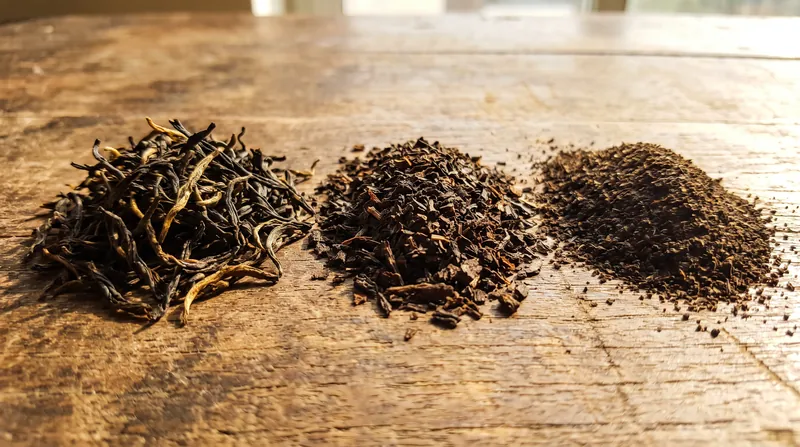
The Orange Pekoe Standard: How International Tea Grades Classify Leaf Size and Quality
5 sources
Food Labeling
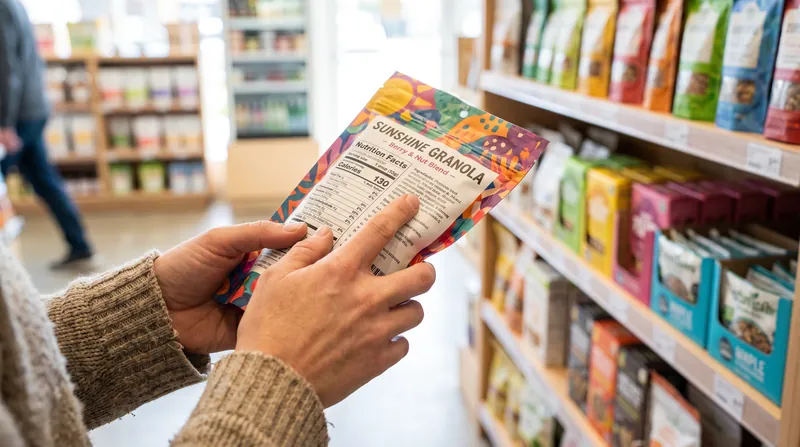
The 20% to 40% Variation: How Different Countries Define a 'Serving Size' for Packaged Food
5 sources
Flour Milling
The 0.45% Ash Content: How European Flour Type Numbers Define Global Baking Grades
6 sources

Espresso Mechanics
The 9-Bar Maximum: How 1940s Spring-Lever Engineering Established the Global Standard for Espresso Extraction
7 sources

Every angle. Every day.
Get Food & Drink stories with full source coverage and perspective breakdowns delivered to your inbox.