
US-Iran Peace Talks Delayed as Israel-Hezbollah Clashes Test Fragile Ceasefire
A sudden escalation of violence in Lebanon temporarily derailed the first round of U.S.-Iran peace negotiations in Switzerland, threatening a broader Middle East agreement before a renewed ceasefire took hold late Friday.
By Factlen Editorial Team
- U.S. Administration
- Focused on securing the 60-day window to finalize a nuclear deal and stabilize global energy markets.
- Iranian Leadership
- Demanding strict adherence to the ceasefire across all fronts and immediate economic relief.
- Israeli Government
- Prioritizing the neutralization of Hezbollah threats and maintaining a security buffer in Lebanon regardless of the broader deal.
- Global Energy Markets
- Monitoring the Strait of Hormuz and oil price volatility, prioritizing the resumption of global trade over regional political disputes.
What's not represented
- · Lebanese civilians displaced by the fighting
- · European nations reliant on Middle Eastern energy imports
Why this matters
The success or failure of these peace talks directly impacts global energy markets. A collapse of the truce could lead to a renewed blockade of the Strait of Hormuz, sending oil prices soaring and triggering a new wave of global inflation.
Key points
- The first round of U.S.-Iran peace talks in Switzerland was abruptly postponed due to escalating violence in Lebanon.
- Hezbollah killed four Israeli soldiers, prompting Israeli retaliatory airstrikes that killed at least 18 people.
- Iran delayed sending its delegation, demanding that Israel halt its military operations as required by the interim peace deal.
- A renewed ceasefire between Israel and Hezbollah was brokered by the U.S. and Qatar late Friday afternoon.
- The diplomatic volatility threatens global energy markets, with oil prices having recently dropped from $120 to $80 a barrel.
- The U.S. delegation remains prepared to travel to Switzerland once logistical and security conditions allow.
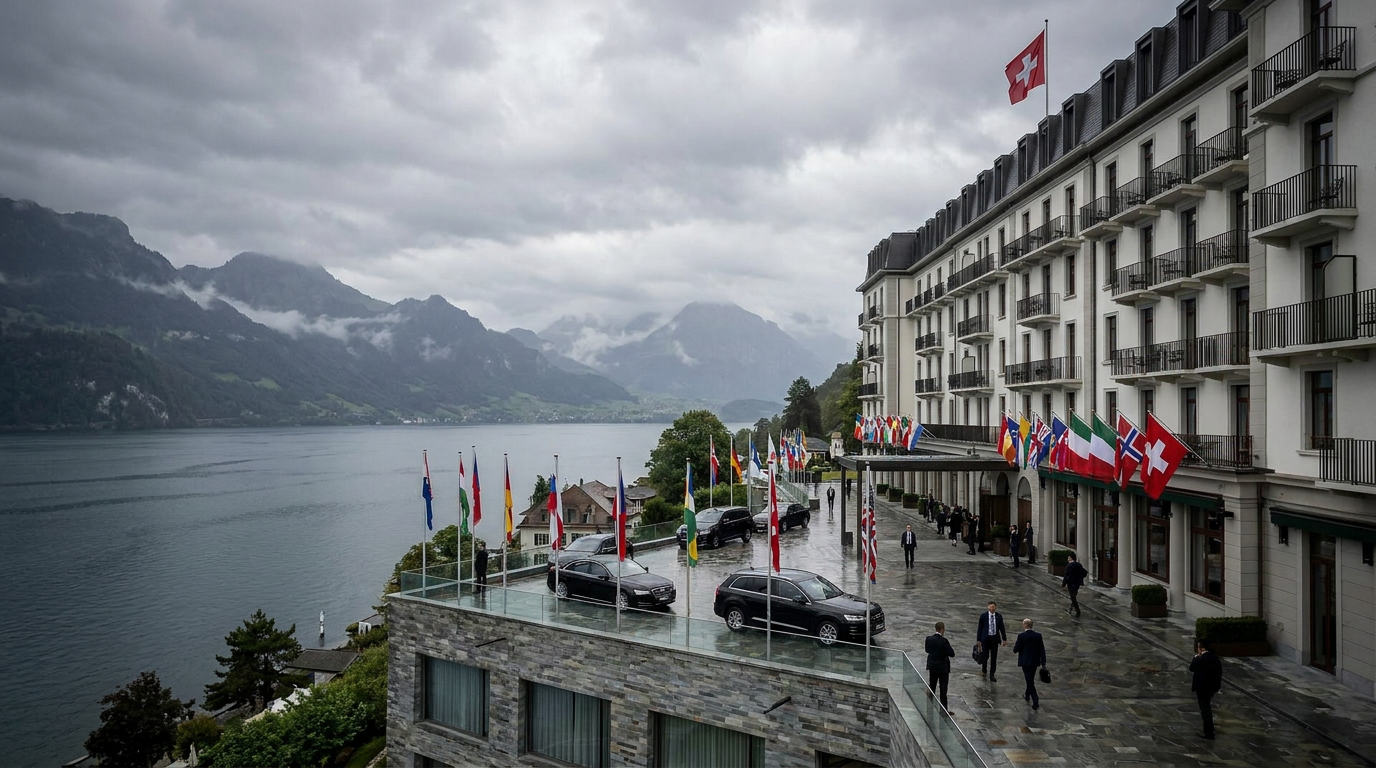
The diplomatic machinery designed to end the Middle East conflict ground to a sudden halt on Friday, exposing the extreme fragility of the newly signed United States-Iran peace agreement. Just days after Washington and Tehran agreed to an interim memorandum of understanding, a planned first round of technical negotiations at the Bürgenstock resort in Switzerland was abruptly postponed. The cancellation came so late that the staff of U.S. Vice President JD Vance, who is leading the American delegation, had already gathered at Joint Base Andrews outside Washington in anticipation of the flight. The sudden delay underscores how quickly regional volatility can disrupt high-level diplomacy, leaving the international community waiting to see if the ambitious framework can survive its first major stress test.[1][2]
The disruption was triggered not at the negotiating table, but on the battlefield in southern Lebanon, where a sudden escalation between Israel and the Iran-backed militant group Hezbollah threatened to unravel the broader regional truce. Hezbollah forces attacked an Israeli tank in the Lebanese village of Kfar Tebnit, killing four Israeli soldiers, including a battalion commander. In response, the Israel Defense Forces launched a wave of retaliatory airstrikes across southern Lebanon and the Bekaa Valley. Lebanon's health ministry reported that the strikes killed at least 18 people and wounded dozens more, sending civilians fleeing from the border region just days after many had returned home in the wake of the initial peace announcement.[1][3]
This localized violence immediately imperiled the broader U.S.-Iran accord, which explicitly requires the immediate and permanent termination of military operations on all fronts, including Lebanon. Iranian officials, citing the Israeli airstrikes, delayed sending their delegation to Geneva. Hezbollah lawmakers relayed messages from Tehran indicating that direct negotiations with the United States could not proceed without a comprehensive ceasefire in place, placing the burden on Washington to rein in Israeli operations. The standoff highlighted a core vulnerability of the peace process: the reliance on proxy forces and allied nations to maintain discipline while the primary powers attempt to negotiate a permanent settlement.[2][4]

The diplomatic crisis underscores the complex mechanism of the interim peace deal, which was designed to halt a conflict that has killed thousands and destabilized the global economy. The memorandum of understanding signed earlier in the week opened a 60-day window for the U.S. and Iran to negotiate a permanent resolution regarding Iran's nuclear program. In exchange for halting hostilities, the framework offers Iran significant economic relief, including the unfreezing of tens of billions of dollars in assets, immediate waivers for oil exports, and the establishment of a $300 billion reconstruction fund. The ambitious timeline leaves little room for delays, making the Swiss summit a critical first step in translating the memorandum into a binding treaty.[1][2]
However, the deal's architecture relies on compliance from regional actors who were not at the signing table and who have their own distinct security imperatives. Israel has repeatedly stated that it is not a party to the U.S.-Iran agreement and is not bound by its terms. Following the deaths of the four soldiers, Israeli Prime Minister Benjamin Netanyahu warned that Israel would exact a heavy price from Hezbollah. He insisted that Israeli forces would maintain their security buffer zone along the northern border for as long as required to ensure the safety of Israeli citizens, setting up a direct clash with Iran's demand for a complete cessation of military activity in Lebanon.[2][3]

However, the deal's architecture relies on compliance from regional actors who were not at the signing table and who have their own distinct security imperatives.
The prospect of the peace deal collapsing sent immediate tremors through global financial markets, which have been battered by months of geopolitical volatility. The conflict's primary economic choke point is the Strait of Hormuz, a narrow waterway that handles approximately 20 percent of the world's daily crude oil and seaborne liquefied natural gas exports. When the war escalated earlier in the year, the effective blockade of the strait caused a severe energy shock, disrupting supply chains and forcing shipping companies to reroute vessels at immense cost. The reopening of the strait is a central pillar of the U.S.-Iran agreement, making the success of the negotiations a matter of vital economic interest for nations far removed from the Middle East.[2][7]
During the height of the conflict, the price of Brent crude oil surged from roughly $70 a barrel to a peak of over $120 a barrel, threatening to trigger a renewed global inflation crisis and driving up the cost of living for consumers worldwide. Following the announcement of the interim peace deal, oil prices rapidly retreated to around $80 a barrel, providing a wave of relief to consumers and central banks. The International Energy Agency noted that while supplies would eventually rebound as shipping routes reopen, the physical logistical challenges of repairing infrastructure and clearing transportation bottlenecks mean that a return to pre-war energy prices will not happen overnight, requiring sustained peace to fully stabilize the markets.[7][8]
Recognizing the catastrophic economic and political consequences of a failed agreement, international mediators scrambled to patch the fractured truce before the diplomatic window closed entirely. Throughout Friday, diplomats from the United States and Qatar worked urgently with Iranian officials to broker a renewed cessation of hostilities in Lebanon. The frantic back-channel communications aimed to separate the localized border clashes from the broader strategic negotiations, assuring Iran that the U.S. remained committed to the framework while simultaneously pressuring Israel to halt its retaliatory strikes. By late afternoon, the intensive shuttle diplomacy yielded a crucial breakthrough.[2][3]

A senior U.S. official confirmed that a renewed ceasefire between Israel and Hezbollah officially took effect around 4 p.m. local time in Lebanon, halting the immediate cycle of violence. Both Hezbollah sources and Israeli officials confirmed the halt in fighting, with an Israeli official noting that as long as Hezbollah ceased its attacks, Israel would not treat the current moment as a time of war. However, the official reiterated that Israel would keep its forces in the southern security zone, leaving a persistent point of friction unresolved but temporarily freezing the active combat that had derailed the Swiss talks.[2][3]
The rapid de-escalation was bolstered by direct intervention from the White House, highlighting the political capital invested in the peace process. U.S. President Donald Trump told NBC News that he had spoken with Israeli officials and urged them to agree to the ceasefire, describing the Lebanon truce as a positive development and "little icing on the cake" that removes a major obstacle to the broader diplomacy with Iran. Trump defended the underlying agreement against domestic critics, arguing that Iran entered the negotiations out of desperation and that the 60-day window would prove the deal's leverage by keeping financial pressure on Tehran until a final accord is reached.[2][6]
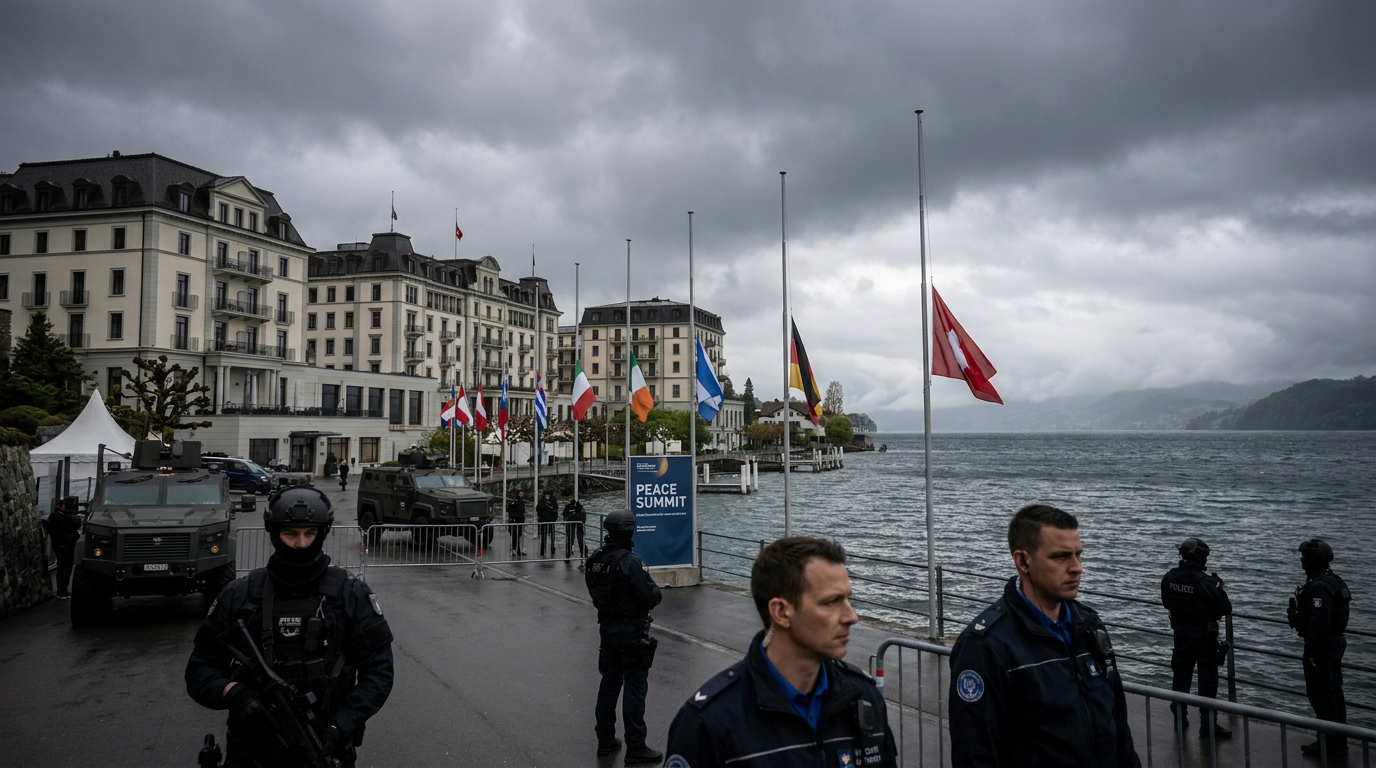
With the guns temporarily silenced in Lebanon, the focus now returns to the logistics of the Swiss summit and the ticking clock of the 60-day negotiation period. The White House maintains that the U.S. delegation remains prepared to depart for the technical talks at the first available opportunity, emphasizing that the logistical hurdles of such high-stakes diplomacy are rarely simple or predictable. Meanwhile, the Swiss Federal Department of Foreign Affairs noted that while preparatory work continues at the Bürgenstock resort, the formal negotiations remain officially postponed until both sides confirm their readiness to sit at the table.[5]

The events of the past 24 hours highlight the immense uncertainty hanging over the Middle East peace process. While the economic incentives for Iran and the global necessity of an open Strait of Hormuz provide strong momentum for a permanent deal, the interwoven nature of regional alliances means that a single localized skirmish can instantly threaten the entire diplomatic architecture. The ultimate success of the U.S.-Iran peace effort will depend not just on agreements reached in Alpine resorts, but on the ability of international mediators to maintain quiet across the region's most volatile borders, ensuring that proxy conflicts do not consume the broader pursuit of stability.[1][8]
How we got here
March 2026
Conflict escalates, leading to the blockade of the Strait of Hormuz and a spike in global oil prices.
Mid-June 2026
The U.S. and Iran sign an interim memorandum of understanding to halt hostilities and open a 60-day negotiation window.
June 18, 2026
Hezbollah attacks an Israeli tank in Kfar Tebnit, killing four soldiers; Israel retaliates with heavy airstrikes.
June 19, 2026 (Morning)
U.S.-Iran technical talks in Switzerland are postponed; JD Vance's delegation is grounded in Washington.
June 19, 2026 (4:00 PM)
A renewed ceasefire between Israel and Hezbollah takes effect following mediation by the U.S. and Qatar.
Viewpoints in depth
U.S. Administration's view
The deal is a strategic victory that weakens Iran and stabilizes global markets.
U.S. officials argue that the interim agreement was negotiated from a position of strength, forcing Iran to the table after months of debilitating conflict. They view the 60-day window as a strict probationary period where Iran must prove its commitment to halting proxy attacks and curbing its nuclear program before receiving the full benefits of the $300 billion reconstruction fund. For Washington, the immediate priority is keeping the Strait of Hormuz open to prevent a global inflation crisis, making the temporary tolerance of localized friction in Lebanon a necessary trade-off for broader macroeconomic stability.
Iranian Leadership's view
Sanctions relief and regional security are non-negotiable prerequisites for a permanent deal.
Tehran approaches the negotiations demanding immediate and tangible economic relief, particularly the unfreezing of assets and the lifting of oil export waivers. Iranian officials argue that the U.S. must guarantee the behavior of its allies, specifically demanding that Israel halt all military operations in Lebanon as stipulated by the memorandum of understanding. From Iran's perspective, any Israeli strike on Hezbollah is a violation of the truce, justifying their refusal to proceed with technical talks in Switzerland until a comprehensive cessation of hostilities is enforced across all fronts.
Israeli Government's view
Israel is not bound by the U.S.-Iran deal and must maintain its northern security buffer.
Israeli leadership maintains that they are not a party to the bilateral agreement between Washington and Tehran and will not compromise their national security for the sake of the broader diplomatic effort. Following months of conflict with Hezbollah, Israel insists on maintaining a physical security zone in southern Lebanon to protect its northern communities from cross-border attacks. They argue that retaliating against Hezbollah strikes is a necessary defense measure, not a violation of a peace deal they never signed, and warn that any permanent agreement that leaves Iran's proxy network intact is fundamentally flawed.
What we don't know
- Whether the renewed Israel-Hezbollah ceasefire will hold long enough for the Swiss talks to commence.
- How the U.S. will enforce the terms of the memorandum of understanding on regional allies who are not party to the agreement.
- If the 60-day negotiation window will be sufficient to resolve the complex issues surrounding Iran's nuclear program.
Key terms
- Memorandum of Understanding (MoU)
- A non-binding agreement outlining the terms and details of an understanding, serving as the foundation for a future formal treaty.
- Strait of Hormuz
- A critical maritime chokepoint between the Persian Gulf and the Gulf of Oman, through which roughly a fifth of the world's oil is transported.
- Buffer Zone
- A neutral or demilitarized area designed to separate hostile forces and prevent cross-border attacks.
- Brent Crude
- A major trading classification of sweet light crude oil that serves as a benchmark price for purchases worldwide.
Frequently asked
Why were the U.S.-Iran talks in Switzerland cancelled?
The talks were postponed because of a sudden escalation in fighting between Israel and Hezbollah in Lebanon, which prompted Iran to delay sending its delegation.
Is Israel part of the U.S.-Iran peace deal?
No, Israel is not a signatory to the agreement and maintains that it is not bound by its terms, particularly regarding its military operations in Lebanon.
How does this conflict affect global gas prices?
The conflict previously disrupted shipping through the Strait of Hormuz, causing oil prices to spike to $120 a barrel. The peace deal helped lower prices to $80, but renewed fighting threatens to disrupt markets again.
What happens during the 60-day window?
The U.S. and Iran have 60 days to negotiate a permanent resolution regarding Iran's nuclear program and the unfreezing of assets, provided the ceasefire holds.
Sources
Source coverage
8 outlets
4 viewpoints surfaced








[1]The GuardianIsraeli Government
US-Iran talks abruptly called off after Israel and Hezbollah trade deadly attacks
Read on The Guardian →[2]ReutersGlobal Energy Markets
Lebanon ceasefire deal reached after U.S.-Iran talks in Switzerland scrapped
Read on Reuters →[3]The Washington PostU.S. Administration
After 4 Israeli soldiers' deaths, Israel and Hezbollah agree to renew ceasefire
Read on The Washington Post →[4]The Straits TimesGlobal Energy Markets
Uncertainty hangs over timing of US-Iran peace talks
Read on The Straits Times →[5]South China Morning PostIranian Leadership
US-Iran talks in Switzerland delayed, White House says Vance still ready to go
Read on South China Morning Post →[6]AxiosU.S. Administration
Witkoff heads to Switzerland for potential US-Iran talks
Read on Axios →[7]Money To The MassesGlobal Energy Markets
How the Middle East peace deal is impacting your finances
Read on Money To The Masses →[8]The Wall Street JournalGlobal Energy Markets
Oil Supply Could Far Outstrip Demand Growth if Middle East Peace Deal Holds, IEA Says
Read on The Wall Street Journal →

Every angle. Every day.
Get news politics stories with full source coverage and perspective breakdowns delivered to your inbox.