
US and Iran Reach Preliminary Peace Deal, Agreeing to Reopen Strait of Hormuz
The United States and Iran have agreed to a framework to end their months-long conflict and lift blockades on the vital Strait of Hormuz. The breakthrough sent global oil prices tumbling, though details regarding Tehran's nuclear program remain unresolved.
By Factlen Editorial Team
- US Administration & Mediators
- Focuses on the immediate economic victory of reopening the Strait of Hormuz and views the 60-day window as leverage to force nuclear dismantlement.
- Iranian Leadership
- Frames the agreement as a victory against the US naval blockade, emphasizing the unfreezing of assets and domestic dilution of uranium.
- Israeli Security Establishment
- Strongly opposes the framework as a dangerous concession that leaves Iran's nuclear infrastructure intact and fails to secure Israel's northern border.
- US Conservative Critics
- Expresses deep skepticism over the release of frozen funds and fears the deal amounts to a surrender without verifiable nuclear concessions.
- Defense Analysts
- Cautions that the mechanics of the strait's reopening remain ambiguous and that Iran will likely attempt to retain strategic control.
What's not represented
- · Lebanese Civilians
- · Commercial Shipping Crews
- · OPEC+ Producers
Why this matters
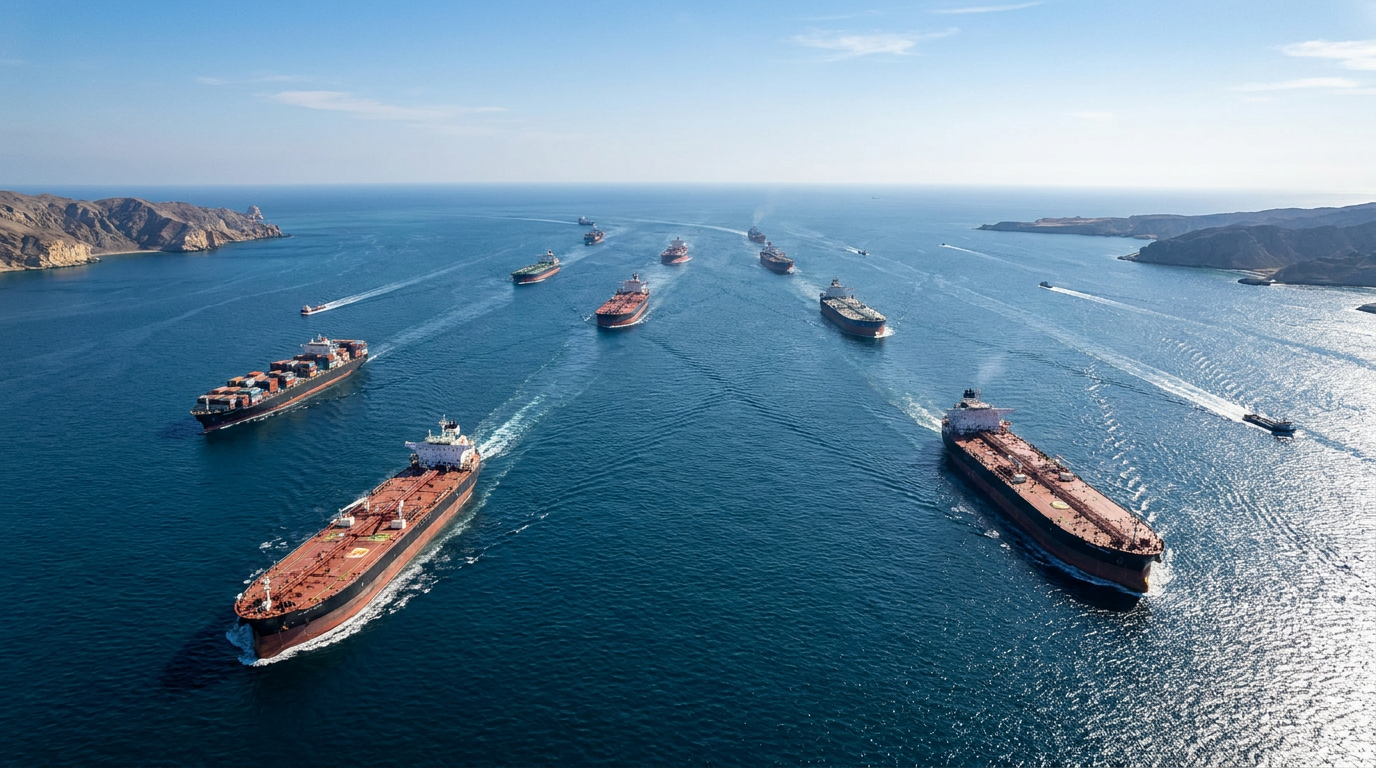
The reopening of the Strait of Hormuz restores passage for 20% of the world's crude oil and liquefied natural gas, promising immediate relief for global energy markets and inflation. However, the fragile framework leaves the ultimate fate of Iran's nuclear program to a tight 60-day negotiating window, meaning long-term regional stability remains uncertain.
Key points
- The US and Iran have agreed to a preliminary peace deal to end their months-long conflict.
- The agreement includes the immediate reopening of the Strait of Hormuz and the lifting of the US naval blockade.
- Brent crude oil prices dropped 4% to below $84 a barrel following the announcement.
- A 60-day negotiating period will commence to address the future of Iran's nuclear program.
- Israeli officials, who were not part of the negotiations, have strongly criticized the framework.
The United States and Iran have reached a preliminary agreement to end their months-long military conflict, signaling an end to the blockade of the Strait of Hormuz and offering immediate relief to global energy markets. The breakthrough, brokered by Pakistan alongside Qatar, Egypt, and other regional powers, establishes an immediate and permanent ceasefire on all fronts. The diplomatic resolution marks a dramatic turning point in a war that has destabilized the Middle East and severely disrupted international supply chains since late February.[1][5]
The conflict originally ignited following joint US-Israeli military strikes on Iranian territory, which prompted a swift and economically devastating retaliation from Tehran. In response to the strikes, Iranian forces effectively closed the Strait of Hormuz—a narrow, vital maritime chokepoint situated between Iran and Oman. Because roughly 20 percent of the world's crude oil and liquefied natural gas transits through this specific corridor, the closure triggered an unprecedented global energy shock, forcing shipping companies to reroute and causing severe inflationary pressures across international markets.[2][6]
US President Donald Trump confirmed the framework agreement on Truth Social, announcing that he had authorized the immediate removal of the United States naval blockade on Iranian ports. 'Ships of the World, start your engines. Let the oil flow!' Trump wrote to his followers, noting that the strait would officially reopen for mine removal and commercial transit on Friday. The formal signing of the peace pact is slated to take place in Geneva, Switzerland, bringing an official close to the naval standoffs that have defined the past three months.[2][3]

Global financial markets reacted swiftly and euphorically to the de-escalation. Brent crude prices, which had surged as high as $114 a barrel at the absolute peak of the crisis, tumbled more than 4 percent on Monday morning to trade below $84. Asian equities also surged, led by major indices in Tokyo and Seoul, reflecting widespread relief that the energy shock might finally be concluding. Energy analysts noted that while the war premium is rapidly exiting the market, it will take weeks to fully clear the backlog of stranded vessels.[2][6]
While the immediate resumption of maritime traffic represents a massive economic victory for the global community, the most contentious elements of the US-Iran relationship remain entirely unresolved. The preliminary pact does not finalize a comprehensive nuclear treaty; instead, it initiates a strict 60-day negotiating window to determine the ultimate fate of Iran's nuclear program. This tight timeframe places immense pressure on diplomats from both nations to forge a lasting consensus before the fragile ceasefire risks collapsing under the weight of unmet expectations and domestic political pressures.[4][7]
According to US officials briefed on the negotiations, the primary objective of these upcoming talks is the complete dismantlement of Iran's nuclear infrastructure, including the destruction and removal of its highly enriched uranium stockpile. However, Iranian officials have publicly countered that the draft deal allows them to dilute the enriched uranium domestically rather than surrendering it. Tehran continues to maintain its long-held stance that its nuclear program is strictly for civilian energy purposes, setting the stage for a highly adversarial 60 days of technical negotiations.[1][4]

However, Iranian officials have publicly countered that the draft deal allows them to dilute the enriched uranium domestically rather than surrendering it.
Financial concessions are also a central, albeit disputed, component of the framework. Reports from regional media indicate the agreement includes the phased release of up to $25 billion in frozen Iranian assets, alongside the suspension of crippling international sanctions on Iran's energy sector. However, several US officials have strongly disputed the timeline of this financial relief, insisting that no funds will be released until Tehran meets specific, verifiable conditions regarding its nuclear facilities, highlighting the deep mistrust that still permeates the bilateral relationship.[3][4]
The broader international community has largely embraced the diplomatic breakthrough with open relief. United Nations Secretary-General António Guterres called the agreement a 'critical step' toward the peaceful settlement of the conflict, while European Commission President Ursula von der Leyen emphasized that restoring toll-free navigation is absolutely essential for the stability of the global economy. Leaders from China, India, and the United Kingdom echoed similar sentiments, specifically praising the extensive mediation efforts by Pakistan that successfully brought both sides to the negotiating table.[5]
Despite the global optimism, the agreement has exposed a sharp and public rift between Washington and its closest Middle Eastern ally. Israel, which was notably sidelined from the final stages of the negotiations, has fiercely criticized the framework. Israeli National Security Minister Itamar Ben Gvir denounced the pact as a dangerous surrender, stating on Telegram that 'Trump's agreement does not bind us' and fundamentally fails to safeguard Israeli security against Iranian proxies. The sentiment reflects deep anxiety within Jerusalem that the deal prioritizes economic relief over regional disarmament.[4][5]

The exclusion of Israel is particularly sensitive given the ongoing, intense hostilities in Lebanon. While the US-Iran deal nominally calls for an immediate end to military operations on all fronts—including those involving the Iran-backed militant group Hezbollah—Israeli Defense Minister Israel Katz affirmed that Israeli forces will absolutely not withdraw from territory they have seized in southern Lebanon. Katz further warned that the Israeli military will retaliate aggressively if attacked, complicating the narrative of a comprehensive regional ceasefire and leaving a major flashpoint entirely unresolved.[4][5]
Military and geopolitical analysts note that the exact mechanics of the strait's reopening remain highly ambiguous. While the United States has pledged to lift its naval blockade of Iranian ports, it is unclear whether Iran will retain management functions or attempt to impose administrative tolls on passing commercial vessels. The Institute for the Study of War highlighted that Tehran has historically viewed control over the Strait of Hormuz as a core component of its national deterrence strategy, meaning any relinquishment of authority will likely be heavily conditioned.[7]
As diplomats and heads of state prepare for Friday's formal signing ceremony in Geneva, the durability of the peace remains incredibly fragile. The next 60 days will serve as a critical test of whether the two nations can translate a mutual desire for immediate economic relief into a lasting resolution on nuclear proliferation. If the technical talks collapse, President Trump has already threatened to resume military action, meaning the global economy remains just one diplomatic misstep away from plunging back into crisis.[1][7]
How we got here
Feb 2026
The conflict begins following joint US-Israeli strikes on Iran, prompting Tehran to close the Strait of Hormuz.
Mar 2026
Global oil prices surge to $114 a barrel as 20% of the world's petroleum supply is disrupted.
Jun 14, 2026
Mediators announce a preliminary peace agreement, confirmed by US President Donald Trump.
Jun 15, 2026
Global markets rally and oil prices tumble as the impending reopening of the strait is priced in.
Jun 19, 2026
The formal signing of the peace agreement is scheduled to take place in Geneva, Switzerland.
Viewpoints in depth
US Administration's View
Focuses on the immediate economic victory of reopening the Strait of Hormuz and ending the naval blockade.
The US administration views the preliminary agreement as a massive economic and diplomatic win that neutralizes the immediate threat to global supply chains. By lifting the naval blockade in exchange for the reopening of the Strait of Hormuz, the US has successfully deflated the war premium on oil prices. Crucially, Washington views the upcoming 60-day window as a strict deadline to force the dismantlement of Iran's nuclear program, leveraging the promise of sanctions relief to achieve long-term non-proliferation goals.
Iranian Government's View
Frames the agreement as a victory against the US naval blockade and a pathway to economic relief.
Tehran is framing the peace deal as a strategic victory that successfully broke the US naval blockade without surrendering its core nuclear capabilities. Iranian officials emphasize the unfreezing of up to $25 billion in assets and the suspension of energy sanctions as critical lifelines for their battered economy. Regarding the nuclear program, Iran maintains that any concessions will involve domestic dilution rather than the complete removal of its enriched uranium stockpile, preserving its technological infrastructure.
Israeli Leadership's View
Strongly opposes the framework, viewing it as a dangerous concession that leaves Iran's nuclear infrastructure intact.
Israeli officials, who were excluded from the final stages of the negotiations, view the agreement with deep alarm. The Israeli security establishment argues that the deal prioritizes global economic relief over regional disarmament, effectively rewarding Iranian aggression while leaving its nuclear program dangerously close to weapons-grade capacity. Furthermore, Israel stresses that it is not bound by the ceasefire and will continue its military operations against Hezbollah in Lebanon to secure its northern border, regardless of the US-Iran pact.
What we don't know
- Whether Iran will be permitted to dilute its enriched uranium domestically or be forced to export it.
- How Israel's ongoing military operations in southern Lebanon will impact the broader ceasefire with Iran's proxy network.
- Whether Iran will attempt to impose administrative tolls or retain management authority over vessels transiting the Strait of Hormuz.
Key terms
- Strait of Hormuz
- A vital maritime chokepoint between Iran and Oman through which roughly 20% of the world's petroleum transits.
- Naval Blockade
- A military operation by the United States that restricted access to Iranian ports during the conflict.
- Highly Enriched Uranium
- Uranium processed to a concentration near weapons-grade, a central sticking point in the upcoming 60-day negotiations.
Frequently asked
When will the Strait of Hormuz reopen?
The strait is expected to officially reopen for mine removal and commercial traffic on Friday, June 19, following the formal signing of the agreement.
Does this deal end Iran's nuclear program?
Not yet. The agreement triggers a 60-day negotiating period specifically focused on Iran's nuclear capabilities, with the US demanding dismantlement.
Is Israel a party to this peace deal?
No. Israel was not part of the negotiations, and Israeli officials have stated the agreement does not bind them regarding ongoing operations in Lebanon.
How much money is Iran receiving?
Reports indicate up to $25 billion in frozen assets could be released, though US officials insist the funds are conditional on verifiable nuclear concessions.
Sources
Source coverage
7 outlets
5 viewpoints surfaced







[1]Al JazeeraIranian Leadership
Iran war live: Tehran says ‘peace deal’ ends US blockade, war on all fronts
Read on Al Jazeera →[2]The GuardianUS Administration & Mediators
Donald Trump posts 'Let the oil flow' as US-Iran peace deal sparks immediate drop for Brent crude
Read on The Guardian →[3]Fox NewsUS Conservative Critics
Trump again says deal is close, then confirms a last-minute agreement with Iran, but details still secret
Read on Fox News →[4]Times of IsraelIsraeli Security Establishment
Deal's completion said to be spurred by recent Israel-Iran tension; agreement may include release of $12 billion to Iran
Read on Times of Israel →[5]The HinduUS Administration & Mediators
World reacts as Iran and US reach deal
Read on The Hindu →[6]AxiosUS Administration & Mediators
Oil prices sink on announcement of Iran deal
Read on Axios →[7]Institute for the Study of WarDefense Analysts
Iran Update, June 14, 2026
Read on Institute for the Study of War →
More in news politics
See all 9 stories →US-Iran Deal
U.S. and Iran Sign Agreement to End War; Vance Lashes Out at Israeli Critics
7 sources
U.S.-Iran Deal
U.S. and Iran Sign 14-Point Agreement to End War, Sparking Fierce Backlash from Israel
6 sources
U.S.-Iran Relations
Vance Rebukes Israeli Critics of U.S.-Iran Peace Agreement, Warning Against Alienating 'Only Powerful Ally'
8 sources
Cognitive Defense
The Science of 'Prebunking': How Psychological Inoculation is Defeating Misinformation
6 sources

Every angle. Every day.
Get news politics stories with full source coverage and perspective breakdowns delivered to your inbox.