
US and Iran Reach Peace Deal to End War and Reopen Strait of Hormuz
The United States and Iran have agreed to a preliminary peace deal to end a four-month war, reopening the Strait of Hormuz to global shipping and lifting the U.S. naval blockade.
By Factlen Editorial Team
- U.S. Administration
- Views the deal as a definitive victory that neutralizes the Iranian nuclear threat and restores global commerce.
- Iranian Leadership
- Views the agreement as a temporary framework to secure vital sanctions relief while maintaining regional leverage.
- Global Markets & Mediators
- Prioritizes the resumption of global energy flows, economic stability, and successful diplomatic de-escalation.
- Israeli Security Establishment
- Remains focused on neutralizing immediate threats from Hezbollah, acting independently of the U.S.-Iran bilateral negotiations.
What's not represented
- · Lebanese civilians displaced by the cross-border fighting
- · Commercial shipping companies tasked with navigating the newly reopened strait
Why this matters
The reopening of the Strait of Hormuz will immediately lower global energy costs and avert a major economic crisis, while the ceasefire halts a devastating four-month war that threatened to engulf the entire Middle East.
Key points
- The U.S. and Iran have agreed to end a four-month war and halt military operations across all fronts.
- The deal includes the reopening of the Strait of Hormuz and the lifting of the U.S. naval blockade on Iran.
- Global oil prices dropped by more than 4% as markets anticipated the resumption of Middle Eastern energy flows.
- An Israeli airstrike on Hezbollah in Beirut nearly derailed the talks, drawing rare public criticism from President Trump.
- The official signing ceremony is scheduled for June 19 in Switzerland, brokered by Pakistan and Qatar.
- Analysts caution that the agreement is likely a 60-day framework rather than a finalized nuclear treaty.
After nearly four months of a devastating regional war that choked global energy supplies and destabilized the Middle East, the United States and Iran have reached a preliminary peace agreement to end hostilities. The breakthrough was announced late Sunday by U.S. President Donald Trump and confirmed by senior Iranian and Pakistani officials, signaling an immediate halt to military operations across multiple fronts. The conflict, which erupted in late February following U.S. and Israeli strikes aimed at curbing Tehran’s nuclear program, had spiraled into a grueling war of attrition. Now, after weeks of intensive back-channel diplomacy, the two adversaries are preparing to formalize a truce that promises to pull the region back from the brink of a broader conflagration.[1][3][4]
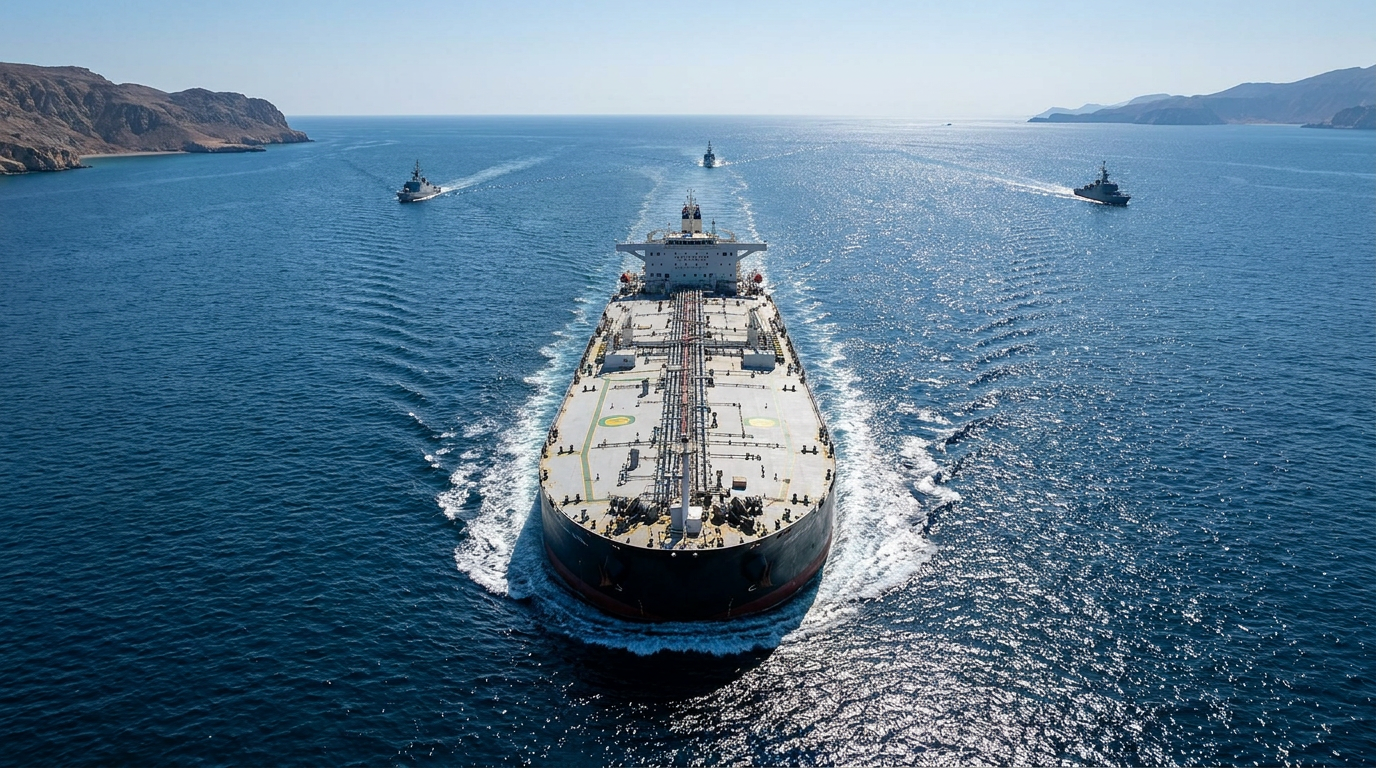
The cornerstone of the newly announced pact is the reopening of the Strait of Hormuz, a critical maritime chokepoint that Tehran had blockaded in retaliation for Western strikes. In exchange, the United States has agreed to simultaneously lift its naval blockade on Iranian ports, providing a vital lifeline to Iran's fast-deteriorating economy. In a celebratory social media post on his Truth Social platform, President Trump authorized the "toll-free" opening of the strait, effectively declaring an end to the maritime standoff. Directing his message to the global shipping industry, Trump wrote: "Ships of the World, start your engines. Let the oil flow!" The official signing ceremony for the agreement is scheduled to take place on Friday, June 19, in Switzerland.[3][4]
The mere announcement of the impending ceasefire sent immediate shockwaves of relief through global financial markets, which had been battered by the geopolitical uncertainty. Crude oil futures plunged by more than four percent in early Monday trading as traders priced in the return of Middle Eastern supply. The global benchmark Brent crude dropped by roughly $3.50 to hover around $83.50 per barrel, while U.S. West Texas Intermediate slid similarly to just under $81. Asian stock markets, which are heavily dependent on imported energy from the Persian Gulf, surged in response to the news, with Japan's Nikkei index and South Korea's Kospi both posting massive single-day gains.[2][5]

The dramatic market reaction underscores the unparalleled strategic importance of the Strait of Hormuz to the global economy. In peacetime, the narrow waterway between the Persian Gulf and the Gulf of Oman facilitates the transit of approximately one-fifth of the world's total oil consumption and a massive share of its liquefied natural gas. When the war effectively shuttered the strait in February, it engineered an unprecedented energy shock, severing millions of barrels of daily supply and threatening to drag major industrialized nations into a recession. The prospect of those energy flows resuming has rapidly deflated the massive risk premium that had been baked into global commodities for a third of the year.[4][5]
While the political declarations point to an immediate resumption of maritime traffic, the logistical reality of reopening the Strait of Hormuz will require careful coordination and time. Draft details of the memorandum of understanding suggest a 30-day window for the waterway to become fully operational under Iranian arrangements. The primary hurdle is not merely diplomatic permission, but the physical safety of the shipping lanes. Extensive mine-removal operations must be conducted to ensure that commercial supertankers can navigate the waters without the risk of catastrophic explosions. Trump acknowledged this reality in subsequent statements, noting that the initial opening upon Friday's signing would be specifically "for purposes of mine removal" before full commercial traffic can safely resume.[4]

Beyond the maritime domain, the agreement explicitly calls for an "immediate and permanent" termination of military operations on all fronts, which crucially includes the volatile theater of Lebanon. Pakistani Prime Minister Shehbaz Sharif, whose government played a central role in mediating the talks, emphasized that the ceasefire is designed to comprehensively freeze the regional conflict. The inclusion of Lebanon is highly significant, as the war had drawn in Hezbollah, the heavily armed Iranian proxy group. For months, Hezbollah and the Israeli military had engaged in devastating exchanges of fire across the Israeli-Lebanese border, displacing tens of thousands of civilians and threatening to open a catastrophic second front in the war.[4][6]
The inclusion of Lebanon is highly significant, as the war had drawn in Hezbollah, the heavily armed Iranian proxy group.
The diplomatic breakthrough was made possible by a frantic, multi-national mediation effort spearheaded by Pakistan and Qatar. With Washington and Tehran lacking direct diplomatic relations and locked in a bitter armed conflict, these regional intermediaries stepped in to bridge the massive divide. Qatari delegations reportedly spent the weekend in Tehran conducting marathon 17-hour negotiating sessions to finalize the text of the agreement. Prime Minister Sharif praised the intensive talks that led to the breakthrough, noting that preparatory meetings will continue in Doha throughout the week to lay the technical foundation for the official signing ceremony in Switzerland.[4][6]
However, the extreme fragility of this nascent peace was laid bare just hours before the diplomatic breakthrough was announced to the world. On Sunday morning, the Israeli military launched a targeted airstrike against a Hezbollah command center situated in an apartment building in the southern suburbs of Beirut. The strike, which Lebanese state media reported killed at least one person and injured several others, sent plumes of smoke rising over the capital. Because Israel has not been a direct party to the bilateral negotiations between Washington and Tehran, its security establishment has continued to operate independently, focusing on neutralizing immediate threats on its northern border regardless of the broader diplomatic timeline.[6][7][8]

The Israel Defense Forces stated that the Beirut strike was a direct and necessary retaliation for a barrage of explosive drones that Hezbollah had launched into northern Israeli territory earlier in the day. Israeli Prime Minister Benjamin Netanyahu and Defense Minister Israel Katz issued a joint statement declaring that Israel "will not tolerate firing into its territory" and would continue to defend its citizens. This parallel track of violence momentarily threatened to scuttle the entire U.S.-Iran peace framework before the ink could even approach the paper, highlighting the inherent danger of negotiating a bilateral truce in a region defined by interconnected proxy conflicts.[7][8]
The Beirut strike triggered a rare and remarkably sharp public rebuke from President Trump directed at Israel, a traditionally steadfast U.S. ally. Taking to social media, Trump demanded that all sides stand down, stating that the attack on the Lebanese capital "should not have happened, particularly on a special day when we are so close to a Peace Deal with Iran." Behind the scenes, the frustration was reportedly even more intense. Trump told the Axios news site that the Israeli strike had delayed the signing of the agreement by several hours, and he claimed to have bluntly criticized Prime Minister Netanyahu's judgment regarding the timing of the military operation.[4][6][7]
In Tehran, the reaction to the Beirut strike was furious, with officials warning that the attack crossed a definitive red line. Iranian parliamentary speaker Mohammad-Bagher Ghalibaf warned that the strike demonstrated that the United States either lacked the will to fulfill its commitments or the ability to control its allies. Iranian state media broadcast threats from senior military commanders vowing that the attack would not go unanswered, and the foreign ministry held Washington ultimately responsible. The intense diplomatic scramble that followed the strike underscored how easily a single localized tactical decision could unravel months of painstaking strategic diplomacy.[4][8]
Even if the Friday signing proceeds without further military interruptions, the agreement is widely understood by analysts to be a preliminary memorandum of understanding rather than a comprehensive final treaty. The most contentious unresolved issue remains Iran's nuclear program, which was the original catalyst for the war. Trump has boldly claimed that as part of the deal, Iran will permanently abandon its pursuit of a nuclear weapon. He further asserted that the U.S. military would eventually extract and destroy enriched "Nuclear Dust" buried deep under Iranian mountains "when all is calm."[4][6]

Conversely, Iranian officials and regional experts describe the impending Swiss ceremony not as a surrender of their nuclear infrastructure, but as the kickoff for a 60-day negotiation period. This window is meant to hammer out the complex technical specifics of sanctions relief, nuclear monitoring, and the eventual withdrawal of U.S. forces from the immediate region. Given that the 2015 nuclear accord required years of grueling negotiations by vast teams of technical experts, observers remain deeply skeptical that a permanent, verifiable architecture can be finalized in just two months. Alia Brahimi of the Atlantic Council noted the extreme difficulty of hammering out such complex geopolitical compromises on an accelerated timeline.[4][7]
For now, the international community is holding its collective breath as the June 19 deadline approaches. The stakes for the global economy and Middle Eastern stability could not be higher; a successful signing in Switzerland would not only end a devastating four-month war but also avert a catastrophic long-term energy crisis. Yet, the underlying architecture of the region's security remains heavily fractured. As oil tankers prepare to restart their engines and navigate the heavily militarized waters of the Persian Gulf, the true test of this peace deal will be whether it can survive the inevitable provocations, miscalculations, and deep-seated mistrust that define the modern Middle East.[1][3][4]
How we got here
Late Feb 2026
The U.S. and Israel launch strikes against Iran's nuclear program, sparking a regional war.
March - May 2026
Iran blockades the Strait of Hormuz, and the U.S. imposes a naval blockade on Iranian ports, triggering a global energy crisis.
June 14, 2026 (Morning)
Israel strikes a Hezbollah command center in Beirut, threatening to derail impending peace talks.
June 14, 2026 (Evening)
President Trump and mediators announce a breakthrough peace agreement to end hostilities.
June 19, 2026
The scheduled date for the official signing ceremony in Switzerland.
Viewpoints in depth
U.S. Administration's view
The deal is a definitive victory that neutralizes the Iranian nuclear threat and restores global commerce.
President Trump and his allies frame the agreement as a complete capitulation by Tehran, emphasizing the immediate economic benefits of reopening the Strait of Hormuz. In this view, the U.S. naval blockade successfully pressured Iran into abandoning its nuclear ambitions, and the upcoming signing in Switzerland represents a final resolution that will allow the U.S. to physically remove enriched nuclear material from Iranian soil.
Iranian Leadership's view
The agreement is a temporary framework to secure vital sanctions relief while maintaining regional leverage.
For Tehran, the Friday signing is not a surrender, but a 60-day memorandum of understanding designed to lift the crippling U.S. naval blockade and allow Iran to sell oil freely again. Iranian officials view the ceasefire as a necessary pause to stabilize their deteriorating economy, while warning that any further Israeli strikes on their allies in Lebanon could instantly void the agreement and reignite the conflict.
Israeli Security Establishment's view
Bilateral U.S.-Iran talks do not negate the immediate security threats posed by Hezbollah on Israel's borders.
Israel, which was excluded from the U.S.-Iran negotiations, views the broader peace deal with deep skepticism. The Israeli military remains focused on the tactical reality of Hezbollah drone and rocket attacks from Lebanon. By striking Beirut just hours before the announcement, Israel signaled that it will not be bound by Washington's diplomatic timelines when it comes to defending its northern territory from Iranian proxy groups.
What we don't know
- Whether Iran will actually allow the U.S. to extract and destroy its enriched nuclear material as Trump claimed.
- How Israel will conduct its ongoing conflict with Hezbollah now that a U.S.-backed ceasefire in Lebanon is theoretically in place.
- Whether the 60-day negotiation window will be sufficient to hammer out a permanent, verifiable nuclear and sanctions agreement.
Key terms
- Strait of Hormuz
- A narrow waterway between the Persian Gulf and the Gulf of Oman that serves as the world's most important chokepoint for global oil shipments.
- Naval Blockade
- A military operation in which ships are used to prevent vessels, goods, or people from entering or leaving a country's ports.
- Memorandum of Understanding
- A formal agreement between two or more parties that outlines the broad terms of a deal before a final, legally binding treaty is drafted.
- Proxy Group
- An armed organization that acts on behalf of, or receives significant support from, a larger state power—such as Hezbollah's relationship with Iran.
Frequently asked
Why did oil prices drop after the announcement?
Oil prices fell because the peace deal includes reopening the Strait of Hormuz, which will allow millions of barrels of Middle Eastern oil to flow back into the global market.
Is the war completely over?
While a ceasefire has been announced, analysts warn the situation remains highly fragile, especially given ongoing Israeli military operations against Hezbollah in Lebanon.
What happens to Iran's nuclear program?
President Trump claims Iran will abandon its nuclear ambitions and allow the U.S. to remove nuclear material, but Iranian officials say this will be the subject of a 60-day negotiation period.
Who mediated the peace deal?
Pakistan and Qatar played the primary roles in mediating the agreement, hosting intensive back-channel talks between U.S. and Iranian delegations.
Sources
Source coverage
8 outlets
4 viewpoints surfaced








[1]Al JazeeraIranian Leadership
US-Iran to sign a ‘peace deal’ on Friday: What we know so far
Read on Al Jazeera →[2]NPRGlobal Markets & Mediators
Crude oil futures drop after Trump promises an Iran deal will be signed Friday
Read on NPR →[3]Fox NewsU.S. Administration
Trump announces peace deal with Iran, declares Strait of Hormuz will reopen: 'Let the oil flow!'
Read on Fox News →[4]The GuardianIsraeli Security Establishment
Peace deal between US and Iran announced, with strait of Hormuz expected to reopen
Read on The Guardian →[5]The Straits TimesGlobal Markets & Mediators
Oil prices fall on US-Iran peace deal
Read on The Straits Times →[6]CBS NewsIsraeli Security Establishment
Live Updates: Iran and U.S. reach deal, Trump and Pakistani prime minister say, as Israeli strikes in Lebanon threaten agreement
Read on CBS News →[7]TIMEIsraeli Security Establishment
Trump Says U.S. and Iran Reach Deal to End War
Read on TIME →[8]AxiosIsraeli Security Establishment
Iran warns Israel's Beirut strike could derail U.S. deal
Read on Axios →
More in news politics
See all 9 stories →US-Iran Deal
U.S. and Iran Sign Agreement to End War; Vance Lashes Out at Israeli Critics
7 sources
U.S.-Iran Deal
U.S. and Iran Sign 14-Point Agreement to End War, Sparking Fierce Backlash from Israel
6 sources
U.S.-Iran Relations
Vance Rebukes Israeli Critics of U.S.-Iran Peace Agreement, Warning Against Alienating 'Only Powerful Ally'
8 sources
Cognitive Defense
The Science of 'Prebunking': How Psychological Inoculation is Defeating Misinformation
6 sources

Every angle. Every day.
Get news politics stories with full source coverage and perspective breakdowns delivered to your inbox.