
US and Iran Reach Interim Deal to Reopen Strait of Hormuz, Triggering Global Market Rally
The United States and Iran have agreed to a fragile ceasefire to end a three-month conflict and reopen the world's most critical energy chokepoint. The breakthrough sent global oil prices tumbling and sparked a massive rally in Asian equities, though analysts warn maritime trade will take months to fully normalize.
By Factlen Editorial Team
- Global Markets & Importers
- Focused on the immediate relief from inflation and energy shortages, prioritizing the resumption of maritime trade.
- US Administration
- Framing the deal as a decisive victory that forces open the global energy tap and lifts the naval blockade.
- Iranian Leadership
- Approaching the truce with deep skepticism, leveraging their control over the strait to secure sanctions relief.
- Energy Analysts
- Warning that the physical and economic damage will take months to unwind, despite the diplomatic breakthrough.
What's not represented
- · Crews of stranded commercial vessels
- · Lebanese civilians affected by parallel strikes
- · Alternative energy producers who benefited from the price spike
Why this matters
The closure of the Strait of Hormuz triggered the worst energy shock since the 1970s, driving up the cost of everything from gasoline to groceries. This agreement pulls the global economy back from the brink of entrenched inflation, offering immediate relief to central banks, businesses, and consumers worldwide.
Key points
- The US and Iran reached an interim agreement to end hostilities and reopen the Strait of Hormuz.
- Global oil prices tumbled 4% and Asian stock markets surged on the news of the breakthrough.
- The deal provides a 60-day window to negotiate broader issues, including Iran's nuclear program.
- Analysts warn that clearing sea mines and normalizing maritime trade will take months.
- The closure caused a severe bottleneck effect, driving up global fertilizer and food prices.
The United States and Iran have reached an interim agreement to halt hostilities and reopen the Strait of Hormuz, potentially ending a three-month conflict that triggered the most severe global energy crisis since the 1970s. Brokered by Pakistan and Qatar after 17 hours of intensive negotiations, the memorandum of understanding establishes a fragile ceasefire across multiple Middle Eastern fronts. The breakthrough promises to restore the flow of roughly 20 million barrels of oil per day that have been trapped behind military blockades and sea mines since late February.[2][4][5]
Financial markets reacted with immediate euphoria to the prospect of normalized energy trade. Brent crude, the international benchmark, tumbled 4% to trade below $83.40 a barrel as Asian trading desks opened on Monday. The relief rally cascaded into equities, sending Japan's Nikkei 225 surging 5.5% and South Korea's Kospi up nearly 5.7%. For central banks battling a resurgence of inflation driven by the energy shock, the sudden drop in crude prices offers a critical reprieve.[3][8]

The mechanism of the deal involves a synchronized de-escalation. U.S. President Donald Trump announced the immediate removal of the United States Naval blockade on Iranian ports, declaring on social media, "Ships of the World, start your engines. Let the oil flow!" However, the actual resumption of maritime traffic faces logistical and diplomatic hurdles. Iranian Deputy Foreign Minister Kazem Gharibabadi confirmed the text of the agreement but clarified that implementation will not begin until an official signing ceremony in Switzerland this Friday.[2][5]
Gharibabadi noted that the framework was drafted in an "atmosphere of continued distrust," highlighting the fragility of the truce. The agreement provides a narrow 60-day window for negotiators to tackle deeply entrenched structural issues, primarily Iran's stockpile of highly enriched uranium and the architecture of a broader sanctions-relief package. If these technical talks collapse, the region risks plunging back into the blockade conditions that defined the spring.[4][5]
The geopolitical backdrop remains highly volatile. The negotiations were nearly derailed over the weekend by Israeli airstrikes targeting Hezbollah positions in Beirut's southern suburbs. Iran had insisted that any ceasefire must encompass all regional fronts, including Lebanon, where Israel has pushed its invasion deeper than at any point in the last quarter-century. The final text reportedly includes a commitment to terminate military operations across these interconnected theaters.[4][5]
The economic damage inflicted by the 100-day closure of the Strait of Hormuz has been profound and structurally complex. Standard trade models initially underestimated the fallout because they failed to account for "bottleneck effects." The Kiel Institute notes that the disruption of oil and liquefied natural gas cascaded rapidly into the petrochemical sector, spiking the cost of fertilizers and subsequently driving up global food prices.[6]

The economic damage inflicted by the 100-day closure of the Strait of Hormuz has been profound and structurally complex.
This bottleneck mechanism disproportionately punished developing nations. While the United States, insulated by domestic energy production, faced relatively minor aggregate welfare losses, countries in South Asia and sub-Saharan Africa suffered economic hits 10 to 20 times larger. For major energy importers like India, the reopening of the strait is expected to dramatically lower freight costs, reduce shipping insurance premiums, and ease the fiscal burden on state-owned oil companies that have been absorbing retail losses.[6][7]
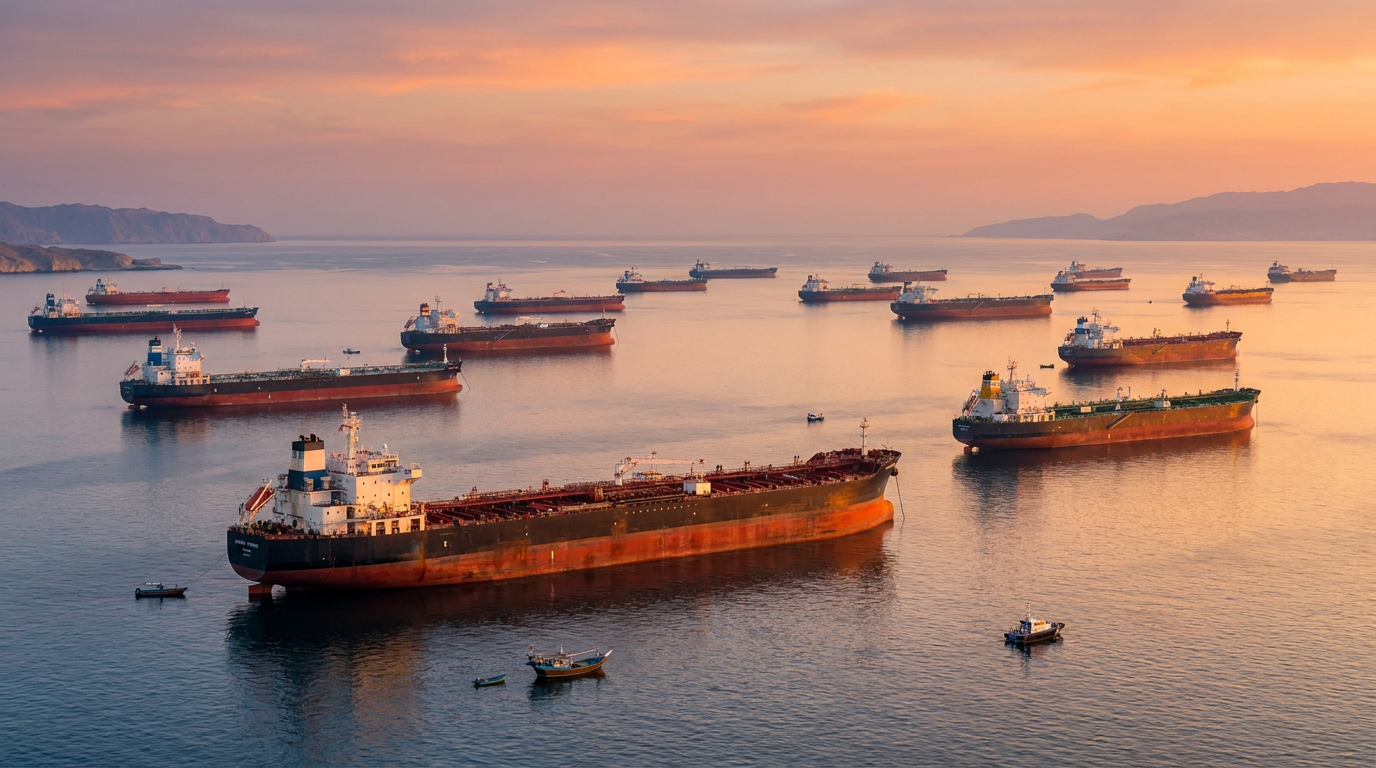
Despite the diplomatic breakthrough, energy analysts warn that the physical reopening of the waterway will not be instantaneous. Clearing the Strait of Hormuz of sea mines laid by the Islamic Revolutionary Guard Corps and navigating the backlog of stranded vessels will require a coordinated, multi-week effort. The Japanese Shipowners' Association reported that dozens of their vessels remain anchored in the Gulf of Oman, waiting for concrete security guarantees before attempting the transit.[1][2]
"Hormuz trade will take months to return to normal," analysts caution, noting that war-risk insurance premiums will likely remain elevated until the 60-day negotiation window closes successfully. During the blockade, Gulf producers managed to reroute approximately 5 million barrels a day through alternative pipelines, while a "dark fleet" of tankers shuttled limited cargoes under the radar. Unwinding these emergency logistics and restoring standard maritime protocols will be a slow, bureaucratic process.[1][2]
The macroeconomic outlook also carries hidden complexities. While the immediate drop in oil prices is disinflationary, Bloomberg Economics warns that the peace deal could paradoxically reignite inflation if it spurs a rapid recovery in Chinese industrial demand. China had drawn down its strategic reserves and cut imports to decade lows during the crisis; a sudden rush to restock could tighten the market just as the Northern Hemisphere enters its peak summer driving season.[1][2]

In the interim, global hedge funds are rapidly reopening their pre-war playbooks. Portfolio managers are rotating capital into shorter-maturity Treasuries and beaten-up Asian currencies, betting that the worst of the geopolitical risk premium has been priced out. The shift reflects a broader market consensus that, despite the remaining hurdles, the tail-risk of a permanent closure of the world's most critical energy chokepoint has been averted.[1]
The military reality of the strait means that trust must be established on the water before commercial captains will risk their crews. The U.S. Navy and allied maritime coalitions will likely need to establish a joint verification mechanism with Iranian coastal authorities to ensure safe passage. This unprecedented level of tactical coordination between adversaries underscores the high stakes of the Friday signing.[2][5]
The ultimate success of the agreement now hinges on the technical talks scheduled to follow the ceremony in Switzerland. Negotiators must bridge the gap between Washington's demand for verifiable limits on Tehran's nuclear ambitions and Iran's requirement for the unfreezing of billions of dollars in foreign assets. Both sides are acutely aware that the interim deal is merely a foundation, not a final resolution.[4]
As the world waits for the ink to dry, the focus shifts to the resilience of the global supply chain. The 2026 Strait of Hormuz crisis has permanently altered how nations view energy security, proving that even in an era of renewable transition, the global economy remains acutely vulnerable to a single 21-mile-wide maritime chokepoint. For now, however, the global economy is breathing a collective sigh of relief, watching the waters of the Persian Gulf for the first signs of moving tankers.[2][6]

How we got here
Feb 28, 2026
The U.S. and Israel launch strikes on Iran, prompting Tehran to close the Strait of Hormuz.
March 2026
Brent crude spikes to $126 per barrel as 20 million barrels per day are cut off from the global market.
April–May 2026
The U.S. enforces a naval blockade on Iranian ports, bringing maritime traffic in the region to a complete halt.
June 14, 2026
The U.S. and Iran announce an interim agreement brokered by Pakistan and Qatar to end hostilities.
June 19, 2026
The scheduled date for the official signing of the memorandum of understanding in Switzerland.
Viewpoints in depth
Global Markets & Importers
Focused on the immediate relief from inflation and energy shortages.
For energy-dependent economies and global central banks, the agreement is a vital release valve. The three-month closure threatened to entrench a new wave of structural inflation, forcing central banks to keep interest rates punishingly high. Importers in Asia and Europe view the deal as an economic necessity, prioritizing the resumption of maritime trade and the lowering of freight costs over the geopolitical nuances of the U.S.-Iran relationship.
US Administration
Framing the deal as a decisive victory that forces open the global energy tap.
The administration is projecting immediate success, emphasizing the lifting of the naval blockade and the rapid drop in crude prices. By declaring 'Let the oil flow,' the U.S. is signaling to domestic consumers and global allies that it has successfully managed the crisis and restored order to the world's most critical maritime chokepoint, while keeping the pressure on Iran for the upcoming 60-day nuclear negotiations.
Iranian Leadership
Approaching the truce with deep skepticism and leveraging their control over the strait.
Tehran views the interim agreement not as a capitulation, but as a tactical pause negotiated from a position of strength. Having proven their ability to effectively shut down 20% of the global oil supply and withstand a U.S. blockade, Iranian officials are entering the 60-day technical talks with significant leverage. They maintain that the strait will only physically reopen once the agreement is formally signed and their demands regarding frozen assets and sanctions relief are met.
Energy Analysts
Warning that the physical and economic damage will take months to unwind.
Industry experts and maritime insurers are throwing cold water on the idea of an overnight return to normal. They point out that clearing sea mines, unwinding the complex logistics of the 'dark fleet,' and processing the backlog of stranded vessels will be a slow, hazardous process. Furthermore, they warn that the structural damage to the supply chain—particularly the cascading effects on fertilizer and food prices—will persist long after the first tankers resume their routes.
What we don't know
- Whether the 60-day negotiation window will be enough to resolve the deeply entrenched dispute over Iran's nuclear program.
- Exactly how long it will take to clear sea mines and restore full commercial traffic through the Strait of Hormuz.
- If the recovery of Chinese industrial demand will offset the drop in oil prices and reignite global inflation.
Key terms
- Strait of Hormuz
- A narrow maritime chokepoint between the Persian Gulf and the Gulf of Oman, through which roughly 20% of the world's oil supply normally passes.
- Brent crude
- The major trading classification of sweet light crude oil that serves as a benchmark price for purchases of oil worldwide.
- Naval blockade
- A military operation in which ships are used to cut off a specific port or region from maritime commerce.
- Bottleneck effect
- An economic phenomenon where a disruption in a critical primary input (like energy) cascades through supply chains, causing outsized damage to secondary industries (like agriculture).
- Dark fleet
- A network of commercial vessels that obscure their locations and identities to transport sanctioned or blockaded oil undetected.
Frequently asked
Is the Strait of Hormuz open right now?
While the U.S. has authorized the lifting of its naval blockade, Iran states that implementation will not begin until the official agreement is signed on Friday. Physical clearing of sea mines will also delay immediate commercial transit.
Why did oil prices drop if ships aren't moving yet?
Markets are forward-looking. The formal announcement of a ceasefire removed the 'war premium' that had kept prices artificially high, triggering an immediate sell-off in crude futures.
What happens during the 60-day window?
Negotiators will attempt to resolve deeper structural issues, including limits on Iran's nuclear program and the unfreezing of Iranian assets, to convert the interim truce into a permanent treaty.
How did the closure affect food prices?
The blockage of natural gas and oil spiked the cost of petrochemicals used to make fertilizers. This increased the cost of farming globally, disproportionately raising food prices in developing nations.
Sources
Source coverage
8 outlets
4 viewpoints surfaced







[1]BloombergEnergy Analysts
Hormuz Trade Will Take Months to Return to Normal, Analysts Say
Read on Bloomberg →[2]The GuardianUS Administration
Donald Trump posts 'Let the oil flow' as US-Iran peace deal sparks immediate drop for Brent crude
Read on The Guardian →[3]Al JazeeraGlobal Markets & Importers
Asian stock markets surge as Washington and Tehran announce breakthrough in talks to reopen Strait of Hormuz
Read on Al Jazeera →[4]Associated PressIranian Leadership
The United States and Iran have reached an initial agreement to end the war and reopen the Strait of Hormuz
Read on Associated Press →[5]CBS NewsUS Administration
Trump says U.S. deal with Iran 'is now complete,' authorizes removal of Navy blockade of Strait of Hormuz
Read on CBS News →[6]Kiel InstituteEnergy Analysts
The Strait of Hormuz Closure: Bottleneck Effects and Global Welfare Losses
Read on Kiel Institute →[7]The HinduGlobal Markets & Importers
Iran will announce Strait of Hormuz mechanism, collect fees, Iranian MP says
Read on The Hindu →[8]CNBCGlobal Markets & Importers
CNBC Daily Open: Iran deal fuels global relief rally
Read on CNBC →

More in business
See all 5 stories →AI Infrastructure
SpaceX Raises Record $85.7 Billion in Historic IPO to Fund Orbital AI Infrastructure
7 sources

AI Economics
The Compute-First Era: How AI is Rewriting the Rules of Venture Capital
6 sources

Fed Watch
Federal Reserve Holds Rates Steady as New Chair Kevin Warsh Signals Hawkish Pivot
8 sources
Every angle. Every day.
Get business stories with full source coverage and perspective breakdowns delivered to your inbox.