
US and Iran Reach Deal to Halt War and Reopen Strait of Hormuz, Sending Oil Prices Tumbling
A breakthrough interim agreement brokered by Pakistan aims to end months of conflict, reopen the world's most critical energy chokepoint, and ease global inflationary pressures.
By Factlen Editorial Team
- Energy Importers & Markets
- Prioritizes the resumption of trade, lower inflation, and macroeconomic stability.
- Diplomatic Mediators
- Focuses on de-escalation, phased sanctions relief, and establishing a framework for future talks.
- Security & Energy Analysts
- Evaluates the physical logistics of reopening the strait and the strategic implications of the truce.
What's not represented
- · Crews of the commercial vessels trapped in the Persian Gulf for three months
- · Insurance underwriters who must price the ongoing risk of transiting the newly reopened waterway
Why this matters
The reopening of the Strait of Hormuz releases millions of barrels of trapped oil and liquefied natural gas back into the global market. This sudden influx is expected to significantly lower energy costs, potentially altering central bank trajectories on interest rates and providing immediate relief to consumers worldwide.
Key points
- The US and Iran reached an interim agreement brokered by Pakistan to halt their three-month conflict.
- The deal paves the way for the reopening of the Strait of Hormuz, a critical global energy chokepoint.
- Global oil prices slid sharply as markets priced in the return of trapped crude and LNG supplies.
- European leaders indicated a readiness to lift relevant sanctions in exchange for verifiable nuclear compliance.
- The physical clearing of the strait and the resumption of full shipping volumes will likely take weeks.
The United States and Iran have reached a historic interim agreement to halt hostilities and reopen the Strait of Hormuz, effectively ending a devastating three-month conflict that has severely disrupted global energy markets and international shipping. Brokered through extensive back-channel diplomacy by Pakistan, the breakthrough was announced late Sunday and immediately sent shockwaves of relief through global financial centers. The cessation of military action marks a critical turning point in a crisis that had threatened to drag the broader Middle East into a prolonged regional war and plunge the global economy into a deep recession.[2][3]
The immediate economic reaction across global markets was swift, decisive, and overwhelmingly positive. Oil prices slid sharply in early Asian trading hours as commodities traders rapidly priced in the imminent return of millions of barrels of crude to the global market. For months, the closure of the vital waterway had forced international shippers to either reroute vessels on massive, costly detours around the Cape of Good Hope or anchor in place, creating an unprecedented backlog of energy supplies that strangled industrial production worldwide.[3][4]
“The conflict is moving into a new stage, shifting toward a diplomatic track,” noted William Roebuck, former US Ambassador to Bahrain, highlighting the delicate transition from active military confrontation to complex, multi-party negotiations. The interim deal not only pauses the immediate violence but sets the necessary stage for broader, more comprehensive talks concerning the ultimate fate of Iran's nuclear program, the lifting of systemic economic sanctions, and the establishment of a stable regional security architecture that can permanently insulate commercial shipping from geopolitical disputes.[2]
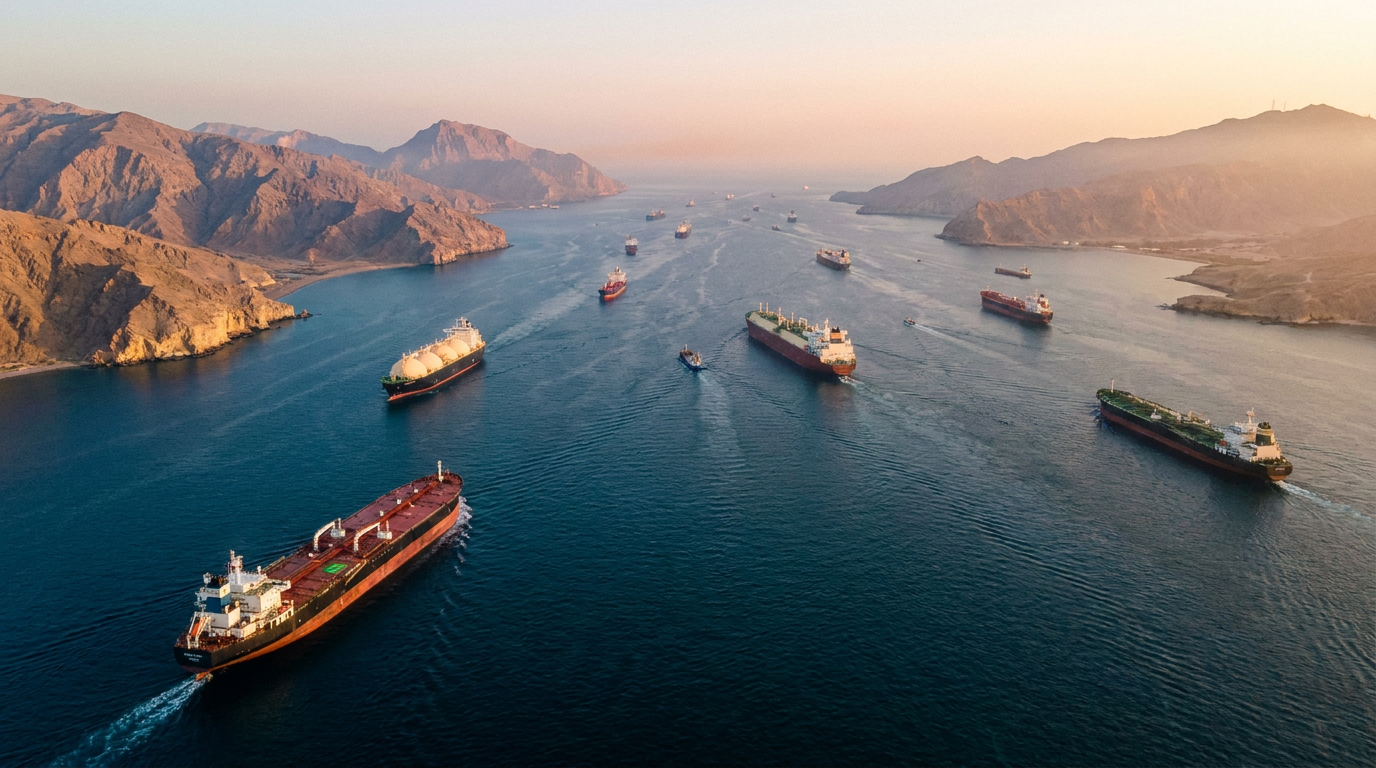
To truly understand the macroeconomic magnitude of this diplomatic agreement, one must look closely at the unique geography and strategic importance of the Strait of Hormuz. The narrow, highly congested waterway situated between Oman and Iran serves as the world's most critical energy chokepoint, connecting the oil-rich Persian Gulf to the Gulf of Oman and the open waters of the Arabian Sea. At its narrowest point, the strait is just 21 miles wide, with the designated deep-water shipping lanes restricted to a mere two miles in each direction, making it highly vulnerable to military blockades or asymmetric warfare.[6]

Before the conflict unexpectedly erupted in late February, approximately 20.5 million barrels of oil per day passed through this narrow corridor, representing roughly 20 percent of total global petroleum liquids consumption. Furthermore, the strait is an absolutely vital artery for the transport of liquefied natural gas (LNG), particularly exports originating from Qatar. The waterway handles over a fifth of all global LNG trade, making it the linchpin of energy security for major importing economies across Asia and Europe that rely on continuous, uninterrupted deliveries to power their electrical grids and industrial sectors.[6]
The three-month closure effectively severed this critical global artery, creating a logistical nightmare of historic proportions. A massive flotilla of fully loaded LNG carriers and crude oil tankers has been trapped inside the Persian Gulf, unable to safely navigate the heavily mined and militarily contested waters. With the official announcement of the truce, satellite imagery and maritime tracking data already show dozens of massive vessels—including a major LNG tanker that had been trapped near the Qatari coast since March—beginning to fire up their engines and reposition toward the strait in anticipation of a safe corridor.[2]
The three-month closure effectively severed this critical global artery, creating a logistical nightmare of historic proportions.
The macroeconomic implications of reopening the strait extend far beyond the immediate drop in crude prices. Throughout the spring, the artificially constrained energy supply acted as a massive, regressive tax on the global economy, driving up headline inflation across multiple continents and forcing central banks to maintain significantly tighter monetary policies than they had previously anticipated. The sudden release of this trapped supply is expected to act as a powerful deflationary force, lowering input costs for manufacturers, reducing transportation expenses, and providing immediate financial relief to everyday consumers at the gas pump.[8]
Qian Wang, Chief APAC Economist at Vanguard Group, indicated that while significant uncertainty remains regarding the long-term political sustainability of the deal, the immediate resumption of energy flows could dramatically boost the outlook for the global economy. Cheaper energy fundamentally alters the calculus for global growth, potentially allowing central banks like the Federal Reserve and the European Central Bank to pivot toward interest rate cuts sooner than markets had priced in during the height of the conflict.[2][8]

Financial markets are already aggressively pricing in this anticipated “peace dividend” across a variety of asset classes. Japanese stocks, which are highly sensitive to the cost of imported energy, are set to surge on the opening bell, while currency speculators have rapidly boosted their bets against the yen to a nine-year high, signaling a massive revival of the yen carry trade. The sudden easing of severe geopolitical risk is prompting institutional investors to move vast amounts of capital out of traditional safe havens like gold and government bonds, redirecting it back into growth-oriented equities and emerging markets.[2]
The complex diplomatic framework underpinning this sudden economic relief relies heavily on a carefully choreographed, phased approach to international sanctions. European leaders have quickly stepped forward to signal their willingness to support the economic normalization process, provided that Tehran strictly adheres to the agreement's rigorous stipulations. This approach aims to offer Iran a tangible economic lifeline—allowing it to monetize its vast energy reserves—while keeping the ultimate leverage of snapback sanctions firmly on the table if the interim truce breaks down.[1][7]
In a highly coordinated joint statement released shortly after the truce was announced, the leaders of the United Kingdom, France, Germany, and Italy explicitly announced they are “prepared to lift relevant sanctions in response to clear, verifiable steps by Iran on its nuclear programme.” This unified European response is strategically designed to offer immediate, front-loaded economic incentives to Tehran, encouraging compliance with the ceasefire while simultaneously laying the groundwork for a more permanent, legally binding treaty that addresses the international community's long-standing proliferation concerns.[2][7]

However, despite the market euphoria, the actual path to full economic normalization remains fraught with severe logistical and political hurdles. The physical reopening of the Strait of Hormuz is not as simple as declaring a ceasefire; it will require extensive, highly coordinated international demining operations and the establishment of secure, heavily monitored maritime corridors. Maritime security experts warn that this physical clearing process, combined with the need to secure new insurance underwriting for commercial vessels, could take several weeks to fully implement before shipping volumes return to pre-war levels.[5][6]
Furthermore, the explicitly interim nature of the deal means that the underlying geopolitical tensions that sparked the war have merely been paused, not permanently resolved. Hardliners in both Washington and Tehran will heavily scrutinize every aspect of the verifiable steps required by the agreement, making the ongoing diplomatic track highly vulnerable to domestic political pressures, upcoming election cycles, and potential spoiler actions by regional proxy groups. The fragility of the truce means that energy markets will likely maintain a persistent, albeit reduced, geopolitical risk premium for the foreseeable future.[5][8]
For now, however, the global economy is breathing a collective, massive sigh of relief. The unblocking of the Strait of Hormuz removes the single most significant downside risk that has hung over international markets for the past quarter. By pivoting the global economic narrative away from the terrifying prospect of supply-shock stagflation and back toward a trajectory of cautious, inflation-adjusted recovery, the US-Iran interim deal stands as the most consequential geopolitical and economic development of the year.[1][4]
How we got here
Late February 2026
Hostilities break out between the US and Iran, leading to the effective closure of the Strait of Hormuz to commercial shipping.
March - May 2026
Global energy markets are roiled as millions of barrels of oil and LNG are trapped in the Persian Gulf, driving up global inflation.
June 14, 2026
Pakistan announces it has successfully brokered an interim agreement between the US and Iran to halt the war.
June 15, 2026
Global oil prices slide sharply and European leaders signal a willingness to begin phased sanctions relief.
Viewpoints in depth
Global Energy Consumers
Nations heavily reliant on imported oil and gas prioritize the immediate resumption of maritime trade.
For energy-importing powerhouses like Japan, South Korea, and much of Europe, the primary concern is macroeconomic stability. The three-month closure of the Strait of Hormuz acted as a massive inflationary tax on their economies. This camp views the interim deal pragmatically: regardless of the long-term geopolitical resolution, the immediate unblocking of the waterway is essential to prevent a global recession and stabilize industrial production costs.
Non-Proliferation Advocates
Diplomats and security analysts focused on ensuring the deal translates into verifiable constraints on Iran's nuclear program.
While welcoming the halt to hostilities, this camp emphasizes that the economic relief—specifically the lifting of European sanctions—must be strictly tied to nuclear compliance. They argue that the interim deal is only a temporary pause, and without rigorous, verifiable steps by Tehran, the influx of oil revenue could simply fund future regional instability. Their focus is on the sequencing of sanctions relief versus IAEA inspections.
Regional Gulf States
Neighboring nations balancing the relief of resumed trade with long-term security concerns.
Countries bordering the Persian Gulf have borne the brunt of the immediate physical and economic risks of the conflict. While they are the most direct beneficiaries of a reopened Strait of Hormuz—allowing their own trapped LNG and crude to reach global markets—they remain deeply cautious. They advocate for a comprehensive regional security architecture that goes beyond bilateral US-Iran terms, ensuring that maritime chokepoints are permanently insulated from future geopolitical disputes.
What we don't know
- Exactly how long it will take to clear the Strait of Hormuz of military hazards and resume full commercial shipping volumes.
- The specific, verifiable steps Iran has agreed to take regarding its nuclear program in exchange for European sanctions relief.
- Whether domestic political pressure in either Washington or Tehran will threaten the sustainability of the interim agreement.
Key terms
- Strait of Hormuz
- A narrow maritime chokepoint between Oman and Iran that connects the Persian Gulf to the Gulf of Oman and the Arabian Sea, serving as the world's most important oil transit route.
- Liquefied Natural Gas (LNG)
- Natural gas that has been cooled to a liquid state for easier and safer storage and transport, heavily reliant on the Strait of Hormuz for global distribution.
- Yen Carry Trade
- A financial strategy where investors borrow money in Japanese yen (which has low interest rates) to invest in higher-yielding assets elsewhere, a practice that revived following the deal's announcement.
- Sanctions Relief
- The reduction or removal of economic penalties—such as trade barriers or financial restrictions—placed on a country, used in this deal as an incentive for nuclear compliance.
Frequently asked
Why was the Strait of Hormuz closed?
The waterway was effectively closed for three months due to a military conflict between the US and Iran, making the heavily mined and contested waters too dangerous for commercial shipping.
How much oil passes through the strait?
Before the conflict, approximately 20.5 million barrels of oil per day transited the strait, representing about 20% of global petroleum liquids consumption.
Will sanctions on Iran be lifted immediately?
No. European leaders from the UK, France, Germany, and Italy have stated they are prepared to lift relevant sanctions only in response to clear, verifiable steps by Iran regarding its nuclear program.
Who brokered the interim agreement?
The interim deal to halt the war and reopen the waterway was announced by Pakistan, which acted as a diplomatic mediator between Washington and Tehran.
Sources
Source coverage
8 outlets
3 viewpoints surfaced








[1]CNBCEnergy Importers & Markets
World leaders welcome U.S.-Iran deal as Europe signals sanctions relief, urges Hormuz reopening
Read on CNBC →[2]BloombergEnergy Importers & Markets
US and Iran Agree to Deal Halting War
Read on Bloomberg →[3]BBCDiplomatic Mediators
Oil prices slide after Pakistan announces deal between US and Iran
Read on BBC →[4]ReutersEnergy Importers & Markets
Oil plunges as US-Iran interim deal signals Hormuz reopening
Read on Reuters →[5]Al JazeeraDiplomatic Mediators
Pakistan brokers landmark interim truce between Washington and Tehran
Read on Al Jazeera →[6]U.S. Energy Information AdministrationSecurity & Energy Analysts
World Oil Transit Chokepoints: The Strait of Hormuz
Read on U.S. Energy Information Administration →[7]Financial TimesDiplomatic Mediators
European powers ready to lift Iran sanctions in wake of truce
Read on Financial Times →[8]Vanguard GroupEnergy Importers & Markets
Global Macro Matters: Geopolitical shocks and market recovery
Read on Vanguard Group →

More in business
See all 5 stories →AI Infrastructure
SpaceX Raises Record $85.7 Billion in Historic IPO to Fund Orbital AI Infrastructure
7 sources

AI Economics
The Compute-First Era: How AI is Rewriting the Rules of Venture Capital
6 sources
Fed Watch
Federal Reserve Holds Rates Steady as New Chair Kevin Warsh Signals Hawkish Pivot
8 sources
Every angle. Every day.
Get business stories with full source coverage and perspective breakdowns delivered to your inbox.