
US and Iran Near 60-Day Ceasefire Deal to Reopen Strait of Hormuz
President Trump canceled planned military strikes against Iran, announcing the two nations are on the verge of a memorandum of understanding to extend a ceasefire and unblock vital shipping lanes.
By Factlen Editorial Team
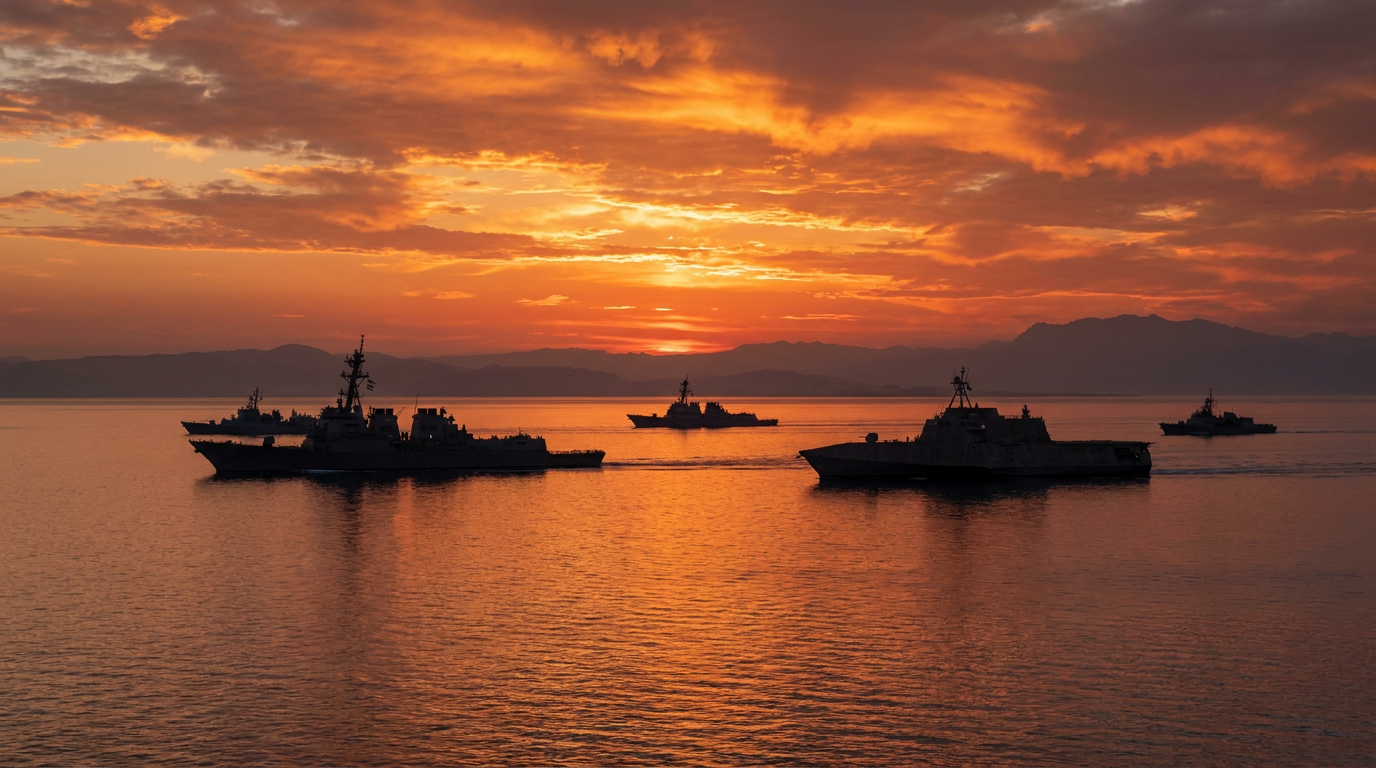
- US Administration
- Focuses on performance-based compliance and dismantling Iran's nuclear capabilities.
- Iranian Leadership
- Prioritizes immediate economic relief and the restoration of maritime sovereignty.
- Global Markets
- Views the de-escalation as a critical macro tailwind for energy and trade.
What's not represented
- · Commercial shipping companies navigating the Strait of Hormuz
- · Lebanese civilians affected by the Hezbollah-Israel border conflict
Why this matters
The reopening of the Strait of Hormuz and a US-Iran ceasefire would immediately lower global energy costs, stabilize financial markets, and avert a broader Middle Eastern war that could draw in US service members.
Key points
- The US and Iran are reportedly close to signing a 60-day ceasefire agreement.
- The deal aims to reopen the Strait of Hormuz within 30 days and lift the US naval blockade.
- President Trump canceled planned military strikes against Iran to pursue the diplomatic framework.
- Global oil prices dropped more than 3% and stock markets rallied on the news.
- The two sides strongly disagree on whether the unfreezing of Iranian assets is immediate or performance-based.
US President Donald Trump announced that Washington and Tehran are on the verge of signing a memorandum of understanding to extend a ceasefire and reopen the Strait of Hormuz, abruptly canceling planned US military strikes against Iran.[4][5]
The diplomatic breakthrough follows a highly volatile 48 hours. Earlier in the week, the US military struck Iranian oil tankers and water facilities, and Trump threatened to seize Kharg Island—Iran's primary oil export terminal—before pivoting to the negotiating table.[3][4]
Under the proposed framework, the two nations would observe a 60-day ceasefire across all regional fronts. This window is designed to pause hostilities and set the stage for comprehensive negotiations regarding Iran's nuclear program.[5][7]
A central pillar of the agreement is the reopening of the Strait of Hormuz. The deal reportedly establishes a 30-day timeline to demine the vital shipping lane and lift the US naval blockade, allowing a return to pre-war maritime transit volumes.[3][7]

In exchange for compliance, Iran would receive phased sanctions relief tied to its oil exports. Reports indicate the US would also unfreeze billions in Iranian assets—estimated between $12 billion and $24 billion—though the exact timing of the release remains heavily disputed.[5][7]
In exchange for compliance, Iran would receive phased sanctions relief tied to its oil exports.
Despite the optimism, the two sides are already clashing over the specifics. Trump accused Iranian state media of leaking false terms that "bear no relation to the truth," insisting that the deal is strictly performance-based and that no assets will be released until Tehran fulfills its obligations.[2][5]
Iranian officials have offered a more cautious assessment. Foreign Minister Abbas Araghchi stated that an agreement has "never been closer," but the foreign ministry clarified that Tehran has not yet reached a final conclusion on the draft.[1][3]
Global markets reacted immediately to the prospect of de-escalation. Oil prices sank more than 3% as traders priced in the return of Iranian crude to the formal market and the easing of supply bottlenecks in the Persian Gulf.[6][7]

Wall Street followed suit, with US stock futures rallying. The S&P 500 and Dow Jones Industrial Average posted early gains as investors cheered the reduced geopolitical risk premium and the avoidance of a broader Middle Eastern war.[6]
The agreement's impact extends beyond the Persian Gulf. The ceasefire reportedly includes provisions to halt fighting in Lebanon between Israel and Hezbollah, with Trump claiming he personally intervened with both Israeli Prime Minister Benjamin Netanyahu and Hezbollah leadership to stop the shooting.[5][8]
Regional allies are watching the developments closely. Netanyahu reiterated that he and Trump are in "complete agreement" that Iran will not be allowed to possess nuclear weapons, a core demand that will dominate the upcoming 60-day negotiation window.[5]

The memorandum could be signed as early as this weekend in Europe. However, diplomats briefed on the talks warn there is still a "50% chance" of collapse, citing a long history of false starts, potential spoilers, and deep-seated mistrust between Washington and Tehran.[3]
How we got here
April 2026
An initial, fragile ceasefire begins between the US and Iran.
Late May 2026
The US presents Iran with a peace deal framework requiring the reopening of the Strait of Hormuz.
June 10-11, 2026
The ceasefire breaks down as the US strikes Iranian facilities and a US helicopter is downed.
June 11, 2026
President Trump threatens to seize Kharg Island, then abruptly cancels strikes and announces a peace deal.
June 12, 2026
Global markets rally as both sides dispute the exact terms of the leaked agreement.
Viewpoints in depth
US Administration
Focuses on performance-based compliance and dismantling Iran's nuclear capabilities.
US officials stress that the agreement is not a blank check. The administration insists that the naval blockade will remain in effect until the transaction is finalized and that no frozen assets will be released until Iran demonstrates verifiable steps toward dismantling its nuclear program and halting support for regional proxies.
Iranian Leadership
Prioritizes immediate economic relief and the restoration of maritime sovereignty.
Tehran views the memorandum as a necessary step to rescue its economy from crippling sanctions. Iranian state media emphasizes the immediate unfreezing of up to $24 billion and the lifting of the Strait of Hormuz blockade, framing the deal as a diplomatic victory that forces the US to step back from military intervention without conceding domestic sovereignty.
Global Markets
Views the de-escalation as a critical macro tailwind for energy and trade.
Financial analysts and energy traders are largely agnostic to the political posturing, focusing instead on supply chain mechanics. The potential return of Iranian barrels to the global market and the elimination of exorbitant freight insurance costs in the Persian Gulf have significantly compressed energy risk premiums, sparking a broad market rally.
What we don't know
- Whether the Iranian government will officially sign the memorandum of understanding.
- The exact timeline and conditions for the release of Iran's frozen financial assets.
- How the 60-day negotiation window will address Iran's ballistic missile program and support for proxy groups.
Key terms
- Memorandum of Understanding (MOU)
- A formal agreement between two or more parties that outlines the terms of a mutual understanding, often preceding a binding contract.
- Kharg Island
- Iran's primary oil export terminal located in the Persian Gulf, which handles the vast majority of the country's crude oil exports.
- Sanctions Relief
- The reduction or removal of economic penalties imposed on a country, allowing it to resume international trade and access frozen financial assets.
Frequently asked
What is the Strait of Hormuz?
It is a vital maritime chokepoint between the Persian Gulf and the Gulf of Oman, through which a significant portion of the world's oil passes.
Why did the US plan to strike Iran?
The US had scheduled strikes in retaliation for the downing of a US helicopter and ongoing attacks on shipping, before canceling them in favor of the deal.
Does this agreement end Iran's nuclear program?
No. The current memorandum only establishes a 60-day window to negotiate a separate, final agreement regarding Iran's nuclear ambitions.
Sources
Source coverage
8 outlets
3 viewpoints surfaced








[1]AxiosIranian Leadership
Iranian foreign minister says deal with U.S. "never been closer"
Read on Axios →[2]BBCUS Administration
Trump accuses Iran of leaking agreement details that 'bear no relation to the truth'
Read on BBC →[3]The GuardianIranian Leadership
Chaotic talks on a US-Iran deal continue on the Trump rollercoaster
Read on The Guardian →[4]ForbesUS Administration
Trump Cancels Iran Strikes, Claims Peace Deal Will Be Signed 'Shortly'
Read on Forbes →[5]Jerusalem PostUS Administration
Trump cancels Iran strikes, announces deal
Read on Jerusalem Post →[6]CBS NewsGlobal Markets
Wall Street rebound continues as markets take heart in Trump's Thursday remarks on Iran deal
Read on CBS News →[7]Sahi MarketsGlobal Markets
A multi-phase US-Iran deal is on the table
Read on Sahi Markets →[8]Iran InternationalIranian Leadership
Tit-for-tat under ceasefire: Experts warn of new normal in Mideast conflict
Read on Iran International →
More in news politics
See all 154 stories →Media Consolidation
DOJ Approves $111 Billion Paramount-Warner Bros. Merger, Reshaping Media Landscape
9 sources

Tren de Aragua
U.S. Military Strike in Venezuela Kills Tren de Aragua Leader Niño Guerrero
7 sources
Tren de Aragua
U.S. Military Strike in Venezuela Kills Tren de Aragua Leader Niño Guerrero
7 sources
Information Integrity
The 'Mind Vaccine': How Prebunking is Winning the War Against Misinformation
6 sources

Every angle. Every day.
Get news politics stories with full source coverage and perspective breakdowns delivered to your inbox.