
US and Iran Announce Peace Deal, Paving Way for Strait of Hormuz Reopening
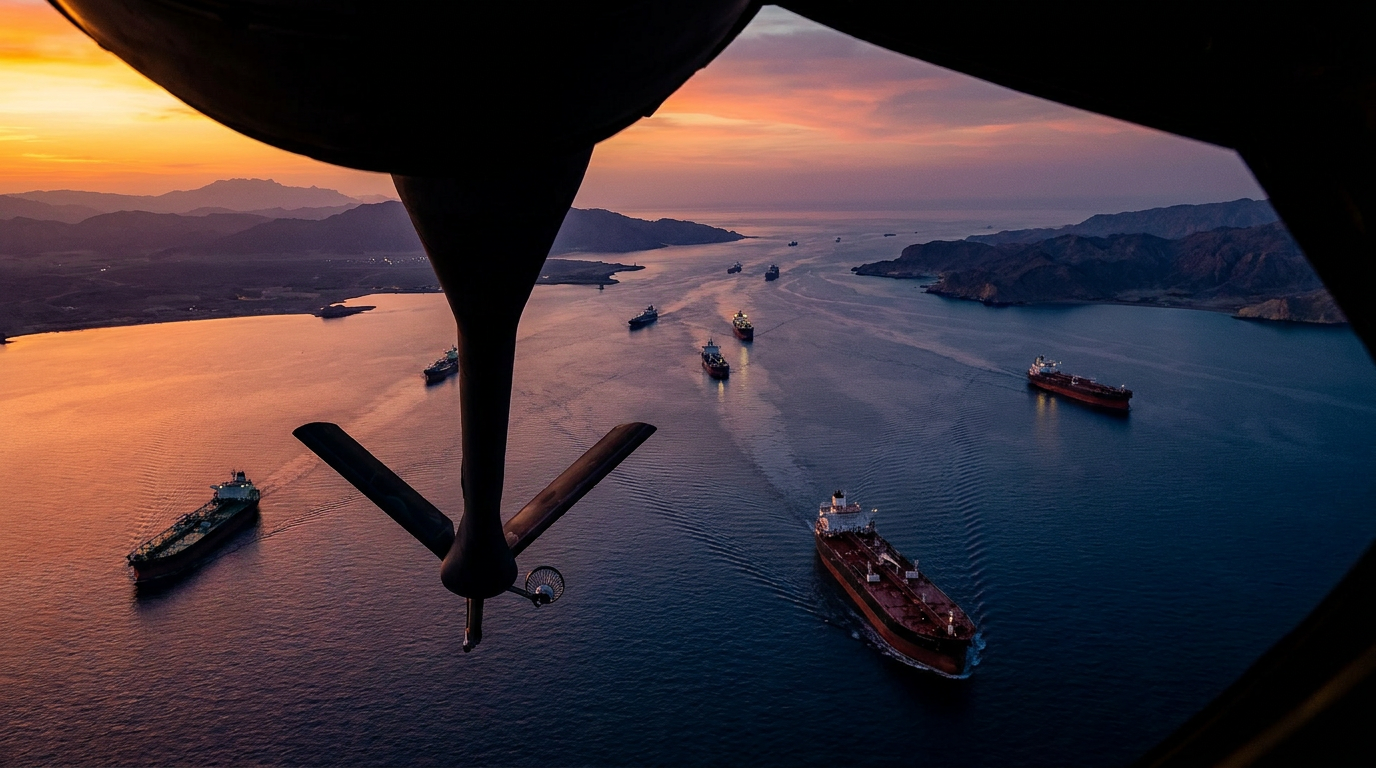
The United States and Iran have reached a landmark peace agreement to halt military hostilities, triggering a sharp drop in global oil prices as the critical Strait of Hormuz prepares to reopen to commercial shipping.
By Factlen Editorial Team
- US Administration
- Views the agreement as a major diplomatic victory that stabilizes global markets and secures vital shipping lanes without a protracted war.
- Global Energy Markets
- Relieved by the immediate drop in oil prices but remains cautious about the logistical hurdles of reopening the strait and the fragility of the peace.
- Iranian Leadership
- Frames the deal as a necessary maneuver to secure sanctions relief and economic survival while maintaining national sovereignty.
What's not represented
- · Commercial shipping operators
- · Regional proxy groups
Why this matters
The reopening of the Strait of Hormuz—a maritime chokepoint that handles a fifth of the world's oil supply—promises immediate relief for global energy markets and eases the threat of a broader regional war that has disrupted international trade and spiked inflation.
Key points
- The US and Iran have announced a landmark peace deal to halt military hostilities.
- The agreement paves the way for the reopening of the Strait of Hormuz to commercial shipping.
- Global oil prices, including Brent crude, tumbled immediately following the announcement.
- The diplomatic breakthrough is a central focus of the ongoing G7 summit in France.
- Complex negotiations remain regarding sanctions relief and regional security architecture.
The United States and Iran have announced a landmark peace agreement aimed at halting months of direct military confrontation and reopening the Strait of Hormuz to international shipping. The diplomatic breakthrough, confirmed early Monday, marks a sudden de-escalation in a conflict that had severely disrupted global trade and raised fears of a broader, protracted regional war.[1][5]
Global energy markets reacted immediately to the news, with Brent crude prices tumbling as traders priced in the return of unimpeded oil flows through the critical maritime chokepoint. Analysts noted that while the initial price drop reflects widespread relief, the complex logistics of clearing the strait and verifying military stand-downs mean a full resumption of normal shipping could take weeks.[1][4]

The agreement comes just as world leaders gather for the Group of Seven (G7) summit in Évian-les-Bains, France. French President Emmanuel Macron has heavily framed the summit's agenda around solidifying the fragile peace, hoping to secure long-term commitments from U.S. President Donald Trump, who is attending the gathering following the breakthrough.[2]
For the Trump administration, the deal is being touted as a major foreign policy victory that stabilizes the global economy while avoiding a costly ground conflict in the Middle East. U.S. officials emphasized that the agreement secures the free flow of commerce—a core strategic objective—without compromising broader security guarantees for regional allies.[6][7]

In Tehran, the agreement is being framed as a necessary step to alleviate crippling economic pressure. Iranian officials have indicated that the reopening of the Strait of Hormuz will be tied to specific sanctions relief and the unfreezing of international assets, allowing the nation to stabilize its domestic economy after a period of intense military and financial strain.[5]
In Tehran, the agreement is being framed as a necessary step to alleviate crippling economic pressure.
The Strait of Hormuz is arguably the world's most important oil transit chokepoint, historically handling roughly 20% of global petroleum liquids consumption. Its effective closure during the height of the recent hostilities forced shipping companies to reroute vessels, skyrocketing freight insurance premiums and threatening energy security across Europe and Asia.[3][4]
European allies, who have borne the brunt of the energy price shocks and subsequent industrial strain, welcomed the announcement with cautious optimism. European diplomats at the G7 are expected to push for a formalized multilateral monitoring mechanism to ensure that the waterway remains open and that neither side resumes hostile posturing in the Persian Gulf.[2][3]

Despite the market euphoria, defense analysts warn that the underlying geopolitical friction remains unresolved. The peace deal addresses the immediate maritime crisis and halts direct strikes, but complex negotiations lie ahead regarding Iran's nuclear program, its regional proxy networks, and the long-term security architecture of the Middle East.[1][7]
Implementation of the maritime reopening will require coordinated efforts to sweep for naval mines and establish safe transit corridors. International shipping registries have advised vessel operators to await official clearance from joint naval task forces before resuming standard routes through the strait.[3][4]
How we got here
Early 2026
Escalating military hostilities lead to the effective closure of the Strait of Hormuz to commercial shipping.
June 14, 2026
Reports emerge of a breakthrough in indirect negotiations between the US and Iran.
June 15, 2026
A formal peace agreement is announced, triggering a sharp drop in global oil prices.
June 15, 2026
The G7 summit begins in Évian-les-Bains, with the peace deal dominating the agenda.
Viewpoints in depth
US Administration's view
The White House views the agreement as a major strategic victory that stabilizes the global economy.
For the US administration, securing the Strait of Hormuz without committing to a protracted ground war is being framed as a triumph of 'peace through strength.' Officials emphasize that the deal protects the global economy from a catastrophic energy shock while maintaining core security commitments to regional allies. The administration argues that the economic pressure applied to Tehran ultimately forced them to the negotiating table.
Iranian Leadership's view
Tehran frames the deal as a necessary step to secure economic survival and sanctions relief.
Iranian officials are presenting the agreement domestically as a validation of their resilience against Western pressure. By tying the reopening of the strait to specific sanctions relief and the unfreezing of assets, Tehran aims to stabilize its domestic economy, which has been battered by inflation and restricted trade. The leadership maintains that the deal does not compromise their fundamental regional sovereignty.
European Allies' view
Europe is relieved by the de-escalation but remains focused on establishing long-term monitoring mechanisms.
European nations, heavily dependent on stable energy imports and deeply affected by the recent price shocks, have welcomed the deal with cautious optimism. At the G7 summit, European diplomats are prioritizing the creation of a multilateral framework to monitor the strait and ensure compliance. They remain wary of the fragility of the agreement and are pushing for broader negotiations to address underlying regional tensions.
What we don't know
- The exact timeline for when commercial shipping will fully resume through the Strait of Hormuz.
- The specific details of the sanctions relief granted to Iran in exchange for the military stand-down.
- How regional proxy groups allied with Iran will respond to the ceasefire agreement.
Key terms
- Strait of Hormuz
- A narrow maritime chokepoint between the Persian Gulf and the Gulf of Oman, through which roughly 20% of the world's oil supply passes.
- Brent Crude
- A major global price benchmark for Atlantic basin crude oils, used to price two-thirds of the world's internationally traded crude oil supplies.
- G7 (Group of Seven)
- An intergovernmental political forum consisting of Canada, France, Germany, Italy, Japan, the United Kingdom, and the United States.
Frequently asked
Why was the Strait of Hormuz closed?
The strait was effectively closed to commercial shipping due to intense military hostilities and direct strikes between the US and Iran, making the waters too dangerous for oil tankers to navigate.
How does this affect global oil prices?
The announcement of the peace deal caused an immediate and sharp drop in Brent crude prices, as markets anticipate the resumption of normal oil flows from the Middle East.
When will shipping resume?
While the agreement has been announced, clearing the strait of potential hazards and establishing safe transit corridors could take several weeks before normal shipping volumes return.
Sources
Source coverage
7 outlets
3 viewpoints surfaced






[1]The GuardianGlobal Energy Markets
Oil prices tumble amid hopes strait of Hormuz will soon reopen
Read on The Guardian →Macron frames Évian G7 agenda in hope Trump will stay for whole summit
Read on The Guardian →[3]ReutersGlobal Energy Markets
U.S. and Iran reach agreement to halt strikes, reopen critical shipping lanes
Read on Reuters →[4]BloombergGlobal Energy Markets
Oil Plunges as US-Iran Deal Signals Hormuz Shipping Restart
Read on Bloomberg →[5]Al JazeeraIranian Leadership
Iran, US announce peace deal to end hostilities and reopen Hormuz
Read on Al Jazeera →[6]Fox NewsUS Administration
Trump administration secures historic peace deal with Iran, stabilizing global markets
Read on Fox News →[7]CNNUS Administration
US and Iran strike fragile peace agreement to reopen Strait of Hormuz
Read on CNN →
More in news politics
See all 9 stories →US-Iran Deal
U.S. and Iran Sign Agreement to End War; Vance Lashes Out at Israeli Critics
7 sources
U.S.-Iran Deal
U.S. and Iran Sign 14-Point Agreement to End War, Sparking Fierce Backlash from Israel
6 sources
U.S.-Iran Relations
Vance Rebukes Israeli Critics of U.S.-Iran Peace Agreement, Warning Against Alienating 'Only Powerful Ally'
8 sources
Cognitive Defense
The Science of 'Prebunking': How Psychological Inoculation is Defeating Misinformation
6 sources

Every angle. Every day.
Get news politics stories with full source coverage and perspective breakdowns delivered to your inbox.