
US and Iran Announce Peace Agreement, Clearing Path to Reopen Strait of Hormuz
A landmark diplomatic agreement between Washington and Tehran aims to end hostilities and reopen the critical Strait of Hormuz to global shipping. The breakthrough has triggered a sharp drop in global oil prices, though analysts caution that complex implementation hurdles remain.
By Factlen Editorial Team
- US Administration
- Frames the agreement as a victory for pragmatic diplomacy that secures vital global supply chains and lowers domestic energy costs.
- Iranian Leadership
- Views the deal as a successful assertion of regional sovereignty that forces the lifting of crippling economic sanctions.
- Global Energy Markets
- Expresses massive relief at the de-escalation, focusing primarily on the restoration of oil transit and the reduction of risk premiums.
- Regional Skeptics
- Warns that sanctions relief will enrich Tehran, potentially funding proxy networks and destabilizing the broader Middle East in the long term.
What's not represented
- · Commercial shipping insurers
- · Oman maritime authorities
Why this matters
The Strait of Hormuz is the world's most critical energy chokepoint, handling roughly a fifth of global petroleum consumption. Its reopening promises immediate relief for global energy markets and inflation, while fundamentally reshaping the security architecture of the Middle East.
Key points
- The US and Iran have reached a framework peace agreement to end maritime hostilities.
- The deal clears the way for the reopening of the Strait of Hormuz to commercial shipping.
- Global oil prices, including Brent crude, plummeted nearly 8.5% following the announcement.
- Iran will lift its blockade in exchange for phased relief from economic sanctions.
- Implementation remains complex, requiring verification of demilitarization and new insurance underwriting.
- Regional skeptics warn that the influx of capital to Tehran could fund proxy networks.
The announcement of a framework peace agreement between the United States and Iran has sent shockwaves through global capitals and energy markets. After months of escalating conflict and a crippling maritime blockade, negotiators have reached a deal designed to halt hostilities and restore commercial transit through the Persian Gulf. The diplomatic breakthrough marks a sudden de-escalation in a conflict that had threatened to drag the broader Middle East into a protracted war.[1][2]
The most immediate casualty of the diplomatic breakthrough was the price of oil. Brent crude plummeted nearly 8.5% within hours of the announcement, reflecting massive relief among energy traders who had priced in a worst-case scenario for global supply chains. Financial analysts noted that the sudden drop erased weeks of risk premiums that had accumulated as the standoff intensified.[4][6]

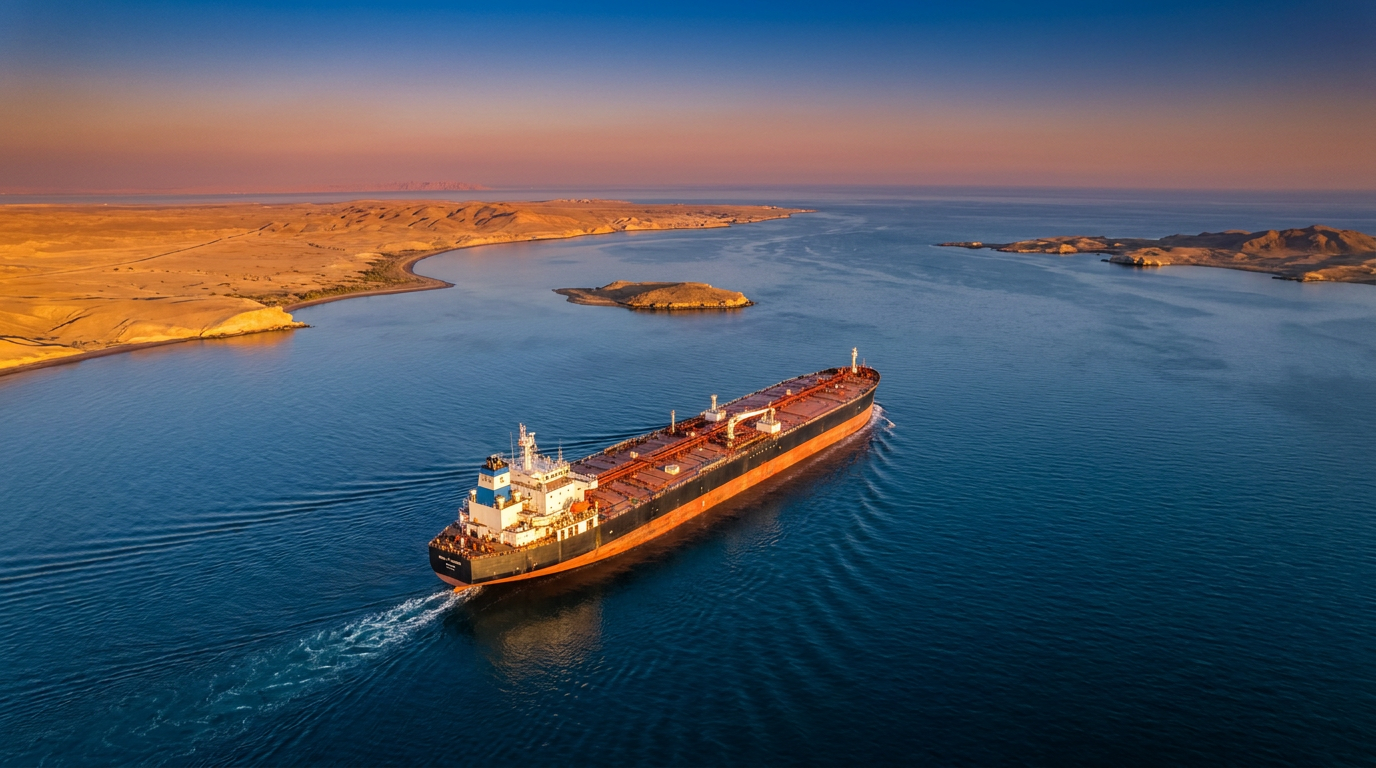
To understand the market's dramatic reaction, one must understand the geography of the Strait of Hormuz. This narrow waterway between Oman and Iran is the world's most critical energy chokepoint. At its narrowest, the strait is just 21 miles wide, with the designated shipping lanes restricted to a mere two miles in each direction, separated by a two-mile buffer zone.[2][6]
Prior to the recent conflict, roughly 21 million barrels of oil passed through this corridor every day, accounting for nearly a fifth of global petroleum consumption. When hostilities effectively closed the strait, it severed the primary artery for crude exports from Saudi Arabia, the United Arab Emirates, Kuwait, and Iraq, sending shockwaves through industrial economies heavily reliant on imported energy.[4][6]

The newly announced framework, brokered with the assistance of regional intermediaries, involves a sequenced de-escalation. Washington has reportedly agreed to a phased lifting of specific economic sanctions that have choked the Iranian economy, providing Tehran with access to frozen funds and international banking networks.[2][3]
In exchange, Tehran has committed to immediately lifting its maritime blockade, withdrawing fast-attack craft from the shipping lanes, and halting proxy attacks on commercial vessels. The agreement also includes provisions for international monitors to verify the demilitarization of the transit corridors, ensuring that civilian supertankers can navigate the waters without military escort.[3][7]
For the US administration, the deal represents a significant foreign policy pivot. After a period of intense military posturing, the White House is now framing the agreement as a victory for pragmatic diplomacy that directly benefits American consumers at the gas pump. Officials emphasize that restoring the flow of oil is a critical national security interest that supersedes the desire for prolonged confrontation.[5]
For the US administration, the deal represents a significant foreign policy pivot.
European leaders, currently gathering for the G7 summit in Évian-les-Bains, have cautiously welcomed the news. The continent's industrial sector has been battered by high energy prices, with manufacturing bodies warning of widespread deindustrialization and potential bankruptcies if energy costs did not fall to manageable levels.[1]
However, diplomatic analysts warn that announcing a framework is vastly different from executing a durable peace. The sequencing of sanctions relief versus maritime demilitarization remains a highly sensitive friction point. Negotiators must now translate broad political commitments into granular technical protocols, a process fraught with opportunities for miscommunication or sabotage.[1][6]

The technical challenge of verifying the strait's safety is immense. Commercial shipping insurers, who have hiked premiums to unprecedented levels during the conflict, will require concrete proof of safety before underwriting massive supertankers. Industry experts suggest that a transition period of joint naval patrols or international observation missions may be necessary to rebuild trust among maritime operators.[4][6]
Not all regional actors are celebrating the breakthrough. Officials in Jerusalem have expressed deep reservations, warning that sanctions relief will provide Tehran with a massive influx of capital. Skeptics argue that these funds could be funneled to regional proxy networks, ultimately destabilizing the region further despite the immediate reopening of the shipping lanes.[8]
The agreement's success or failure will likely dictate the broader security architecture of the Middle East. If the peace holds, it could pave the way for broader regional stabilization efforts, including ongoing negotiations regarding conflicts in Lebanon and Gaza. Conversely, if the deal collapses, the resulting escalation could be far more severe than the initial standoff.[1][2]
Despite the optimism, the timeline for a full resumption of normal shipping volumes remains unclear. Energy analysts suggest it could take weeks or even months for maritime traffic to return to pre-conflict levels, as logistics networks are slowly rebuilt, insurance rates are renegotiated, and backlogged supply chains are untangled.[4][6]

For now, the world watches the waters of the Persian Gulf. The diplomatic ink is dry, but the true test of the US-Iran peace deal will be measured not in press conferences, but in the safe, uninterrupted passage of the first commercial supertankers through the Strait of Hormuz.[2]
How we got here
Early 2026
Escalating regional conflict leads to the effective closure of the Strait of Hormuz to commercial shipping.
Spring 2026
Global oil prices surge as the blockade chokes off 20% of the world's petroleum supply.
June 14, 2026
The United States and Iran announce a framework peace agreement brokered by regional intermediaries.
June 15, 2026
Brent crude prices plummet as energy markets anticipate the imminent reopening of the strait.
Viewpoints in depth
US Administration
Frames the agreement as a victory for pragmatic diplomacy that secures vital global supply chains.
For the White House, the agreement is being touted as a masterclass in pragmatic diplomacy that prioritizes tangible economic benefits over ideological standoffs. Administration officials emphasize that restoring the flow of oil through the Strait of Hormuz is a paramount national security interest, directly lowering inflation and providing relief to American consumers at the gas pump. By securing the shipping lanes without committing to a protracted military engagement, the administration argues it has successfully stabilized a volatile region while protecting the global economy from a devastating energy shock.
Iranian Leadership
Views the deal as a successful assertion of regional sovereignty that forces the lifting of crippling economic sanctions.
In Tehran, the framework is being celebrated as a strategic victory that validates the country's leverage over global energy markets. Iranian officials argue that their ability to control the Strait of Hormuz forced the international community to the negotiating table, resulting in the phased lifting of economic sanctions that have long stifled the nation's economy. The leadership views the unfreezing of assets and the reintegration into global banking networks as a necessary step for domestic stability, framing the concessions on maritime transit as a fair exchange for economic sovereignty.
Global Energy Markets
Expresses massive relief at the de-escalation, focusing primarily on the restoration of oil transit.
Energy traders, shipping conglomerates, and industrial manufacturers have reacted with overwhelming relief. For months, the market had been gripped by the fear of a prolonged blockade, which had driven up risk premiums and threatened to trigger a global recession. While analysts acknowledge the complex technical hurdles of implementation—such as renegotiating insurance rates and verifying the safety of the shipping lanes—the immediate sentiment is one of cautious optimism. The focus for this camp is entirely on the logistics of untangling backlogged supply chains and returning transit volumes to their historical baseline of 21 million barrels per day.
Regional Skeptics
Warns that sanctions relief will enrich Tehran, potentially funding proxy networks and destabilizing the broader Middle East.
Not all observers view the agreement as a net positive for regional stability. Officials in Jerusalem and hawkish defense analysts warn that the deal is a short-sighted compromise. They argue that the phased lifting of sanctions will provide Tehran with a massive influx of capital, which could be diverted to fund proxy militias across Lebanon, Syria, and Yemen. From this perspective, reopening the Strait of Hormuz addresses the immediate economic symptom but exacerbates the underlying geopolitical disease, potentially setting the stage for a more severe conflict once Iran's economy recovers.
What we don't know
- The exact timeline for when commercial supertankers will resume full-volume transit through the strait.
- How quickly international shipping insurers will lower premiums to pre-conflict levels.
- The specific mechanisms that will be used to verify the demilitarization of the shipping lanes.
Key terms
- Strait of Hormuz
- A narrow waterway between the Persian Gulf and the Gulf of Oman, serving as the world's most important oil transit chokepoint.
- Brent Crude
- A major trading classification of sweet light crude oil that serves as a primary benchmark price for global oil purchases.
- Sanctions Relief
- The reduction or removal of economic penalties imposed on a country, allowing it to re-enter international banking and trade networks.
- Risk Premium
- The extra cost added to the price of a commodity, like oil, by traders to account for the threat of supply disruptions due to geopolitical instability.
Frequently asked
Why is the Strait of Hormuz so important?
It is the only sea passage from the Persian Gulf to the open ocean, making it a vital chokepoint through which roughly 20% of the world's oil supply passes.
Will gas prices go down immediately?
While global crude prices dropped instantly on the news, it typically takes weeks for these reductions to fully reflect at consumer gas pumps as supply chains normalize.
Is the conflict completely over?
The framework agreement halts hostilities and reopens shipping, but complex negotiations regarding long-term sanctions and regional security are still ongoing.
Sources
Source coverage
8 outlets
4 viewpoints surfaced








[1]The GuardianGlobal Energy Markets
Oil prices tumble amid hopes strait of Hormuz will soon reopen
Read on The Guardian →[2]ReutersGlobal Energy Markets
US, Iran reach framework peace agreement; Hormuz shipping to resume
Read on Reuters →[3]Al JazeeraIranian Leadership
Iran and US announce peace deal, ending maritime standoff
Read on Al Jazeera →[4]BloombergUS Administration
Oil Plunges as US-Iran Pact Clears Way for Hormuz Shipping Restart
Read on Bloomberg →[5]Fox NewsUS Administration
US secures landmark Iran peace deal, reopening critical oil routes
Read on Fox News →[6]Financial TimesGlobal Energy Markets
Energy markets breathe sigh of relief as Hormuz blockade ends
Read on Financial Times →[7]IRNAIranian Leadership
Diplomatic victory: Agreement lifts sanctions, secures maritime routes
Read on IRNA →[8]The Times of IsraelRegional Skeptics
Jerusalem wary as US and Iran announce framework peace deal
Read on The Times of Israel →
More in news politics
See all 9 stories →US-Iran Deal
U.S. and Iran Sign Agreement to End War; Vance Lashes Out at Israeli Critics
7 sources
U.S.-Iran Deal
U.S. and Iran Sign 14-Point Agreement to End War, Sparking Fierce Backlash from Israel
6 sources
U.S.-Iran Relations
Vance Rebukes Israeli Critics of U.S.-Iran Peace Agreement, Warning Against Alienating 'Only Powerful Ally'
8 sources
Cognitive Defense
The Science of 'Prebunking': How Psychological Inoculation is Defeating Misinformation
6 sources

Every angle. Every day.
Get news politics stories with full source coverage and perspective breakdowns delivered to your inbox.