
U.S. and Iran Reach Peace Deal to End War and Reopen Strait of Hormuz
The United States and Iran have agreed to a tentative peace framework that ends their three-month conflict, lifts the U.S. naval blockade, and initiates a 60-day window for nuclear negotiations.
By Factlen Editorial Team
- U.S. Administration
- Focuses on the reopening of global trade routes and the containment of Iran's nuclear ambitions.
- Iranian Leadership
- Emphasizes the lifting of the U.S. blockade, unfreezing of assets, and defense of national sovereignty.
- Regional Mediators
- Prioritizes immediate de-escalation and the restoration of diplomatic channels to stabilize the Middle East.
- Israeli Security Establishment
- Views the ceasefire as a missed opportunity to dismantle Hezbollah and doubts Iran's nuclear compliance.
What's not represented
- · Lebanese civilians affected by the sudden ceasefire implementation.
- · Commercial shipping companies tasked with navigating the newly reopened, potentially mined Strait.
Why this matters
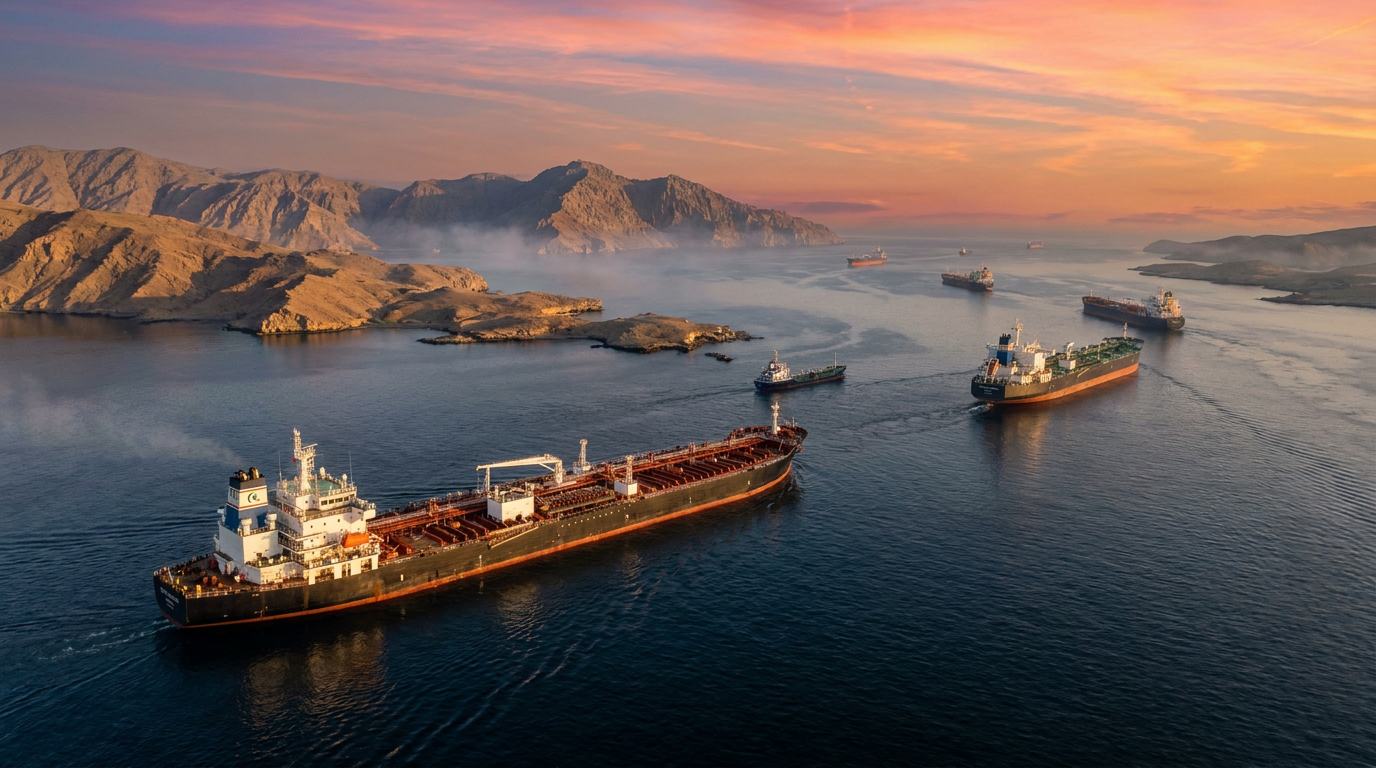
The agreement halts a conflict that threatened to engulf the entire Middle East and immediately eases global economic anxiety by reopening a maritime chokepoint responsible for a fifth of the world's oil supply.
Key points
- The U.S. and Iran agreed to a peace framework ending their three-month war.
- The U.S. naval blockade on Iranian ports will be immediately lifted.
- The Strait of Hormuz will reopen, prompting a 4% drop in global oil prices.
- A 60-day negotiation window will address Iran's nuclear program.
- The ceasefire extends to all fronts, including the Israel-Hezbollah conflict in Lebanon.
- The official signing is scheduled for Friday in Geneva, Switzerland.
The United States and Iran have reached a tentative peace agreement to end a devastating three-month war, signaling an immediate halt to military operations across the Middle East and the reopening of the strategically vital Strait of Hormuz.[1][3]
Brokered through intense mediation by Pakistan and Qatar, the memorandum of understanding outlines a comprehensive ceasefire that extends beyond direct U.S.-Iran engagements to include the ongoing conflict between Israel and Hezbollah in Lebanon. The official signing ceremony is scheduled for Friday, June 19, in Geneva, Switzerland.[1][2][3][6]
U.S. President Donald Trump confirmed the breakthrough on Sunday evening, announcing that he had authorized the immediate removal of the U.S. naval blockade on Iranian ports. "Ships of the World, start your engines. Let the oil flow!" Trump wrote on social media, declaring that the strategic waterway would be permanently toll-free.[1][3][4]
Iranian Deputy Foreign Minister Kazem Gharibabadi corroborated the agreement on state television, emphasizing that the deal forces an end to the war on all fronts. However, Iranian state media indicated that the management of the Strait would remain under "Iranian arrangements," suggesting potential friction over the exact mechanics and security protocols of the reopening.[2][4][5][8]

The economic relief was instantaneous. The Strait of Hormuz is a critical maritime chokepoint through which roughly 20 percent of the world's crude oil supply transits. Following the announcement, global markets surged, and Brent crude prices dropped by more than 4 percent to approximately $83.60 a barrel.[4]

The Strait of Hormuz is a critical maritime chokepoint through which roughly 20 percent of the world's crude oil supply transits.
Beyond the immediate maritime and military concessions, the pact initiates a 60-day negotiation window to address Tehran's nuclear program. The U.S. administration claims the framework will prevent Iran from acquiring a nuclear weapon and involves the destruction of highly enriched uranium.[2][3][6]
Conversely, Iranian officials maintain that their nuclear program has always been peaceful and assert that the draft deal allows them to dilute their 60-percent enriched uranium domestically rather than surrendering the material to foreign powers.[2][7]
The agreement also reportedly includes significant economic relief for Tehran. Iranian media and regional diplomats suggest the deal facilitates the release of $12 billion in frozen Iranian assets and the suspension of U.S. sanctions on Iran's oil and energy sectors.[2][7]

The path to the agreement was highly volatile, nearly collapsing over the weekend. An Israeli airstrike on Beirut's southern suburbs threatened to derail the 14 hours of final negotiations taking place in Tehran.[1][8]
Iranian military officials reportedly prepared a retaliatory strike against Israel, but the attack was called off following urgent diplomatic pressure and calls for restraint from the U.S. administration.[6][8]
While global leaders and financial markets have welcomed the de-escalation, the implementation phase remains precarious. The strategic waterway must be cleared of mines during the first month, and the broader nuclear negotiations face steep opposition from hardliners in both Washington and Tehran.[4][8]
How we got here
Feb 28, 2026
The U.S. and Israel launch initial strikes against the Iranian regime, sparking the war.
April 2026
The U.S. military imposes a naval blockade on Iranian ports.
June 14, 2026
Pakistan and Qatar broker a 14-hour negotiation session in Tehran, finalizing the MoU.
June 19, 2026
The official signing ceremony is scheduled to take place in Geneva.
Viewpoints in depth
U.S. Administration
Frames the deal as a definitive victory that neutralizes Iran's nuclear threat and secures global commerce.
President Trump and his allies are projecting the agreement as a triumph of maximum pressure. By lifting the naval blockade only after securing a ceasefire and a commitment to reopen the Strait of Hormuz, the administration argues it has protected the global economy without sacrificing leverage. U.S. officials emphasize the upcoming 60-day window as a strict timeline to dismantle Iran's highly enriched uranium stockpile, warning that military options remain on the table if Tehran fails to comply.
Iranian Leadership
Views the agreement as a successful defense of national sovereignty that forces the U.S. to lift its blockade.
Tehran is framing the MoU as a capitulation by the United States, highlighting the removal of the naval blockade and the unfreezing of billions in assets as major victories. Iranian state media underscores that the country will maintain control over the Strait of Hormuz and insists that any dilution of enriched uranium will happen domestically. For the Iranian establishment, the deal validates their strategy of using the Strait as a deterrent to force economic relief.
Israel & Security Hawks
Expresses deep skepticism over the survival of Hezbollah and the enforceability of nuclear limits.
Israeli officials and hawkish defense analysts are highly critical of the framework, noting that it leaves the Iranian regime intact and potentially emboldened. The inclusion of a ceasefire in Lebanon is particularly contentious for Israel, which was actively pursuing Hezbollah forces during the negotiations. Critics fear that the unfreezing of $12 billion will simply refund Iran's proxy network, and they doubt the 60-day nuclear talks will yield a verifiable dismantling of underground facilities.
What we don't know
- Whether Iran will allow international inspectors to verify the domestic dilution of its enriched uranium.
- How the management and security of the Strait of Hormuz will be handled practically between Iranian and international forces.
- If Israel will fully adhere to the Lebanon ceasefire provisions negotiated without its direct participation.
Key terms
- Strait of Hormuz
- A narrow, strategically vital waterway between the Persian Gulf and the Gulf of Oman through which 20% of the world's oil passes.
- Naval Blockade
- A military operation in which ships are used to prevent vessels from entering or leaving a country's ports.
- Highly Enriched Uranium
- Uranium that has been processed to a purity level of 60% or higher, bringing it close to the 90% threshold needed for nuclear weapons.
Frequently asked
When will the peace deal be officially signed?
The memorandum of understanding is scheduled to be signed on Friday, June 19, 2026, in Geneva, Switzerland.
What happens to Iran's nuclear program?
The deal initiates a 60-day negotiation period. The U.S. expects the highly enriched uranium to be destroyed, while Iran says it will dilute the material domestically.
How did the stock market react?
Global markets surged and oil prices dropped significantly, with Brent crude falling over 4% to around $83.60 a barrel due to the reopening of the Strait of Hormuz.
Sources
Source coverage
8 outlets
4 viewpoints surfaced








[1]PBSRegional Mediators
Deal is reached to end Iran war and Trump orders stop to U.S. naval blockade
Read on PBS →[2]The Times of IsraelIsraeli Security Establishment
US, Iran reach deal to end war, reportedly including Lebanon conflict; Trump: Hormuz to open
Read on The Times of Israel →[3]TIMEU.S. Administration
Trump Says U.S. and Iran Reach Deal to End War
Read on TIME →[4]The Guardian
Middle East crisis live: US and Iran say peace deal reached but Israel rules out withdrawing from Lebanon
Read on The Guardian →[5]Al JazeeraIranian Leadership
Global relief as Iran, US sign deal to end war
Read on Al Jazeera →[6]CBS NewsU.S. Administration
Live Updates: Iran and U.S. reach deal, Trump and Pakistani prime minister say, as Israeli strikes in Lebanon threaten agreement
Read on CBS News →[7]The HinduIranian Leadership
West Asia war highlights: U.S.-Iran peace deal announced with 'permanent' end to military action
Read on The Hindu →[8]Institute for the Study of WarIsraeli Security Establishment
Iran Update Special Report, June 14, 2026
Read on Institute for the Study of War →
More in news politics
See all 9 stories →US-Iran Deal
U.S. and Iran Sign Agreement to End War; Vance Lashes Out at Israeli Critics
7 sources
U.S.-Iran Deal
U.S. and Iran Sign 14-Point Agreement to End War, Sparking Fierce Backlash from Israel
6 sources
U.S.-Iran Relations
Vance Rebukes Israeli Critics of U.S.-Iran Peace Agreement, Warning Against Alienating 'Only Powerful Ally'
8 sources
Cognitive Defense
The Science of 'Prebunking': How Psychological Inoculation is Defeating Misinformation
6 sources

Every angle. Every day.
Get news politics stories with full source coverage and perspective breakdowns delivered to your inbox.