
U.S. and Iran Announce Deal to End Hostilities and Reopen the Strait of Hormuz
President Trump and Iranian officials have confirmed a memorandum to end hostilities, with a formal signing scheduled for Friday that will reopen the critical Strait of Hormuz. Global markets surged and oil prices plummeted in response to the breakthrough, though lawmakers are demanding clarity on the specific terms of the agreement.
By Factlen Editorial Team
- Financial Markets
- Focuses on the immediate economic relief and the return of normalized energy shipments.
- U.S. Administration & Allies
- Views the agreement as a historic diplomatic victory achieved through maximum pressure.
- Congressional Skeptics
- Demands transparency regarding the specific concessions made to secure the deal.
- Geopolitical Observers
- Analyzes the external pressures and regional escalations that accelerated the negotiations.
- Iranian State Media
- Frames the memorandum as a necessary step to lift the economic blockade and ease tensions.
What's not represented
- · Regional Gulf State Leaders
- · Shipping Industry Executives
Why this matters
The Strait of Hormuz is a vital artery for global energy, carrying roughly a fifth of the world's oil supply. Reopening the waterway immediately lowers global energy costs and significantly de-escalates the threat of a broader Middle Eastern conflict that has weighed heavily on international markets.
Key points
- The U.S. and Iran have agreed to a memorandum to end hostilities and reopen the Strait of Hormuz.
- A formal signing of the agreement is scheduled for Friday, June 19.
- Global stock markets surged and crude oil futures plummeted following the announcement.
- Trump allies are celebrating the deal, while Democratic lawmakers demand clarity on the terms.
- Roughly 20 percent of the world's oil supply passes through the Strait of Hormuz.
The United States and Iran have reached a breakthrough agreement to end hostilities and reopen the Strait of Hormuz, signaling a sudden and dramatic de-escalation in a conflict that has severely disrupted global energy markets. President Donald Trump announced the peace deal late Sunday, declaring on social media that the critical shipping lane will reopen and proclaiming to his supporters, "Let the oil flow!" The announcement outlined that a formal memorandum of understanding is scheduled to be signed on Friday, effectively ending the naval blockade that has choked off one of the world's most vital maritime chokepoints for weeks. The sudden diplomatic victory marks a pivotal moment in the administration's foreign policy agenda.[1][2]
Iranian officials and state-aligned media quickly confirmed the impending agreement, framing the memorandum as a necessary and pragmatic step to lift the economic blockade and ease regional tensions. While the exact diplomatic mechanisms and back-channel negotiations that led to the sudden breakthrough remain closely guarded by both administrations, the synchronized announcements from Washington and Tehran suggest a highly coordinated effort to stabilize the region before the weekend. The confirmation marks a stark reversal from months of escalating military posturing, drone strikes, and economic brinkmanship between the two nations that had threatened to engulf the broader Middle East in a protracted conflict.[3][9]
The immediate financial fallout from the announcement was swift and dramatic, with global markets reacting euphorically to the prospect of restored energy flows. Crude oil futures plummeted in early trading as speculators rapidly priced in the imminent return of millions of barrels of delayed supply to the global market. Brent crude and West Texas Intermediate both saw steep, immediate declines, extending a downward trend that began late last week when rumors of a back-channel diplomatic breakthrough first began to circulate among institutional investors and energy analysts. The sharp drop in energy prices provides immediate relief to importing nations that had been bracing for a sustained period of inflated fuel costs.[2][6]

Beyond the energy sector, broader financial markets surged on the news of the geopolitical stabilization. Asian stock markets rallied sharply at the opening bell, reflecting widespread relief that the threat of a broader, protracted Middle Eastern war—and the accompanying inflationary shock—had been decisively averted. Investors who had sought safe-haven assets during the height of the naval blockade rapidly shifted capital back into equities, anticipating that lowered energy costs would ease pressure on global supply chains and central banks. Wall Street futures similarly pointed to a strong opening, driven by optimism that the de-escalation will foster a more predictable environment for international trade.[4][7]
Beyond the energy sector, broader financial markets surged on the news of the geopolitical stabilization.
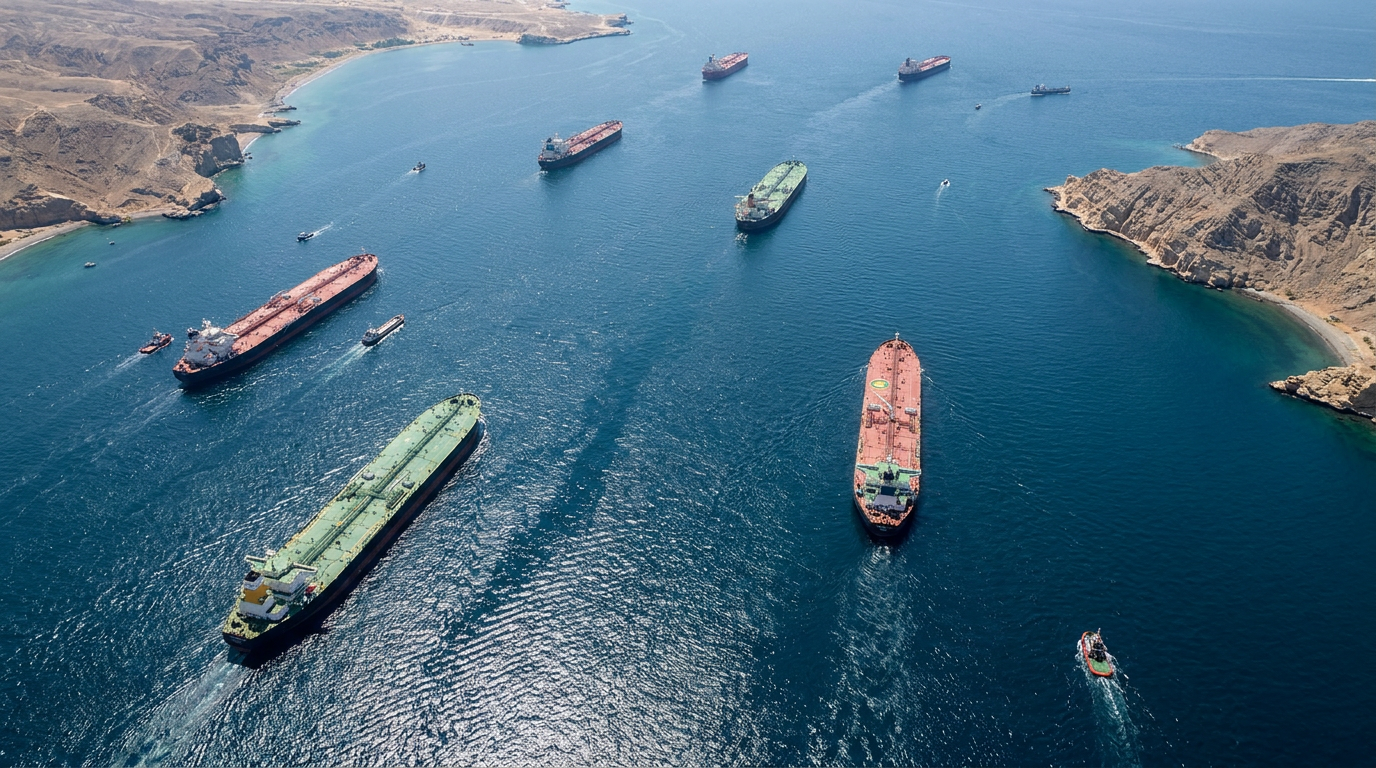
The strategic importance of the Strait of Hormuz cannot be overstated, as roughly 20 percent of the world's total oil consumption passes through the narrow waterway separating Iran and the Arabian Peninsula. The recent naval blockade had forced international shipping conglomerates to reroute vessels, drastically increasing transit times, insurance premiums, and freight costs across the board. The reopening of the strait is expected to normalize these logistical bottlenecks and restore the standard flow of global commerce, though maritime security experts caution that clearing the massive backlog of anchored tankers and re-establishing safe transit corridors will likely take several weeks to fully execute.[6][10]
Domestically, the political reaction in the United States has been sharply divided along familiar partisan lines. Allies of the Trump administration immediately championed the Sunday announcement as a historic diplomatic victory and a profound vindication of the President's aggressive negotiating tactics. Supporters argue that the administration's willingness to exert maximum economic and military pressure ultimately forced Tehran to the negotiating table, securing a reopening of the strait without committing the United States to a protracted, boots-on-the-ground military engagement. For the administration's base, the deal is being hailed as a masterclass in high-stakes geopolitical leverage.[1][3]

Conversely, Democratic lawmakers and national security skeptics are demanding immediate clarity on the specific concessions made to secure the landmark deal. Critics point out that no official terms have been released to Congress, raising urgent concerns about what the United States may have promised—financially or strategically—in exchange for the blockade's end. The lack of transparency has prompted calls for emergency congressional briefings, with opposition leaders warning that a hastily arranged memorandum might fail to address the underlying structural conflicts and nuclear ambitions that have long defined the adversarial relationship between the two nations.[3][8]
The precise timing of the announcement has also drawn intense scrutiny from geopolitical analysts monitoring the region. Some diplomatic observers suggest that recent regional escalations, including a high-profile Israeli military strike in Beirut, may have inadvertently accelerated the timeline for the U.S.-Iran negotiations. According to this assessment, the imminent threat of the conflict spiraling completely beyond either Washington or Tehran's control provided the necessary catalyst for both sides to finalize the ceasefire framework before the security situation deteriorated into an irreversible regional war. The external pressure seemingly forced a rapid consolidation of the diplomatic terms.[5]

Despite the overwhelming market optimism and political declarations of victory, veteran diplomats are urging caution until the ink is officially dry. Former U.S. diplomat Alan Eyre noted publicly that while the ceasefire announcement is a monumental step forward, there is technically no binding deal until the memorandum is formalized and signed on Friday. The coming days will be critical as lower-level officials work feverishly to translate the high-level political agreement into actionable maritime and military protocols, ensuring that the promised reopening of the Strait of Hormuz becomes a logistical reality rather than just a diplomatic talking point.[5][10]
How we got here
Early 2026
A naval blockade restricts international shipping through the critical Strait of Hormuz.
June 11-12, 2026
Global oil prices begin falling on rumors of a back-channel diplomatic breakthrough.
June 14, 2026
President Trump announces a peace deal and the imminent reopening of the strait.
June 19, 2026
Scheduled date for the formal signing of the U.S.-Iran memorandum.
Viewpoints in depth
U.S. Administration's View
The deal is a historic diplomatic victory achieved through maximum pressure.
Allies of the administration argue that aggressive negotiating tactics and economic pressure forced Tehran to the table. They view the reopening of the Strait of Hormuz as a massive win for the U.S. economy and a vindication of the President's strategy to avoid protracted military engagements while securing vital global trade routes.
Congressional Skeptics
Lawmakers are concerned about undisclosed concessions and structural flaws.
Democratic leaders and national security skeptics warn that the lack of transparent terms is a major red flag. They argue that a hastily arranged memorandum might offer significant financial or strategic concessions to Iran without addressing the underlying geopolitical conflicts, demanding immediate congressional briefings before the Friday signing.
Global Energy Markets
Investors are pricing in immediate relief from supply chain bottlenecks.
Financial analysts and institutional investors are reacting with overwhelming optimism, driving down crude oil futures and boosting equities. The market perspective is heavily focused on the logistical reality of millions of barrels of oil returning to the global supply chain, which is expected to ease inflationary pressures worldwide.
What we don't know
- The exact diplomatic and financial concessions made by either side to secure the memorandum.
- The specific logistical timeline for clearing the backlog of tankers and fully restoring maritime traffic.
- How the agreement addresses the broader, underlying geopolitical tensions beyond the immediate naval blockade.
Key terms
- Strait of Hormuz
- A narrow, strategically critical waterway between the Persian Gulf and the Gulf of Oman through which roughly a fifth of the world's oil passes.
- Crude Oil Futures
- Financial contracts obligating the buyer to purchase oil at a set price on a future date, heavily influenced by geopolitical stability.
- Naval Blockade
- The use of military ships to restrict maritime access to a specific area, which had previously halted shipping in the region.
Frequently asked
When will the Strait of Hormuz reopen?
President Trump announced the strait will reopen following the formal signing of the memorandum, which is scheduled for Friday, June 19.
How are financial markets reacting to the news?
Global stock markets surged and crude oil futures dropped significantly as investors priced in the return of normalized energy shipments.
What are the exact terms of the peace deal?
The official terms have not yet been released. Democratic lawmakers are currently demanding clarity on what specific concessions were made to secure the agreement.
Sources
Source coverage
10 outlets
5 viewpoints surfaced








[1]Fox NewsU.S. Administration & Allies
Trump announces peace deal with Iran, declares Strait of Hormuz will reopen: 'Let the oil flow!'
Read on Fox News →[2]NPRFinancial Markets
Crude oil futures drop after Trump promises an Iran deal will be signed Friday
Read on NPR →[3]Al JazeeraGeopolitical Observers
Trump allies cheer Iran deal announcement as Democrats call for clarity
Read on Al Jazeera →Stock markets soar, oil falls as US, Iran confirm deal to end war
Read on Al Jazeera →Claims Israel’s Beirut strike pushed Trump on Iran announcement
Read on Al Jazeera →[6]ReutersFinancial Markets
Oil prices plunge as US, Iran announce Friday signing for Strait of Hormuz reopening
Read on Reuters →[7]BloombergFinancial Markets
Global Markets Rally, Brent Crude Dives on US-Iran Ceasefire Breakthrough
Read on Bloomberg →[8]The New York TimesCongressional Skeptics
Trump Announces Imminent Iran Deal, but Details Remain Scarce as Democrats Demand Answers
Read on The New York Times →[9]Tehran TimesIranian State Media
Tehran and Washington Reach Memorandum to Lift Blockade, Ease Regional Tensions
Read on Tehran Times →[10]BBC NewsGeopolitical Observers
US and Iran agree to end hostilities, reopening vital Strait of Hormuz shipping lane
Read on BBC News →
More in news politics
See all 9 stories →US-Iran Deal
U.S. and Iran Sign Agreement to End War; Vance Lashes Out at Israeli Critics
7 sources
U.S.-Iran Deal
U.S. and Iran Sign 14-Point Agreement to End War, Sparking Fierce Backlash from Israel
6 sources

U.S.-Iran Relations
Vance Rebukes Israeli Critics of U.S.-Iran Peace Agreement, Warning Against Alienating 'Only Powerful Ally'
8 sources
Cognitive Defense
The Science of 'Prebunking': How Psychological Inoculation is Defeating Misinformation
6 sources

Every angle. Every day.
Get news politics stories with full source coverage and perspective breakdowns delivered to your inbox.