
The Sub-500cc Renaissance: Why Lightweight Motorcycles Are Dominating the 2026 Market
A new generation of affordable, tech-heavy motorcycles in the 300cc to 500cc range is reshaping the industry, offering premium features and manageable power for both beginners and veteran riders.
By Factlen Editorial Team
- New Riders
- Value approachability, safety features, and low cost of entry.
- Urban Commuters
- Focus on fuel economy, traffic maneuverability, and practical gear.
- Veteran Motorcyclists
- Appreciate the lightweight agility and 'slow bike fast' riding dynamics.
What's not represented
- · Electric Motorcycle Manufacturers
- · Motorcycle Insurance Providers
Why this matters
For consumers looking to enter the world of motorcycling or downsize their commute, the 2026 market offers unprecedented value. Buyers no longer have to choose between affordability and modern safety technology, making riding more accessible and financially viable than ever before.
Key points
- The 300-500cc motorcycle segment has become the most vital entry point in the 2026 global market.
- Modern lightweight bikes now feature premium technology like TFT displays, ride modes, and standard ABS.
- High fuel efficiency (60-80 mpg) and low insurance costs make these bikes ideal for urban commuting.
- The used market for sub-500cc motorcycles is exceptionally strong, with bikes retaining up to 70% of their value after three years.
- Rider gear is evolving alongside the bikes, shifting from aggressive racing styles to casual, protective streetwear.
For decades, the global motorcycle industry operated on a simple, unspoken rule: bigger is inherently better. Manufacturers engaged in a relentless arms race of engine displacement, pushing flagship models past the 1,000cc mark, chasing 200 horsepower, and demanding $20,000 price tags. But as the 2026 riding season unfolds, the market has decisively pivoted. The most exciting, fiercely competitive, and rapidly growing segment in motorcycling isn't the fire-breathing superbike category—it is the sub-500cc lightweight class. This renaissance of smaller-displacement motorcycles is fundamentally reshaping how bikes are designed, who is buying them, and what consumers expect from an entry-level machine.
Industry analysts note that the 300cc to 700cc segment has cemented itself as the global entry point for new riders, while simultaneously becoming a deliberate destination for veteran motorcyclists seeking simplicity. This "shrinking middleweight" trend is driven by a collective desire for manageable power, urban practicality, and significantly lower costs. Manufacturers are responding by building down within their own lineups, offering premium mid-size options that trim excess weight and power under the guise of delivering pure, usable riding joy.[1][2]
The economics of the lightweight class are undeniably compelling. With highly capable new models like the Triumph Speed 400 starting around $6,195, the financial barrier to entry has plummeted. But the real advantage lies in the total cost of ownership. These machines are incredibly frugal, with many models in the 400cc range delivering between 60 and 80 miles per gallon. For urban commuters dealing with volatile fuel prices, this efficiency transforms the motorcycle from a weekend recreational toy into a highly practical daily mobility solution.[4][6]
Furthermore, the depreciation curve on these lightweight motorcycles is remarkably flat, making them one of the smartest financial plays in the powersports world. Market data indicates that while a typical heavy cruiser or superbike might lose significant value in its first two years, popular beginner bikes like the Kawasaki Ninja 400 and Honda CBR500R retain up to 70% of their original value after three years. Because there is a constant, churning demand from new riders entering the sport, these bikes are essentially liquid assets; a rider can buy a used model, learn the ropes for a season or two, and sell it for nearly what they originally paid.[3]

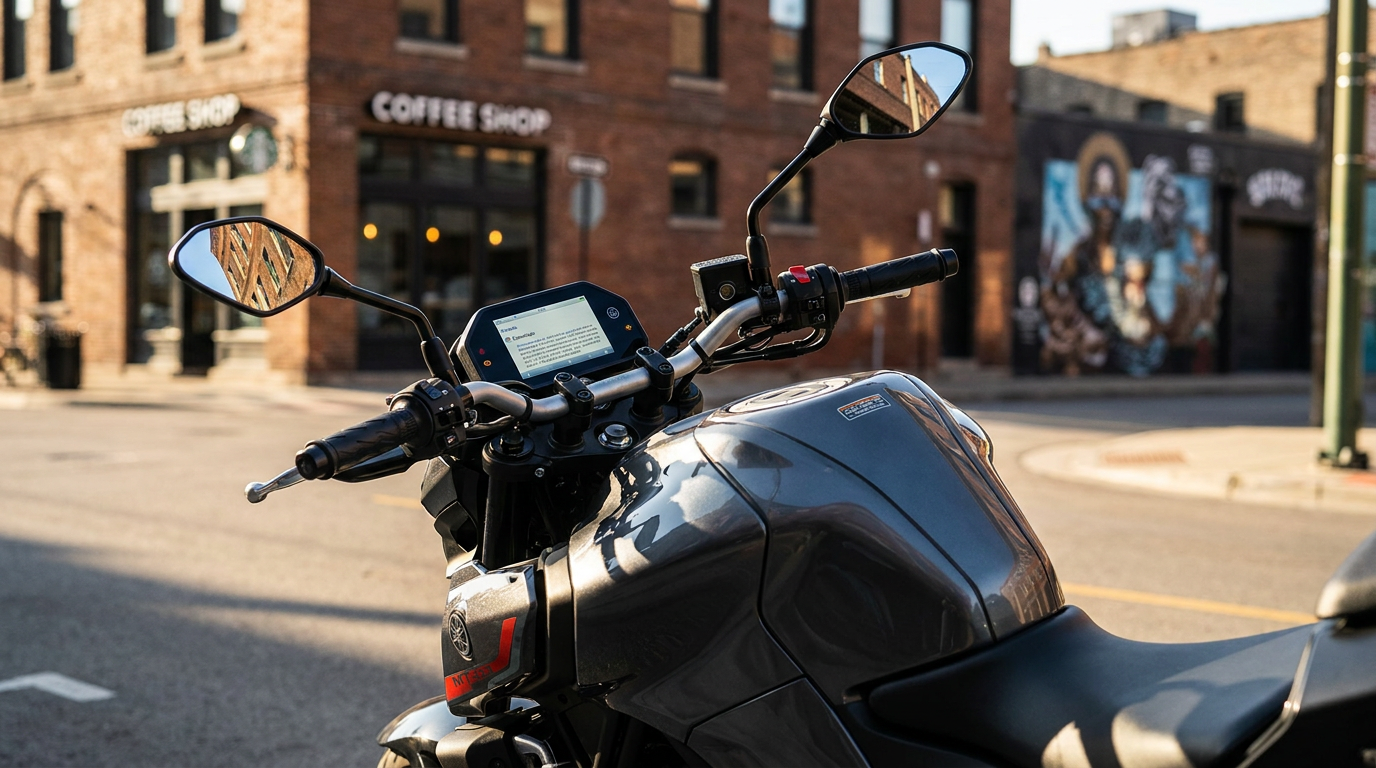
What truly separates the 2026 lightweight class from the bare-bones "starter bikes" of the past is the aggressive trickle-down of premium technology. A decade ago, a 300cc motorcycle was typically a stripped-down machine featuring a carburetor, a halogen headlight, and analog dials. Today, consumer expectations have completely shifted. Buyers demand that their smaller bikes look, feel, and operate with the same sophistication as the flagship models that cost three times as much.
What truly separates the 2026 lightweight class from the bare-bones "starter bikes" of the past is the aggressive trickle-down of premium technology.
Modern entry-level motorcycles now feature electronic equipment previously reserved for top-tier superbikes. The KTM 390 Duke, for example, comes standard with a full-color TFT digital dashboard, seamless smartphone connectivity for turn-by-turn navigation, and multiple ride modes including Rain, Street, and Track. This level of electronic integration allows riders to tailor the bike's power delivery to their specific skill level and the current road conditions, making the learning curve significantly less intimidating.[5][6]
Safety hardware has also seen a massive, standardized upgrade across the category. Slipper clutches, which prevent the rear wheel from locking up or skipping during aggressive downshifts, are now standard equipment on bikes like the Kawasaki Z400. Dual-channel Anti-lock Braking Systems (ABS) are ubiquitous, providing crucial stopping power on wet or unpredictable urban surfaces. Additionally, manufacturers are intentionally tuning their throttle maps to be highly forgiving at low speeds, preventing the jerky, stalling starts that often plague new riders at stoplights.[3][4]
This shift toward smaller, more practical bikes is also reshaping motorcycle culture and the apparel industry. As urban commuting on lightweight motorcycles surges, riders are demanding practical, lifestyle-oriented gear. The aggressive "Power Ranger" aesthetic of full leather racing suits is rapidly giving way to Kevlar-reinforced riding jeans, breathable armored textile jackets, and casual-looking protective boots. Riders want gear that seamlessly transitions from the saddle to the office or the coffee shop without looking out of place, reflecting the motorcycle's role as a daily utility rather than just a track-day weapon.[7]

Several standout models are currently defining this sub-500cc renaissance. The Triumph Speed 400 brings premium British heritage styling and impeccable fit-and-finish to the entry-level market, proving that affordability does not have to mean cheap construction. On the cruiser side, the Honda Rebel 500 offers highly accessible ergonomics with an ultra-low 27.2-inch seat height, making it perfect for riders who want the confidence of flat-footing their motorcycle in heavy stop-and-go traffic.[4][6]
Meanwhile, the Kawasaki Ninja 500 and Yamaha MT-03 continue to dominate the sporty side of the spectrum. These bikes offer lightweight frames—often weighing well under 400 pounds fully fueled—and smooth, predictable parallel-twin engines. They provide enough top-end power to comfortably cruise at highway speeds and execute passes safely, yet remain nimble enough to carve through tight city streets or weekend mountain twisties with effortless agility.[3][5]
Yet, the internal combustion sub-500cc market faces a looming, silent challenger: the rapid advancement of electric motorcycles. While electric two-wheelers currently dominate the low-speed scooter and urban mobility space, full-size electric motorcycles from brands like Can-Am and Zero are beginning to target the exact same commuter demographic. These electric models promise zero maintenance, instant torque, and the ultimate ease of use with no clutch or gears to manage.

However, for the immediate future, the lightweight petrol bikes hold a distinct, insurmountable advantage in infrastructure-independent touring and absolute upfront cost. Until electric motorcycles can match the $5,000 to $7,000 price point with comparable highway range and zero charge-time anxiety, the 300-500cc petrol class will remain the undisputed king of the entry-level market. By prioritizing accessibility, affordability, and practical technology over sheer horsepower, manufacturers are not just selling motorcycles—they are actively minting the next generation of lifelong riders.
How we got here
Early 2010s
The 250cc beginner class begins to expand to 300cc, led by models like the Kawasaki Ninja 300.
2018–2020
Manufacturers introduce 400cc models, establishing a new baseline for highway-capable entry-level bikes.
2023–2024
Premium features like TFT dashes and cornering ABS begin trickling down to the sub-500cc segment.
2026
The 300-500cc class solidifies as the dominant growth segment, featuring models from nearly every major global manufacturer.
Viewpoints in depth
New Riders
Prioritizing safety, approachability, and low upfront costs.
For those just earning their motorcycle endorsement, the sub-500cc class is a revelation. Historically, beginners were forced to choose between underpowered, bare-bones 250cc machines or intimidating, heavy 600cc sportbikes. The new middleweight class offers a Goldilocks solution: enough power to safely merge on the highway, but with forgiving throttle maps, standard ABS, and lightweight chassis that inspire confidence rather than fear.
Veteran Motorcyclists
Seeking lightweight agility and simplicity over sheer horsepower.
Surprisingly, a significant portion of the sub-500cc market consists of experienced riders downsizing from 1,000cc+ machines. These veterans cite the joy of 'riding a slow bike fast' and the sheer practicality of a 350-pound motorcycle for urban commuting. For them, the inclusion of premium features like slipper clutches and TFT displays means they don't have to sacrifice modern comforts when moving to a smaller displacement.
Urban Commuters
Focusing on fuel efficiency, parking ease, and running costs.
In congested urban centers, the lightweight motorcycle is viewed primarily as a mobility solution rather than a recreational toy. Commuters value the 60-80 mpg fuel efficiency, the ability to filter through traffic (where legal), and the low insurance premiums. For this demographic, the motorcycle is a tool to beat gridlock and reduce transit costs, making the flat depreciation curve highly attractive.
What we don't know
- How quickly electric motorcycles will reach price parity with the $6,000 petrol-powered sub-500cc class.
- Whether insurance premiums for new riders will remain low as the bikes become more technologically complex to repair.
Key terms
- TFT Display
- Thin-Film-Transistor display; a high-resolution, full-color digital dashboard that replaces traditional analog gauges.
- Slipper Clutch
- A mechanical device that partially disengages the clutch during hard braking or downshifting, preventing the rear wheel from locking up.
- Ride-by-Wire
- An electronic system where the throttle is connected to the engine via sensors and wires rather than a physical cable, allowing for different ride modes.
- ABS
- Anti-lock Braking System; a safety feature that prevents the wheels from locking during hard braking, maintaining traction.
Frequently asked
Are 400cc motorcycles fast enough for the highway?
Yes. Modern 400cc and 500cc motorcycles typically produce between 40 and 50 horsepower, allowing them to comfortably cruise at highway speeds and execute passes safely.
Why do these bikes hold their value so well?
Because there is a constant influx of new riders looking for affordable, reliable starter bikes, demand on the used market remains consistently high, flattening the depreciation curve.
Do I need special gear to ride these motorcycles?
While full safety gear is always recommended, the trend in 2026 leans toward casual-looking protective gear, such as Kevlar-lined jeans and armored textile jackets, rather than full leather racing suits.
Sources
Source coverage
7 outlets
3 viewpoints surfaced






[1]MotorlandVeteran Motorcyclists
TOP 10 Motorcycle Trends for 2026 That Will Change Everything
Read on Motorland →[2]RevZillaVeteran Motorcyclists
2026 Motorcycle Industry Predictions
Read on RevZilla →[3]Premier MotorsportsUrban Commuters
Top 7 Beginner-Friendly Used Motorcycles in 2026!
Read on Premier Motorsports →[4]ChigeeUrban Commuters
The 7 Best Beginner Motorcycles for Commuting (2026 Guide)
Read on Chigee →[5]Cardo SystemsNew Riders
How to Choose Your First Motorcycle
Read on Cardo Systems →[6]Motos IllimitéesNew Riders
Top 5 best 2026 motorcycles for beginners
Read on Motos Illimitées →[7]Proto The Bike ShopUrban Commuters
Motorcycle Clothing Is Now About Lifestyle
Read on Proto The Bike Shop →

Every angle. Every day.
Get shopping stories with full source coverage and perspective breakdowns delivered to your inbox.