
The Solid-State Battery Era Arrives: How 2026 Became the Tipping Point for EV Range and Safety
After years of laboratory development, solid-state batteries are entering pilot production in 2026, promising to double EV driving ranges and eliminate fire risks. Major partnerships from Toyota, Honda, and QuantumScape signal the technology is finally ready for the road.
By Factlen Editorial Team
- Solid-State Pioneers
- Automakers and startups pushing for rapid commercialization.
- Market Analysts
- Financial and industry observers tracking the commercial viability of the transition.
- Incumbent Battery Defenders
- Manufacturers focused on optimizing existing lithium-ion and LFP chemistries.
What's not represented
- · Raw material suppliers (lithium mining)
- · Independent battery recycling firms
Why this matters
Solid-state batteries solve the two biggest hurdles to electric vehicle adoption: range anxiety and charging times. By enabling 600-mile ranges and 10-minute charge times without the fire risks of current batteries, this technology paves the way for the complete phase-out of internal combustion engines.
Key points
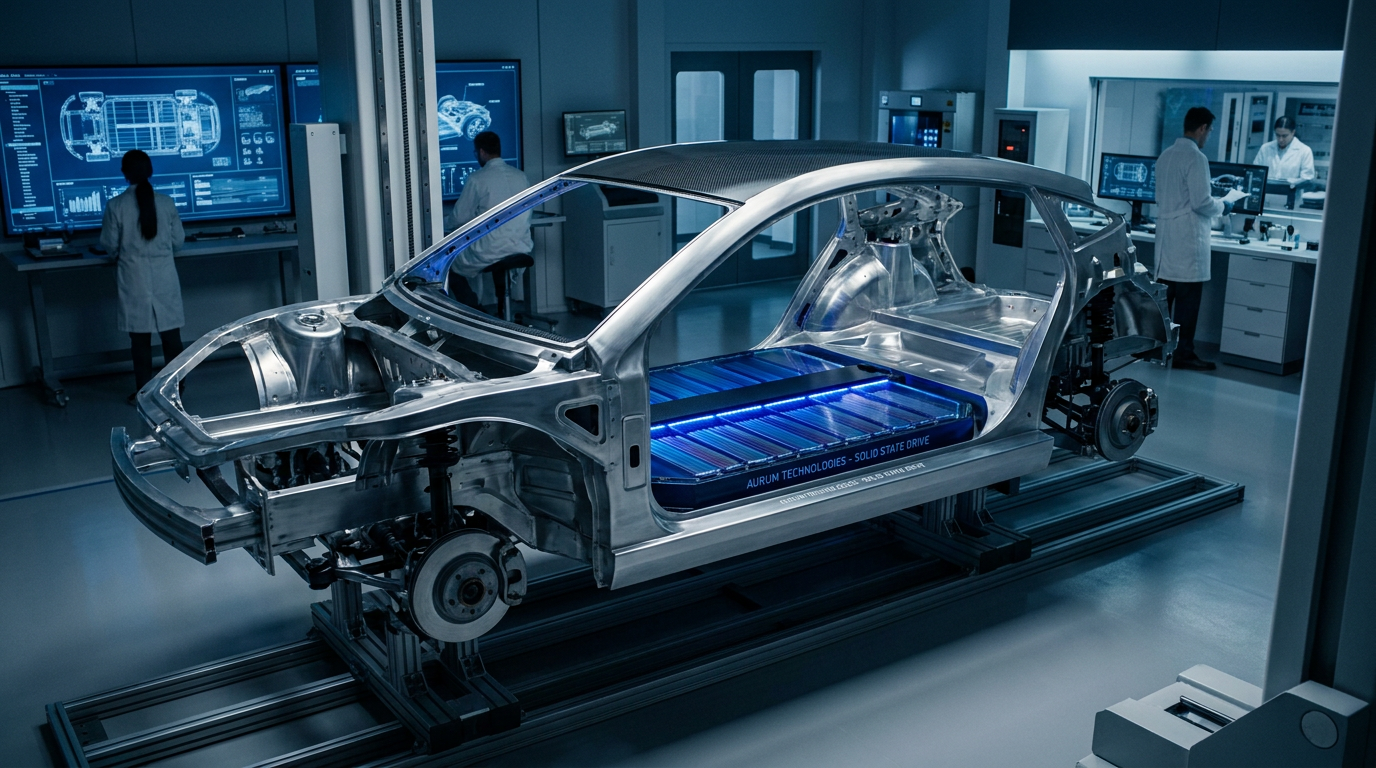
- Solid-state batteries replace flammable liquid electrolytes with rigid materials, unlocking massive gains in energy density and safety.
- First-generation cells are targeting 400 to 500 Wh/kg, enabling EVs to travel over 1,000 kilometers on a single charge.
- Major automakers like Toyota and Honda have signed production agreements in 2026, moving the technology from the lab to pilot manufacturing.
- While performance is proven, scaling up manufacturing and achieving cost parity with traditional lithium-ion batteries remain the final hurdles.
For the better part of a decade, the solid-state battery has been the electric vehicle industry's white whale—a theoretical marvel that promised to double driving range and eliminate fire risks, yet perpetually remained five years away. But in the summer of 2026, the timeline has finally collapsed into the present. Major automakers and battery startups are moving beyond laboratory prototypes and into pilot production, signaling a tectonic shift in how the world stores energy. [7] The transition from liquid to solid battery architectures is no longer a speculative academic exercise; it is an industrial reality backed by billions of dollars in fresh manufacturing commitments.[7]
The urgency behind this shift stems from the physical limitations of current technology. Traditional lithium-ion batteries, which power everything from smartphones to the Tesla Model Y, rely on a liquid organic electrolyte to shuttle lithium ions between the anode and the cathode during charging and discharging. [5] While this liquid medium is highly conductive, it is also inherently flammable and prone to degradation over time. Furthermore, conventional lithium-ion cells have largely reached the top of their developmental S-curve, maxing out at an energy density of roughly 250 to 300 watt-hours per kilogram (Wh/kg). [7] To push EVs into the realm of 1,000-kilometer ranges without adding thousands of pounds of dead weight, the industry needed a fundamental chemical breakthrough.[5][7]
That breakthrough centers on replacing the liquid solvent with a solid material—typically a ceramic, polymer, or sulfide-based compound. [5] By utilizing a solid electrolyte, engineers can safely swap out the bulky graphite anodes used in traditional batteries for a pure lithium-metal anode. [5] In a liquid battery, a lithium-metal anode tends to grow microscopic, needle-like structures called dendrites, which can pierce the battery's internal separator and cause catastrophic short circuits. [7] A rigid solid electrolyte acts as a physical barrier, suppressing dendrite growth and allowing the battery to safely harness the massive energy capacity of lithium metal.[5][7]

The performance gains unlocked by this architectural change are staggering. First-generation solid-state cells currently entering pilot production are targeting energy densities between 400 and 500 Wh/kg, effectively doubling the energy storage capacity of a standard EV battery pack without increasing its physical footprint. [7] For the consumer, this translates to vehicles capable of traveling well over 600 miles (roughly 1,000 kilometers) on a single charge. [8] It fundamentally alters the geometry of vehicle design, allowing automakers to build lighter, more aerodynamic cars, or to pack massive range into smaller, more affordable urban vehicles.[7][8]
Beyond raw range, solid-state technology fundamentally rewrites the rules of charging and safety. Because solid electrolytes are vastly more thermally stable than their liquid counterparts, they can accept electrical current at much higher rates without overheating. [5] Recent prototype cells have demonstrated the ability to fast-charge from 10 percent to 80 percent capacity in just 10 to 12 minutes—a refueling time that finally rivals the convenience of a traditional gas station pump. [8] Crucially, this rapid charging does not come at the expense of safety; comparative testing shows that thermal runaway events in solid-state systems do not begin until temperatures exceed 247 degrees Celsius, compared to just 90 degrees for conventional lithium-ion cells. [7][5][7][8]

Beyond raw range, solid-state technology fundamentally rewrites the rules of charging and safety.
The commercial validation of these claims arrived forcefully in June 2026, when QuantumScape, a leading American battery developer, announced a sweeping joint research and production agreement with Honda. [1] The pact followed an exhaustive, months-long technical evaluation by Honda's engineering teams, who benchmarked QuantumScape's QSE-5 solid-state platform against a battery of rigorous stress tests. [2] Honda's decision to formally partner with the pre-revenue startup serves as a massive trust signal for the broader industry, proving that the technology can survive the exacting quality standards of a legacy global automaker. [2] QuantumScape is now positioning itself as a fabless technology licensor, aiming to distribute its ceramic-separator technology across multiple manufacturing partners. [6][1][2][6]
Across the Pacific, Toyota is executing an even more aggressive manufacturing timeline. Holding over 1,000 patents in solid-state technology, the Japanese automotive giant has partnered with oil refiner Idemitsu Kosan to build a massive pilot plant dedicated to manufacturing sulfide-based solid electrolytes. [3] This facility, slated for completion in 2027, is designed to produce hundreds of tonnes of the critical material annually—enough to support meaningful commercial vehicle production. [4] Toyota has publicly committed to integrating these batteries into its production vehicles by 2027 or 2028, targeting a 10-minute charge time and a lifespan that retains over 90 percent of its capacity after 2,000 cycles. [8][3][4][8]
China's battery sector is matching this pace with rapid industrialization efforts of its own. Greater Bay Technology (GBT), a startup backed by the GAC Group, announced in early 2026 that its first "A-sample" all-solid-state battery cells had successfully rolled off the production line. [9] These cells, which utilize a novel organic-inorganic composite electrolyte, passed extreme needle penetration and thermal shock tests without igniting. [9] GBT is targeting gigawatt-hour-level mass production by the end of 2026, aiming to be among the first to supply solid-state packs for both passenger vehicles and the emerging electric vertical takeoff and landing (eVTOL) aircraft market. [9][9]

Despite the accelerating momentum, the transition from pilot lines to global mass production remains fraught with engineering hurdles. The primary challenge is mechanical: as a solid-state battery charges and discharges, the lithium-metal anode physically expands and contracts. [5] Maintaining perfect, microscopic contact between the rigid solid electrolyte and the shifting electrodes over thousands of cycles requires extraordinary manufacturing precision and, in some designs, external pressure mechanisms integrated directly into the battery pack. [5] If microscopic gaps form at the interface during operation, the battery's internal electrical resistance spikes, and its overall performance rapidly degrades.[5]
Cost also remains a formidable barrier to ubiquitous adoption. The current global battery market is dominated by lithium iron phosphate (LFP) chemistry, which has driven cell costs down to roughly $60 per kilowatt-hour. [5] Early solid-state cells are expected to carry a significant premium, owing to the complex manufacturing environments required to handle moisture-sensitive solid electrolytes and pure lithium metal. Until economies of scale are achieved, the technology will likely be confined to high-margin applications where the performance benefits justify the cost. Automakers must carefully balance these initial premiums against the undeniable consumer appeal of ultra-fast charging and extended range.[5]
Consequently, the initial rollout of solid-state batteries will not happen in budget-friendly commuter cars. Automakers are universally planning a top-down introduction strategy. Toyota intends to debut its first solid-state packs in flagship Lexus models, while early adopters like Ducati and Verge Motorcycles are integrating the technology into premium electric superbikes where weight reduction is paramount. [1] As manufacturing yields improve and the supply chain for solid electrolytes matures throughout the late 2020s, the technology is expected to trickle down to the broader passenger vehicle market. [8][1][8]

The successful commercialization of solid-state batteries represents what many industry experts consider the final nail in the coffin for the internal combustion engine's remaining advantages. By neutralizing the twin anxieties of driving range and charging time, while simultaneously eliminating the thermal risks that have occasionally plagued early electric vehicles, the industry is removing the last rational barriers to global electrification. Consumers who previously held out due to long road trips or cold-weather performance degradation will soon find those concerns entirely mitigated by solid-state chemistry. The laboratory era of the solid-state battery is officially over; the race to manufacture the future of clean mobility has definitively begun.
How we got here
2020–2024
Solid-state technology remains largely confined to laboratory testing and small-scale prototype demonstrations.
Jan 2025
Honda begins pilot production of solid-state batteries at its Sakura plant in Japan.
Early 2026
Greater Bay Technology and other startups announce the successful production of A-sample solid-state cells.
Jun 2026
QuantumScape and Honda sign a major joint research and production agreement, validating the technology for automotive use.
2027–2028
Toyota and Idemitsu Kosan plan to launch mass production of solid electrolytes for integration into premium passenger vehicles.
Viewpoints in depth
Solid-State Pioneers
Automakers and startups pushing for rapid commercialization.
Companies like QuantumScape, Toyota, and Greater Bay Technology argue that the fundamental science of solid-state batteries is now solved. Their focus has shifted entirely to manufacturing scale and supply chain logistics. They point to successful A-sample testing and rigorous OEM validation as proof that solid-state cells can deliver 400+ Wh/kg energy densities safely. For these pioneers, the technology is not a distant luxury but an imminent necessity to push EVs past the 1,000-kilometer range threshold and eliminate the thermal runaway risks that have historically plagued liquid lithium-ion systems.
Incumbent Battery Defenders
Manufacturers focused on optimizing existing lithium-ion and LFP chemistries.
While acknowledging the scientific achievements of solid-state technology, defenders of current battery chemistries emphasize the massive economic moat of lithium iron phosphate (LFP) and traditional lithium-ion cells. They argue that current batteries are already cheap enough—nearing $60 per kilowatt-hour—and reliable enough to satisfy 90 percent of global driving needs. From this perspective, the exorbitant initial costs and complex manufacturing requirements of solid electrolytes will relegate solid-state batteries to a niche luxury market for at least the next decade, while LFP continues to dominate the mass market.
Market Analysts
Financial and industry observers tracking the commercial viability of the transition.
Industry analysts view the 2026 pilot production milestones as highly encouraging but caution against expecting an overnight revolution. They highlight the immense difficulty of scaling up moisture-sensitive solid electrolyte production and maintaining perfect electrode contact over thousands of charge cycles in real-world conditions. Analysts project a top-down rollout, where the technology first proves its worth in high-margin applications like aviation, premium superbikes, and flagship luxury sedans, before economies of scale eventually bring the price down to mass-market parity in the 2030s.
What we don't know
- Exactly how much of a price premium first-generation solid-state vehicles will carry over traditional EVs.
- Whether the manufacturing yield rates for solid electrolytes can scale quickly enough to meet automaker timelines.
- How solid-state cells will degrade over a 15-year real-world lifespan outside of controlled laboratory conditions.
Key terms
- Solid Electrolyte
- A rigid, non-flammable material (often ceramic or sulfide-based) that conducts ions between a battery's anode and cathode, replacing traditional liquid solvents.
- Lithium-Metal Anode
- A battery component made of pure lithium that stores significantly more energy than the graphite anodes used in conventional batteries, made possible by solid electrolytes.
- Energy Density
- A measure of how much energy a battery can store relative to its weight, typically expressed in watt-hours per kilogram (Wh/kg).
- Dendrites
- Microscopic, needle-like structures that can grow inside liquid batteries and cause short circuits; solid-state batteries physically block their formation.
- Thermal Runaway
- A dangerous chain reaction where a battery overheats and catches fire, a risk that is virtually eliminated in solid-state designs.
Frequently asked
What makes a solid-state battery different from current EV batteries?
Instead of using a flammable liquid electrolyte to move ions, solid-state batteries use a rigid, solid material like ceramic or sulfide. This allows them to store more energy and eliminates the risk of liquid fires.
How much farther can an EV drive with a solid-state battery?
First-generation solid-state cells are targeting energy densities of 400 to 500 Wh/kg, which could enable driving ranges of over 600 miles (1,000 kilometers) on a single charge.
Will solid-state batteries charge faster?
Yes. Because solid electrolytes handle heat much better than liquid ones, they can accept higher charging currents. Automakers are targeting 10-to-80-percent charge times of just 10 to 12 minutes.
When will cars with solid-state batteries be available to buy?
Pilot production is beginning in 2026, with early integration planned for premium vehicles and motorcycles in 2027 and 2028. Mass-market availability is expected closer to 2030.
Sources
Source coverage
9 outlets
3 viewpoints surfaced








[1]ElectrekMarket Analysts
Honda, QuantumScape enter solid-state battery tie-up
Read on Electrek →[2]24/7 Wall StMarket Analysts
Honda Pact Validates QuantumScape's Tech
Read on 24/7 Wall St →[3]Driven Car GuideSolid-State Pioneers
Toyota, Idemitsu move solid-state battery tech from lab to production scale
Read on Driven Car Guide →[4]EV Infrastructure NewsSolid-State Pioneers
Toyota solid-state Battery timeline: production plans and lifespan projections
Read on EV Infrastructure News →[5]AnkerIncumbent Battery Defenders
Solid State Battery vs Lithium-Ion at a Glance
Read on Anker →[6]QuantumScapeSolid-State Pioneers
QuantumScape Announces Agreement with Honda on Solid-State Battery Technology
Read on QuantumScape →[7]To7MotorSolid-State Pioneers
Solid-state batteries are no longer simply lab experiments
Read on To7Motor →[8]Metal.comMarket Analysts
Toyota's Solid-State Battery Layout in Japan
Read on Metal.com →China ramps up solid-state EV battery production
Read on Electrek →
Every angle. Every day.
Get automotive stories with full source coverage and perspective breakdowns delivered to your inbox.