
The Science of Tangzhong and Yudane: How a Simple Water Roux Transforms Bread
By pre-cooking a small portion of flour and water, bakers can trigger starch gelatinization to create ultra-soft, high-hydration bread that resists staling for days.
By Factlen Editorial Team
- Culinary Scientists
- Focuses on the precise thermal reactions, starch gelatinization, and the delay of retrogradation at a molecular level.
- Home Bakers
- Values the practical benefits of the technique, such as easier dough handling, softer texture, and extended shelf life.
- Commercial Bakeries
- Appreciates the scalability of the Yudane method and the ability to reduce fat content while maintaining a soft product.
What's not represented
- · Gluten-Free Bakers
- · Pastry Chefs
Why this matters
Understanding the science of starch gelatinization allows home bakers to create bakery-quality, ultra-soft bread that stays fresh for days without relying on chemical preservatives. By mastering this simple stovetop technique, you can dramatically improve the texture and shelf life of your homemade loaves while saving money on premium artisan breads.
Key points
- Tangzhong and Yudane are Asian baking techniques that pre-cook a portion of a recipe's flour and liquid to pre-gelatinize the starches.
- Heating the flour to 65°C (149°F) causes the starch granules to swell, burst, and form a viscous gel that traps massive amounts of water.
- This gelatinous web allows bakers to create high-hydration doughs that remain cohesive and easy to knead.
- The trapped moisture and broken-down saccharides actively delay retrogradation, keeping the bread soft and fresh for days longer than standard loaves.
- The technique is ideal for enriched breads like sandwich loaves and brioche, but detrimental to crusty artisan breads that rely on strong gluten networks.
The pursuit of the perfect loaf of soft bread is often met with a frustrating reality: the fleeting nature of freshness. A brioche bun or a slice of sandwich bread might emerge from the oven with a cloud-like, feathery texture, only to turn dry, crumbly, and tough within twenty-four hours. For generations, commercial bakeries have solved this problem by relying on a cocktail of chemical dough conditioners, artificial preservatives, and industrial enzymes to keep their packaged loaves artificially soft for weeks. But for artisan bakers and home enthusiasts seeking a natural path to enduring tenderness, the secret does not lie in a laboratory additive. Instead, it is found in a simple, centuries-old manipulation of heat and hydration that fundamentally alters the molecular structure of wheat.[1][2]
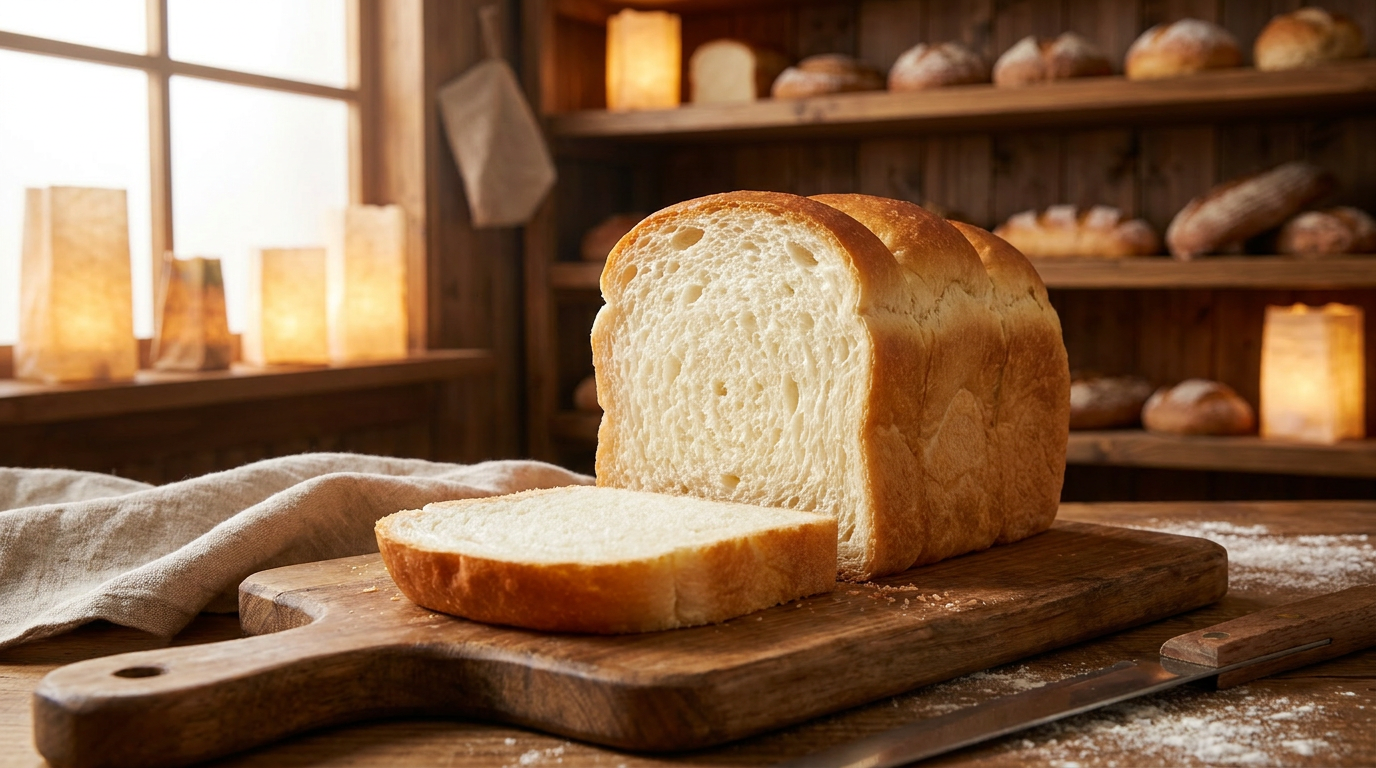
In recent years, Western baking culture has been quietly revolutionized by the mainstream adoption of two Asian dough-improving techniques: Tangzhong and Yudane. Popularized in the early 2000s by Taiwanese cookbook author Yvonne Chen, these methods have since become the gold standard for creating Hokkaido milk bread, ultra-soft dinner rolls, and brioche that defies the normal aging process. While they are often discussed interchangeably, they represent two distinct approaches to achieving the exact same chemical phenomenon. By pre-cooking a small fraction of a recipe’s flour and water before mixing the final dough, bakers can dramatically increase the bread's moisture capacity, resulting in a crumb that is remarkably springy, tender, and resistant to staling.[1][4]
Tangzhong, which translates roughly to "soup" or "dough starter" in Chinese, is a stovetop water roux. The technique requires taking a small percentage of the total flour in a recipe—typically between five and ten percent—and whisking it with a liquid, usually water or milk, at a ratio of one part flour to five parts liquid by weight. This slurry is then gently cooked over medium heat until it thickens into a translucent, pudding-like paste. The critical threshold in this process is reaching a temperature of 65 degrees Celsius, or 149 degrees Fahrenheit. Once the paste cools to room temperature, it is incorporated into the rest of the raw ingredients, acting as a powerful binder and moisture reservoir for the final dough.[1][2]
Yudane, the Japanese predecessor to Tangzhong, achieves a similar result through a slightly different thermal shock. Rather than cooking a slurry on the stove, the Yudane method involves pouring boiling water directly over a portion of the flour at a strict one-to-one ratio by weight. The mixture is stirred into a dense, sticky mass, covered, and left to rest, often overnight in the refrigerator. Because the Yudane method does not involve sustained cooking over an open flame, it suffers from zero water evaporation, making hydration calculations slightly more precise. The resulting dough tends to be slightly tighter and sweeter than its Tangzhong counterpart, but both methods ultimately serve the exact same scientific purpose.[2][3]

The magic behind both Tangzhong and Yudane lies in a chemical reaction known as starch gelatinization. In its raw state, the starch granules inside wheat flour are tightly packed, crystalline structures that can only absorb a limited amount of cold or lukewarm water—typically about half their own weight. However, when these granules are exposed to water and heat exceeding 65 degrees Celsius, their intermolecular bonds begin to break down. The heat causes the starch granules to rapidly absorb the surrounding liquid, swelling to several times their original size until they eventually burst. This violent microscopic rupture releases amylose and amylopectin molecules, which tangle together to form a highly viscous, gelatinous web.[1][4]
This gelatinous web fundamentally changes the physics of the bread dough. Because the pre-cooked flour has absorbed twice as much liquid as it could have in its raw state, that water is now securely locked inside the gel matrix. When this paste is added to the rest of the dough, the trapped water cannot easily escape or bleed out into the surrounding mixture. This allows bakers to push the overall hydration of their dough to incredibly high levels—often exceeding 75 percent liquid to flour—without turning the dough into an unmanageable, sticky puddle. The dough remains cohesive, elastic, and surprisingly easy to knead, while secretly carrying a massive payload of moisture into the oven.[1][4]
This gelatinous web fundamentally changes the physics of the bread dough.
Beyond hydration, the pre-cooking process also alters the structural role of the flour's proteins. Wheat flour contains gliadin and glutenin, the two proteins responsible for forming the elastic gluten network that gives bread its chew and structure. However, when the flour in the roux is scalded by boiling water or cooked on the stove, those specific proteins are denatured by the heat. They lose their ability to form gluten. Furthermore, because the gelatinized starches have greedily absorbed all the available water in the roux, the denatured proteins are left completely bereft of the hydration they would need to link together.[1][3]
By intentionally neutralizing the gluten-forming potential of five to ten percent of the flour, the baker actively reduces the overall chewiness and toughness of the final loaf. The remaining raw flour in the recipe still provides enough gluten to give the bread its necessary structure and volume, but the inclusion of the soft, gluten-free starch gel interrupts those protein strands, ensuring the crumb remains delicate and tender. It is a delicate balancing act: the dough retains enough strength to trap the carbon dioxide produced by the yeast, allowing it to rise high and light, but it lacks the leathery resistance of a crusty artisan loaf.[5][6]
The most celebrated benefit of the water roux method, however, is its profound impact on the bread's shelf life. To understand why Tangzhong bread stays soft for days, one must understand why normal bread goes stale. Staling is not simply a matter of bread drying out; it is a chemical process called retrogradation. As a loaf of bread cools after baking, the starches that were gelatinized in the oven slowly begin to recrystallize, returning to their rigid, organized state. As these starch molecules bind back together, they force water out of their structure, causing the crumb to become hard, brittle, and dry, even if the bread is sealed in an airtight plastic bag.[5][6]

The inclusion of a pre-gelatinized water roux actively disrupts this recrystallization process. Because the starches in the Tangzhong or Yudane were fully gelatinized before the dough was even mixed, they behave differently during the cooling phase. The massive amount of water trapped within the gel matrix acts as a physical barrier, keeping the starch molecules separated and preventing them from easily realigning into a crystalline structure. Furthermore, the intense heat of the pre-cooking process breaks down some of the complex starches into simpler saccharides, or sugars. These sugars not only give the bread a subtle, natural sweetness, but they also hold onto moisture tenaciously, further delaying the onset of retrogradation.[5][6]
In commercial baking environments, the Yudane method has gained particular traction due to its operational efficiency. For large-scale production, pouring boiling water from a commercial tank over a massive bin of flour is significantly easier and less labor-intensive than cooking and stirring a giant vat of Tangzhong slurry on a stove. Food scientists and industrial bakers have also discovered that because the water roux provides so much inherent softness and moisture, they can significantly reduce the amount of butter, oil, and eggs in their recipes. This allows bakeries to produce a loaf that is lower in fat and cheaper to manufacture, yet still boasts the luxurious, cloud-like texture that consumers demand.[5][7]
Despite its near-magical properties, the water roux technique is not without its limitations. The percentage of pre-cooked flour must be carefully calibrated; if a baker attempts to gelatinize too much of the flour—pushing past the ten percent threshold—the dough will lack the necessary raw gluten to hold its shape. The resulting bread will fail to rise properly, yielding a dense, gummy, and unpleasantly wet crumb that feels underbaked. Precision is paramount, and bakers must account for the liquid already present in the roux when calculating the hydration of their final dough to avoid a structural collapse.[2][6]

Furthermore, the technique is highly specialized and is not a universal solution for all types of bread. Tangzhong and Yudane are exclusively designed for enriched, soft-crumb breads like sandwich loaves, cinnamon rolls, brioche, and milk buns. They are actively detrimental to lean, crusty artisan breads like French baguettes, ciabatta, or rustic sourdough boules. Those styles rely on a strong, uninterrupted gluten network to create large, irregular air pockets and a thick, shatteringly crisp crust. Introducing a moisture-retaining starch gel into a baguette dough would soften the crust and tighten the crumb, ruining the very characteristics that define the style.[3]
Ultimately, the science of Tangzhong and Yudane represents a perfect intersection of chemistry and culinary art. By understanding the thermal properties of starch and the mechanics of hydration, bakers can manipulate the fundamental building blocks of wheat to achieve extraordinary results. It is a testament to the fact that improving a recipe does not always require adding new, expensive ingredients or relying on artificial preservatives. Sometimes, the secret to a softer, longer-lasting, and more delicious loaf of bread is simply knowing exactly how and when to apply a little bit of heat to a little bit of water.[7]
Viewpoints in depth
Culinary Scientists
Focuses on the precise thermal reactions, starch gelatinization, and the delay of retrogradation at a molecular level.
For food scientists and cereal chemists, the value of Tangzhong and Yudane lies in the precise manipulation of starch gelatinization. By heating a specific ratio of flour and water to exactly 65°C, the crystalline structure of the starch granules is irreversibly broken down, allowing them to absorb massive amounts of water and form a viscous gel. This gelatinous web fundamentally alters the dough's rheology, trapping moisture that would otherwise bleed out and make the dough unworkable. Furthermore, researchers emphasize the technique's ability to delay retrogradation—the chemical recrystallization of starches that causes bread to stale. The trapped water acts as a physical barrier, while the breakdown of complex starches into simpler saccharides provides a natural defense against staling, keeping the crumb soft for days without the need for industrial preservatives.
Home Bakers
Values the practical benefits of the technique, such as easier dough handling, softer texture, and extended shelf life.
In the home kitchen, the appeal of the water roux method is largely practical. Home bakers often struggle with high-hydration doughs, which can be sticky, messy, and difficult to knead by hand. By locking a significant portion of the recipe's water inside a pre-cooked starch gel, the final dough becomes incredibly cohesive and easy to handle, even when the overall hydration exceeds 75 percent. Additionally, home bakers prize the technique for its ability to produce bakery-quality softness without the use of chemical dough conditioners. The extended shelf life is particularly valuable for small households, as a loaf of Tangzhong sandwich bread or a batch of Yudane cinnamon rolls will remain tender and fresh on the counter for nearly a week, eliminating the disappointment of next-day staling.
Commercial Bakeries
Appreciates the scalability of the Yudane method and the ability to reduce fat content while maintaining a soft product.
For industrial and large-scale commercial bakeries, the focus shifts toward efficiency, scalability, and cost reduction. While Tangzhong requires cooking a slurry over heat—a process that is difficult to scale up without specialized, constantly stirring vats—the Yudane method is highly attractive. Pouring boiling water over a large bin of flour is a simple, repeatable process that easily integrates into mass-production workflows. Moreover, commercial operators value the water roux methods because the intense moisture retention allows them to reformulate their recipes. By relying on gelatinized starch for softness, bakeries can significantly reduce the amount of expensive enriching ingredients like butter, oil, and eggs. This results in a product that is cheaper to produce, lower in fat, and yet still delivers the ultra-soft, shelf-stable crumb that consumers expect from packaged bread.
What we don't know
- While the macroscopic effects on crumb softness are well-documented, the exact molecular interactions between the pre-gelatinized starches and the raw gluten network during the oven spring phase are still being studied.
- The optimal ratio of pre-cooked flour for alternative, non-wheat flours (like rye or gluten-free blends) remains an area of active experimentation among food scientists.
Key terms
- Tangzhong
- A Chinese baking technique where a small portion of flour and liquid is cooked into a paste to pre-gelatinize the starches.
- Yudane
- A Japanese baking technique that achieves starch gelatinization by pouring boiling water directly over a portion of the flour.
- Starch Gelatinization
- The process where starch granules absorb water, swell, and burst when heated, forming a viscous gel.
- Retrogradation
- The chemical process where starch molecules recrystallize after baking, causing bread to become hard and stale.
- Hydration
- The ratio of liquid to flour in a bread dough, expressed as a percentage.
Frequently asked
Can I use milk instead of water for the roux?
Yes. Milk adds fat and sugars that further tenderize the dough and enrich the flavor, though water works perfectly for a vegan loaf.
Can I convert any bread recipe to use Tangzhong?
Most soft bread recipes can be converted by taking 5% to 10% of the recipe's total flour and cooking it with five times its weight in liquid from the recipe.
Does this technique work for gluten-free baking?
Yes. Because the technique relies on starch gelatinization rather than gluten development, it is highly effective at adding structure and moisture to gluten-free breads.
Can I make the roux ahead of time?
Both Tangzhong and Yudane can be made a day in advance and stored in the refrigerator, though they should be brought to room temperature before mixing into the dough.
Sources
Source coverage
7 outlets
3 viewpoints surfaced







[1]King Arthur BakingHome Bakers
Tangzhong, the secret to softer bread
Read on King Arthur Baking →[2]ChainBakerHome Bakers
Tangzhong & Yudane Explained, Bread Improvers
Read on ChainBaker →[3]The Perfect LoafHome Bakers
How To Make and Use Tangzhong and Yudane
Read on The Perfect Loaf →[4]Cook's IllustratedCulinary Scientists
The Science Behind the Tangzhong Method
Read on Cook's Illustrated →[5]Journal of Texture StudiesCulinary Scientists
Effect of water roux starter (Tangzhong) on texture and consumer acceptance of bread
Read on Journal of Texture Studies →[6]ResearchGateCulinary Scientists
The effect of the addition of gelatinized flour on dough rheology and quality of bread
Read on ResearchGate →[7]Factlen Editorial TeamCommercial Bakeries
Synthesis by Factlen editorial team
Read on Factlen Editorial Team →
Every angle. Every day.
Get food drink stories with full source coverage and perspective breakdowns delivered to your inbox.