
The Science of Super Shoes: How Carbon Plates and New Foams Boost Running Economy
Modern running shoes combine ultra-resilient foams and rigid carbon-fiber plates to improve running economy by up to 4 percent. Biomechanical research reveals exactly how this technology rewrote the record books—and whether it actually helps the everyday runner.

In short
- Super shoes combine ultra-light PEBA foam and a rigid carbon-fiber plate to improve running economy by roughly 4 percent.
- The highly resilient foam returns up to 87 percent of the runner's mechanical energy, compared to 65 percent for traditional EVA foam.
- The carbon plate acts as a lever to reduce the energetic cost of bending the toes and stabilizes the soft foam.
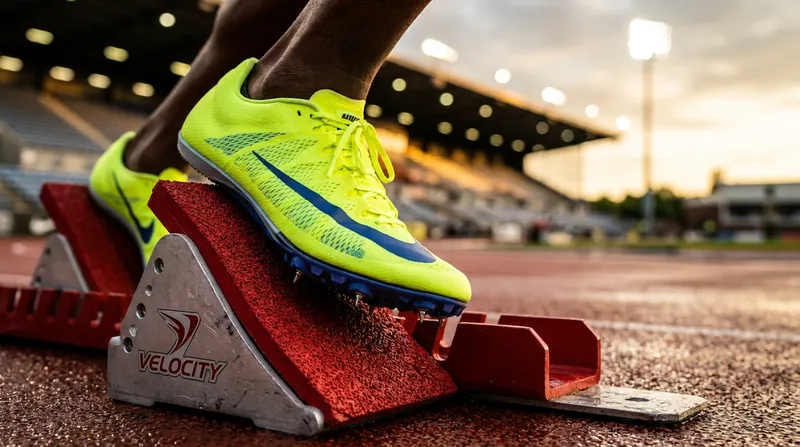
The marathon world record has been obliterated repeatedly over the last decade, with elite times dropping at a rate that defies standard human physiological evolution. This sudden leap in performance wasn't driven by a new training philosophy or a breakthrough in human genetics. It was engineered in a laboratory. The advent of the "super shoe"—a highly specialized racing shoe combining ultra-lightweight, high-rebound foam with a rigid carbon-fiber plate—has fundamentally rewritten the biomechanics of distance running.[1]
The revolution officially began in 2017 with Nike's "Breaking2" project and the subsequent public release of the Vaporfly 4%. The shoe's name was a bold, literal claim: laboratory testing indicated that the footwear improved a runner's metabolic efficiency—known as running economy—by an average of 4 percent compared to the fastest racing flats on the market.[2]
Independent biomechanics researchers quickly verified the claim. A landmark study published in Sports Medicine confirmed that the energetic cost of running at highly trained speeds was indeed reduced by roughly 4 percent. For an elite marathoner, a 4 percent improvement in running economy translates to roughly a 2 to 3 percent improvement in race time—enough to shave several minutes off a world-class finish.[2][4]
While the carbon-fiber plate captures the public imagination, biomechanists argue that the true magic of the super shoe lies in the foam. Traditional running shoes rely on ethylene-vinyl acetate (EVA), a reliable but relatively dense material that returns about 65 percent of the energy compressed into it with each footstrike. The rest is lost as heat.[3]
Super shoes utilize a completely different chemical compound: polyether block amide, commonly known as PEBA. PEBA foam is exceptionally lightweight, allowing manufacturers to build shoes with massive stack heights—often up to the legal limit of 40 millimeters—without weighing down the runner's foot.[1]
More importantly, PEBA is both highly compliant and highly resilient. "Compliant" means it compresses easily under load, cushioning the impact of the road. "Resilient" means it springs back to its original shape with explosive force. High-quality PEBA foams return upwards of 87 percent of the runner's mechanical energy.[3]
However, a 40-millimeter stack of ultra-soft, highly resilient foam creates a severe biomechanical problem: instability. Running on thick PEBA foam without structural support is akin to running on marshmallows; the ankle would roll, and the energy return would scatter in all directions.[1]
This is where the carbon-fiber plate becomes essential. Embedded within the thick midsole, the rigid, spoon-shaped plate acts as a stabilizing chassis. It forces the squishy PEBA foam to compress and rebound in a linear, forward direction, harnessing the energy return rather than letting it dissipate laterally.[2]
The carbon plate also serves a secondary biomechanical function by increasing the longitudinal bending stiffness of the shoe. During a normal running stride, the metatarsophalangeal (MTP) joint—where the toes meet the foot—bends significantly. This bending requires muscular effort and dissipates energy.[2][4]
A stiff carbon plate acts as a lever, effectively splinting the MTP joint and reducing the amount of mechanical work the foot muscles must perform. Combined with an aggressive "rocker" geometry—a curved sole that rolls the foot forward—the plate creates a teeter-totter effect that effortlessly pivots the runner onto their toes for the next stride.[2][3]
Beyond raw speed, the most profound impact of super shoes may be their effect on muscular fatigue. Because the highly compliant PEBA foam absorbs so much of the eccentric impact forces that normally damage muscle tissue, runners report significantly less delayed onset muscle soreness (DOMS) after grueling long runs and races.
This "leg-saving" effect has revolutionized elite training paradigms. Marathoners can now run higher volumes of intense, race-pace workouts, recover faster, and line up on race day with less accumulated micro-damage in their legs.[1]
But the benefits are not universally distributed. Recent studies in the European Journal of Sport Science suggest that the 4 percent running economy boost is highly speed-dependent. At slower paces—typically slower than an 8:00-per-mile pace—the runner may not generate enough ground reaction force to fully compress the foam and bend the carbon plate. For some recreational runners, the stiff plate can actually decrease running economy at slower speeds.[4]
Furthermore, the altered biomechanics come with new injury risks. While super shoes reduce the load on the Achilles tendon and calf muscles, they shift that mechanical stress upward. Sports medicine clinicians have documented a rise in knee, hip, and proximal hamstring issues, as well as an uptick in navicular bone stress injuries in the midfoot, directly correlated with the widespread adoption of carbon-plated footwear.[5]
Despite the nuances and the hefty price tags—often exceeding $250—super shoes represent a permanent paradigm shift in endurance sports. They are not a gimmick, but rather a highly engineered tool that, when paired with the right biomechanics and training, allows the human body to operate closer to its absolute physiological limits.[1]
Jargon, explained
- Running Economy
- The energy demand for a given velocity of submaximal running, typically measured by oxygen consumption.
- PEBA Foam
- Polyether block amide, an ultra-lightweight, highly resilient plastic compound used in modern running shoe midsoles.
- Longitudinal Bending Stiffness
- The resistance of a shoe to bending from heel to toe, heavily increased by the insertion of a carbon-fiber plate.
- Metatarsophalangeal (MTP) Joint
- The joint connecting the toes to the rest of the foot, which bends significantly during the push-off phase of running.
- Delayed Onset Muscle Soreness (DOMS)
- The muscle pain and stiffness that develops 12 to 24 hours after exhaustive exercise, caused by microscopic muscle damage.
Common questions
Do super shoes actually make you run faster?
Yes. By improving running economy—the amount of oxygen required to maintain a pace—they allow runners to sustain faster speeds with the same physiological effort.
Do carbon-plated shoes work for slow runners?
The benefits are significantly reduced at slower paces. Runners moving slower than an 8:00-per-mile pace may not generate enough force to fully utilize the foam's rebound or the plate's lever effect.
Can super shoes cause injuries?
They change your biomechanics, which shifts the physical load. While they reduce strain on the Achilles and calves, they can increase stress on the knees, hips, and the bones of the midfoot.
How long do super shoes last?
Because the ultra-light PEBA foam degrades faster than traditional EVA foam, most super shoes lose their peak energetic benefits after 150 to 250 miles of use.
Competing readings
The Biomechanical Consensus
How researchers explain the undeniable speed advantage.
Biomechanists largely agree that the 'super shoe' effect is real and measurable. The consensus points to a synergistic relationship between the PEBA foam and the carbon plate. The foam acts as a highly efficient spring, while the plate stabilizes the foot and reduces the energetic cost of bending the toes. Together, they lower the metabolic demand of running at a given speed, allowing athletes to sustain faster paces before reaching their physiological thresholds.
The Clinical Caution
Why physical therapists are monitoring a shift in running injuries.
While super shoes protect the calf and Achilles tendon by reducing the work required at the ankle joint, that mechanical load does not disappear—it travels up the kinetic chain. Sports medicine professionals note that the extreme stiffness of the carbon plate and the instability of the thick foam can increase rotational forces on the knee and hip. Furthermore, the rigid plate alters the natural flexion of the foot, leading to a documented increase in midfoot bone stress injuries among runners who transition to the footwear too quickly.
- Biomechanics Researchers
- Focus on the measurable improvements in energy return, running economy, and the mechanical function of the shoe's components.
- Sports Medicine Clinicians
- Emphasize how the altered biomechanics shift impact loads away from the lower leg and toward the knees, hips, and midfoot.
- Endurance Athletes & Coaches
- Value the technology primarily for its ability to reduce muscle damage during long efforts, allowing for faster recovery.
Perspectives this story doesn't cover
- Shoe manufacturers defending the high retail costs and short lifespans of the footwear.
- Track and field purists who argue the technology compromises historical record comparisons.
Sources
Source coverage
5 outlets
3 viewpoints surfaced





- [1]Factlen Editorial TeamEndurance Athletes & Coaches
Synthesis by Factlen editorial team
Read on Factlen Editorial Team → - [2]Sports MedicineBiomechanics Researchers
A Comparison of the Energetic Cost of Running in Marathon Racing Shoes
Read on Sports Medicine → - [3]Journal of Sport and Health ScienceBiomechanics Researchers
The biomechanics of carbon-fiber plate running shoes
Read on Journal of Sport and Health Science → - [4]European Journal of Sport ScienceBiomechanics Researchers
Running economy improvements in carbon-plated shoes are speed-dependent
Read on European Journal of Sport Science → - [5]American Journal of Sports MedicineSports Medicine Clinicians
Bone Stress Injuries Associated with Carbon-Plated Running Shoes
Read on American Journal of Sports Medicine →
More in Fitness
See all →Carb Loading
New Research Establishes Higher Optimal Carbohydrate Loading Dose for Endurance Athletes
6 sources

Marathon Expansion
London Marathon to Expand to Two-Day Event in 2027, Doubling Field to 100,000 Runners
3 sources

Running Economy
The Science of Tendon Stiffness: Why Runners Are Using Plyometrics to Unlock 'Free Energy'
3 sources
Marathon Majors
Cape Town Officially Named Eighth World Marathon Major, Bringing the Circuit to Africa
2 sources

Comments
Every angle. Every day.
Get Fitness stories with full source coverage and perspective breakdowns, free every day.