
The Science of Hormonal Periodization: How the Menstrual Cycle Dictates Optimal Training Intensity
While social media promotes syncing workouts to menstrual phases for better gains, sports science reveals a more nuanced reality where individual symptoms often outweigh group-level hormonal fluctuations.
By Factlen Editorial Team
- Evidence-Based Sports Scientists
- Emphasize that group-level data shows trivial physical differences, warning against rigid phase-based limitations.
- Cycle-Syncing Advocates
- Argue that aligning workouts with hormonal phases optimizes physiological gains and prevents burnout.
- Elite Coaches & Practitioners
- Focus on symptom-based autoregulation, using the cycle as context rather than a strict rulebook.
What's not represented
- · Recreational athletes who do not track their cycles
- · Athletes using hormonal contraceptives
Why this matters
For decades, female athletes were trained using protocols designed for male physiology. Understanding how hormonal fluctuations actually impact performance allows women to optimize their training without falling for rigid, pseudoscientific fitness trends.
Key points
- Hormonal periodization suggests aligning high-intensity workouts with the estrogen-dominant follicular phase.
- Recent massive meta-analyses show that objective physical performance does not significantly drop during the luteal phase.
- While physical output remains stable, athletes' subjective perception of fatigue and effort fluctuates dramatically across the cycle.
- Rigidly syncing workouts to a calendar can artificially limit a woman's training volume and progression.
- Sports scientists now recommend 'autoregulation'—adjusting daily training intensity based on real-time symptoms rather than strict phases.
For years, the fitness industry treated women as "small men," applying training protocols designed around male physiology to female athletes. Recently, a counter-movement has taken over gym floors and social media: "hormonal periodization" or "cycle syncing." The premise is seductive in its logic. By aligning workout intensity with the natural hormonal fluctuations of the menstrual cycle, women can theoretically unlock "free" physiological gains, accelerate recovery, and avoid the burnout that comes from fighting their own biology.[6]
The foundation of this approach rests on the biological mechanism of the ovulatory-menstrual cycle, which typically spans 21 to 35 days. The cycle is divided into two primary halves: the follicular phase, which begins on the first day of menstruation and leads up to ovulation, and the luteal phase, which follows ovulation and ends with the start of the next period. Each phase is defined by the rise and fall of specific sex hormones, primarily estrogen and progesterone, which act as powerful chemical messengers throughout the body.[6]
During the follicular phase, estrogen levels steadily rise, peaking just before ovulation. In sports science, estrogen is recognized as an anabolic and neuro-excitatory hormone. It aids in muscle repair, enhances glucose availability, and improves neuromuscular efficiency. Proponents of hormonal periodization argue that this is the optimal biological window for high-intensity interval training (HIIT), heavy resistance lifting, and chasing personal records, as the body is primed to build muscle and recover quickly.[3][5]
Conversely, the luteal phase is dominated by progesterone. While essential for reproductive health, progesterone is often viewed through a catabolic lens in fitness contexts. It increases core body temperature, elevates cardiovascular strain, and shifts the body's metabolism to rely more on fat than carbohydrates for fuel. Under the strict hormonal periodization model, the luteal phase is designated as a time to deload, reduce lifting volume, and focus on steady-state aerobic exercise to accommodate the body's reduced recovery capacity.[3]

Beyond muscle and metabolism, hormonal fluctuations also impact connective tissue. Estrogen influences collagen synthesis, which can alter the stiffness of tendons and ligaments. Research indicates that tendon laxity increases in the days leading up to ovulation, when estrogen is at its highest. This physiological shift correlates with a startling statistic: female athletes are three to six times more likely to suffer anterior cruciate ligament (ACL) injuries than their male counterparts, with the risk peaking during the late follicular and ovulatory phases.[5]
The theoretical framework of hormonal periodization is biologically sound, but does it translate to actual athletic performance? When sports scientists put the model to the test, the results are surprisingly mixed. Massive systematic reviews and network meta-analyses—which aggregate data from thousands of female athletes—have consistently found that the menstrual cycle's impact on objective strength and endurance is statistically trivial.[3]
A landmark study published in Medicine & Science in Sports & Exercise tested female endurance athletes across three distinct phases of their cycles. The researchers measured objective markers like VO2 max, anaerobic power, and maximal strength. They found no significant differences at the group level. "There is no point in the menstrual cycle where all women have better or worse physical fitness," the researchers concluded, debunking the idea that a universal "luteal deload" is necessary for all women.[2]
A landmark study published in Medicine & Science in Sports & Exercise tested female endurance athletes across three distinct phases of their cycles.
However, an undeniable gap exists between objective output and subjective experience. While a woman's muscles may be capable of producing the exact same wattage on a stationary bike during her luteal phase as her follicular phase, how that effort feels changes dramatically. Studies show that between 50% and 71% of female athletes report feeling heavier, more fatigued, and less motivated during the late luteal and early follicular phases, often battling symptoms like cramping and lethargy.[1][2]

This perception gap highlights the danger of rigidly applying hormonal periodization. If a coach mandates that an athlete lift lighter weights during her luteal phase simply because the calendar dictates it, she may miss out on valuable training volume on a day she actually feels fine. Rigid cycle syncing can inadvertently become a limiting factor, placing an artificial ceiling on a woman's training progression based on group-level assumptions rather than individual readiness.[2][4]
The rigid model also falls apart in team sports. A collegiate soccer coach cannot practically periodize a training camp around the menstrual cycles of 25 different athletes, all of whom have different cycle lengths, hormonal baselines, and symptom severities. Attempting to do so is not only logistically impossible but, according to recent sports science data, physiologically unnecessary for optimizing group performance.[2][4]
Instead of rigid hormonal periodization, elite strength and conditioning coaches are pivoting toward a more flexible, evidence-based approach: symptom-based autoregulation. Autoregulation is a training framework that adjusts daily volume and intensity based on an athlete's real-time readiness, rather than a predetermined calendar. It acknowledges the menstrual cycle as a vital sign, but uses it as context rather than a strict rulebook.[4][6]
In practice, autoregulation empowers the athlete to let her warm-up dictate the session. She may track her cycle and know she is in her late luteal phase, anticipating higher fatigue. But if she steps up to the squat rack and the barbell moves with speed and precision, she is cleared to lift heavy. If, however, the weight feels unusually crushing and her perceived exertion spikes, she has the biological context to confidently scale back the workout without feeling like she failed.[4]

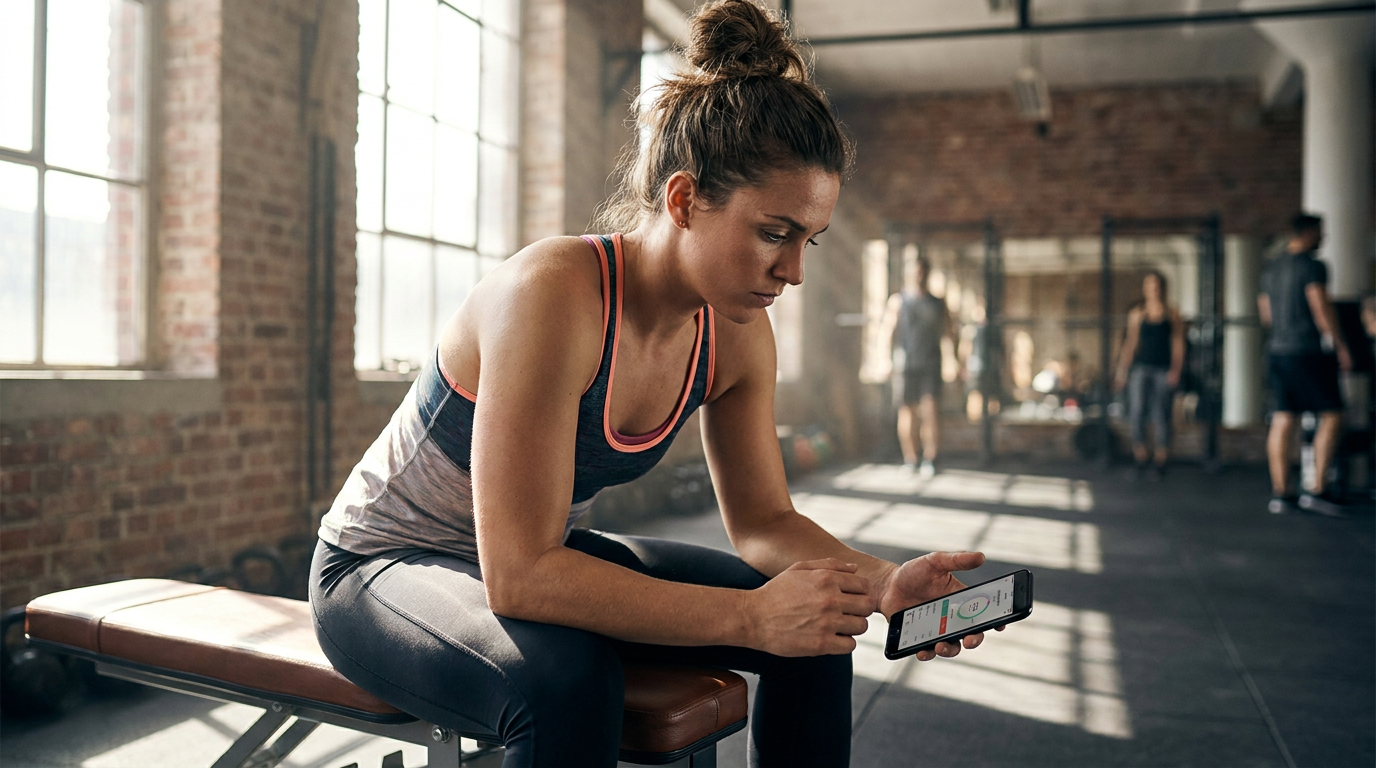
The rise of wearable technology is accelerating this individualized approach. Modern fitness trackers and smart rings can monitor subtle shifts in resting heart rate, heart rate variability (HRV), and basal body temperature. These biomarkers often fluctuate in tandem with the menstrual cycle, providing female athletes with a daily, personalized readiness score. This data bridges the gap between the calendar and the body, allowing for precise, day-to-day training adjustments.[1][6]
The realization that group-level performance remains relatively stable across the menstrual cycle is actually a massive victory for female representation in sports science. Historically, women were systematically excluded from exercise physiology research because scientists feared that hormonal fluctuations would "muddy" the data. This exclusion resulted in decades of sports science being based almost entirely on male cohorts.[2]
The new consensus—that the cycle's effect on objective performance is highly individual and statistically trivial at scale—means researchers no longer have a valid excuse to exclude women from general fitness studies. "There is a sigh of relief in the research community," noted one lead researcher, pointing out that women can now be seamlessly integrated into broad sports science research without the menstrual cycle invalidating the results.[2][3]

Ultimately, the science of hormonal periodization is evolving from a rigid set of rules into a tool for profound self-awareness. It has successfully shifted the industry narrative, forcing coaches and athletes to respect female physiology. While the menstrual cycle may not dictate a universal training program, tracking it provides women with the biological literacy needed to train smarter, recover better, and finally work with their bodies instead of against them.[4][6]
How we got here
Pre-2010s
Female athletes are largely excluded from sports science research due to the perceived complexity of the menstrual cycle.
2019–2021
Cycle syncing goes viral on social media, popularizing the idea of altering workouts based on hormonal phases.
2024–2025
Massive systematic reviews reveal that the menstrual cycle's impact on objective physical performance is statistically trivial at the group level.
2026
Elite strength and conditioning shifts away from rigid hormonal periodization toward symptom-based autoregulation and wearable tracking.
Viewpoints in depth
The Cycle-Syncing Advocates
Supporters of strict hormonal periodization argue that working with female biology prevents burnout.
This perspective emphasizes that estrogen and progesterone have profound, undeniable effects on metabolism, core temperature, and recovery. Advocates argue that pushing through the luteal phase with high-intensity interval training ignores the body's natural shift toward fat oxidation and increased cardiovascular strain. By deliberately deloading during high-progesterone days and pushing for personal records during the estrogen-rich follicular phase, they believe women can maximize long-term physiological adaptations while avoiding the overtraining syndrome that plagues many female athletes.
The Evidence-Based Sports Scientists
Researchers point to large-scale data showing that group-level physical performance does not change across the cycle.
Sports scientists caution against turning biological theory into rigid training dogma. They point to extensive network meta-analyses demonstrating that objective markers—such as VO2 max, Wingate power output, and maximal strength—remain remarkably stable regardless of the menstrual phase. From this viewpoint, prescribing a universal 'luteal deload' is not only unsupported by the data but actively harmful, as it unnecessarily restricts training volume. They stress that while the cycle matters, it should not be used as an excuse to artificially cap a female athlete's potential.
The Elite Coaches
Practitioners favor symptom-based autoregulation over rigid calendar tracking.
For strength and conditioning coaches working with elite rosters, the focus is entirely on practical application. They recognize that while the science shows trivial group-level differences, the individual athlete's experience of fatigue is very real. Instead of mapping out a 28-day periodization block, these coaches use daily readiness scores, heart rate variability, and the athlete's warm-up performance to dictate the session. This autoregulated approach respects the menstrual cycle as a vital piece of context without letting it dictate the entire training program.
What we don't know
- Exactly why some women experience severe performance-altering symptoms during their cycle while others experience none.
- The long-term impact of hormonal contraceptives on training adaptations compared to natural ovulatory cycles.
- How to perfectly isolate the effects of estrogen on tendon laxity from other biomechanical risk factors in ACL injuries.
Key terms
- Follicular Phase
- The first half of the menstrual cycle, starting on the first day of bleeding and ending with ovulation, characterized by rising estrogen.
- Luteal Phase
- The second half of the menstrual cycle, following ovulation, characterized by elevated progesterone and often associated with PMS symptoms.
- Autoregulation
- A training methodology that adjusts exercise volume and intensity on a daily basis according to an athlete's real-time physical and mental readiness.
- Estrogen
- A primary female sex hormone that, in a fitness context, acts as an anabolic agent to aid muscle repair and neuromuscular efficiency.
- Progesterone
- A hormone that dominates the luteal phase, known to increase core body temperature and cardiovascular strain during exercise.
Frequently asked
Should I stop lifting heavy during my luteal phase?
No. Research shows that objective strength capacity does not significantly drop during the luteal phase, though your perceived exertion might be higher.
Why are female athletes more prone to ACL injuries?
Estrogen peaks near ovulation, which can increase tendon laxity and alter joint mechanics, contributing to a 3 to 6 times higher risk of ACL tears compared to men.
Can I use hormonal periodization for a whole sports team?
Sports scientists advise against this, as cycle lengths and symptom severities are highly individual; a single protocol cannot fit an entire roster.
What is symptom-based autoregulation?
It is a flexible training approach where athletes adjust their daily workout intensity based on real-time readiness and fatigue, rather than a rigid calendar.
Sources
Source coverage
6 outlets
3 viewpoints surfaced






[1]MDPI SportsElite Coaches & Practitioners
Menstrual cycle-based training in endurance sports: A qualitative study on athlete perceptions
Read on MDPI Sports →[2]Medicine & Science in Sports & ExerciseEvidence-Based Sports Scientists
No Effect of Menstrual Cycle Phase on Physical Fitness in Female Endurance Athletes
Read on Medicine & Science in Sports & Exercise →[3]National Institutes of HealthEvidence-Based Sports Scientists
The Influence of Menstrual Cycle Phase on Exercise Performance: A Network Meta-Analysis
Read on National Institutes of Health →[4]ResearchGateElite Coaches & Practitioners
Menstrual Cycle Phase-Based Strength and Conditioning Training for Elite Team Sport Female Athletes
Read on ResearchGate →[5]Clue ScienceCycle-Syncing Advocates
How fluctuations of hormones across the menstrual cycle affect athletic performance
Read on Clue Science →[6]Factlen Editorial TeamElite Coaches & Practitioners
Synthesis by Factlen editorial team
Read on Factlen Editorial Team →
Every angle. Every day.
Get fitness stories with full source coverage and perspective breakdowns delivered to your inbox.