
The Science of Sourdough: How Wild Yeast and Bacteria Transform Flour and Water
Beneath the rustic crust of a sourdough loaf lies a complex microscopic ecosystem. A symbiotic community of wild yeast and lactic acid bacteria fundamentally alters the chemistry of the dough, unlocking nutrients and transforming its flavor.
By Factlen Editorial Team
- Food Microbiologists
- Focus on the complex symbiotic ecosystem of wild yeasts and lactic acid bacteria, viewing the starter as a dynamic microbial environment.
- Clinical Nutritionists
- Emphasize the measurable health outcomes, such as reduced FODMAPs, lowered glycemic index, and improved mineral bioaccessibility.
- Artisan Bakers
- Prioritize the practical application of fermentation science—manipulating temperature, hydration, and autolyse to achieve the perfect flavor profile and crumb structure.
What's not represented
- · Commercial Yeast Manufacturers
- · Gluten-Free Advocates
Why this matters
Understanding the biology and chemistry behind sourdough empowers home bakers to troubleshoot their loaves and manipulate flavor profiles. Furthermore, the scientifically proven health benefits—from lowered glycemic index to improved mineral absorption—make it a superior nutritional choice compared to commercial quick-rise breads.
Key points
- A sourdough starter is a symbiotic ecosystem consisting primarily of wild yeast and lactic acid bacteria.
- Lactic acid bacteria outnumber yeast cells by a ratio of roughly 100 to 1 in a healthy starter.
- The autolyse process uses natural enzymes to break down starches and develop a strong gluten network before kneading.
- Fermentation neutralizes phytic acid, significantly increasing the body's ability to absorb essential minerals from the flour.
- Sourdough bread has a lower glycemic index and reduced FODMAP levels, making it easier to digest than commercial bread.
Bread is humanity's oldest processed food, but naturally leavened sourdough has experienced a massive modern renaissance. Beyond the rustic aesthetic and the satisfaction of baking from scratch, a sourdough starter is a thriving, complex microscopic ecosystem.[7]
The fundamental ingredients of a starter are deceptively simple: just flour and water. Yet, when combined and left at room temperature, they become a nutrient-rich habitat for wild microorganisms that drift in from the environment and the flour itself.[2]
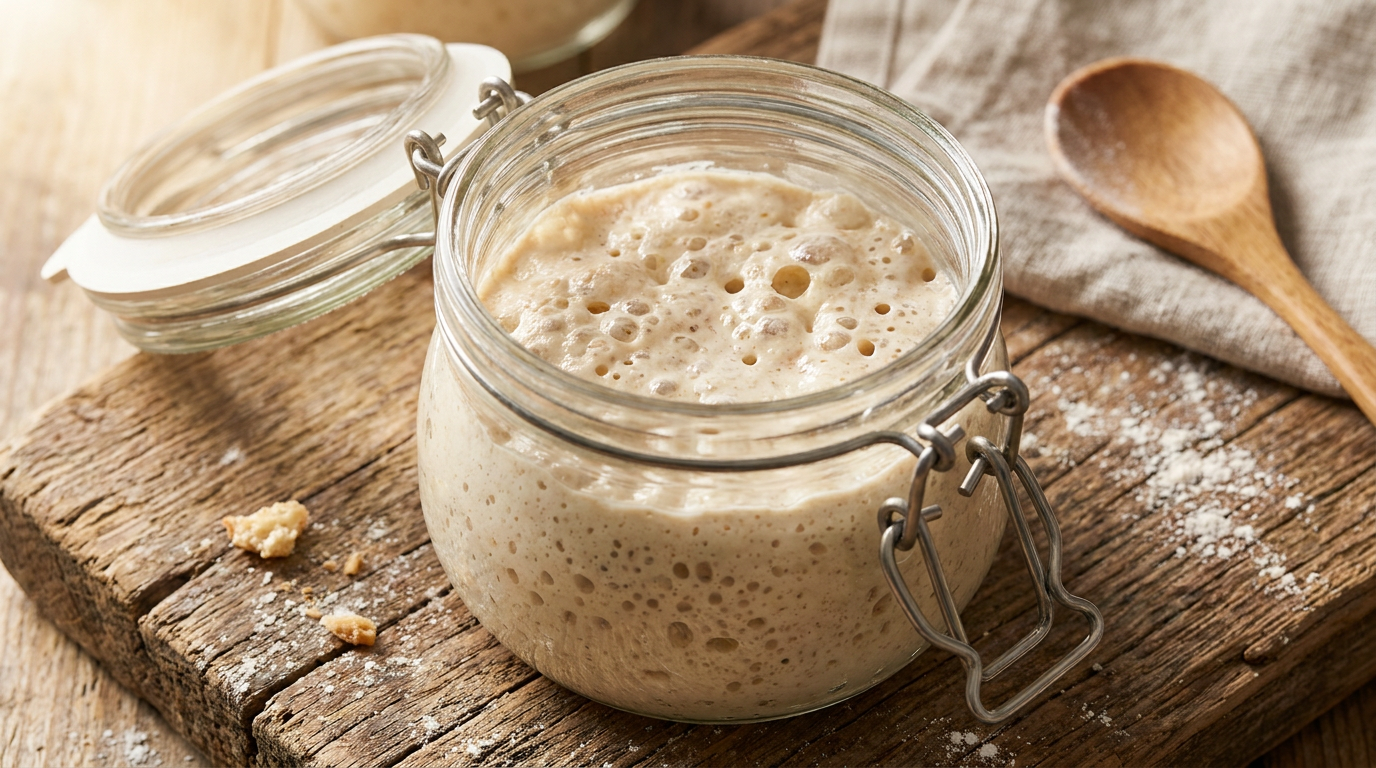
A mature sourdough starter is primarily composed of two distinct types of microbes working in tandem: wild yeast and lactic acid bacteria (LAB).[4]
Unlike commercial baker's yeast, which relies on a single, highly concentrated strain engineered for rapid rising, a wild starter is a diverse, competitive community. It functions more like a vibrant ecosystem than a sterile factory.[4]
The microbial balance is heavily skewed. In a healthy starter, for every single yeast cell, there are typically 100 lactic acid bacteria. This symbiotic relationship is the biological engine that drives the entire sourdough process.[2][4]

The wild yeast's primary job is leavening. It consumes simple sugars derived from the flour's starches and produces carbon dioxide gas and ethanol. The trapped gas creates the bubbles that cause the dough to rise and gives the bread its airy crumb.[4]
Meanwhile, the lactic acid bacteria are responsible for the bread's signature flavor profile and its profound structural transformations.[3][4]
LAB produces two main organic acids during fermentation. Lactic acid imparts a mild, yogurt-like tang, while acetic acid delivers a sharper, vinegary bite. The specific strains of bacteria present dictate the baseline flavor of the culture.[4]
Bakers can actively manipulate this flavor profile through environmental controls. Warmer temperatures and wetter doughs favor lactic acid production, resulting in a milder loaf. Conversely, cooler temperatures and stiffer starters encourage acetic acid, producing a noticeably sourer bread.[4]
Bakers can actively manipulate this flavor profile through environmental controls.
Before the fermentation process even reaches its peak, a critical physical and chemical step called 'autolyse' sets the stage for the dough's structure.[5]

Autolyse involves mixing only the flour and water and letting the mixture rest for anywhere from 30 minutes to several hours. During this period, enzymes inherent in the flour—specifically protease and amylase—awaken and begin their work.[5]
Amylase begins breaking down complex starches into the simple sugars that the yeast and bacteria will later consume, effectively pre-digesting the food source for the microbial community.[5]
Simultaneously, protease gently breaks down proteins, allowing the gluten network to hydrate and form naturally without aggressive mechanical kneading. This creates a dough that is highly extensible—meaning it can stretch without tearing—which is crucial for capturing the gas bubbles produced by the yeast.[5]

The intense fermentation process fundamentally alters the nutritional profile of the final loaf, leading to several evidence-backed health benefits that distinguish sourdough from quick-rise commercial breads.[1][3]
The first major benefit is mineral bioaccessibility. Whole grains are rich in essential minerals like zinc, magnesium, and iron, but these nutrients are often locked away by phytic acid, a naturally occurring anti-nutrient found in the bran.[1][2]
The highly acidic environment created by the lactic acid bacteria activates an enzyme called phytase. Phytase degrades the phytic acid, freeing the trapped minerals and making them readily available for human absorption during digestion.[2]
Second, sourdough fermentation significantly improves overall digestibility by reducing the levels of fermentable oligosaccharides, disaccharides, monosaccharides, and polyols—collectively known as FODMAPs.[1][3]
For individuals with irritable bowel syndrome (IBS) or general gut sensitivities, these specific carbohydrates can cause severe bloating and discomfort. The bacterial pre-digestion of FODMAPs makes sourdough a highly tolerable alternative for many who otherwise struggle with wheat products.[1][6]
Finally, the fermentation process plays a surprising role in blood sugar regulation. The organic acids produced by the LAB slow down gastric emptying and physically hinder the enzymes that metabolize starches in the human digestive tract.[1][3]
This mechanism results in a significantly lower glycemic index compared to standard commercial bread. Consuming sourdough leads to a slower, more sustained release of glucose, preventing the rapid spikes in blood sugar and insulin levels associated with highly processed carbohydrates.[1]

Despite these benefits, some popular health claims require nuance. While the raw starter is packed with beneficial probiotics, the high heat of the baking process kills these live microbes. Sourdough bread is not a probiotic food, though it does contain beneficial 'postbiotics.' Furthermore, while fermentation degrades some gluten proteins, the bread is absolutely not safe for individuals with celiac disease, even if those with mild non-celiac sensitivities find it easier to digest.[6][7]
How we got here
2000 BC
Ancient Egyptians discover the process of leavening bread using wild yeast and bacteria.
1857
French microbiologist Louis Pasteur officially discovers yeast's fundamental role in the fermentation process.
1971
Scientists formally identify Lactobacillus sanfranciscensis, a key lactic acid bacterium prevalent in sourdough starters.
2020
The global pandemic sparks a massive resurgence in home sourdough baking, driving renewed scientific interest in the microbiome.
Viewpoints in depth
Food Microbiologists
Viewing the starter as a complex, competitive microbial ecosystem.
Microbiologists study sourdough as a model ecosystem. They are less concerned with the final loaf and more fascinated by how different strains of wild yeast and lactic acid bacteria compete, cooperate, and establish dominance. They note that the exact microbial makeup of a starter is highly localized, influenced by the specific flour used, the ambient temperature, and even the microbes naturally present on the baker's hands.
Clinical Nutritionists
Focusing on the biochemical changes that improve human digestion and metabolic response.
Nutritionists highlight that fermentation is essentially a form of pre-digestion. By allowing bacteria to break down complex carbohydrates and neutralize anti-nutrients like phytic acid before the bread is even baked, the resulting food is significantly gentler on the human gastrointestinal tract. They emphasize the clinical data showing a blunted insulin response, making sourdough a safer carbohydrate choice for metabolic health.
Artisan Bakers
Applying scientific principles to manipulate flavor, texture, and crust.
For artisan bakers, the science is a tool for sensory perfection. They use their understanding of enzyme activity and bacterial metabolism to troubleshoot dough behavior. By adjusting hydration levels (stiff vs. liquid starters) and controlling ambient fermentation temperatures, they can intentionally steer the microbial community to produce either a mildly sweet, lactic-forward loaf or a sharply acidic, San Francisco-style sour.
What we don't know
- The exact degree to which the baker's own skin microbiome influences the long-term microbial makeup of a household starter.
- How different ancient grain varieties specifically alter the ratio of lactic to acetic acid production during fermentation.
- The precise clinical threshold at which sourdough fermentation renders gluten tolerable for individuals with non-celiac gluten sensitivity.
Key terms
- Lactic Acid Bacteria (LAB)
- Beneficial bacteria that ferment sugars into lactic and acetic acids, providing sourdough's tangy flavor and preserving the bread.
- Autolyse
- A resting period where only flour and water are mixed, allowing enzymes to hydrate and begin forming a gluten network before adding salt or starter.
- Phytic Acid
- A compound found in grain bran that binds to essential minerals, preventing their absorption in the human digestive tract.
- FODMAPs
- Specific types of fermentable carbohydrates that can cause severe digestive distress and bloating in individuals with sensitive guts or IBS.
- Extensibility
- The ability of bread dough to stretch without tearing, which is crucial for capturing gas bubbles and achieving an open, airy crumb.
Frequently asked
Does sourdough bread contain live probiotics?
No. While the raw starter is rich in live probiotics, the high internal temperature reached during baking kills the bacteria and yeast. However, the beneficial metabolic byproducts they create remain in the bread.
Is sourdough bread safe for people with celiac disease?
No. Although the long fermentation process breaks down a significant portion of the gluten proteins, it does not eliminate them entirely. It remains unsafe for celiac patients.
Why does my sourdough starter have a dark liquid on top?
This liquid, commonly known as 'hooch,' is a harmless mixture of alcohol and water produced during fermentation. It simply indicates that the starter has consumed its available food and needs to be fed.
Sources
Source coverage
7 outlets
3 viewpoints surfaced





[1]MDPIClinical Nutritionists
The effect of sourdough fermentation on the nutritional properties of sourdough bread
Read on MDPI →[2]National Institutes of HealthFood Microbiologists
Microbial Communities in Different Sourdough Starters
Read on National Institutes of Health →[3]Colorado State UniversityClinical Nutritionists
Digestibility and Health Benefits of Sourdough
Read on Colorado State University →[4]Knowable MagazineFood Microbiologists
The Science of Sourdough
Read on Knowable Magazine →[5]King Arthur BakingArtisan Bakers
Autolyse and Gluten Development
Read on King Arthur Baking →[6]Semantic ScholarClinical Nutritionists
Sourdough fermentation in Food Science and Technology
Read on Semantic Scholar →[7]Factlen Editorial TeamArtisan Bakers
Synthesis by Factlen editorial team
Read on Factlen Editorial Team →

Every angle. Every day.
Get food drink stories with full source coverage and perspective breakdowns delivered to your inbox.