
The Science of Reformer Pilates: Why the Spring-Loaded Workout is Dominating Longevity and Rehab
Recent clinical studies reveal how the variable resistance of Reformer Pilates improves athletic power, everyday mobility, and functional aging far beyond traditional mat exercises.
By Factlen Editorial Team
- Clinical & Rehabilitation Researchers
- Focus on evidence-based outcomes, emphasizing the Reformer's ability to improve balance, pelvic floor recovery, and functional mobility in older adults.
- Sports Science & Biomechanics
- Value the modality for developing core stiffness and neuromuscular control, while noting its limitations for maximal hypertrophy compared to heavy lifting.
- General Fitness & Wellness
- Highlight the accessibility, mental health benefits, and postural improvements that make the Reformer ideal for counteracting sedentary lifestyles.
What's not represented
- · Insurance Providers
- · Budget-Conscious Consumers
- · Traditional Physical Therapists
Why this matters
Understanding the mechanics of variable resistance can help you choose the right modality for injury recovery, athletic performance, or long-term joint health, potentially saving years of ineffective training.
Key points
- Reformer Pilates uses a spring-loaded carriage to provide variable resistance, challenging muscles dynamically throughout the entire movement.
- Clinical trials show the Reformer is significantly more effective than Mat Pilates for improving athletic agility and explosive power.
- The apparatus is highly effective for older adults, significantly improving balance and reducing fall risk by mimicking real-world functional demands.
- While excellent for core endurance and mobility, experts caution that Pilates cannot replace heavy weightlifting for maximal muscle hypertrophy.
Pilates is no longer confined to the periphery of the fitness world or reserved solely for dancers. In 2026, Reformer Pilates has cemented its place at the intersection of clinical rehabilitation, professional sports training, and everyday longevity. Moving far beyond aesthetic goals, the modality is increasingly prescribed by physical therapists and integrated into the strength and conditioning programs of elite athletes. This surge in popularity is not merely a trend; it is backed by a growing body of clinical evidence demonstrating profound effects on core stability, neuromuscular control, and functional mobility.[1]
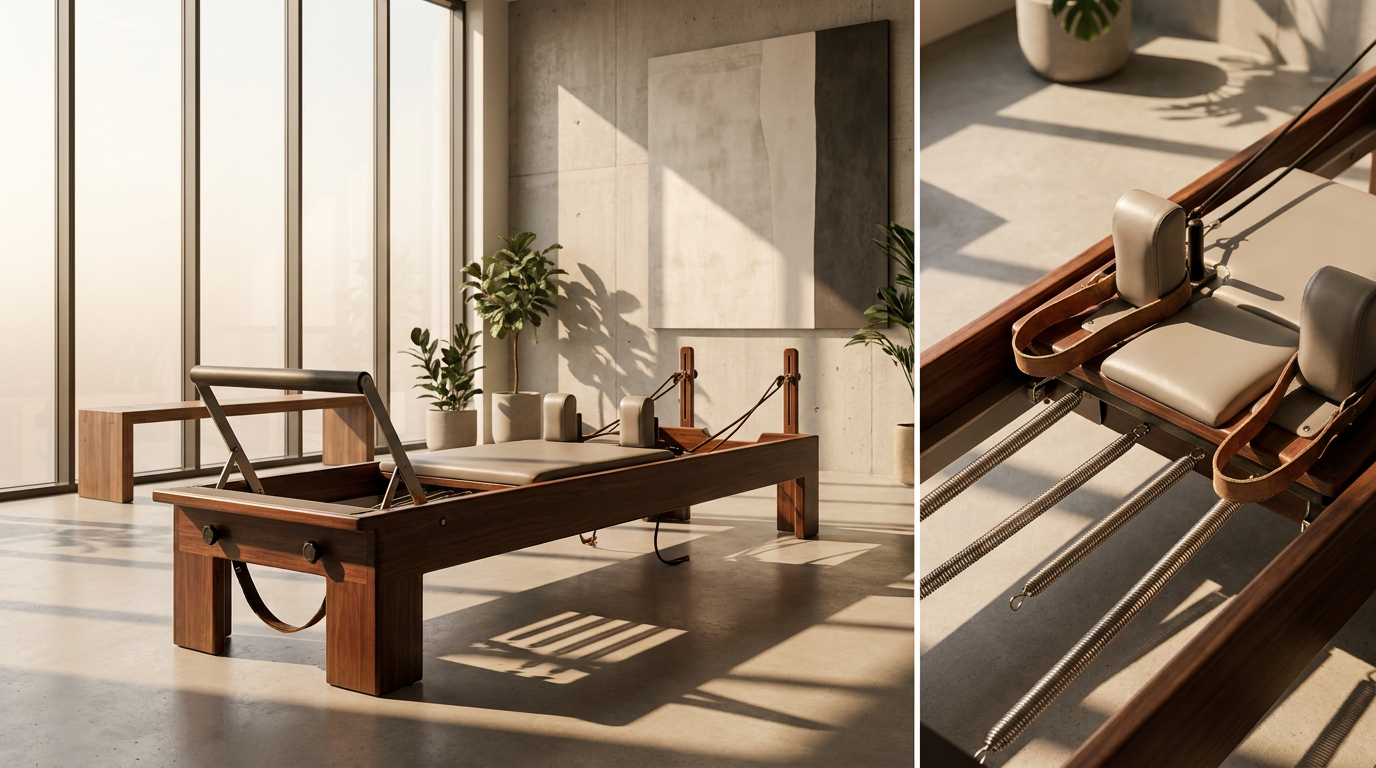
At the heart of this shift is the Reformer itself, a specialized apparatus developed by Joseph Pilates in the 1920s. Unlike traditional gym equipment that isolates single muscle groups, the Reformer consists of a sliding carriage tethered by a series of color-coded springs, straps, and pulleys. This design creates variable resistance, meaning the load changes dynamically throughout the entire range of motion. As the springs stretch, the resistance increases, forcing the body to control the deceleration phase of the movement just as rigorously as the exertion phase.[1][6]
This mechanical advantage explains the growing divergence in clinical outcomes between Mat Pilates and Reformer Pilates. While Mat Pilates relies entirely on body weight and gravity, the Reformer provides both assistance and progressive external loading. Recent analyses highlight that the machine's springs offer a unique stimulus that mechanistically promotes greater muscle adaptation. Because the apparatus can be adjusted to either support a weakened joint or challenge a highly conditioned athlete, it bridges the gap between early-stage physical therapy and high-performance athletic training.[2][6]
Professional sports teams are increasingly leveraging this precise external loading. A 2025 clinical trial examining amateur soccer players found that Reformer Pilates significantly outperformed Mat Pilates in enhancing athletic metrics. Players who trained on the apparatus demonstrated marked improvements in agility, short sprint times, and standing broad jumps. Researchers attributed these gains to the Reformer's ability to safely train explosive power and precise coordination through a wider, loaded range of movement than floor exercises can provide.[2][3]

For athletes, the primary benefit lies in the development of "core stiffness." In biomechanical terms, core stiffness is the ability of the trunk muscles to brace and stabilize the spine, preventing energy leaks when force is transferred between the lower and upper body. The guided motion of the Reformer trains the central nervous system to reflexively recruit deep stabilizing muscles—such as the transversus abdominis and multifidus—milliseconds before initiating limb movement. This neuromuscular re-education is critical for athletes who need to swing a racket, throw a ball, or change direction rapidly without compromising spinal integrity.[1][4]
However, the benefits of this neuromuscular training extend far beyond the athletic field. Everyday mobility and postural endurance are equally impacted. A 2026 report documenting the effects of sporadic Reformer use found that attending just two classes a month yielded a 13-point improvement in 3D mobility scans over six months. Participants recorded significant enhancements in shoulder flexion and squat depth, moving from restricted mobility ranges into optimal zones. The apparatus forces the body to prioritize hip mobility and shoulder engagement, counteracting the postural decay caused by prolonged sitting.[5]
However, the benefits of this neuromuscular training extend far beyond the athletic field.
As global fitness trends increasingly prioritize functional longevity over sheer muscle size, Reformer Pilates is proving particularly vital for older populations. The progressive resistance of the springs, combined with the postural challenge of stabilizing the moving carriage, closely mimics the demands of real-world activities. Unlike seated weight machines that artificially stabilize the user, the Reformer requires active balance and proprioception, making it highly effective for maintaining independence in later life.[1][7]
This translates directly into fall prevention, a critical metric in geriatric health. Systematic reviews of older adults aged 65 to 80 demonstrate that 12-week Reformer programs lead to statistically significant improvements in "timed-up-and-go" tests and self-reported balance confidence. By safely challenging the vestibular system and strengthening the stabilizing muscles of the ankle, knee, and hip under a controlled load, the apparatus directly mitigates one of the leading causes of injury in older demographics.[7]

Beyond mobility and balance, the external loading of the Reformer also influences body composition and metabolic health. A recent study focusing on overweight and obese women revealed that eight weeks of Reformer training significantly reduced body fat mass and waist-to-hip ratios compared to control groups. While Pilates is not traditionally viewed as a primary weight-loss tool, the continuous muscular tension required to control the carriage elevates the heart rate and increases overall metabolic demand, contributing to favorable changes in lean mass.[4]
The physiological benefits are deeply intertwined with psychological and nervous system regulation. Pilates demands intense concentration, breath control, and precise movement, effectively forcing the practitioner into a state of active mindfulness. This mind-body integration activates the parasympathetic nervous system, lowering cortisol levels and reducing the physical manifestations of stress. Clinical evidence shows that regular Reformer practice significantly reduces symptoms of anxiety and depression, yielding psychological benefits comparable to moderate aerobic exercise.[4][6]
In the realm of women's health, the Reformer has become a cornerstone of postnatal recovery. Clinical trials demonstrate that targeted, clinical Reformer work effectively improves pelvic-floor strength and reduces urinary incontinence. Furthermore, the controlled engagement of the deep abdominal fascia aids in closing diastasis recti—the separation of the abdominal muscles that frequently occurs during pregnancy. The machine allows new mothers to rebuild foundational core strength without subjecting vulnerable connective tissues to high-impact stress.[1][7]

Despite the overwhelming clinical support, sports scientists caution against viewing Reformer Pilates as a universal panacea. While the apparatus excels at building core endurance, mobility, and functional balance, its capacity to induce robust skeletal muscle hypertrophy remains heterogeneous. Reviews indicate that while the Reformer is better positioned than Mat Pilates to promote muscle growth due to its external loading, it cannot replace the heavy, progressive overload provided by traditional barbell or dumbbell training for maximal strength gains.[4]
Furthermore, for sports requiring peak force production or maximal explosive power—such as powerlifting or sprinting—Pilates must be viewed as a supplementary tool rather than a standalone regimen. It builds the stable foundation and movement efficiency required to lift heavy weights safely, but the sport-specific application of that strength requires dedicated, high-velocity training. Experts recommend integrating 2 to 3 Reformer sessions a week alongside cardiovascular work and heavy resistance training for a truly comprehensive fitness protocol.[1][4]
Ultimately, the science of 2026 confirms what practitioners have long observed anecdotally. By combining variable mechanical resistance with rigorous neuromuscular re-education, Reformer Pilates offers a uniquely adaptable tool for physical conditioning. Whether utilized to rehabilitate a spinal injury, extend the career of a professional athlete, or simply restore pain-free movement to a sedentary office worker, the apparatus provides a scientifically validated pathway to a more resilient and capable body.[1]
How we got here
1920s
Joseph Pilates develops the Reformer apparatus to rehabilitate bedridden patients and train dancers.
2004
Early observational studies begin documenting the flexibility and body composition benefits of Pilates in clinical settings.
2018
Systematic reviews confirm Pilates significantly reduces symptoms of anxiety and depressive mood across multiple trials.
2025
Clinical trials demonstrate Reformer Pilates outperforms Mat Pilates in enhancing athletic agility and explosive power.
2026
Advanced 3D mobility scans and longevity research cement Reformer Pilates as a primary tool for functional aging and joint health.
Viewpoints in depth
Clinical Rehabilitation View
Physical therapists value the Reformer for its ability to safely load joints and isolate deep stabilizing muscles.
For clinicians, the Reformer is a precision tool. Because the springs can be adjusted to provide assistance or resistance, therapists can safely load vulnerable joints without the high-impact stress of traditional weights. This makes it particularly valuable for postnatal recovery, where it aids in closing diastasis recti, and for older adults needing to improve proprioception and balance without risking a fall.
Athletic Performance View
Strength coaches utilize the apparatus for neuromuscular re-education and core stiffness, rather than primary strength building.
In elite sports, the Reformer is viewed as a supplementary modality that trains the nervous system. Coaches prioritize the 'core stiffness' it develops, which allows athletes to transfer power efficiently from their lower body to their upper body. However, sports scientists are clear that while Pilates builds the functional foundation, it must be paired with heavy, high-velocity resistance training to maximize explosive power and sprint speed.
General Wellness View
Everyday practitioners focus on the profound improvements in posture, mobility, and mental health.
For the general public, the appeal of the Reformer lies in its ability to counteract the physical decay of sedentary lifestyles. Practitioners consistently report rapid improvements in shoulder mobility, squat depth, and spinal alignment. Furthermore, the intense focus required to control the carriage acts as a form of active meditation, activating the parasympathetic nervous system and providing measurable reductions in anxiety and stress.
What we don't know
- The exact threshold of spring resistance required to trigger significant skeletal muscle hypertrophy in advanced trainees.
- How long the neuromuscular adaptations from Reformer Pilates persist if a practitioner stops training entirely.
- Whether the mental health benefits are derived primarily from the physical exertion or the mindful breathing techniques inherent to the practice.
Key terms
- Reformer
- A specialized Pilates machine featuring a sliding carriage, springs, and pulleys that provides variable resistance.
- Variable Resistance
- Resistance that changes continuously throughout a movement's range of motion, challenging muscles dynamically.
- Core Stiffness
- The ability of the trunk muscles to brace and stabilize the spine, allowing efficient force transfer between limbs.
- Hypertrophy
- The enlargement of an organ or tissue from the increase in size of its cells, commonly referring to muscle growth.
- Neuromuscular Re-education
- Training the nervous system to properly recruit and coordinate muscle firing patterns.
Frequently asked
Can Reformer Pilates replace weightlifting?
No. While it improves core endurance and functional strength, it does not provide the maximal external loading required for robust muscle hypertrophy or peak force production.
How often should I do Reformer Pilates to see results?
Clinical studies suggest 2 to 3 sessions per week for 8 to 12 weeks to achieve significant, measurable improvements in mobility, balance, and core strength.
Is Reformer Pilates safe for older adults?
Yes, when supervised by a qualified instructor. Research shows it significantly improves balance and reduces fall risk in adults aged 65 to 80 by safely challenging the vestibular system.
What makes the Reformer different from Mat Pilates?
The Reformer uses spring-loaded resistance, which provides both support for beginners and progressive external loading for advanced practitioners, leading to greater gains in power and agility.
Sources
Source coverage
7 outlets
3 viewpoints surfaced






[1]Factlen Editorial TeamSports Science & Biomechanics
Synthesis by Factlen editorial team
Read on Factlen Editorial Team →[2]Medical News TodayGeneral Fitness & Wellness
Reformer Pilates vs. Mat Pilates: Which is better?
Read on Medical News Today →[3]National Institutes of HealthClinical & Rehabilitation Researchers
Effects of reformer Pilates and mat Pilates on physical performance
Read on National Institutes of Health →[4]ResearchGateSports Science & Biomechanics
A Study on the Effects of an 8-Week Pilates Training Program on Athletic Performance and Core Strength
Read on ResearchGate →[5]Business InsiderGeneral Fitness & Wellness
Taking just two reformer Pilates classes a month helped me gain body awareness and stretch more often
Read on Business Insider →[6]HealthlineGeneral Fitness & Wellness
Reformer vs. Mat Pilates: Benefits, Differences, and More
Read on Healthline →[7]Pilates Method AllianceClinical & Rehabilitation Researchers
Clinical Evidence and Systematic Reviews on Pilates Interventions
Read on Pilates Method Alliance →

Every angle. Every day.
Get fitness stories with full source coverage and perspective breakdowns delivered to your inbox.