
The Science of Red Light Therapy: How Photobiomodulation Alters Cellular Health
Once confined to dermatology clinics, red light therapy has become a ubiquitous wellness trend. Clinical evidence shows that specific wavelengths of light can genuinely boost cellular energy, aiding in skin rejuvenation and chronic pain relief.
By Factlen Editorial Team
- Clinical Dermatologists
- Focus on the evidence for skin health but caution against overhyped, underpowered at-home devices.
- Pain Management Researchers
- Emphasize photobiomodulation's ability to reduce inflammation and modulate cellular energy for chronic pain relief.
- Wellness Advocates
- Champion the therapy as a safe, non-invasive tool for anti-aging, recovery, and overall cellular health.
What's not represented
- · Regulatory Agencies
- · Device Manufacturers
Why this matters
As at-home wellness devices flood the market, distinguishing between expensive fads and scientifically backed treatments is crucial. Understanding the cellular mechanics of red light therapy empowers consumers to make evidence-based decisions about managing chronic pain, accelerating recovery, and improving skin health without invasive procedures.
Key points
- Red light therapy, or photobiomodulation, uses specific light wavelengths to stimulate cellular energy production.
- The light is absorbed by the mitochondria, boosting the production of ATP, which fuels tissue repair and reduces inflammation.
- Clinical evidence strongly supports its use for skin rejuvenation, showing significant increases in collagen and reductions in acne.
- Emerging research highlights its effectiveness in managing chronic pain conditions like fibromyalgia and peripheral neuropathy.
- Dermatologists caution that while the science is real, at-home devices require months of consistent use to achieve modest results.
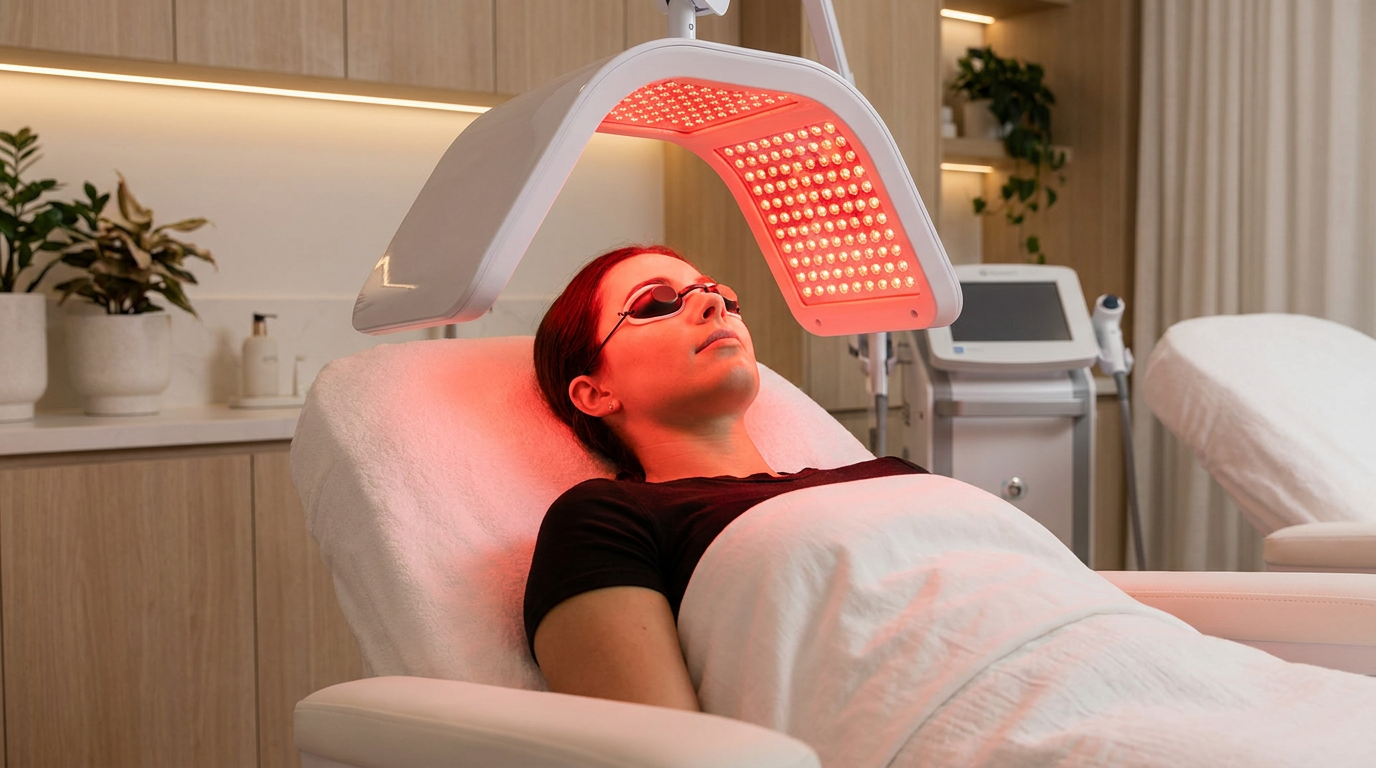
Red light therapy has officially migrated from the sterile confines of dermatology clinics to the living rooms of millions. Once a niche treatment reserved for elite athletes and clinical skincare professionals, glowing red panels and futuristic LED face masks are now ubiquitous wellness staples.
Proponents claim these devices can do everything from erasing wrinkles and clearing acne to soothing chronic joint pain and accelerating muscle recovery. In an era of overhyped wellness fads and instant-fix marketing, it is easy to dismiss the glowing red lights as just another expensive placebo.
But unlike many wellness trends, red light therapy—clinically known as photobiomodulation—is anchored in decades of biological research. While social media marketing often exaggerates the speed and scale of the results, a growing body of clinical evidence suggests that specific wavelengths of light genuinely alter human biology at the cellular level.
The science of photobiomodulation dates back to the 1960s, when researchers accidentally discovered that low-level laser exposure stimulated hair growth and accelerated wound healing in mice. Today, the mechanism is well understood by dermatologists and biologists: it all comes down to cellular energy.[1]

Red light therapy utilizes specific wavelengths of light—typically red light between 630 and 680 nanometers, and near-infrared light between 810 and 850 nanometers. Unlike ultraviolet (UV) light, which damages DNA and increases the risk of skin cancer, these longer wavelengths safely penetrate the skin without causing thermal damage or cellular mutation.[5]
When these specific wavelengths enter the body, they are absorbed by chromophores within the cells, particularly an enzyme called cytochrome c oxidase located in the mitochondria. The mitochondria are the powerhouses of the cell, responsible for producing adenosine triphosphate (ATP), the energy currency that fuels all biological functions.[1][7]
By stimulating the mitochondria, red and near-infrared light prompt the cell to produce more ATP. This surge in cellular energy allows the body to repair tissue, clear inflammation, and synthesize proteins much more efficiently than it could in a depleted or stressed state.[5]
The most robust clinical evidence for photobiomodulation lies in dermatology. Because visible red light penetrates the upper layers of the skin, it directly stimulates fibroblasts—the specialized cells responsible for producing collagen and elastin, which give skin its structure and firmness.
The most robust clinical evidence for photobiomodulation lies in dermatology.
A recent clinical trial demonstrated that participants using a targeted red light device twice weekly for three months saw a 38% reduction in the depth of crow's feet wrinkles and a 48% increase in dermal collagen density. Furthermore, a March 2025 meta-analysis published in JAMA Dermatology reviewed multiple studies and found that at-home LED devices reduced acne lesions by approximately 45% over four to eight weeks, largely by calming the inflammatory response.[6][7]

Beyond aesthetics, photobiomodulation is gaining serious traction in pain management and physical rehabilitation. Near-infrared light penetrates deeper than visible red light, reaching muscles, nerves, connective tissues, and even bone.
A comprehensive 2025 umbrella review analyzed 15 meta-analyses encompassing over 9,000 participants. The researchers found moderate-to-high quality evidence that red light therapy significantly improved outcomes for conditions like fibromyalgia, burning mouth syndrome, and osteoarthritis-related disability.[3]
Similarly, a 2026 review published by the National Institutes of Health highlighted photobiomodulation as a promising non-pharmacological intervention for chronic pain. The review noted its profound ability to reduce inflammation, modulate pain signaling, and promote tissue repair in patients suffering from peripheral neuropathy.[4]
Despite the promising data, medical professionals urge consumers to approach the consumer market with a healthy dose of skepticism. The explosion of at-home devices has led to a flood of cheap products that emit red-colored light but lack the specific therapeutic wavelengths or power output required to trigger a biological response.[2]

Dr. Raman Madan, a dermatologist with Northwell Health, cautions that the results from at-home devices are often "very, very modest" compared to the powerful clinical lasers used in medical offices. He notes that many patients develop unrealistic expectations fueled by aggressive social media marketing and influencer endorsements.[2]
Furthermore, photobiomodulation is not a quick fix. Unlike a painkiller that works in twenty minutes or a cosmetic injectable that shows results in days, red light therapy is a biological long-game. Clinical studies indicate that consistent use—typically three to five times a week for at least three to six months—is required to see meaningful structural changes in the skin or sustained pain relief.[1][2]
The safety profile of the therapy, however, is exceptionally strong. Across thousands of clinical trials, adverse events are exceedingly rare, with the most common side effect being mild, temporary skin redness. It is non-invasive, painless, and does not require any recovery time.[4][5]

Experts advise that consumers looking to invest in at-home devices should verify that the product emits the clinically backed wavelengths—around 660 nm for red and 850 nm for near-infrared—and has sufficient irradiance, or power output, to penetrate the skin effectively.[1][7]
Ultimately, red light therapy is a prime example of science and wellness intersecting. It is not a miracle cure that will replace healthy habits, medical care, or surgical interventions. But as a supplementary tool to support the body's natural cellular repair systems, the evidence suggests that stepping into the red light is a biologically sound investment.
How we got here
1967
A Hungarian physician accidentally discovers that low-level laser light stimulates hair growth and wound healing in mice.
1990s
NASA experiments with red LEDs to promote plant growth in space, later discovering it accelerates wound healing in astronauts.
2010s
Photobiomodulation transitions from expensive clinical lasers to accessible LED technology, sparking the at-home device market.
2025
Major umbrella reviews and meta-analyses consolidate decades of data, confirming efficacy for acne, wrinkles, and chronic pain.
Viewpoints in depth
Clinical Dermatologists
Focus on the evidence for skin health but caution against overhyped, underpowered at-home devices.
Dermatologists acknowledge the robust clinical data supporting photobiomodulation for collagen synthesis, wound healing, and acne reduction. However, they emphasize a stark difference between medical-grade clinical lasers and the flood of consumer LED masks. Medical professionals warn that many at-home devices lack the necessary irradiance to penetrate the skin effectively, leading to unrealistic expectations fueled by social media. They advocate for viewing the therapy as a long-term, modest supplement to traditional skincare rather than a miraculous overnight cure.
Pain Management Researchers
Emphasize photobiomodulation's ability to reduce inflammation and modulate cellular energy for chronic pain relief.
For researchers studying chronic conditions like fibromyalgia, osteoarthritis, and peripheral neuropathy, red light therapy represents a vital non-pharmacological tool. By utilizing near-infrared wavelengths that penetrate deep into muscle and nerve tissue, the therapy reduces inflammatory signaling and boosts cellular repair mechanisms. This camp points to massive umbrella reviews encompassing thousands of patients, arguing that photobiomodulation should be integrated into standard multimodal pain management strategies to reduce reliance on painkillers.
Wellness Advocates
Champion the therapy as a safe, non-invasive tool for anti-aging, recovery, and overall cellular health.
The wellness and biohacking communities view red light therapy as a foundational pillar of proactive health maintenance. Because the treatment is non-invasive, painless, and free of the risks associated with UV radiation or pharmaceuticals, advocates argue it should be a daily habit. They focus on the systemic benefits of optimizing mitochondrial function, highlighting anecdotal and clinical successes in athletic recovery, sleep optimization, and holistic anti-aging.
What we don't know
- The exact optimal dosing protocols (time, distance, and frequency) for specific conditions, as at-home devices vary wildly in power output.
- Whether long-term, daily use of high-powered at-home LED panels carries any unforeseen biological consequences over decades.
- The definitive efficacy of red light therapy for deeper systemic issues like dementia or weight loss, which currently lack robust clinical backing.
Key terms
- Photobiomodulation (PBM)
- The scientific term for using specific wavelengths of light to alter human biology and stimulate cellular function.
- Mitochondria
- The structures within cells that generate most of the chemical energy needed to power biochemical reactions.
- Adenosine Triphosphate (ATP)
- The primary molecule that stores and transfers energy within cells, often called the 'energy currency' of the body.
- Fibroblasts
- Cells in the connective tissue that produce collagen and other fibers, essential for skin elasticity and wound healing.
- Near-Infrared Light
- Invisible wavelengths of light (typically 810–850 nm) that penetrate deeper into the body than visible red light, reaching muscles and nerves.
Frequently asked
Does red light therapy actually work for wrinkles?
Yes. Clinical trials show that consistent use stimulates collagen production, leading to a measurable reduction in fine lines and improved skin firmness over several months.
Can I just use a regular red light bulb?
No. Therapeutic benefits require specific wavelengths (630-680 nm for red, 810-850 nm for near-infrared) and a specific power output that standard colored light bulbs do not provide.
How long does it take to see results?
Red light therapy is a biological process, not a quick fix. Most clinical studies indicate that it takes three to six months of consistent use to see significant structural changes.
Is it safe to use every day?
Yes, photobiomodulation is generally considered very safe and non-invasive, with no UV radiation. However, experts recommend following the specific dosing guidelines of your device.
Sources
Source coverage
7 outlets
3 viewpoints surfaced







[1]Stanford MedicineClinical Dermatologists
What's the deal with red light therapy?
Read on Stanford Medicine →[2]MedPage TodayClinical Dermatologists
Is Red Light Therapy More Hype Than Helpful?
Read on MedPage Today →[3]ExaminePain Management Researchers
Effects of photobiomodulation on multiple health outcomes: an umbrella review
Read on Examine →[4]National Institutes of HealthPain Management Researchers
Photobiomodulation in chronic pain management
Read on National Institutes of Health →[5]WebMDWellness Advocates
What Is Red Light Therapy?
Read on WebMD →[6]JAMA DermatologyClinical Dermatologists
Efficacy of Light Therapy for Acne Vulgaris: A Meta-analysis
Read on JAMA Dermatology →[7]Factlen Editorial TeamWellness Advocates
Synthesis by Factlen editorial team
Read on Factlen Editorial Team →

More in health
See all 9 stories →Dementia Research
The Shingles Vaccine Is Emerging as a Powerful Shield Against Dementia
7 sources

Exercise Mimetics
The Science of 'Exercise in a Pill': How New Longevity Drugs Mimic Physical Activity
7 sources

Brain Health
How Deep Sleep Washes the Brain: The Science of the Glymphatic System
7 sources
Longevity Science
The Postbiotic Promise: How Urolithin A Recycles Aging Cells
6 sources
Every angle. Every day.
Get health stories with full source coverage and perspective breakdowns delivered to your inbox.