
The Science of No-Dig Gardening: Why Leaving Soil Undisturbed Yields Better Plants
By abandoning the traditional spring rototiller, gardeners are preserving microscopic fungal networks that naturally fertilize plants and sequester carbon.
By Factlen Editorial Team
- Regenerative Growers
- Focus on the practical benefits of reduced labor and increased yields.
- Soil Microbiologists
- Emphasize the preservation of microscopic ecosystems and carbon sequestration.
- Traditional Horticulturists
- Acknowledge the benefits but note the logistical hurdles of sourcing compost.
What's not represented
- · Commercial Fertilizer Manufacturers
- · Large-Scale Industrial Farmers
Why this matters
Understanding soil biology transforms gardening from a labor-intensive battle against weeds into a self-sustaining ecosystem, saving you time while improving plant health and reducing carbon emissions.
Key points
- No-dig gardening involves layering compost on the surface rather than turning the soil.
- Traditional tilling destroys microscopic fungal networks that plants rely on for water and nutrients.
- Leaving soil undisturbed prevents dormant weed seeds from surfacing and germinating.
- Tilling releases sequestered carbon into the atmosphere, while no-dig methods keep it locked underground.
- New beds can be started instantly by laying cardboard over grass and topping it with compost.
For generations, the arrival of spring has been heralded by the rhythmic thrust of the garden spade and the roar of the rototiller. Turning the soil over, breaking up clods, and burying the remnants of last year's crops feels inherently productive. It is a ritual designed to aerate the earth and create a soft, welcoming bed for new seeds. Yet, a quiet revolution is taking root in backyards and market farms alike, challenging this ancient agricultural dogma.[2][8]
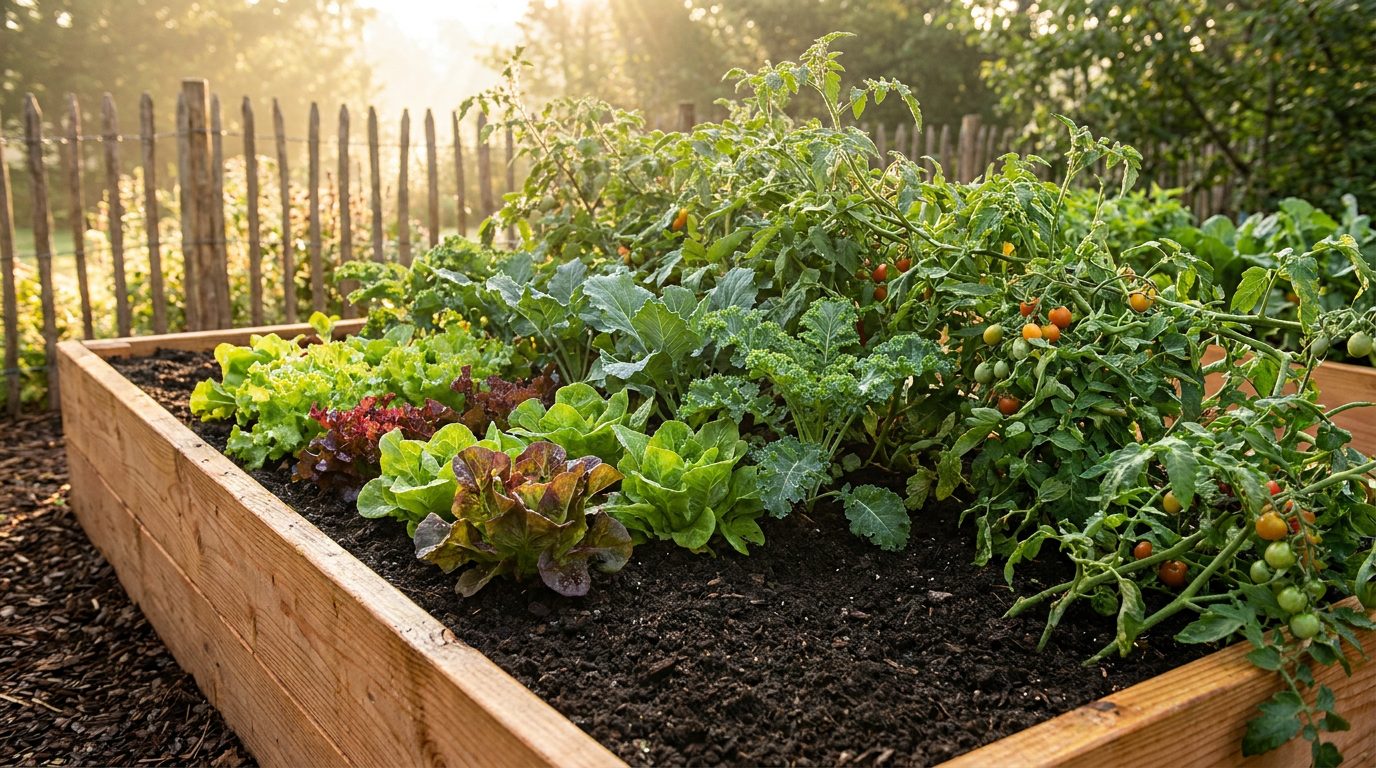
The movement is known as "no-dig" or "no-till" gardening. Instead of violently churning the earth, practitioners leave the soil entirely undisturbed. They build garden beds upward rather than digging downward, mimicking the natural accumulation of organic matter found on a forest floor. By layering compost directly onto the surface, gardeners are discovering that they can dramatically reduce their physical labor while simultaneously increasing their crop yields.[3][6]
At first glance, the premise sounds like a lazy gardener's excuse to avoid heavy lifting. However, the success of the no-dig method is anchored in complex soil microbiology. When we stop viewing soil as inert dirt and start treating it as a living ecosystem, the mechanics of plant growth fundamentally change. The secret lies in a microscopic world that is instantly destroyed the moment a spade slices through the earth.[1][7]
The most critical casualties of traditional digging are arbuscular mycorrhizal fungi (AMF). These microscopic fungal threads form a symbiotic relationship with approximately 80 to 90 percent of all terrestrial plant species. The fungi physically penetrate the roots of the plants, effectively acting as a massive secondary root system that extends far deeper and wider into the soil than the plant could ever reach on its own.[5][7]
This relationship is a biological trade agreement. Plants harness sunlight to produce carbon-rich sugars through photosynthesis, but they often struggle to extract enough water and essential minerals like phosphorus from the soil. The mycorrhizal fungi, lacking the ability to photosynthesize, are desperate for sugar. In exchange for a steady supply of carbohydrates from the plant, the fungal network mines the surrounding earth, pumping water and nutrients directly back into the plant's roots.[5][7]

Beyond nutrient delivery, these fungal networks literally hold the earth together. As the fungi grow, they secrete a sticky glycoprotein called glomalin. Discovered by scientists only in the late 1990s, glomalin acts as a biological glue. It binds tiny soil particles together into larger clumps known as soil aggregates. These aggregates create a porous, sponge-like soil structure that allows water to drain efficiently while retaining enough moisture to survive droughts.[4][5]
When a gardener rototills or double-digs a bed, they physically sever these delicate fungal networks and shatter the glomalin-bound aggregates. The soil structure collapses. Without the fungal highways to deliver nutrients, the plants become entirely dependent on the gardener to provide synthetic fertilizers and constant watering. The soil goes from being a self-sustaining ecosystem to a dependent patient on life support.[4][7]
When a gardener rototills or double-digs a bed, they physically sever these delicate fungal networks and shatter the glomalin-bound aggregates.
Tilling also triggers a massive, invisible release of carbon. When the soil is turned, a sudden influx of oxygen rushes into the earth. This oxygen fuels a population explosion of aerobic bacteria, which rapidly consume the organic matter stored in the soil. As they feast, they exhale carbon dioxide, venting sequestered carbon straight into the atmosphere. In a no-till system, that carbon remains locked safely underground, feeding the microbial life that sustains the garden.[4][7]
The practical benefits of leaving the soil alone extend to weed control—often the most dreaded chore in horticulture. Traditional digging constantly churns dormant weed seeds up to the surface, where exposure to sunlight triggers them to germinate. By refusing to turn the soil, the vast majority of weed seeds remain buried in the dark. The few weeds that do manage to sprout in the loose surface compost are easily plucked out by hand.[2][6]
Transitioning to a no-dig system is surprisingly straightforward, utilizing a technique often called sheet mulching or "lasagna gardening." To convert a patch of lawn or a weed-choked plot, the gardener simply mows the existing vegetation down to the ground and covers the area with a layer of plain, unwaxed brown cardboard. The cardboard acts as a temporary light barrier, smothering the grass and weeds below.[3][6]

Over the cardboard, the gardener applies a thick layer—typically four to six inches—of rich, weed-free compost. There is no need to wait for the cardboard to decompose; seeds and vegetable transplants can be planted directly into the compost layer on the very first day. Over the next few months, the cardboard naturally breaks down, allowing the new plant roots to push through into the native soil below, which has been softened by the activity of earthworms.[3][6]
Earthworms are the unsung heroes of the no-dig garden. Drawn upward by the rich compost on the surface, they constantly tunnel back and forth, naturally aerating the soil and pulling organic matter down into the lower layers. Their tunneling does the work of a rototiller, but at a microscopic, gentle pace that preserves the fungal networks and soil structure.[2][8]
Maintaining a no-dig garden requires minimal effort. At the end of the growing season, the gardener simply cuts the dead plants off at the soil level, leaving the roots in the ground to decompose and feed the soil biology. Then, a fresh one-inch layer of compost is spread over the surface to replenish the organic matter for the following spring.[3][6]
The results are not merely anecdotal. Pioneers of the method, such as British market gardener Charles Dowding, have conducted rigorous side-by-side trials for decades. Dowding's meticulously documented harvests consistently show that his no-dig beds produce higher yields, suffer from fewer pests, and require a fraction of the watering and weeding compared to his traditionally dug control beds.[6][8]

However, the method is not without its initial hurdles. The primary challenge is sourcing the sheer volume of compost required to establish the beds in the first year. For a large garden, purchasing high-quality, weed-free compost can be a significant upfront expense. Additionally, in colder climates, heavily mulched no-dig soils can take slightly longer to warm up in the early spring compared to bare, tilled earth.[8]
Despite these initial logistical challenges, the long-term compounding benefits are undeniable. By stepping back and allowing the subterranean ecosystem to function as nature intended, gardeners are rewarded with resilient, highly productive plots. The no-dig philosophy represents a profound shift in perspective: the realization that the most important crop a gardener tends is not the vegetables above the ground, but the microscopic life thriving beneath it.[1][3]
Viewpoints in depth
Regenerative Growers
Focus on the practical benefits of reduced labor and increased yields.
Practitioners of no-dig gardening argue that nature never tills its own soil. By mimicking the natural accumulation of organic matter found on a forest floor, growers can drastically reduce the physical toll of farming. They point to decades of side-by-side crop trials demonstrating that undisturbed soil retains moisture better during droughts and produces consistently higher yields with fewer weed interventions.
Soil Microbiologists
Emphasize the preservation of microscopic ecosystems and carbon sequestration.
From an ecological perspective, mechanical tilling is viewed as a catastrophic event for soil biology. Microbiologists highlight that digging physically severs the delicate mycorrhizal fungal networks essential for plant immunity and nutrient uptake. Furthermore, they emphasize the climate implications: tilling introduces oxygen that accelerates bacterial decomposition, venting massive amounts of sequestered carbon dioxide into the atmosphere.
Traditional Horticulturists
Acknowledge the benefits but note the logistical hurdles of sourcing compost.
While widely supportive of the no-dig philosophy, traditional horticultural groups note that the method requires a massive initial volume of compost to establish the beds. For urban gardeners or those with large plots, sourcing enough high-quality, weed-free organic matter can be prohibitively expensive. They maintain that light, targeted digging still has a place for removing aggressive perennial weeds or initially breaking up severely compacted construction fill.
What we don't know
- The exact timeline for heavily compacted urban soils to fully regenerate their fungal networks under a no-dig system.
- How the long-term accumulation of compost might affect the pH balance of specific regional soil types over multiple decades.
Key terms
- Arbuscular Mycorrhizal Fungi (AMF)
- Microscopic fungi that penetrate plant roots, forming a symbiotic network that exchanges soil nutrients and water for plant sugars.
- Glomalin
- A glue-like protein secreted by soil fungi that binds soil particles together, improving drainage and storing carbon.
- Soil Aggregates
- Clumps of soil particles bound together by organic matter and fungal threads, essential for healthy root growth and water retention.
- Sheet Mulching
- A technique of layering cardboard and organic matter over existing grass or weeds to create a new planting bed without digging.
Frequently asked
Can I start a no-dig garden over existing grass?
Yes. By laying down plain brown cardboard directly over the grass and covering it with four to six inches of compost, the grass is smothered and eventually breaks down into the soil.
Do I need to buy fertilizer for a no-dig garden?
Generally, no. The undisturbed soil biology, specifically the mycorrhizal fungi, efficiently mines nutrients from the earth, while the annual compost mulch provides a steady supply of organic matter.
What if my soil is heavy clay?
No-dig is highly effective on clay. Instead of trying to dig and break up the heavy soil, the surface compost encourages earthworms to naturally aerate and improve the clay structure from the top down.
How do I deal with weeds without digging?
The thick compost layer smothers existing weeds, and because the soil isn't turned, dormant weed seeds remain buried in the dark where they cannot germinate.
Sources
Source coverage
8 outlets
3 viewpoints surfaced








[1]Factlen Editorial TeamSoil Microbiologists
Synthesis by Factlen editorial team
Read on Factlen Editorial Team →[2]Royal Horticultural SocietyTraditional Horticulturists
No-dig gardening
Read on Royal Horticultural Society →[3]Soil AssociationTraditional Horticulturists
What is no-dig gardening?
Read on Soil Association →[4]MDPI AgronomySoil Microbiologists
Glomalin and Soil Aggregation under Zero Tillage
Read on MDPI Agronomy →[5]Sustainable Food TrustSoil Microbiologists
Mycorrhizae and soil structure
Read on Sustainable Food Trust →[6]Charles DowdingRegenerative Growers
Beginner's Guide to No Dig
Read on Charles Dowding →[7]No-Till FarmerRegenerative Growers
The Science Behind Mycorrhizal Fungi
Read on No-Till Farmer →[8]National Allotment SocietyTraditional Horticulturists
To Dig or Not to Dig? That is the Question
Read on National Allotment Society →
Every angle. Every day.
Get home stories with full source coverage and perspective breakdowns delivered to your inbox.