
The Science of Neuroaesthetics: How Interior Design is Being Rewired for Brain Health
Architects and neuroscientists are teaming up to design homes that actively lower cortisol and heal the nervous system. By measuring how the brain responds to light, texture, and geometry, the emerging field of neuroaesthetics is turning interior design into preventative mental healthcare.
By Factlen Editorial Team
- Neuroscience Researchers
- Scientists focused on quantifying the biological impact of the built environment using empirical data.
- Architectural Designers
- Practitioners focused on translating biological data into livable, functional spaces.
- Holistic Wellness Advocates
- Advocates viewing the home as a vital tool for emotional regulation and mental health.
What's not represented
- · Low-income housing developers
- · Renters with limited control over their spaces
Why this matters
With people spending up to 90% of their lives indoors, chronic sensory overload has become a hidden driver of stress and fatigue. Understanding how your home's lighting, acoustics, and shapes affect your biology empowers you to create a space that actively restores your mental health.
Key points
- Neuroaesthetics is the scientific study of how the built environment impacts the human nervous system.
- Biometric studies show that thoughtful interior design can lower stress hormones by up to 20%.
- Biophilic design uses natural materials and fractal patterns to induce a calming, meditative brain state.
- Biodynamic lighting that mimics the sun's natural progression is crucial for maintaining healthy circadian rhythms.
- Curvilinear furniture and varied ceiling heights can be used to subtly alter cognition and promote feelings of safety.
Have you ever walked into a room and felt your shoulders instantly drop? For decades, the interior design industry dismissed that feeling as a matter of subjective taste—a superficial choice between velvet or linen, minimalist or maximalist. The success of a space was judged almost entirely on its visual appeal and how well it photographed. But a rapidly growing scientific discipline is proving that our reaction to a room is not just an aesthetic preference; it is a biological imperative.[6]
Welcome to neuroaesthetics, the interdisciplinary study of how the built environment interacts with the human nervous system. By merging neuroscience, evolutionary biology, and architecture, researchers are uncovering exactly how our brains process beauty and spatial design. They are finding that every choice made in a room—from the texture of the floorboards and the acoustic dampening of the walls, to the angle of the furniture—acts as a sensory input that triggers a measurable cascade of physiological responses. It is a shift from designing for the eye to designing for the brain.[1]
The field gained traction as brain-scanning technology advanced, allowing scientists to observe human reactions in real-time. Today, researchers utilize functional MRI machines, EEG headsets, and biometric sensors to track how different environments alter our biology. They can monitor heart rates slowing, blood pressure dropping, and stress hormones decreasing simply by changing the physical characteristics of a room. This empirical data is fundamentally rewiring how architects approach residential design.[1]
"Today we use the term neuroarchitecture to describe how the brain and body behave in buildings," explains Eve Edelstein, a pioneer in the field and director at the design firm Perkins & Will. "Our brain's senses, perceptions, thoughts, emotions and actions respond to the air we breathe, the quality of light, the intensity of sound and the color, texture and dimension of all places." The home is no longer just a shelter; it is an active participant in our physical health.[2]

The stakes for this kind of design are surprisingly high. Modern urban living keeps the human body in a state of permanent sensory overload. An excess of visual stimuli, harsh artificial lighting, and unpredictable background noise places chronic strain on the nervous system. This constant low-level stress keeps the amygdala—the brain's threat-detection center—on high alert, elevating cortisol levels and preventing the deep relaxation required for natural cellular regeneration.[5]
To demonstrate how profoundly interiors affect our biology, a landmark 2019 experiment in Milan called "A Space for Being" outfitted visitors with biometric wristbands. The installation, a collaboration between Google, Johns Hopkins University, and design studios, invited guests to move through three differently designed rooms. As they explored, the wearable technology silently tracked their heart rates, skin temperatures, and breathing patterns to see which environment put their bodies most at ease.[3]
The data confirmed what neuroscientists had long suspected: specific spatial configurations can actively heal the nervous system. Thoughtfully designed spaces have been shown to decrease stress hormones by up to 20%, lower heart rates, and trigger the release of serotonin and dopamine. When a space feels "right," it is because the brain is releasing the exact same neurochemicals associated with falling in love or listening to a beautiful piece of music.[1][3]
The data confirmed what neuroscientists had long suspected: specific spatial configurations can actively heal the nervous system.
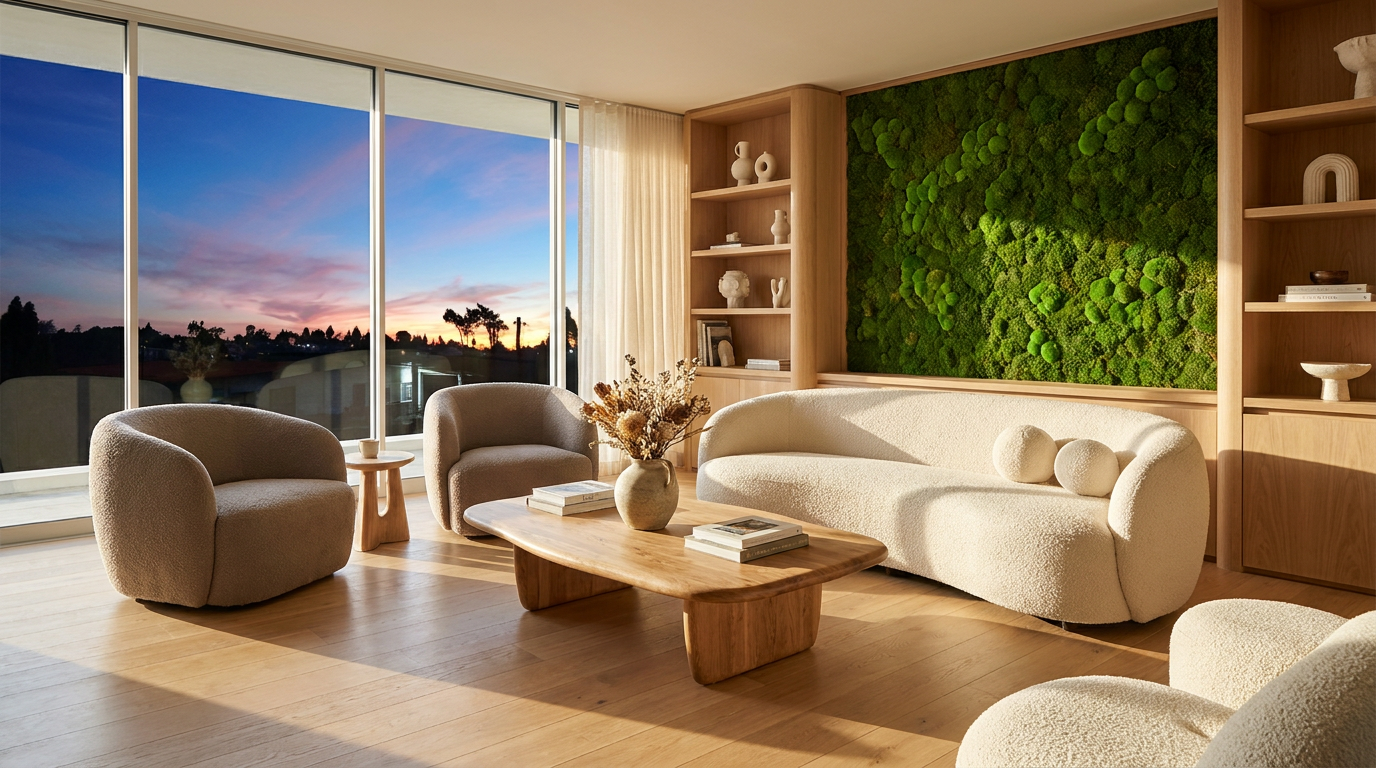
One of the most powerful tools in the neuroaesthetic arsenal is biophilic design. Because the human nervous system evolved outdoors over millions of years, our brains are hardwired to seek out natural elements. When we are trapped in grey, enclosed boxes devoid of natural life, our biology registers a subtle, persistent distress. Integrating nature into the home signals safety to the primitive brain, allowing it to drop its defensive posture, lower its guard, and enter a state of profound calm.[4]

However, effective biophilic design goes far beyond simply adding a potted plant to a corner. It involves incorporating "fractals"—the complex, repeating geometric patterns found in leaves, ocean waves, and tree branches. Exposure to these fractal-rich environments induces a mild meditative state, allowing the mind to wander without becoming overwhelmed. Designers are now weaving these organic patterns into wallpaper, textiles, and architectural details to mimic the restorative complexity of the forest floor.[1][6]
The physical materials we choose to surround ourselves with also play a critical neurological role. A recent interdisciplinary review of sustainable architecture highlighted how natural, untreated materials like wood, bamboo, and cork provide multisensory stimuli that actively benefit the brain. These materials engage our tactile and olfactory senses, activating brain regions involved in emotional regulation and attention far more effectively than synthetic alternatives. The inherent imperfections in natural materials give the brain exactly the right amount of information to process.[4]
Touching natural textures, or even just looking at organic wood grain, has been associated with reduced neuroinflammation and lower heart rates compared to interacting with flat, glossy, manufactured surfaces. The tactile engagement of a space—the way a stone countertop feels under the hand or how a cork floor yields slightly underfoot—is just as important to our neurological well-being as the room's visual color palette.[4]
Then there is the invisible architecture of light. Our circadian rhythms are deeply tied to the progression of the sun, yet modern homes are often bathed in static, artificial light that disrupts our biological clocks. "To not be exposed to blue light, or too much light, in the evening is crucial for a healthy circadian rhythm, which affects your sleep, your mood and even your eating habits," notes Itai Palti, director of the science-informed design practice Hume.[2]

To combat this, neuroarchitects advocate for "biodynamic lighting" systems that emulate the shifting color temperature of the sun. These systems provide bright, cool, blue-toned light in the morning to stimulate cortisol for alertness, and gradually fade to warm, dim amber tones in the evening to promote melatonin production. By aligning the home's lighting with the body's natural rhythms, designers can drastically improve sleep quality and daily energy levels.[2][6]
Geometry and spatial layout also shape our psychology in profound ways. Functional imaging studies reveal that curvilinear spaces and rounded furniture activate the brain's pleasure centers, generating an unconscious sense of safety and refuge. Sharp angles, harsh edges, and highly complex, cluttered layouts, conversely, can subtly trigger the brain's threat-detection systems, making occupants feel inexplicably on edge. By softening the physical contours of a room, designers can immediately lower the baseline anxiety of anyone who enters the space.[1][6]
Even the height of a ceiling can alter human cognition. Research indicates that high ceilings encourage visuospatial exploration, promoting abstract, creative thinking and a sense of freedom. Lower ceilings, on the other hand, narrow our visual focus, making them ideal for spaces dedicated to detail-oriented, analytical tasks or intimate conversation. By varying ceiling heights, designers can subtly cue the brain for different types of activities.[6]

Ultimately, the goal of neuroaesthetics is to transform the home into a true "sensory sanctuary." By intentionally designing spaces that quiet the nervous system, filter out modern overstimulation, and reconnect us with our evolutionary roots, we can create environments that do more than just store our belongings. We can build homes that actively restore our minds, proving that beauty, comfort, and biological wellness are fundamentally inseparable components of a life well-lived. As this science becomes mainstream, the question will no longer be whether a room looks good, but whether it feels healing.[5][6]
How we got here
1950s
Jonas Salk partners with architect Louis Kahn, realizing that the design of his research institute directly influences scientific creativity.
1990
Neurobiologist Semir Zeki pioneers the formal study of neuroaesthetics, mapping how the brain processes beauty.
2019
Google and Johns Hopkins debut 'A Space for Being' at Milan Design Week, using wearables to prove interiors alter biometrics.
2026
Neuroarchitecture moves from experimental labs into mainstream residential design, driven by post-pandemic wellness demands.
Viewpoints in depth
Neuroscience Researchers
Scientists focused on quantifying the biological impact of the built environment.
For neuroscientists, the home is a laboratory of sensory inputs. Using fMRI scans, EEG headsets, and biometric wearables, this camp is moving interior design away from subjective art and into empirical science. They argue that because our brains are constantly processing spatial geometry, lighting, and acoustics, poor design is a public health issue that contributes to chronic stress. Their goal is to establish universal, data-backed design principles that reliably lower cortisol and boost serotonin across all demographics.
Architectural Designers
Practitioners focused on translating biological data into livable, functional spaces.
Architects and interior designers are using neuroaesthetic research to validate their intuitive practices while developing new frameworks for building. This camp emphasizes practical application: integrating biodynamic lighting systems, sourcing acoustic dampening materials, and utilizing curvilinear furniture to soften harsh floor plans. They argue that while the science is complex, the execution must feel effortless and invisible to the homeowner, resulting in spaces that are intuitively comforting rather than clinically optimized.
Holistic Wellness Advocates
Advocates viewing the home as a vital tool for emotional regulation and mental health.
This perspective views the modern world as fundamentally overstimulating and positions the home as the ultimate 'sensory sanctuary.' Wellness advocates focus heavily on biophilic design, arguing that reconnecting with nature through organic textures, indoor greenery, and fractal patterns is essential for evolutionary alignment. They emphasize that neuroaesthetics shouldn't just be for luxury builds, but should inform everyday choices—like decluttering and adjusting lighting—to help individuals actively manage anxiety and find daily refuge.
What we don't know
- How different neurodivergent populations might require entirely different neuroaesthetic baselines compared to neurotypical individuals.
- The long-term longitudinal health outcomes of living in a fully optimized neuroaesthetic home versus a traditional build over a span of decades.
Key terms
- Neuroaesthetics
- The scientific study of how the brain and nervous system respond to aesthetic experiences and beauty.
- Biophilic Design
- An architectural approach that connects occupants to the natural environment through direct nature, natural materials, and organic patterns.
- Fractals
- Complex, repeating geometric patterns found in nature (like ferns or snowflakes) that have been shown to induce meditative brain states.
- Circadian Lighting
- Artificial lighting systems designed to mimic the natural progression of sunlight to support the body's sleep-wake cycle.
- Galvanic Skin Response
- A biometric measurement of the skin's electrical resistance, used by researchers to detect subconscious stress or relaxation.
Frequently asked
Do I need a massive budget to apply neuroaesthetics?
No. While custom biodynamic lighting can be expensive, fundamental principles like decluttering, maximizing natural light, and adding house plants or natural textures are highly accessible.
How does ceiling height actually affect the brain?
Research shows that high ceilings promote visuospatial exploration, encouraging abstract and creative thinking, while lower ceilings narrow visual focus, aiding in detail-oriented, analytical tasks.
Why are curved shapes considered better than sharp edges?
Functional MRI studies reveal that sharp angles can subtly trigger the amygdala—the brain's threat-detection center—while curvilinear forms activate pleasure and safety networks.
Can interior design really lower my heart rate?
Yes. Biometric studies confirm that environments rich in natural materials, soft acoustics, and biophilic patterns can measurably reduce cortisol levels, lower blood pressure, and slow the heart rate.
Sources
Source coverage
6 outlets
3 viewpoints surfaced






[1]Science in DesignNeuroscience Researchers
Neuroaesthetics for Interior Designers
Read on Science in Design →[2]HouzzArchitectural Designers
How to Design a Home That Boosts Well-Being
Read on Houzz →[3]Connections by FinsaArchitectural Designers
Neuroaesthetics in interior design
Read on Connections by Finsa →[4]ResearchGateNeuroscience Researchers
Neuroarchitecture and Mental Health: The Role of Sustainable Building Materials in Cognitive and Emotional Well-Being
Read on ResearchGate →[5]NeurotecturaHolistic Wellness Advocates
Designing Calm: How Neuroarchitecture Can Transform Your Home
Read on Neurotectura →[6]Factlen Editorial TeamNeuroscience Researchers
Synthesis by Factlen editorial team
Read on Factlen Editorial Team →
Every angle. Every day.
Get home stories with full source coverage and perspective breakdowns delivered to your inbox.