
The Science of Koji: How an Ancient Mold is Transforming the Modern Home Kitchen
Aspergillus oryzae, the domesticated fungus behind soy sauce and miso, is stepping out of commercial vats and into home pantries. By harnessing powerful enzymes, it naturally tenderizes proteins and unlocks massive umami flavor in everyday cooking.
By Factlen Editorial Team
- Culinary Scientists
- Focus on the precise enzymatic breakdown and chemical reactions that create umami and caramelization.
- Home Cooking Advocates
- Emphasize the accessibility, ease of use, and practical applications of shio koji in everyday meals.
- Professional Chefs
- Focus on pushing the boundaries of traditional fermentation to create novel textures and rapid-aging techniques.
What's not represented
- · Industrial Food Manufacturers
- · Traditional Japanese Sake Brewers
Why this matters
Understanding how koji works allows home cooks to harness professional-level food science in their own kitchens. By utilizing these natural enzymes, anyone can dramatically improve the flavor, tenderness, and nutritional profile of their everyday meals without relying on ultra-processed additives.
Key points
- Aspergillus oryzae, or koji, is a domesticated mold that has powered East Asian fermentation for millennia.
- Shio koji is a simple, home-friendly marinade made by fermenting rice koji with salt and water.
- The mold produces protease enzymes that break down proteins into umami-rich amino acids.
- Amylase enzymes convert complex starches into simple sugars, aiding in rapid caramelization.
- Unlike acidic marinades, shio koji tenderizes meat gradually without turning the texture mushy.
- The ingredient is increasingly used in plant-based cooking to add savory depth to vegetables and tofu.
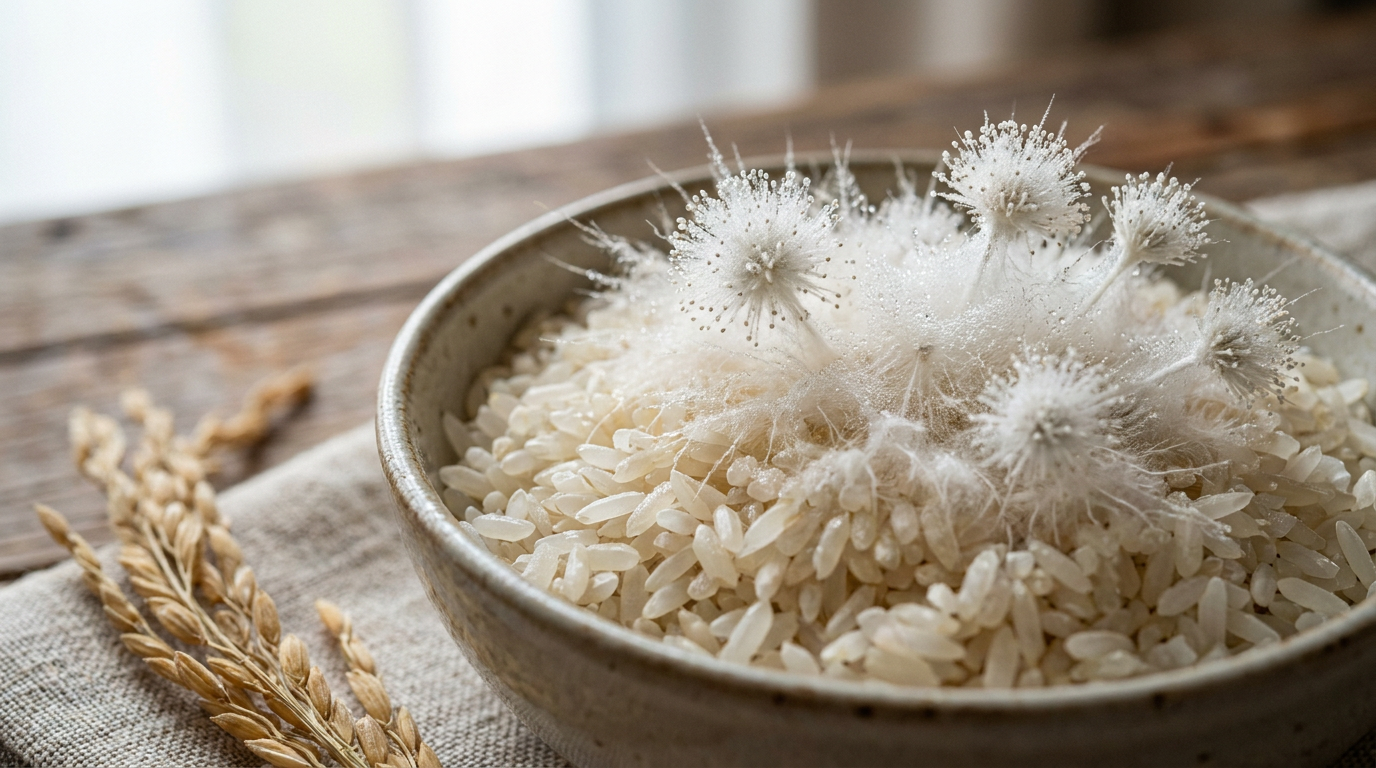
The quest for restaurant-quality flavor at home usually leads cooks to rely heavily on butter, salt, or commercial MSG. But a quiet revolution is currently taking place in modern pantries, driven by a fluffy, unassuming white fungus. This biological powerhouse is fundamentally changing how everyday people approach flavor development, offering a natural, ancient method for unlocking massive savory depth in standard weeknight dinners. By bridging the gap between high-end gastronomy and accessible home cooking, this ingredient is proving that the ultimate flavor enhancer isn't a chemical additive, but a living, breathing ecosystem.[7]
The secret behind this culinary shift is Aspergillus oryzae, affectionately known as koji. For over two millennia, this domesticated mold has served as the invisible biological architect of East Asian cuisine. It is the foundational engine behind some of the world's most beloved fermented foods, including soy sauce, miso paste, and sake. Unlike its wild, unpredictable fungal cousins, koji has been carefully cultivated by humans over centuries to be entirely safe and highly productive, earning it the status of Japan's "national mold."[1][2]
Historically, working with koji was restricted to commercial fermentation vats and specialized artisanal producers. Today, however, it is stepping out of the factory and directly into the hands of everyday home cooks. The primary catalyst for this widespread adoption is "shio koji," a remarkably simple, porridge-like marinade. Created by combining koji-inoculated rice with water and salt, shio koji acts as an accessible gateway for anyone looking to harness the mold's transformative properties without needing a degree in microbiology or a dedicated fermentation chamber.[4][6]
To understand why shio koji is so effective, one must look at the underlying microbiology. Koji is essentially a microscopic, highly efficient factory designed to produce a massive array of digestive enzymes. When the mold grows on a substrate like rice or barley, it secretes these enzymes to break down the surrounding complex molecules into simpler, digestible forms. When a cook applies shio koji to a raw ingredient, they are effectively hijacking this natural biological process to alter the food's chemical structure before it even hits the pan.[1][7]
The most critical of the enzymes produced by koji are proteases. When applied to a protein-dense food—whether that is a thick cut of steak, a chicken breast, or a block of firm tofu—these proteases act like molecular scissors. They systematically snip the long, tightly wound, and largely flavorless protein chains into individual, free-floating amino acids. This enzymatic dismantling is the core mechanism behind koji's ability to fundamentally alter both the texture and the taste profile of whatever it touches.[3][5]

One of the specific amino acids released during this protease breakdown is glutamate. Glutamate is the exact chemical compound responsible for umami—the deeply savory, mouth-filling fifth taste that makes foods feel satisfying, rich, and distinctly "meaty." By breaking down the food's own inherent proteins, koji naturally amplifies the ingredient's baseline umami levels. It achieves this profound depth of flavor without the need to add any artificial flavorings, heavy stocks, or external meat extracts, making it a remarkably pure and self-contained method of culinary enhancement.[5][7]
Simultaneously, the koji mold produces a second class of powerful enzymes known as amylases. While proteases target proteins, amylases aggressively target complex carbohydrates and starches, dismantling them into simple sugars. This dual-action breakdown—proteins into amino acids and starches into sugars—creates a highly complex, multi-layered seasoning environment. The resulting marinade not only tenderizes and adds savory depth, but also introduces a subtle, natural sweetness that balances the harshness of the salt, resulting in a perfectly rounded flavor profile.[5][7]
This enzymatic activity has a profound and unique effect on the physical texture of food. Traditional tenderizing methods often rely on highly acidic marinades, such as those based on lemon juice or vinegar, or aggressive enzymatic tenderizers like the bromelain found in fresh pineapple. While effective, these traditional methods can easily over-process the exterior of the food, turning the outer layers of meat mushy and unappetizing before the center is properly seasoned. Shio koji, by contrast, works with a slow, gradual precision.[3][7]
This enzymatic activity has a profound and unique effect on the physical texture of food.
Because the proteases in shio koji gently dissolve the tough connective tissues over time, the protein is able to retain significantly more of its natural moisture during the cooking process. A lean chicken breast marinated in shio koji for just four to six hours emerges from the oven remarkably juicy and tender. For tougher, more robust cuts like beef short ribs, a longer marination period of up to 24 hours allows the enzymes to deeply penetrate the tissue, yielding a melt-in-the-mouth texture that usually requires hours of slow braising.[3][6]
The simple sugars produced by the amylase enzymes also play a crucial, highly visible role in the final cooking process. When a koji-marinated piece of food hits a hot grill or a cast-iron skillet, those newly formed sugars are immediately subjected to intense heat. This rapid temperature increase triggers the Maillard reaction—the complex chemical interaction between amino acids and reducing sugars that gives browned food its distinctive, irresistible flavor and appealing color. Because of the elevated sugar and amino acid content, this browning happens significantly faster and more intensely than it would with untreated ingredients.[3][5]

This accelerated Maillard reaction allows home cooks to achieve a deeply browned, restaurant-quality caramelized crust in a fraction of the normal time. However, this scientific advantage comes with a practical caveat: cooks must manage their heat carefully. The elevated sugar content on the surface of the food means that the line between beautifully caramelized and bitterly burnt is much thinner. Experts recommend wiping off excess marinade before cooking and utilizing controlled, medium heat to achieve the perfect sear.[3][7]
The culinary magic of koji extends far beyond the butcher's block, making it an invaluable tool for modern plant-based cooking. Because vegetables, grains, and legumes also contain varying levels of proteins and starches, shio koji can coax incredibly deep, savory notes out of entirely meatless ingredients. Plant-based cooks are increasingly leveraging the mold to bridge the savory gap in vegan cuisine, utilizing it to build the kind of satisfying, foundational depth that usually requires hours of simmering animal bones.[2][4]
In practice, this means that a simple, everyday vegetable can be elevated to the satisfying centerpiece of a main meal. Marinating slices of butternut squash, robust mushrooms, or firm tofu in shio koji fundamentally transforms their cellular structure, infusing them with a rich, umami-forward profile. The enzymes break down the plant proteins just as effectively as they do animal proteins, allowing vegan and vegetarian dishes to achieve a level of complex, lingering deliciousness that appeals to even the most dedicated carnivores, proving that deep flavor is a function of chemistry, not just meat.[6][7]
Despite the complex science occurring at the microscopic level, making shio koji at home is surprisingly accessible and requires virtually no specialized equipment. The entire process requires only three basic ingredients: dried rice koji (which is now widely available online and in Asian grocers), filtered water, and high-quality salt. By combining these elements in a clean glass jar, any home cook can initiate a controlled fermentation process right on their kitchen counter, effectively creating their own artisanal flavor enhancer from scratch.[4][6]

The biological guardrail that makes this home fermentation safe and foolproof is the specific, carefully calculated salt concentration. Recipes typically call for a salinity level between 10% and 13% of the total weight of the mixture. This precise concentration is a marvel of traditional food preservation; it is high enough to completely suppress the growth of harmful spoilage bacteria and unwanted wild molds, yet low enough to allow the Aspergillus oryzae enzymes to remain highly active and effective throughout the entire aging process.[5][6]
Once mixed, the shio koji is left to ferment at room temperature for seven to fourteen days, requiring only a quick daily stir to ensure even hydration and oxygenation. Over this period, the mixture thickens into a porridge-like consistency and develops a distinctively sweet, floral aroma reminiscent of ripe fruit and fresh mushrooms. Once the desired flavor profile is achieved, the active fermentation is halted by moving the jar to the refrigerator, where the enzyme-rich paste can be safely stored and used for months.[4][6]
As the understanding of this ancient mold grows, the culinary frontier for koji is expanding at a rapid pace. Innovative chefs, food scientists, and enthusiastic home fermenters are now experimenting with what is often termed "koji alchemy." They are applying the spores to non-traditional substrates, using them to rapidly age fresh cheeses, cure complex charcuterie in a fraction of the traditional time, and even create umami-dusted popcorn, proving that the applications for these enzymes are limited only by the cook's imagination.[2][7]
Ultimately, the rise of koji in the modern home kitchen highlights a fascinating intersection of history and science. As our understanding of food microbiology deepens, we are discovering that some of the most ancient culinary techniques are also the most scientifically sophisticated. Koji represents a perfect bridge between biology and gastronomy, empowering everyday cooks to harness the invisible power of enzymes and transform their daily meals with a depth of flavor that was once the exclusive domain of master brewers and professional chefs.[7]
How we got here
2,000+ years ago
Aspergillus oryzae is domesticated in East Asia for the production of soy sauce, miso, and sake.
1989
Scientists begin mapping the genetic variations of the koji mold, identifying the specific genes responsible for its powerful starch-digesting enzymes.
2010s
Shio koji experiences a massive resurgence in Japan, transitioning from a forgotten traditional technique to a modern pantry staple.
2020
The publication of books like 'Koji Alchemy' helps popularize the mold's use in Western gastronomy and home kitchens.
Viewpoints in depth
The Culinary Science view
Focuses on the precise enzymatic breakdown and chemical reactions that create umami and caramelization.
Food scientists view koji not just as an ingredient, but as a biological tool. By understanding the specific actions of proteases and amylases, researchers and culinary experts can manipulate the flavor profiles of raw ingredients. This perspective emphasizes that the savory depth achieved by koji is a predictable, quantifiable result of protein hydrolysis, rather than mere culinary magic.
The Home Kitchen view
Emphasizes the accessibility and practical applications of shio koji in everyday meals.
For home cooks, the appeal of shio koji lies in its foolproof simplicity. Advocates highlight that despite the complex microbiology at play beneath the surface, the actual application requires no scientific training. Mixing salt, water, and inoculated rice creates a versatile, shelf-stable condiment that can effortlessly replace standard salt, instantly elevating weeknight dinners with minimal extra labor.
The Modern Gastronomy view
Highlights how chefs are pushing the boundaries of traditional fermentation to create novel textures.
Professional chefs and avant-garde fermenters are taking koji far beyond its traditional Japanese roots. This camp is actively experimenting with 'koji alchemy,' applying the mold to non-traditional substrates like dairy, cured meats, and vegetables. By harnessing koji's rapid enzymatic action, they are developing new methods for aging charcuterie in days rather than months, and creating entirely new categories of plant-based umami.
What we don't know
- How the widespread adoption of koji in Western kitchens will influence the long-term evolution of traditional European curing and aging techniques.
- The full potential of using koji mycelium as a standalone, sustainable protein source for meat alternatives.
Key terms
- Aspergillus oryzae
- The scientific name for the domesticated mold used to ferment soybeans and grains in East Asian cuisine.
- Shio Koji
- A fermented Japanese marinade made from rice koji, salt, and water, used as a natural tenderizer and flavor enhancer.
- Protease
- An enzyme that breaks down long protein chains into smaller amino acids, enhancing savory flavors.
- Amylase
- An enzyme that breaks down complex starches into simple sugars, adding sweetness and aiding in caramelization.
- Umami
- The fifth basic taste, characterized by a deep, savory, and meaty flavor profile, primarily driven by the amino acid glutamate.
- Maillard Reaction
- A chemical reaction between amino acids and reducing sugars that gives browned food its distinctive flavor.
Frequently asked
What does shio koji taste like?
It has a mild, salty-sweet flavor with a subtle floral and fermented funkiness, often compared to a lighter, sweeter soy sauce or miso.
Can koji make you sick?
No. Aspergillus oryzae is a domesticated mold that has been safely used for thousands of years and is Generally Recognized as Safe (GRAS). It does not produce the toxins found in its wild relatives.
How do you use shio koji in a recipe?
It is typically used as a marinade for meats or vegetables, or as a salt substitute in soups and sauces. A general rule is to use about two tablespoons per pound of food.
Why does meat marinated in koji brown so quickly?
The amylase enzymes in koji break down starches into simple sugars, which accelerate the Maillard reaction (browning) when exposed to heat.
Sources
Source coverage
7 outlets
3 viewpoints surfaced







[1]Knowable MagazineCulinary Scientists
The domestication of the koji mold
Read on Knowable Magazine →[2]Science FridayCulinary Scientists
Koji: The Mold You Want In Your Kitchen
Read on Science Friday →[3]Food RepublicProfessional Chefs
Shio Koji: The Japanese Secret To Tenderizing Meat
Read on Food Republic →[4]Revolution FermentationHome Cooking Advocates
What is Shio Koji and How to Use It
Read on Revolution Fermentation →[5]Cosmos SocietyProfessional Chefs
Shio Koji: The Shortest Way to Umami
Read on Cosmos Society →[6]Yoko's KitchenHome Cooking Advocates
How to Make Shio Koji at Home
Read on Yoko's Kitchen →[7]Factlen Editorial TeamProfessional Chefs
Synthesis by Factlen editorial team
Read on Factlen Editorial Team →
Every angle. Every day.
Get lifestyle stories with full source coverage and perspective breakdowns delivered to your inbox.