
The Science of Induction Cooking: Why Homes Are Leaving Gas Behind
A convergence of new public health data and leaps in thermodynamic efficiency is driving a rapid transition from gas stoves to induction cooktops. Recent studies highlight the severe indoor air quality impacts of gas, while induction offers a cleaner, faster, and highly efficient alternative.
By Factlen Editorial Team
- Public Health & Environmental Scientists
- Focus on the reduction of indoor pollutants and greenhouse gas emissions to protect vulnerable populations.
- Energy Transition Advocates
- Emphasize the thermodynamic efficiency and technological superiority of magnetic heating over fossil fuels.
- Natural Gas Industry
- Defend the safety of gas cooking and dispute the causality of studies linking gas appliances to respiratory illness.
What's not represented
- · Professional chefs adapting to induction in commercial kitchens
- · Electricians handling the surge in 240-volt home retrofits
- · Renters who lack the authority to upgrade their appliances
Why this matters
Gas stoves have been linked to significant indoor air pollution and respiratory risks, prompting a nationwide shift toward induction cooking. Understanding the science behind magnetic heating and indoor emissions can help you make healthier, more energy-efficient decisions for your home.
Key points
- Induction cooktops use electromagnetic fields to heat cookware directly, rather than relying on thermal conduction.
- Induction is up to 90% energy efficient, compared to just 40% for traditional gas stoves.
- Recent studies show gas stoves emit nitrogen dioxide and benzene at levels that frequently exceed outdoor health limits.
- Children living in homes with gas stoves face a 42% increased risk of developing asthma.
- Switching to induction has been shown to reduce indoor nitrogen dioxide concentrations by over 50%.
The kitchen stove has long served as the emotional and functional center of the home, a gathering place defined by the familiar hiss and glow of a blue flame. But a quiet, profound revolution is currently underway, replacing that open combustion with sleek, featureless ceramic glass. Induction cooking, once viewed as a niche luxury reserved for high-end European kitchens or avant-garde professional chefs, is rapidly accelerating into a mainstream American standard. This transition is fundamentally reshaping how households approach meal preparation, driven by a desire for better performance, faster cooking times, and a growing awareness of the hidden environmental and health costs of traditional cooking methods.
This paradigm shift is not merely a matter of culinary preference or aesthetic trends; it is being propelled by a powerful convergence of two distinct forces. On one side is a massive leap in thermodynamic efficiency, offering unprecedented control and speed that traditional gas and electric stoves simply cannot match. On the other side is a rapidly expanding, rigorous body of scientific research illuminating the severe indoor air quality impacts of combusting fossil fuels inside residential spaces. Together, these factors are prompting homeowners, builders, and policymakers to rethink the very infrastructure of the modern kitchen.
For decades, the consumer debate over stovetops was trapped in a simple, often frustrating binary: gas or electric resistance. Gas stoves offered the immediate visual feedback of a flame and relatively quick temperature control, making them the preferred choice for serious cooks despite their inefficiency. Traditional electric coils, while cheaper and easier to install, were notoriously slow to heat up, agonizingly slow to cool down, and offered imprecise, lagging control over cooking temperatures. Neither option represented a true technological leap, leaving consumers to choose between indoor combustion and sluggish performance.
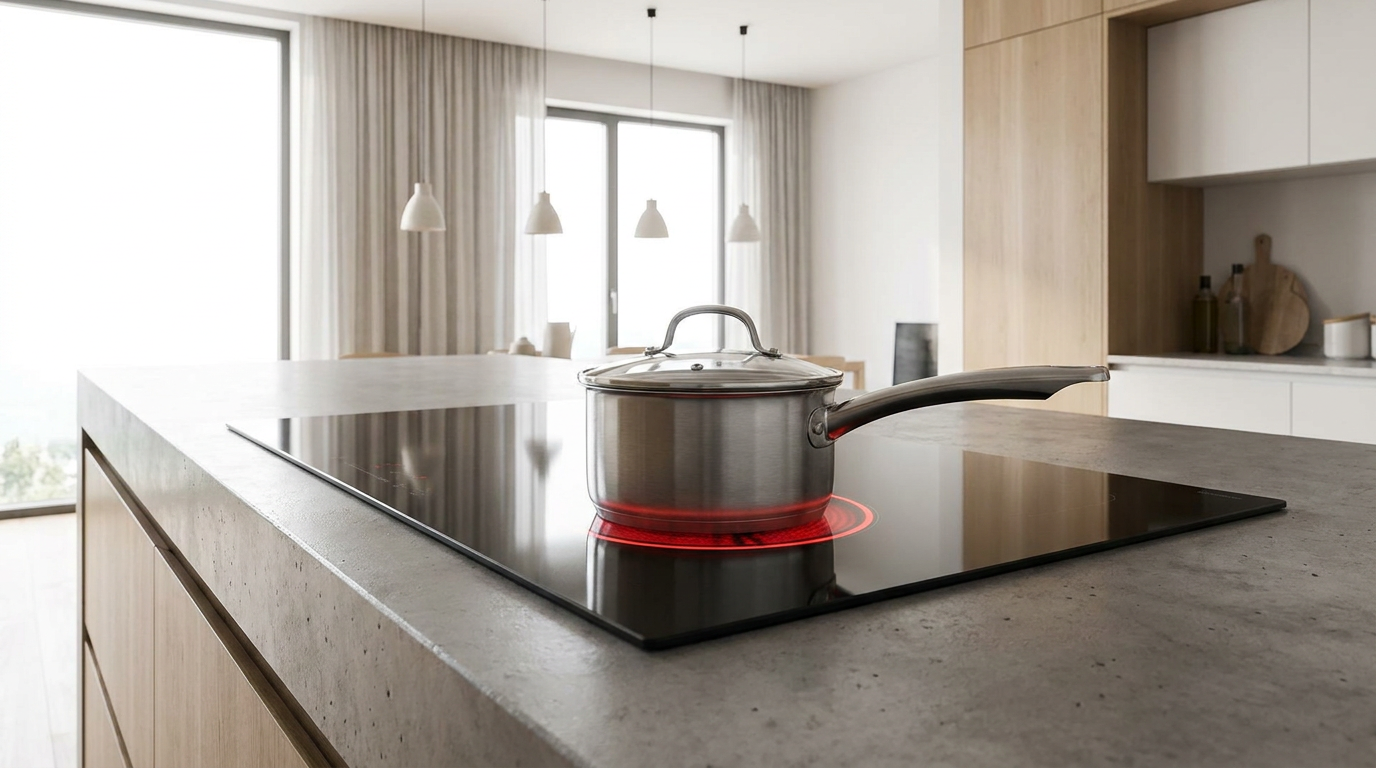
Induction technology shatters this long-standing binary by bypassing the concept of thermal conduction entirely. Instead of generating heat externally and attempting to transfer it to a pot through physical contact or radiant energy, induction relies on the advanced principles of electromagnetism. Beneath the smooth, deceptively simple ceramic glass surface of an induction cooktop lies a tightly wound coil of highly conductive copper wire. This coil is the heart of the system, serving as the origin point for a completely different method of energy transfer that fundamentally changes the physics of how we cook our food.[4][6]
When an induction stove is turned on, an alternating electric current is pushed through this copper coil. This current generates a rapidly oscillating, high-frequency magnetic field that projects just millimeters above the glass surface. Crucially, this magnetic field is completely invisible and generates absolutely no heat on its own. You could place your hand directly over the active coil, and the glass would remain cool to the touch, as the magnetic energy passes harmlessly through non-magnetic materials like human skin, glass, or ceramic.[4]

The physical reaction only occurs when a pot or pan made of a ferromagnetic material—such as cast iron, carbon steel, or magnetic stainless steel—is placed onto the cooking zone. As the magnetic field penetrates the metal base of the cookware, it interacts with the atomic structure of the pan. The oscillating field induces a series of fast-moving, localized electrical currents, known in physics as eddy currents, entirely within the metal of the cookware itself.[4][6]
As these eddy currents swirl rapidly through the base of the pan, the electrons encounter the natural electrical resistance of the metal. This resistance creates intense friction at the atomic level, generating massive amounts of heat through a process known as Joule heating. In essence, the induction mechanism transforms the cookware itself into a self-contained heating element. The heat is born directly inside the metal of the pan, allowing it to transfer immediately and evenly to the food or liquid contained within.[4]
Because the heat is generated directly inside the pan rather than beneath it, there is virtually no thermal energy lost to the surrounding environment. In a traditional gas setup, flames lick the sides of the pot, and a massive amount of heat escapes into the ambient air, warming the kitchen and the cook. Induction's direct energy transfer eliminates this waste, resulting in a cooking process that is not only remarkably fast—capable of boiling water in a fraction of the time of gas—but also keeps the kitchen significantly cooler during heavy cooking sessions.[4][6]
The thermodynamic efficiency of this electromagnetic process is staggering when compared to legacy technologies. According to energy analysts, induction stoves operate at roughly 85 to 90 percent efficiency, meaning that nearly all of the electrical energy pulled from the grid is successfully converted into cooking heat inside the pan. This high level of efficiency translates directly into lower energy consumption per meal, reducing the overall electrical load and making induction an ideal companion for homes transitioning to solar power or broader electrification.[4]
The thermodynamic efficiency of this electromagnetic process is staggering when compared to legacy technologies.
By stark contrast, traditional electric resistance stoves hover around 74 percent efficiency, losing a quarter of their energy as the coils struggle to push heat through the glass and into the pan. Gas stoves are even more notoriously inefficient, capturing only 32 to 40 percent of the energy they consume. The remaining 60 to 68 percent of the heat generated by the burning gas simply radiates outward, entirely wasted. This massive efficiency gap is a primary reason why energy advocates are aggressively pushing for induction adoption.[4]

However, thermodynamic efficiency is only half of the equation driving the rapid transition away from gas. The other, arguably more urgent half, is a rapidly expanding body of public health research illuminating the hidden, long-term health costs of combusting fossil fuels indoors. For generations, the assumption has been that the blue flame of a gas stove burns cleanly, but modern air quality monitoring has revealed a starkly different reality, turning the kitchen stove into a focal point of environmental health scrutiny.
A landmark 2024 study led by researchers at Stanford University and PSE Healthy Energy provided some of the most comprehensive data to date, revealing that gas and propane stoves expose millions of Americans to substantial, dangerous amounts of nitrogen dioxide (NO2). Nitrogen dioxide is a highly reactive gas and a known respiratory irritant that can inflame the airways, exacerbate asthma, and lower the body's resistance to respiratory infections. The study demonstrated that the indoor environment offers little protection from this pollution.[1][2]
The Stanford researchers found that in poorly ventilated homes—which represent the vast majority of American housing stock—NO2 concentrations frequently breach the health benchmarks set for outdoor air quality within just an hour of gas stove use. Even more alarming, the researchers documented that this toxic gas does not remain confined to the kitchen area. The NO2 spreads rapidly throughout the home's floor plan, accumulating in bedrooms and lingering at unsafe levels for hours after the burners and ovens have been completely turned off, exposing sleeping family members to chronic pollution.[1]
Beyond nitrogen dioxide, extensive air sampling has documented that gas stoves routinely emit other hazardous pollutants, including unburned methane and benzene. Benzene is a well-established human carcinogen linked to leukemia and other blood-related cancers. The Stanford and PSE Healthy Energy research found that a single gas cooktop burner on high could raise indoor levels of benzene above the concentrations typically found in secondhand tobacco smoke, introducing a severe, chronic health risk into the daily routine of cooking dinner.[1][2]
The cumulative public health implications of these indoor emissions are significant and heavily impact vulnerable populations. A major meta-analysis of 41 distinct studies concluded that children living in homes with gas stoves face a 42 percent increased risk of developing asthma compared to children in homes with electric cooking. This data has transformed the stovetop from a simple appliance choice into a critical environmental justice issue, as lower-income households often live in smaller, poorly ventilated spaces where these pollutants concentrate most heavily.[4]
Transitioning to induction technology offers a highly effective, immediate remedy to this indoor air crisis. A pivotal 2024 pilot study conducted by Columbia University’s Mailman School of Public Health tested this solution in the real world by replacing gas stoves with induction models in a low-income public housing building in the Bronx. The researchers continuously monitored the indoor air quality of the apartments before and after the intervention, providing concrete data on the health benefits of electrification.[3]

The results of the Columbia study were striking. The researchers recorded a 56 percent reduction in average daily NO2 concentrations in the homes that switched to induction compared to the control group that continued using gas. Furthermore, during focus group discussions, the participants were unanimously pleased with the transition, citing the faster cooking times and the elimination of anxiety regarding potential gas leaks. Tellingly, none of the participants opted to switch back to their gas stoves when given the choice.[3]
Despite the clear health and performance benefits, the transition to induction is not without friction or logistical hurdles. The technology requires compatible magnetic cookware, meaning some households must replace their favorite aluminum or copper pans. More significantly, retrofitting older homes to accommodate induction can be cost-prohibitive, as the stoves require a dedicated 240-volt electrical circuit. For many older apartments and houses, this necessitates an expensive electrical panel upgrade before the stove can even be plugged in.[6]
Furthermore, the natural gas industry has mounted a vigorous defense of its appliances, pushing back heavily against the recent wave of health claims. Organizations like the American Gas Association (AGA) argue that the data linking gas stoves to childhood asthma is fundamentally flawed. The AGA points to alternative meta-analyses suggesting that the risks are exaggerated by studies that fail to properly adjust for confounding socioeconomic variables, and they maintain that proper use of range hoods effectively mitigates indoor air quality concerns.[5]
Despite this industry pushback, the broader momentum toward residential electrification appears to be accelerating rapidly. Driven by federal tax credits, state-level appliance rebates, and the undeniable physics of electromagnetic heating, induction is steadily capturing market share. As consumers increasingly prioritize both the health of their indoor environments and the speed of their cooking, the kitchen of the future is increasingly looking flameless, operating with a cool, silent efficiency that leaves the blue flame in the past.[7]
How we got here
2022
California adopts all-electric ready building codes for new construction, signaling a shift away from gas infrastructure.
May 2023
Stanford researchers publish findings showing gas stoves emit benzene levels comparable to secondhand smoke.
May 2024
A comprehensive study reveals NO2 from gas stoves frequently exceeds outdoor health limits and lingers in bedrooms.
July 2024
Columbia University demonstrates a 56% drop in NO2 when Bronx public housing units switch to induction.
Viewpoints in depth
Public Health Researchers
Argue that indoor combustion of fossil fuels is a major, under-regulated source of respiratory illness.
Public health advocates and environmental scientists point to a growing mountain of empirical data showing that gas stoves routinely push indoor air quality past legal outdoor limits. They emphasize that pollutants like nitrogen dioxide and benzene do not stay confined to the kitchen, but spread to bedrooms where children sleep. For this camp, the transition to induction is not about culinary preference, but about mitigating a chronic, population-level health crisis that disproportionately affects low-income families living in smaller, poorly ventilated homes.
Natural Gas Industry
Argue that proper ventilation mitigates risks and that studies linking gas stoves to asthma are methodologically flawed.
Industry groups like the American Gas Association maintain that natural gas remains a safe, reliable, and preferred cooking method for millions of Americans. They strongly dispute the causality of studies linking gas appliances to respiratory illness, arguing that these meta-analyses often fail to account for confounding socioeconomic factors, such as exposure to outdoor pollution, mold, or secondhand smoke. This camp advocates for better consumer education on the use of range hoods rather than wholesale appliance bans or electrification mandates.
Energy Efficiency Advocates
Focus on the thermodynamic superiority of induction to reduce overall grid load and household energy waste.
For energy transition advocates, the primary argument for induction is pure physics. They highlight that gas stoves waste over 60 percent of their energy heating the ambient air, whereas induction transfers up to 90 percent of its energy directly into the food. This camp argues that as the electrical grid becomes greener, adopting highly efficient appliances is essential for reducing overall energy demand, lowering utility bills, and keeping homes cooler during increasingly hot summers.
What we don't know
- Whether federal and state rebate programs will be sufficient to overcome the high upfront electrical retrofit costs for low-income homeowners.
- How quickly commercial restaurant kitchens will adopt induction technology at scale.
Key terms
- Electromagnetic Induction
- The process of generating an electric current with a magnetic field, used to heat cookware directly.
- Eddy Currents
- Loops of electrical current induced within the metal of a pan by the alternating magnetic field of an induction stove.
- Joule Heating
- The physical process by which the resistance of a metal to an electrical current generates intense heat.
- Nitrogen Dioxide (NO2)
- A toxic gas produced by combustion that can irritate the lungs and lower resistance to respiratory infections.
- Benzene
- A known human carcinogen emitted by burning natural gas, also found in tobacco smoke and vehicle exhaust.
Frequently asked
Do I need special pots and pans for an induction stove?
Yes, induction requires ferromagnetic cookware. If a magnet sticks strongly to the bottom of your pot—like cast iron or magnetic stainless steel—it will work.
Does induction cooking use more electricity than traditional electric stoves?
No, it uses significantly less. Because induction heats the pan directly, it is about 85 to 90 percent efficient, compared to 74 percent for traditional electric resistance coils.
Can I just use a range hood to make my gas stove safe?
While a high-quality, externally vented range hood reduces pollutants, studies show it does not capture all emissions, and many homes lack proper ventilation entirely.
Are induction cooktops hot to the touch?
The glass surface itself does not generate heat, but it can become warm from the residual heat of the hot pan resting on it. It cools down much faster than traditional electric coils.
Sources
Source coverage
7 outlets
3 viewpoints surfaced







[1]Stanford UniversityPublic Health & Environmental Scientists
People with gas and propane stoves breathe more unhealthy nitrogen dioxide
Read on Stanford University →[2]PSE Healthy EnergyPublic Health & Environmental Scientists
Indoor Air Quality and Gas Stoves
Read on PSE Healthy Energy →[3]Columbia University Mailman SchoolPublic Health & Environmental Scientists
Switching to Induction Stoves Reduces Indoor Air Pollution
Read on Columbia University Mailman School →[4]Rewiring AmericaEnergy Transition Advocates
How induction cooking works
Read on Rewiring America →[5]American Gas AssociationNatural Gas Industry
Background on Stanford Gas Stove Study
Read on American Gas Association →[6]MassCECEnergy Transition Advocates
Benefits and Limitations of Induction Stoves
Read on MassCEC →[7]Factlen Editorial TeamEnergy Transition Advocates
Synthesis by Factlen editorial team
Read on Factlen Editorial Team →
Every angle. Every day.
Get lifestyle stories with full source coverage and perspective breakdowns delivered to your inbox.